How Did the Shelby Cobra Marry an American Engine with British Refinement?
Share This Page
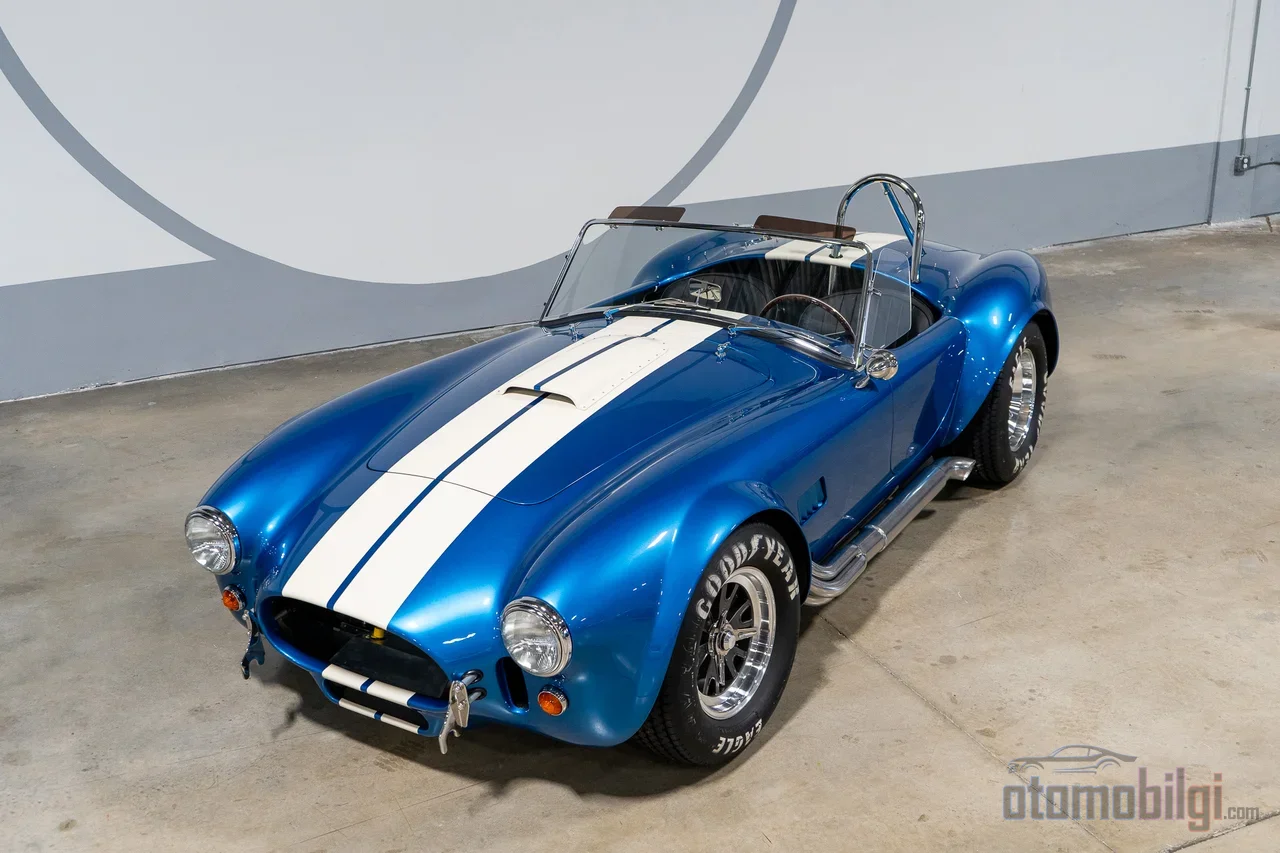
The Shelby Cobra is a sports car born in 1962 when an American Ford V8 engine was fitted into the body of the British AC Cars' AC Ace ; it was produced both in England and the USA between 1962 and 1967. The simple yet brilliant idea conceived by Carroll Shelby created one of the most legendary roadsters in automotive history - and made Ferrari tremble on the racetracks.
Highlights
- The CSX2000 chassis, the first Cobra, was brought to life in February 1962 by fitting an engine in less than 8 hours. was fitted, bringing it back to life.
- A total of 998 original Cobras were produced; the engines evolved from 260 cubic inches to 427 cubic inches.
- The Daytona Coupe beat Ferrari at Le Mans in 1964 and won the FIA GT Championship in 1965.
- The 427 version offered 425 hp of power and a 164 mph top speed.
- The famous Super Snake broke the record at the 2007 auction with 5 million dollars. set a record.
How Was the Cobra Born? An English Workshop and an Eight-Hour Miracle
The story begins in September 1961. Ford gives two of its new 221 cubic inch (3.6 liter) small block V8 engines to Carroll Shelby, and one of them is sent to England, to AC Cars. AC Cars was a small but talented workshop operating in Thames Ditton, Surrey, and had already been producing an elegant roadster called the AC Ace for years. Produced since 1953, this car had a steel ladder chassis and an aluminum body shaped on an English wheel; on the engine side, it had successively tried the AC Light Six, Bristol, and Ford Zephyr 6 inline-six engines. In other words, the body and chassis were ready; all that was needed was an American V8 beating in its heart.
In January 1962, AC completed the prototype with chassis number CSX2000 under the name "AC Ace 3.6", and in early February that chassis was sent by air to Shelby in Los Angeles. Here's my favorite part: Shelby's team took this chassis to Dean Moon's workshop in Santa Fe Springs and fitted the V8 engine in less than eight hours. Imagine waking up after one night's sleep, and morning had come and one of the most iconic cars in automotive history had been born. The changes on the AC side were surprisingly minimal - the Zephyr 6 installation had already required the nose to be reshaped; the only front-end change was moving the steering box outward to make room for the wider V8. At the rear, the powerful Salisbury 4HU differential with inboard disc brakes, the same as the Jaguar E-Type, was fitted.
AC Cars accelerated production from June 20, 1963 onward and continued until roughly 1,000 vehicles had been produced. A small English workshop was, perhaps without realizing it, bringing an entire automotive legend to life.
From 260 to 427: How Did the Cobra's Engine Evolution Progress?
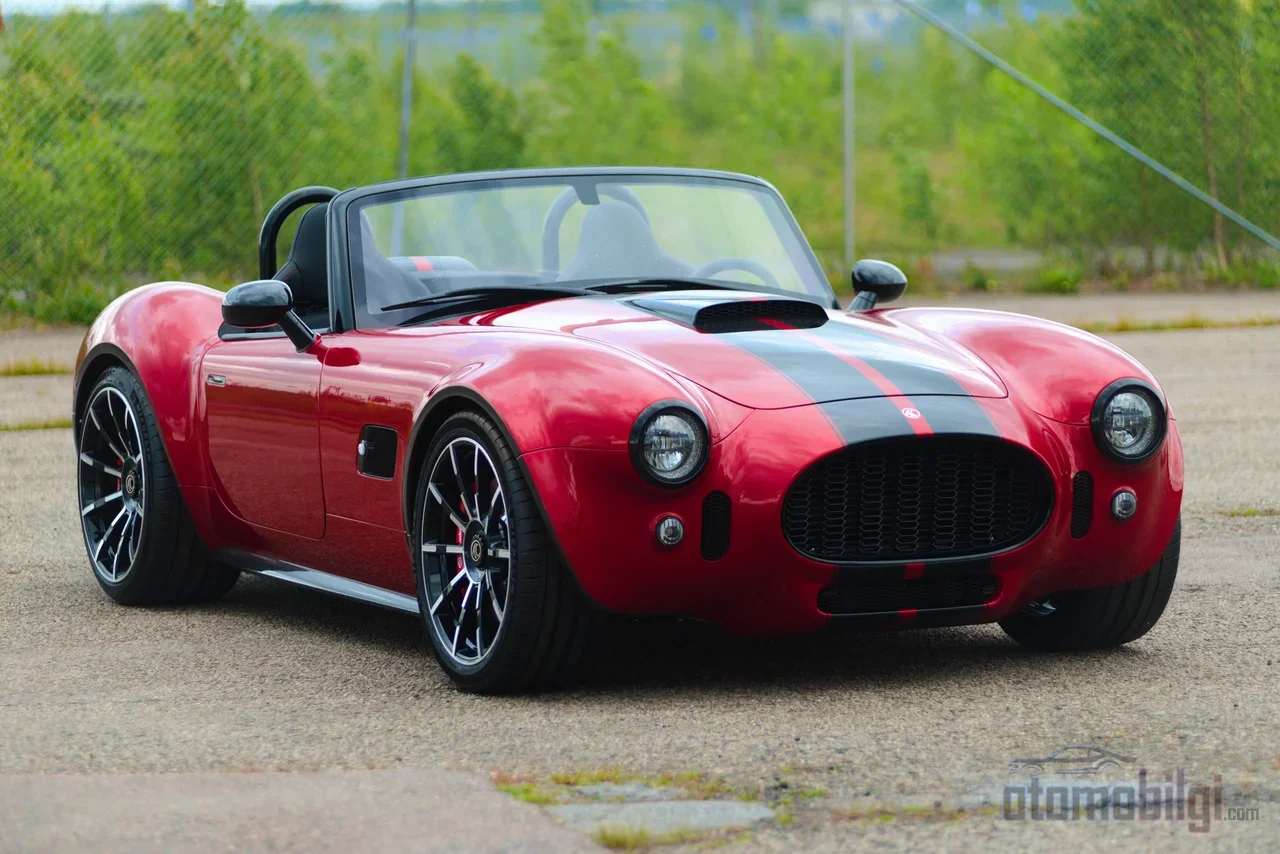
In the Cobra's story, the engine was always the main character. The first generation, the Mk I (1962-1963), came with 4.3-liter (260 cu in) or 4.7-liter (289 cu in) Ford V8s; the first 75 cars (including the prototype) had the 260 Windsor, while the remaining 51 had the 289. Over time, the 260s went through Shelby's upgrade program, so finding a genuine 260 Cobra today is a rare chance. The Mk II (1963-1965) sat on the 289 V8 and is full of interesting details: the steering rack came from the MGB, and the steering column from the VW Beetle. Yes, the famous Cobra's steering column has Beetle DNA in it - few people know this. Around 528 units of the Mk II were produced.
Then in 1965 the scene changed. The Mk III arrived with a new chassis designed together with Ford in Detroit: 4-inch tubes, coil springs, and underneath it a massive 7.0-liter (427 cu in) FE "side oiler" engine. This engine produced 425 hp and 480 lb-ft of torque; top speed was 164 mph. The stiffer S/C version, meanwhile, played with 485 hp and 185 mph. Let me make a simple analogy: if the 289 Cobra is an elegant but fast athlete, the 427 Cobra is an orc - a monster that puts you in its seat and never lets go. Some 427s received Ford's 428 FE engine (~105 cars); the 1966 Police Interceptor version also produced about 360 hp.
| Generation | Years | Engine | Highlight Feature |
|---|---|---|---|
| Mk I | 1962-1963 | 260 / 289 cu in V8 | First 75 cars had the 260 Windsor |
| Mk II | 1963-1965 | 289 cu in V8 | MGB steering rack, Beetle steering column; ~528 units |
| Mk III | 1965-1967 | 427 cu in FE "side oiler" | 425 hp, 164 mph; S/C: 485 hp, 185 mph |
A Family Built from Snakes: Super Snake, Dragon Snake and Others
The Cobra's special versions are a tale all on their own. Super Snake was a monster with twin Paxton superchargers; its sibling CSX3303 is remembered not with a funny but a genuinely tragic story - it was given to Bill Cosby, but he returned it because of the terrifying experience he had with the car, and the vehicle later fell off a cliff into the sea in an accident. CSX3015, the Super Snake itself, was sold at the Barrett-Jackson Scottsdale auction on January 22, 2007 for 5 million dollars (~7.27 million dollars with commission), setting a record for an American-built car. On the more exotic side, there are only 6 examples of the 289 and 1 example of the 427 Dragon Snake drag package and two examples of the Slalom Snake . The story of the S/C versions is also interesting: FIA homologation could not be fully obtained for the 1965 season (FIA approval came in April when only 56 of the 100 cars were ready) and the 31 unsold race cars were converted for the street with glass and the twin four-barrel R-code 427, becoming "semi-competition". Today, an original S/C is valued at up to 1.5 million dollars.
Daytona Coupe and the Ferrari Rivalry: Did the Cobra Beat Ferrari?
The open-bodied Cobra's weak point was aerodynamics. A smoother body was needed to battle Ferrari on long straights like the Mulsanne Straight; closed coupés were built using the leaf-sprung Mark II chassis. The most famous of these are the six official Shelby Daytona Cobra Coupé happened. The goal was clear: to have a more aerodynamic Cobra than Ferrari at high-speed tracks.
The result? The Daytona Coupe won the 1964 Le Mans, beating Ferrari and went down in history by also taking the 1965 FIA GT Championship against Ferrari. This achievement is also the source of the Cobra's claim of being "the only American manufacturer to win the FIA World Championship." There is another intriguing side story: AC's own sole Le Mans coupé attempt (chassis A98) lost time at the 1964 Le Mans due to a sabotage where newspaper was placed in the fuel tank; with a 2.88 differential ratio and 355 hp, it could reach the Daytona's speed - while the Daytona was running 385 hp with a 3.07 ratio.
Can the Cobra Play on the Same Court as the Ferrari 250 GTO?
Would it be unfair to put two legends side by side? According to manufacturer data, the 427 Cobra produces 416 PS while the Ferrari 250 GTO stays at 300 PS. But the GTO is lighter and has a higher top speed - meaning the Cobra is a raw power monster on the straight, while the GTO is a work of art that speaks through its lightness and balance. Both are the pinnacle of their era; one carries the tough and sharp energy of Texas, the other the elegance of Maranello. So which one would you choose, brute power or agile elegance?
The Realities Behind the Legend: Financial Struggles and the 1993 Scandal
Beneath every legend lies uneven ground, and honestly, the Cobra's story has it too. According to most historians, the AC Cobra was actually a financial failure - Shelby and Ford completely cut off vehicle imports from England in 1967. Although the "legend narrative" looks glittering from the outside, the realities of the day were different. Additionally, a newspaper report published in 1993 revealed that Shelby had obtained duplicate documents from the California DMV for 43 chassis that were never produced; AC Cars also confirmed in writing that the relevant chassis numbers were never produced. Shelby admitted that a workshop in Torrance produced these chassis in 1991-1992 but denied deceiving anyone and claimed he was the victim of a smear campaign by his rival Brian Angliss. There was another dispute, with Kirkham Motorsports: according to Pete Brock's account, Shelby signed contracts with Kirkham, delayed the payments, and nearly drove the company bankrupt. So the legend is sparkling bright, but the ground beneath it is a bit muddy - the real history is even more interesting for those who know it, in my opinion.
How Much Does a Shelby Cobra Cost Today and What About the Replica Market?
Here is where the Cobra's real magic emerges: against only 998 original Cobras ever produced, tens of thousands of replicas circulate around the world. The reason is simple - the Cobra has become one of the most copied cars in history. If you look at guide prices, the market spans a massive range: from DIY kits starting at around 15,000 dollars up to six-figure Shelby continuation vehicles (~143,000-176,000 dollars). So whatever your budget is, you can somehow live your Cobra dream - as long as you know at which level.
Continuation cars are a separate category. Shelby's 427 Continuation models from the CSX4000 series are currently available on the market, and in 2026 there is a sales record of approximately $224,950. Also, an original Cobra sold for $1,017,000 at the 2026 Arizona auction; continuation cars, with their special equipment (powder-coated chassis, custom gauges, commemorative badges), can approach nearly half a million dollars. Manufacturers like Superformance also produce continuation cars, including the Cobra, GT40, and Corvette Grand Sport. In fact, in 2023 Argentine entrepreneur Federico Álvarez Castillo announced plans to produce 12 units per year of the Big Block 427 or Small Block 289 under official license in Pilar, Buenos Aires. The legend is still walking - it's even running.
Original, Replica, or Continuation?
Let's look at it like a practical guide. An original 427 S/C today costs around $1.5 million and your chances of taking it out of the garage are very slim. Continuation cars are Shelby licensed, equipped with modern hardware, and give you that "real Cobra feeling" - but their prices are astronomical. Replicas, on the other hand, are budget-friendly; some can even be much more comfortable to drive with 220 hp 3.5-liter V8s. In short: if you're a collector, chase the original; if you're a driver, a replica or continuation will make you happy. The "289 or 427" debate still rages on in forums - while about 60% of originals came with 260/289 engines, the majority of replicas (estimates show 80-90%) prefer the 427 body style. My vote goes to the 427, but that's my hormones' fault.
The Cobra in Popular Culture: A Legacy from the Tracks to the Screen
The Cobra is not just a car, it's a cult icon. It appeared on screens from Elvis Presley's "Spinout" movie to the "Honey West" TV series; these appearances in film, TV, and popular culture made it a symbol of engineering excellence. It's no coincidence that seeing a Cobra today stirs up a strange excitement within a person - the fact that an American heart beats under that elegant British body is one of the most romantic partnerships in automotive history. Moreover, this partnership is still alive today: continuation production, auctions, and special projects keep the Cobra in the spotlight. Do you think a car would still be talked about like this after 60 years? I think only a handful could.
To sum it up: the Shelby Cobra proves what is born when American power merges with the craftsmanship of a British workshop. Only 998 were produced, but it won millions of hearts. Who knows, maybe one day you'll take the wheel of that body too - until then, it falls to me to share this story.
Sources
- AC Cobra
- History - AC CARS
- Shelby American Inc. > Shelby 427 - CSX6000
- When Was the Shelby Cobra Made?
- A Quick History of the Shelby Cobra
- Shelby Daytona Coupe's 1964 Le Mans Victory
- Shelby Cobra Daytona
- Duel: Ferrari 250 GTO vs AC Cobra Shelby 427
- Shelby Cobra 427 Continuation - CSX4000 Market
- Superformance
- Why Shelby's Continuation Cobras Command Nearly Half a Million
- Shelby Cobra Buyer's Guide (August 2026)
- The Legacy of the Shelby Cobra
- Shelby Cobra: Originals, Kits, Replicas & Continuation Cars