Duesenberg Model J: The Story of How a Monument of Beauty Became an Icon
Share This Page
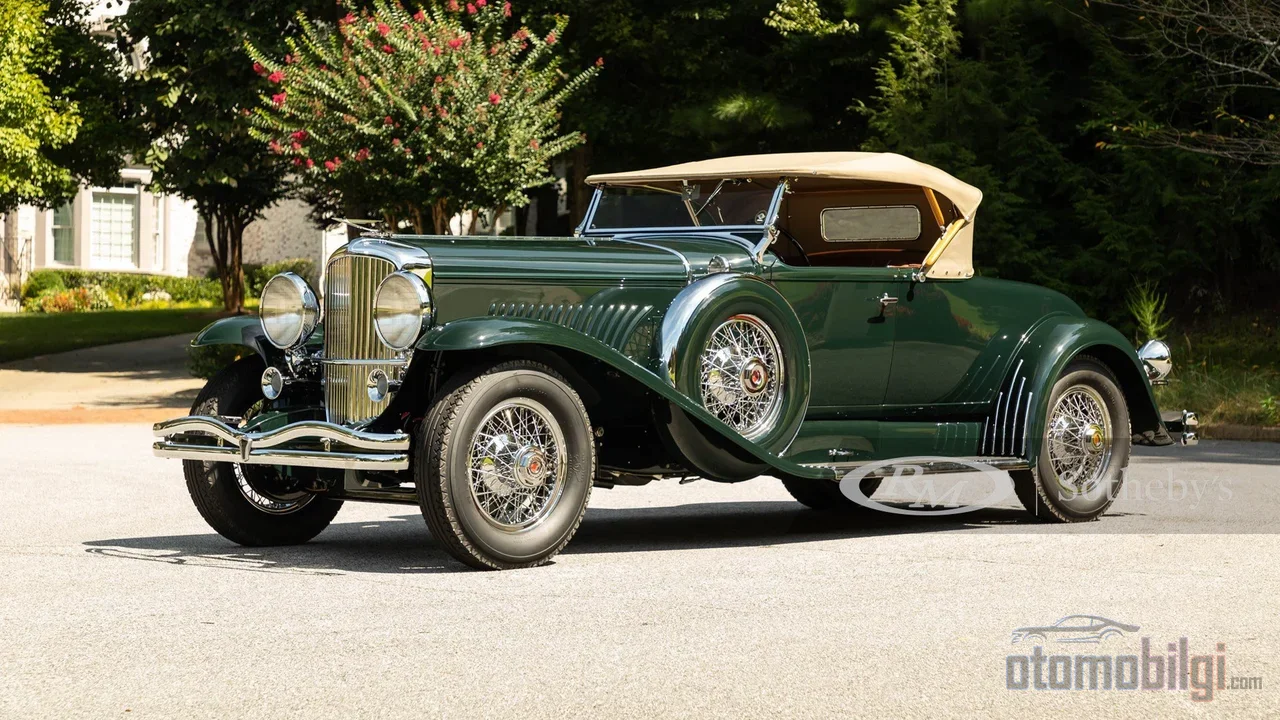
Introduced in 1928, the Duesenberg Model J, with its 265 horsepower, was the fastest and most expensive American automobile of its era; sold as a rolling chassis, it allowed each owner to commission custom bodies from the world's finest coachbuilders, turning every car into a one-of-a-kind work of art, and despite the Great Depression it remained the pinnacle of luxury, becoming an icon that still fetches millions of dollars today. In short, it is the most ambitious project in automotive history, where American engineering met Italian and French coachbuilding artistry in a single automobile.
Highlights
- Introduced on December 1, 1928 at the New York Auto Show, chassis price $8,500
- 6.9-liter inline eight-cylinder engine, 265 HP and 374 lb-ft of torque
- A total of 481 units produced between 1928 and 1937, at least 378 of which survive today
- Gary Cooper's SSJ sold in 2018 for $22 million - a record for an American automobile
- The supercharged SJ version arrived in 1932, producing 320-400 HP
What Is the Duesenberg Model J and Why Is It Still Talked About?
Think about it for a moment: there's a car that isn't just a vehicle; you get to choose its identity. The engine, chassis and mechanical heart come from the factory, but the body you place on top is crafted to your taste by a coachbuilding workshop in Paris, London, or New York. The Model J is exactly that kind of automobile, and that's why it's still talked about today. Two years after E.L. Cord bought the company, it appeared before us at the New York Auto Show on December 1, 1928. The fair had only one completed vehicle: a silver-black dual cowl phaeton with LeBaron bodywork. Its chassis number was J-101 - meaning everything was just beginning.
The goal was clear: to go head-to-head with Rolls-Royce and Hispano-Suiza. American engineering would meet Europe's aristocratic flair, and believe me, the plan worked. Even today, many still describe it as the greatest American automobile ever made, and with good reason.
A 265-Horsepower Monster: How Powerful Was the Model J's Engine?
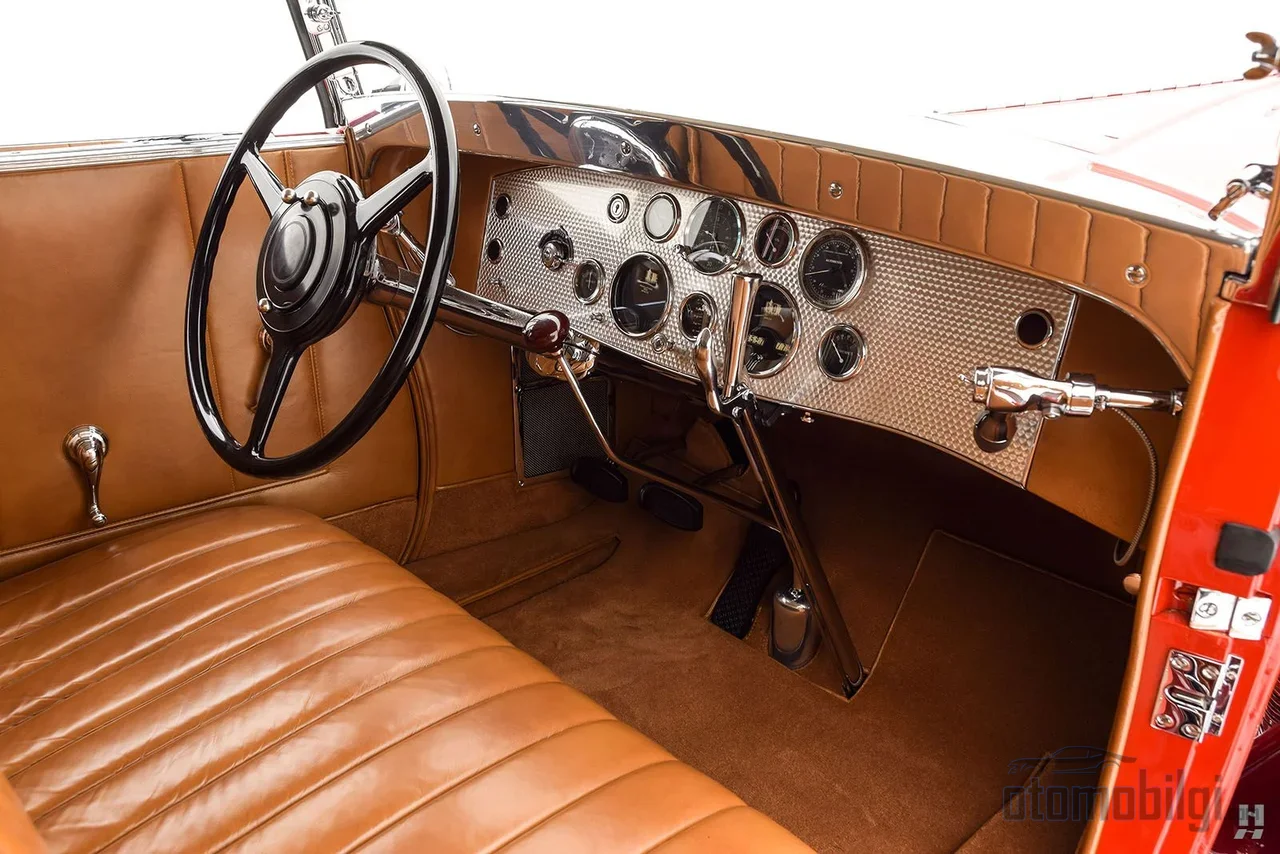
Now to the real matter. In 1928, while the average American drove a car with around 20 horsepower, the engine Duesenberg delivered from the bench had a 6.9-liter (420 cubic inch) displacement, was an inline eight, and produced 265 horsepower at 4,200 RPM . The engine was built by Lycoming; it had four valves per cylinder - 32 in total - and a dual overhead camshaft (DOHC) architecture. That's technology you can still find in sports cars today - try wrapping your head around that in the late 1920s - that's where your mind gets blown.
The torque was equally impressive: 374 lb-ft. Power was sent to the wheels through Warner Gear's three-speed manual transmission. In 1932 things got a touch crazier: the supercharged SJ version arrived, producing between 320 and 400 horsepower depending on the chassis. Let me give you a simple analogy: the Model J in standard form was the most powerful of its era, while the SJ was like giving ankle weights to the school's best runner and still telling them to beat everyone.
But what about speed? Figures for the Model J's top speed vary depending on the body; different chassis-body combinations produced different results. Some sources give around 91 mph, while others go up to 116 mph, roughly 187 kilometers per hour. A figure of 110 mph is also put forward for the 1931 model year. So depending on which body it wore, the same car could turn into completely different monsters.
| Feature | Value |
|---|---|
| Engine | 6.9-liter (420 cu in) straight-8, Lycoming |
| Cylinder architecture | DOHC, 4 valves per cylinder (32 valves) |
| Power | 265 HP @ 4,200 RPM |
| Torque | 374 lb-ft |
| Transmission | Warner Gear 3-speed manual |
| Chassis price (1928) | $8,500 |
| Production (1928-1937) | 481 units (445 J, 36 SJ) |
| Supercharged SJ power | 320-400 HP |
From the Racetrack to the Showroom: The Story of the Duesenberg Brothers
Behind this brand is a very interesting duo: Fred and August Duesenberg brothers. The pair founded the company in Indianapolis, Indiana in 1920 and first proved themselves in the world of racing. This detail matters, because the successes the brothers earned on the track directly fed the engineering credibility of the cars that hit the road. Production cars were put through durability tests; in other words, the message of "we won on the track, we'll win on the road too" was backed by real data.
Then E.L. Cord took the stage. As president of Auburn Automobile Company, Cord bought Duesenberg, which was on the verge of bankruptcy, added it to his empire, and gave the brothers something very valuable: money and freedom. There was only one condition - to build the most technologically advanced, best automobile. During the Cord era, the marketing campaign also changed radically; an image of luxury, glamour, and admiration for Europe came to the forefront. When you hear that a target of producing 500 cars per month was set, you realize once again just how ambitious Cord was.
The Car Sold Without a Body: How Did the Chassis-Only Strategy Work?
Here's the idea that I think made the Model J perfect: the car was sold without a body. The buyer purchased a world-famous chassis, then ordered the body from one of the world's finest coachbuilders. In today's terms, think of it like buying a fully equipped phone and having its case and screen made by a designer in Paris. There was no limit to the class or the taste.
The list of coachbuilders alone is a star roster: on the American side, names like Derham, Holbrook, LeBaron, Murphy, Rollston, Walker, Weymann, Willoughby, Bohman & Schwartz, Dietrich, and Judkins; on the European front were Fernandez et Darrin, Franay, Gurney Nutting, Saoutchik, and Figoni. European coachbuilding artistry was layered onto American engineering - the elegance of Italian and French workshops meeting a chassis born in Indiana. That's why two Model Js almost never looked the same, and the car became a "classless" status symbol: anyone with the money could create one according to their own taste.
Gordon Buehrig and La Grande
The name behind the design of about half of the bodies produced was chief designer Gordon Buehrig, and these bodies La Grande under that brand name at its factories in the United States. American-built bodies of a quality that could compete directly with European coachbuilders - that was exactly Cord's goal. Until the effects of the Depression were felt, that is, until 1932, Murphy remained the main coachbuilder with around 150 bodies.
Hollywood's Sweetheart: Who Owned Model J's?
What do you do when a product needs no advertising? You sneak into celebrities' garages. The Model J's customer list was an all-star cast: Gary Cooper owned a 1931 Derham Tourster, and his 1930 Derham Tourster, displayed in museums, still graces showcases today. Clark Gable, meanwhile, drove a 1935 Model JN. Gable's car had become identified with his memories of Carole Lombard, and after Lombard's death in 1942 he sold it - so emotional bonds were formed with these cars too; this was far from ordinary vehicle ownership.
The celebrity list is not limited to Hollywood; colorful names including Al Capone are counted among them. Duesenbergs were a status symbol favored not just by the rich but by the ultra-rich, and they were the biggest, most valuable American automobile of the era. Prices initially started at $8,500 for the chassis; completed cars with bodies cost between $13,000 and $25,000 - keep in mind that this figure equals roughly $500,000 in 2022 money. Remember: at that time the average car cost $640 and the average house $6,790. So you were paying house money for a Duesenberg, and there was no shortage of those willing to pay it.
It's a Duesey: A Word That Entered the Language
Do you know what it means when a car's name enters everyday language? It means you've become a legend. In the last century, the expression "It's a Duesey" was widespread and meant "something truly special." If a friend shows you something incredible and says "this is quite a duesey," the compliment has hit its mark.
But the striking part is this: linguists argue that the word "doozy" does not originate from Duesenberg. According to them, the word dates back to 18th-century English slang and is probably a form of the word "daisy," used as slang in the late 1800s. So whether "doozy" derived from Duesenberg or the car gave its name to the word remains debated. In short, language, much like auctions, has woven its own legend around this automobile.
Why Couldn't the Great Depression Kill the Model J?
In 1929 the stock market crashed, the country was dragged into the Great Depression, and while average household income fell to $1,850, some people kept dressing $8,500 chassis with $13,000-25,000 bodies. Owning a Model J in those years wasn't just a driving pleasure; it was a declaration: the classiest way of saying, as the world darkens, that I shine like gold. As strange as it may seem, that is exactly how the psychology of luxury works; in times of crisis the top brands set themselves apart, and Duesenberg was the very summit itself.
Of course, the crisis left its mark: Murphy's production slowed in 1932 and the company finally closed in 1937. The last car was delivered to German artist Rudolf Bauer in 1940. So production ended in 1937, but the story kept breathing for a few more years. Looking back today, here is what you see: from 1928 to 1937, only 481 cars were produced, but each one was flawless and none of them fell short of its time.
How Much Is a Model J Today? Auction Values
Now let me tell you the most striking part. At 2024 Monterey Car Week, a 1934 Model J Disappearing-Top Convertible Coupe sold for $3,745,000 and became the most expensive American-built car of the week. At the 2026 Arizona auction, a 1929 SJ Convertible Sedan by Murphy fetched $1,572,500. RM Sotheby's Private Sales is asking $3,850,000 for a 1931 Disappearing Top Convertible Coupe by Murphy. At Mecum Monterey, a 1929 Murphy Convertible Sedan found a buyer for $2.15 million; a 1933 SJ had previously sold in 2017 with a record of $2.3 million.
The ceiling, however, is in a league of its own: Gary Cooper's SSJ sold at auction in 2018 for $22 million the highest price ever paid for an American car. You'll laugh when you hear this, but when a near-twin of Clark Gable's SSJ was announced in 2018, Al Ferrara had bought it for $12,000, a princely sum for its day. The record for a single Duesenberg at public auctions is over $10 million. Considering that at least 378 of the 481 cars are still standing, you understand very clearly why each of the few surviving examples is so precious.
So why do we still love this car so much today? I think the answer is simple: the Model J is tangible proof of how much a car can be. Engineering that came from the racetrack, the idea of selling chassis-less coachwork, the world's finest coachbuilding ateliers, Hollywood's glamour, and a word that seeped into the language... All of them coming together in a single chassis is one of the luckiest accidents in automotive history. And if it were you, which body would you choose - American power or European elegance?
Sources
- December 1, 1928 - Duesenberg Model J debut
- 1931 Duesenberg Model J Specifications & Dimensions
- Duesenberg Model J
- How the Duesenberg brothers redefined the great American automobile
- A Duesy of a Story: The Duesenberg Brothers in Indiana
- 1932 Duesenberg Model J Victoria Coupe by Judkins
- Hollywood Legends and their Duesenbergs
- The Most Famous Duesenberg, Clark Gable's
- Famed 'Gary Cooper SSJ' adds big star power to Monterey auctions
- Doozy: Origin of the Word for Something Outstanding
- It's a DOOZY! New Exhibit
- 1933 Duesenberg Model J Disappearing-Top Convertible Coupe - Mecum
- The Duesenberg Model J Was One Of The '20s Priciest Cars
- 1931 Duesenberg Model J Disappearing Top Convertible Coupe by Murphy
- Duesenberg Model J Market
- This $3.745 Million 1934 Duesenberg Model J
- 1929 Duesenberg Model SJ Convertible Sedan by Murphy
- Duesenberg SJ sets Auctions America record
- 1930 Duesenberg Model J Derham
- Evolution & History of Duesenbergs