Why Has the Chevrolet Corvette Held the Title of 'America's Sports Car' for 70 Years?
Share This Page
The Chevrolet Corvette is an American sports car that has been produced continuously since 1953 and has evolved through eight generations, known for its fiberglass body, distinctive style, and performance. And it doesn't carry this title as an empty claim: from a showpiece that barely survived 1953, it has transformed into a legend that plays in the same league as Europe's biggest rivals today. So how does a car carry the same title for over 70 years? Let's take a look at the story from the beginning.
Highlights
- In 1953, only only 300 units were produced - the lowest figure in all of Corvette history
- The first engine produced only 150 hp and there was no manual transmission
- 1957: With the fuel-injected V8, the "1 hp per cubic inch" goal, 290 hp
- 2020: With the C8, the switch to a mid-engine layout happened for the first time
- Chosen as the most iconic car of the last 75 years in a reader poll
It All Started at the Waldorf-Astoria in 1953
American soldiers returning home from World War II were bringing MGs, Jaguars, and Alfa Romeos back alongside their suitcases. Harley Earl, General Motors' design chief, noticed this and convinced the company: America should have its own two-seater sports car. The project was conducted in secret under the codename Project Opel . The pre-production prototype, EX-122, took the stage at the GM Motorama held at the Waldorf-Astoria hotel in New York on January 17, 1953. The first production car rolled out of an old truck factory in Flint, Michigan on June 30, 1953.
And here we come across Corvette's most famous detail: the fiberglass body. The myth that "they used plastic because of a steel shortage" still circulates, but the truth is far more interesting. Chevrolet had produced roughly two million steel-bodied vehicles in the same period; so there was no shortage of steel. The choice of fiberglass stemmed from production practicality and the industry's curiosity about plastic bodies. Imagine, saying "plastic car" in 1953 was as innovative as using carbon fiber today.
Why Did the First Corvette Fail, and Where Was It When It Was Saved?
Let's be honest: looking at the 1953 Corvette through today's eyes, it wouldn't really count as a true sports car. The engine was a 235 cubic inch Blue Flame inline-six producing just 150 hp . Worse still, the only transmission option was a two-speed automatic - there was no manual transmission to handle that power. The 0-60 mph time was 11.5 seconds; which is an embarrassing figure for a sports car. Quality was also a problem: water leaks in the fiberglass body, even doors that could open while driving, were reported. In an owners' survey conducted in 1954, percent 22 of owners said they found the Corvette inferior to older foreign sports cars; the most common complaint was the body leaking in the rain.
GM nearly shelved the program. But three things pulled the Corvette out of its grave:
- The arrival of the V8 in 1955: The 265 cubic inch small-block V8 opened the door to real performance with 195 hp, and a three-speed manual transmission was also added alongside it.
- Zora Arkus-Duntov: This engineer of Russian descent joined GM in 1953 and became the architect of adding the V8 and manual transmission to the program. In 1956 he took on the title of director of high-performance vehicle development and earned the nickname "Father of the Corvette."
- Ford Thunderbird: Ford's introduction of the two-seat Thunderbird ensured that GM said "we cannot give up this segment." Competition is sometimes the best savior.
Duntov transformed the Corvette from a showroom piece into one of the most respected sports cars in the world.
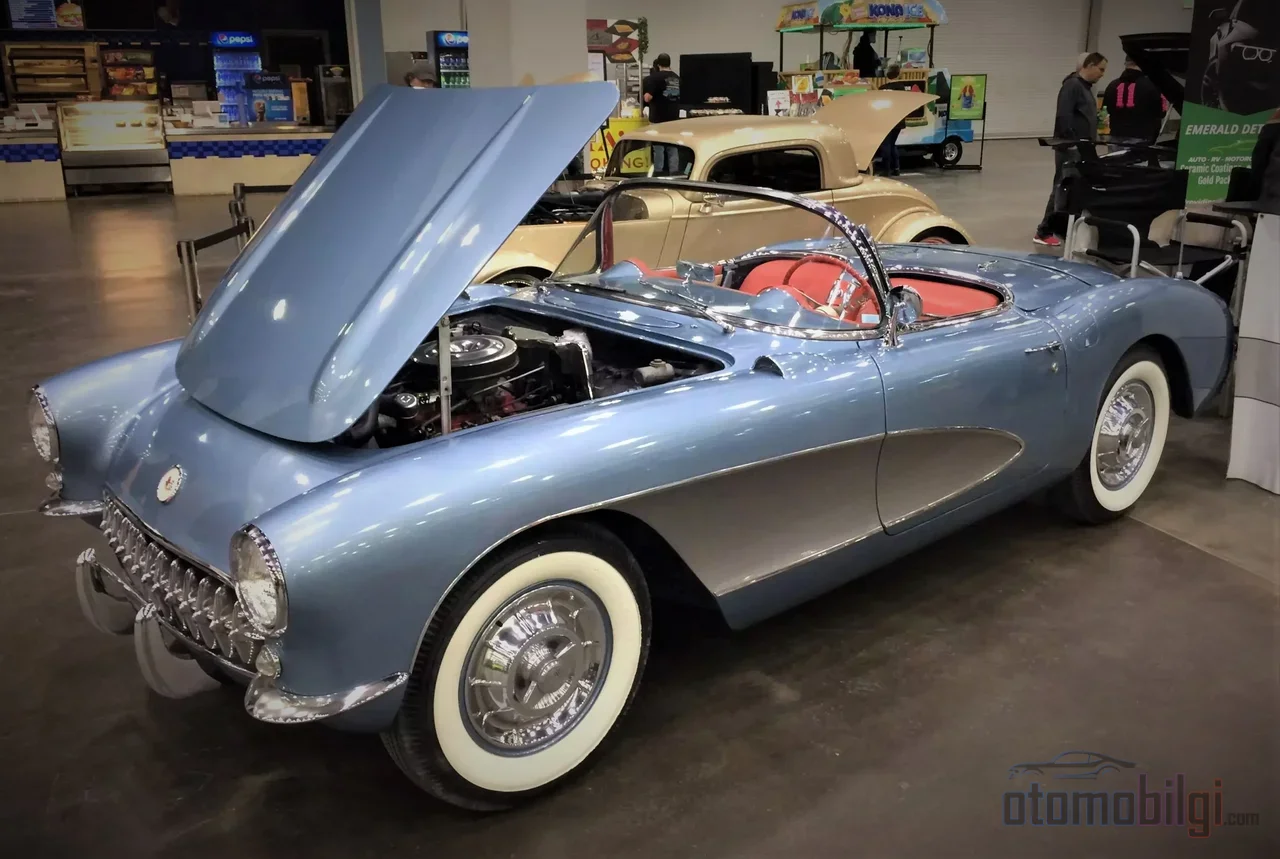
The result? In 1957 sales rose by 83 percent to reach 6,339. In the same year the 283 cubic-inch V8 was producing 290 hp with an advertised claim of 1 hp per cubic inch thanks to the optional Rochester fuel injection - and let's add this too: whether this power was deliberately understated or overstated due to insurance and racing advantages is still debated in the automotive community today. By 1962 the 327 cubic-inch V8 could reach up to 360 hp; this is the fastest Corvette of that era, and the same year marked the closing of a period that would last until 2005: solid rear axles and pop-up headlights were used for the last time. The C1 generation went down in history with a total production of 69,015 units . The most expensive example of this first generation found a buyer at an auction in 2021 for 825,000 dollars.
Sting Ray: The Sting That Settled on the Corvette's Back
Now for the most beautiful part of the story. The C2 Sting Ray, which arrived in 1963, gave the Corvette that line we still spin on the dance floor today. The origin of the name is a pure design story: GM design chief Bill Mitchell bought the mule car used by Zora Duntov in the Sebring races, had it re-bodied, and named it "Sting Ray." This car's origins dated back to Mitchell's 1959 XP-87 concept racer.
And there is also a genius to the story: the first hand sketch of the design came from a young draftsman who was then 19 years old , Peter Brock. Brock's sketch waited six years, then matured under Mitchell's direction through Larry Shinoda's hands and reached the production line in 1963. That generation's signature was the famous split-window design with the rear window divided in two - it was made for only one year, but today it is remembered in Corvette history as the car that "changed the course." Do you think a design being talked about for 60 years is an ordinary achievement?
Corvette in Popular Culture: Route 66 and Beyond
If a car becomes an icon, it surely also strolls across the screen. C1 Corvettes appeared in the "Route 66" TV series broadcast between 1960-64 and fit perfectly with the image of free roads and open horizons. The name Corvette was already derived from fast and agile small warships - so even the name evoked adventure. Over time it became synonymous with "freedom and adventure"; today it is widely known as "America's Sports Car."
Let's clarify one distinction, because there's an urban legend that has leaked onto the internet: the Corvette has no direct connection to James Dean. James Dean lost his life in 1955, at the age of 24, in California near Cholame while driving a Porsche - there is no story linking him to a Corvette. The Corvette's famous anchor in popular culture is not James Dean, but productions like "Route 66". The C3 generation, meanwhile, remained in production from 1968 to 1982 - becoming the longest-lived Corvette generation - and it cemented its iconic status by appearing in countless films during this period.
Generation by Generation Corvette: From C1 to C8
Going through all eight generations one by one is a topic for another article, but a table makes our job easier for seeing the main line:
| Generation | Years | Why Is It Important? |
|---|---|---|
| C1 | 1953-1962 | The first Corvette with a fiberglass body; it came to life with the V8 and Duntov |
| C2 | 1963-1967 | The Sting Ray line and the famous 1963 split-window |
| C3 | 1968-1982 | The generation that remained in production the longest; cultural icon status |
| C8 | 2020- | The first rear-engined Corvette; a challenge to European rivals |
The Big Change in 2020: Why Did the Corvette Become Rear-Engined?
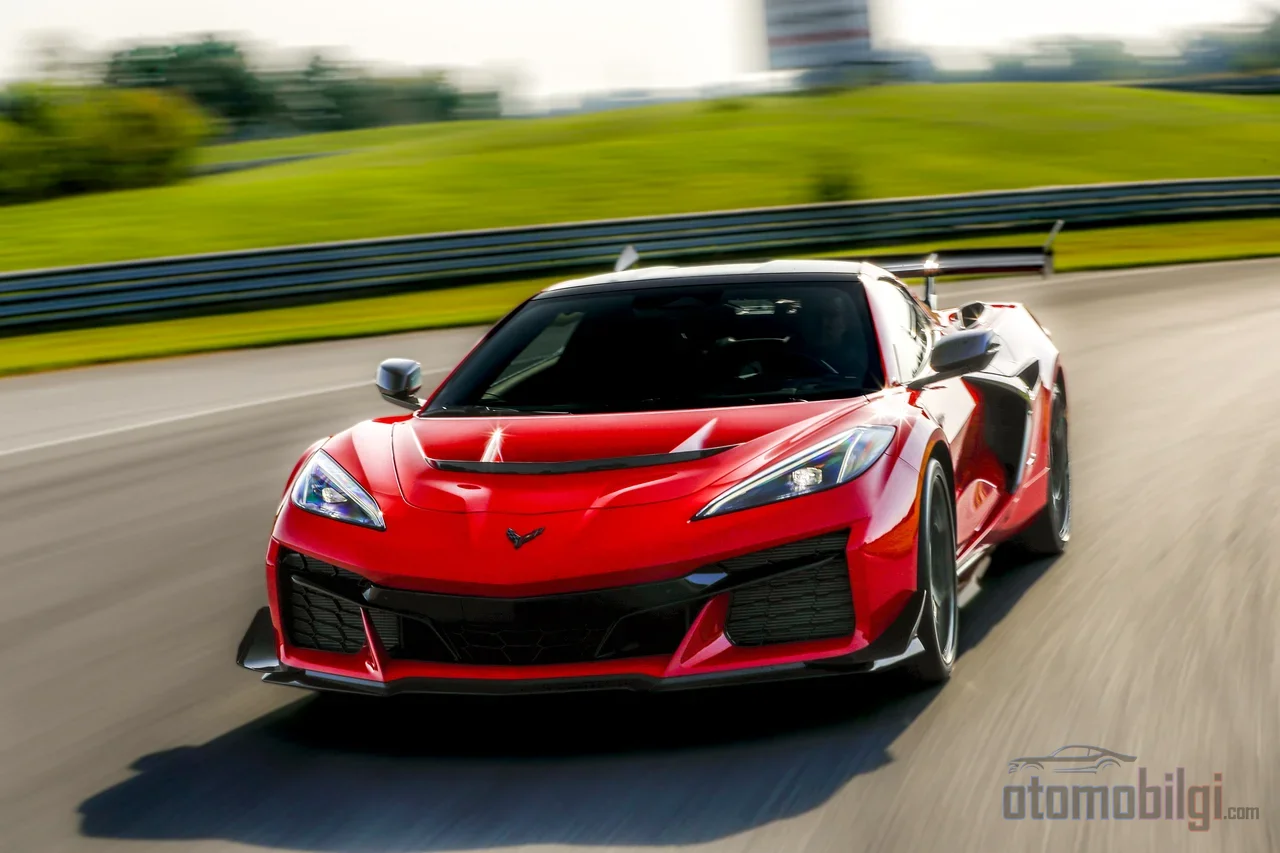
Would a car that has kept its engine at the front for 70 years suddenly move the engine behind the passenger? With the 2020 model year, the C8 did exactly that: the first rear mid-engine Corvette. This transition is described as the most significant engineering change in the history of the American icon, and its purpose is clear - to position the Corvette in the same league as Europe's mid-engine rivals. With the engine in the middle, traction, braking, and balance improve; with a simple analogy, it's like a climber hanging their heavy backpack in the middle of their back: the load is balanced, and corners are no longer enemies but friends.
The transition, of course, did not go without debate. Some enthusiasts argued that the Porsche 911 is more iconic in design and that the C8 shares little with previous Corvettes. In comparison tests, however, the picture is interesting: while the 911 stands out in driving experience scores, the Corvette shines on the value side with its powerful engine and price/performance balance. So you don't have to look like them to be a rival to Europe - you just need to be fast and reasonably priced.
In Production for 70 Years: What Is the Secret of This Continuity?
The Corvette's rise to icon status has three pillars: continuously evolving design, uninterrupted performance innovation, and a substantial heritage along with a motorsport culture. No generation was a copy of the previous one; each was rewritten with the racing data, materials, and tastes of its era. Today, the lineup still carries the Corvette's classic performance names: Stingray, Grand Sport, Z06 and ZR1. Not bad for a car that was fighting for survival as a fiberglass prototype in 1953, right?
The title of longest-running American sports car is no exaggeration either; in its report on the switch to mid-engine, NBC referred to the Corvette with exactly this title. Official manufacturer sources use the same formula. In debates over continuous production, some even claim it is the longest-produced vehicle in the USA, even in the world - this debate flares up in forums, but "longest-running American sports car" is the most solid and widely accepted description. We don't know which generation will be added to this story in the next 70 years, but one thing is clear: this car has refused to remain a showpiece.
Sources
- Chevrolet Corvette (C1) - Wikipedia
- Chevrolet Corvette - Wikipedia
- Chevrolet Corvette (C8) - Wikipedia
- Zora Arkus-Duntov - National Corvette Museum
- Bill Mitchell - National Corvette Museum
- Chevy's Legacy: Iconic Corvette - Chevrolet.com
- Corvette: Stingray, Grand Sport, Z06 & ZR1 - Chevrolet.com
- The Corvette - America's longest-running sports car - NBC News
- The Chevrolet Corvette's Complete History, From C1 to C8 - Car and Driver
- Column: Without Bill Mitchell, the Chevrolet Corvette - Classic Motorsports
- Chevrolet Corvette vs Porsche 911 - Edmunds
- 2026 Chevrolet Corvette Mid-Engine Features - Chevrolet of Wooster
- Death of James Dean - Wikipedia