How Was the Lamborghini Miura, the Mother of Supercars, Born?
Share This Page
The Lamborghini Miura, introduced in Geneva in 1966, is considered the world's first supercar. It placed its V12 engine transversely behind the driver and was the first to apply today's super sports car formula (mid-engine, low body, radical design). Between 1966 and 1973, a total of 763 units were produced, and the word "supercar" entered automotive literature with this vehicle.
Highlights
- Its bare chassis was unveiled at the Turin Motor Show on November 3, 1965; it took orders without a body.
- 3,929 cc V12, mounted transversely at the rear - a first in a series-production road car.
- Top speed 262 km/h, 0-100 km/h in 6.3 seconds - the fastest series of its era.
- Total 763 Miuras: 265 P400, 338 P400 S, 150 P400 SV.
- The orange Miura in the opening of the 1969 film The Italian Job was found 50 years later and restored.
Imagine this: every super sports car you see today uses pretty much the same recipe. Engine at the rear, body hugging the ground, design bold enough to make you raise your eyebrows. Do you know who first wrote this recipe? A tractor manufacturer. And the initial motivation was actually a grudge. This is exactly where the Miura's story begins, at the moment a door slams.
The Famous Feud Between a Tractor Manufacturer and Enzo Ferrari: The Birth Story of the Miura
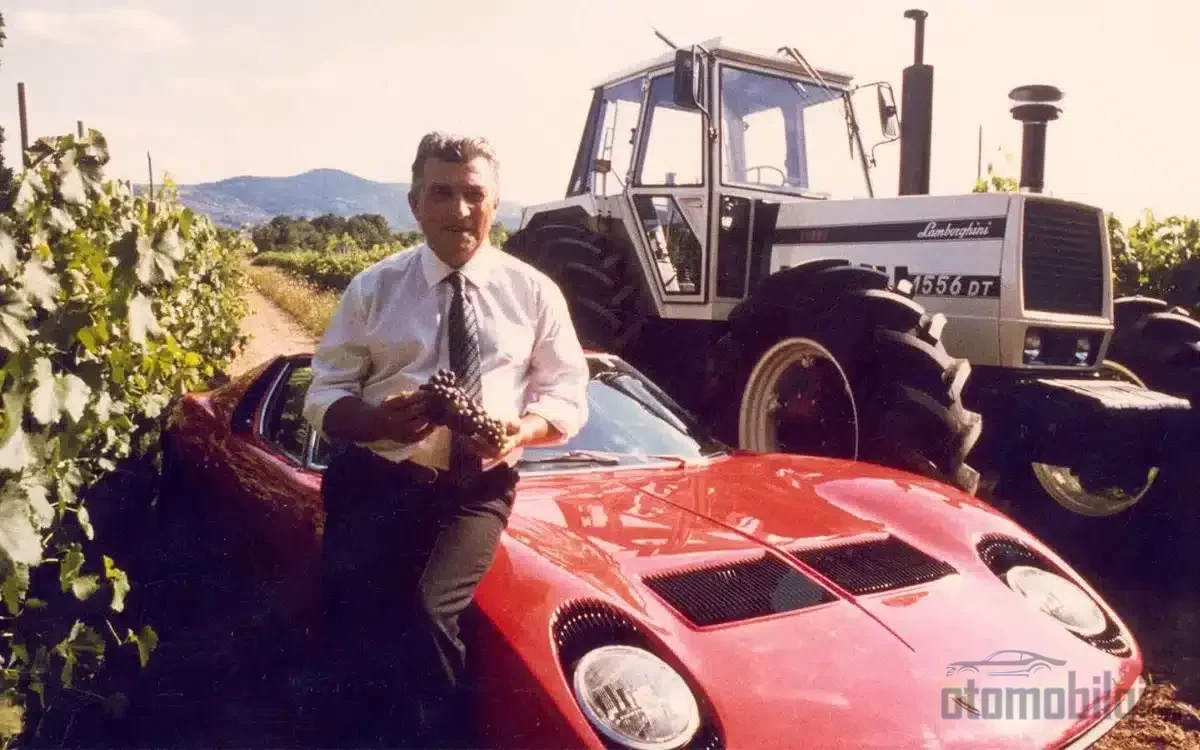
Ferruccio Lamborghini was one of Italy's successful tractor manufacturers in the 1960s. In his spare time, he drove Ferraris, but one problem constantly bothered him: the clutch. Ferruccio went all the way to Maranello with a proposed solution and met with Enzo Ferrari. According to legend, Enzo's answer was short and brutal: "Stop telling me how to build cars, you stick to building tractors."
Those words changed automotive history. Ferruccio founded Automobili Lamborghini in 1963; in an incredible four months, a small factory got up and running in Sant'Agata, and the first model, 350 GT, was unveiled at the 1964 Turin Motor Show. A brand that sold 120 units in two years was now being taken seriously. Ferruccio's famous words also sum up the story:
I had mechanics in my blood, and I knew I could beat Ferrari.
Luck met with fired Ferrari engineers
The interesting thing is that Lamborghini's incubation period coincided exactly with Ferrari's internal crisis. Around 1961, five key figures, including chief engineer Carlo Chiti and Giotto Bizzarrini, had been fired from Maranello for opposing factory management. These men had founded their own design office called ATS. Ferruccio received support for the 350 GT from precisely these former Ferrari engineers. In other words, the tractor maker's first car actually came from the hands of minds cast out of Ferrari. That's fate for you.
The Young Engineers' Secret Project: The Mid-Engine Revolution
Now let's get to the sweetest part of the story. Ferruccio didn't initially trust the two young men leading the project very much. Gian Paolo Dallara and Paolo Stanzani secretly developed a radical prototype despite their boss. Consider Dallara: while engineering the Miura, he was only 27 years old. Who would allow an intern to take on this much responsibility today, right?
The essence of the revolution was this: 3,929 cc V12 engine was mounted transversely (that is, transverse) behind the driver. This idea, surprisingly, was inspired by the Mini - the layout of combining a small city car's engine and gearbox in a single block was being scaled up for . The Miura, which combined the engine with the gearbox and differential as a single unit, became the first high-performance series-production road car with a mid-mounted engine and rear-wheel drive. Today, every supercar from Ferrari to McLaren uses this formula. They all follow the path the Miura opened.
Ferruccio's doubt melted away with the visitors' enthusiasm. When the bare chassis November 3, 1965 was exhibited at the Turin Motor Show - yes, it had no body yet, only a skeleton - it received such great interest from the press and visitors that it even overshadowed the De Tomaso Vallelunga displayed next to it. Orders began to arrive before the body was even drawn. Between 1966 and 1967, five prototypes numbered 0502, 0862, 0706 and so on were produced, and series production was reached.
Marcello Gandini and the Bertone Body: The Secret of the Eyelash Headlights
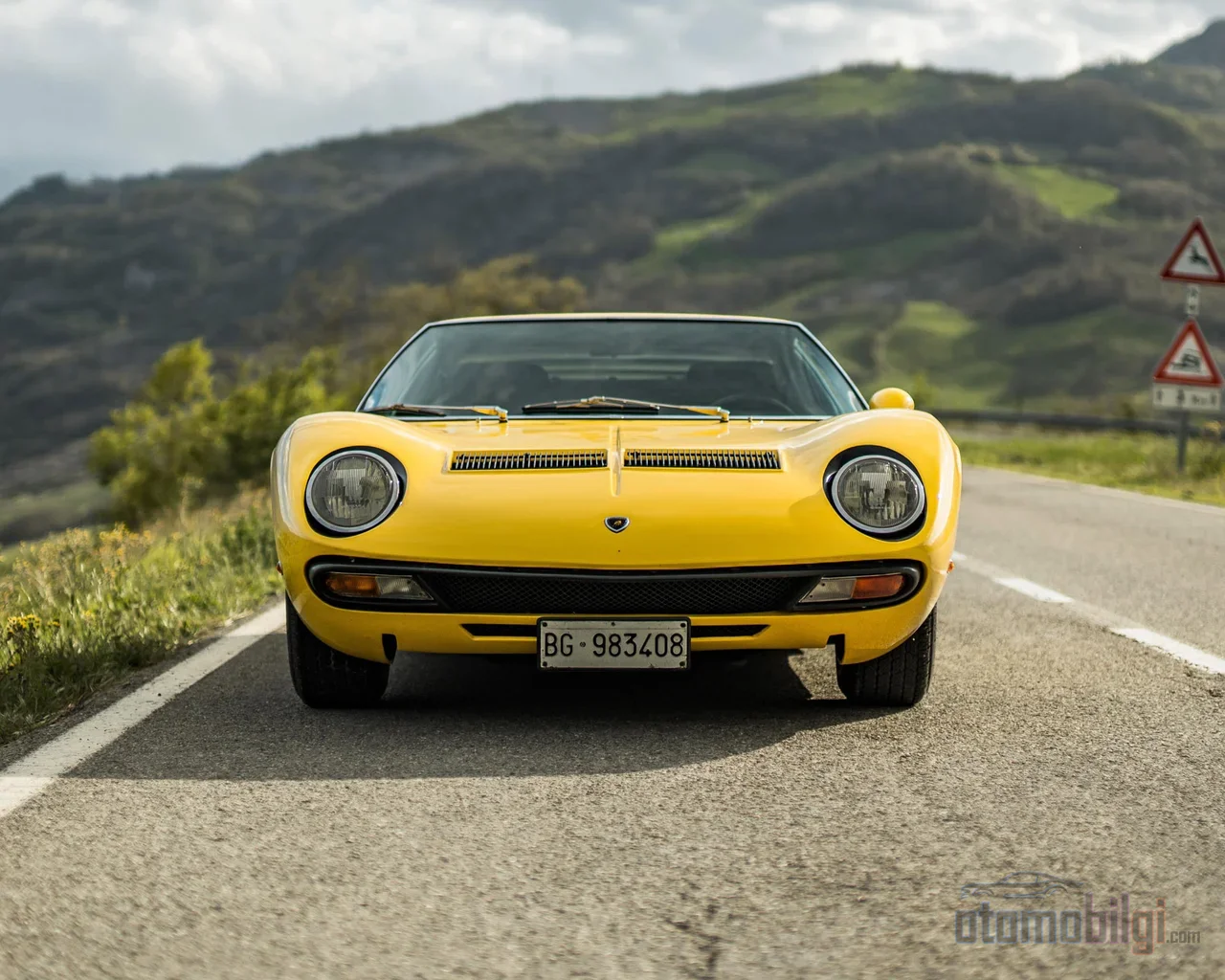
The engineering was perfect, but what truly made the car legendary was the body. The body was built at Bertone, and the man sitting at the design table was the very young Marcello Gandini. Gandini's drawn form was so low, so sharp and organic that it behaved like a child marveling at the cars of the era: the long, pointed front hood made the mechanical heart we just mentioned almost invisible.
But what were those famous "eyelashes"? The story of those graphic details emerging from beneath the pop-up headlights and framing the front is one of my favorite anecdotes in car design. Because despite all those romantic interpretations, the real purpose was very practical: the headlights Fiat 850 were taken from (the Fiat Spider), and Gandini drew those curvy grille elements to mask the standard Fiat headlights. Sometimes history is born from a craftsman's elegant solution. Although today some still find those headlights "weird," according to the majority those eyelashes are one of the most recognizable faces of car design.
The first public showing was March 10, 1966 at the Geneva Motor Show. The press realized it was redefining the idea of the "high-performance road car" and used the term "supercar" for the first time for the Miura. The word entered our language that day.
Production Years and Versions: 763 Miuras from P400 to SV
The Miura was produced from 1966 to 1973 and sold in three main versions. We can summarize the numbers as follows:
| Version | Production Period | Units Produced | Notable Feature |
|---|---|---|---|
| P400 | 1966-1968 | 265 (275 in some records) | First series; 262 km/h top speed |
| P400 S | 1969-1970 | 338 | Improved equipment, the most produced |
| P400 SV | 1971-1973 | 150 | Spinto Veloce: the final and most mature version |
The total figure fluctuates between 763 and 764; pinning down the exact count is difficult even for collectors. But the wildest stat is the performance: the Miura, 262 km/h top speed and 6.3-second 0-100 km/h time made it the fastest series-production car of its era. Imagine that in the '60s - in Italy, an engineer who had wrecked a tractor just the day before founded a new brand, and the speed record is broken right here. Would you have gone crazy if you were in their shoes? I would have gone crazy.
The end of the story, meanwhile, is bittersweet: production came to an end to make way for the Countach. The oil crisis shrank the supercar market by 80% in a single year, and Ferruccio was forced to sell his company. But the Miura had already made its mark; it kept coming back around.
What Happened to the Orange Miura in The Italian Job?
The moment that carried the Miura to the peak of popular culture is, without question, the opening scene of The Italian Job(1969). An orange Miura P400 glides onto the screen over the Alps at the Grand St. Bernard Pass on the Swiss-Italian border, and to the tune of a roaring V12 it delivers a gospel of Italian road-craft. The film stars Michael Caine; and at the wheel, as per the plot that the car was thought to have plunged off a cliff and been destroyed, is the actor Rossano Brazzi himself. Yes, not a stuntman - he was really driving a real Miura.
Here is where the best part of the story begins: we thought the car had been dead for years. That Miura was identified as chassis no. 3586 and Lamborghini officially confirmed the car's identity 50 years later. Then the factory's restoration team, Polo Storico, stepped in and brought the car back to life. It had only covered 11,800 miles . So the orange angel leaping through those Alpine bends was alive - just a little sulky and subdued. Along with the top-speed emphasis of around 170 mph in the opening scene, this car's immortality is now documented.
The Miura Legacy: The Grandfather of Supercars
The reason the Miura is called "the world's first supercar" and "the grandfather of supercars" today is right out in the open: the mid-engine layout became the standard for every performance car that followed. In every press release introducing a new model, you read that the engine has been "placed behind the driver," just as the Miura did. They are all students of the same school.
The direct continuation of this philosophy was the Countach. Instead of mounting the engine transversely, it mounted it longitudinally (the "LP" in the LP400's name stands for longitudinal rear) A 4-liter, 375-horsepower V12 Countach, over 2,000 units were produced in 16 years, and with its doors that opened upward like wings, it created the next generation of icons. The line stretching from the Miura to the Countach is the very identity of Lamborghini. To some enthusiasts, the Miura is still "the most beautiful car ever made" - whether you agree with that claim is up to you, but the claim has plenty of defenders.
And the story isn't over: Miura's 60th year was celebrated by the factory with engineering analyses and design reviews, and the brand's official social media accounts also joined the 60th anniversary celebrations. If a car is still this talked-about at 60 years old, there's no need to debate the definition of the word "cult."
Conclusion: How an Insult Becomes a Legend
A man who told someone selling tractors to "keep making tractors" may have made one of history's greatest marketing blunders. Ferruccio turned that insult into motivation; a 27-year-old engineer quietly built the revolution without caring about his boss's skepticism; a young draftsman changed the face of car design with a detail he drew to disguise a Fiat headlight. The Miura is not just a car - it is proof that stubbornness, youth, and good ideas can win. I should also remind you that Ferrari never spoke to Ferruccio again. Perhaps what hurt Enzo wasn't the argument he lost, but the applause that orange ghost behind him drew from the crowd.
Sources
- Lamborghini History - Miura
- Lamborghini Miura - Wikipedia
- The epic story behind the Ferrari and Lamborghini rivalry - Gran Turismo Events
- History - Ferruccio Lamborghini Museum
- How Giampaolo Dallara Engineered the Lamborghini Miura at Just 27 - Road & Track
- Lamborghini Miura 60th Anniversary: Engineering Deep Dive - Lambocars
- Lamborghini Miura - The World's First Supercar - Sports Car Digest
- 50 years later, Lamborghini confirms the identity of the Italian Job Miura - Hagerty
- Lamborghini Miura from The Italian Job Restored by Polo Storico - Car and Driver
- Original Italian Job Lamborghini Miura up for sale - Evo
- The Italian Job - Wikipedia
- Marcello Gandini - Wikipedia
- Marcello Gandini: The designer of the future - Chapter 2
- Lamborghini Miura: A Guide To Every Version - Car Throttle
- Ferruccio Lamborghini - Wikipedia