VW T1 Microbus: The Symbol of Freedom on Wheels
Share This Page
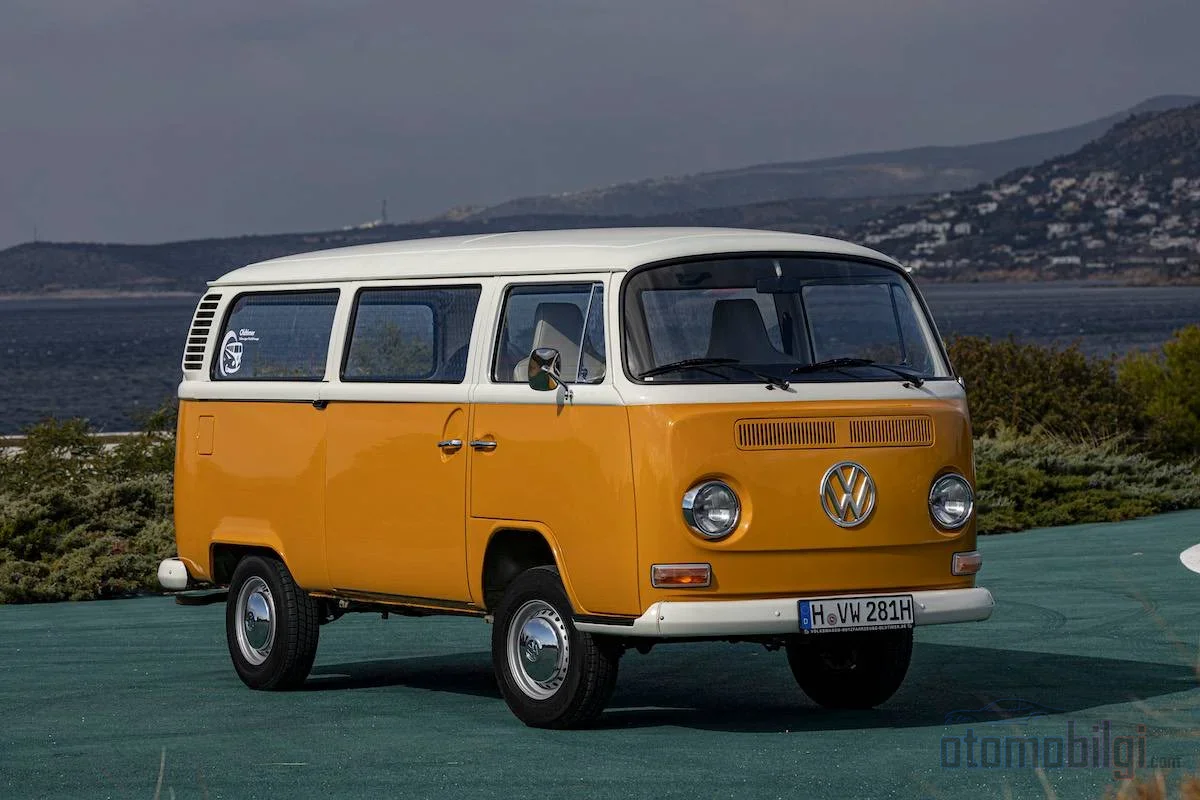
The VW T1 Microbus is Volkswagen's second mass-produced model, entering production in 1950 and becoming one of the most beloved figures in commercial vehicle history with its rear-engined architecture. Over time it became far more than a work vehicle: the "hippie bus" that won the hearts of the hippie movement, a symbol of surf culture, and worldwide the wheeled emblem of freedom. So how did an ordinary panel van become so iconic?
Highlights
- The first T1 rolled off the production line on March 8, 1950; in its first year 9,541 units were produced.
- The design idea is based on a sketch on a piece of paper from 1947 - that sketch is exhibited in a museum today.
- Its most luxurious version, the Samba, with its 21 or 23 windows, commands six-figure prices today.
- Production in Brazil ended on December 31, 2013; a 600-unit Last Edition was produced as a farewell.
- In total, more than 12.5 million VW Buses were produced.
A Legend Born from a Piece of Paper: Ben Pon's Sketch
It all began in 1946. The Dutch Volkswagen importer Ben Pon saw an interesting vehicle when visiting the Wolfsburg factory: a flat-platform work vehicle carrying parts around the workshop, based on the Beetle's chassis. Its name: Plattenwagen. Pon immediately had that famous thought: "A better one can be made from this."
And he did! In his notebook dated April 23, 1947, he drew a simple sketch: driver at the very front, engine at the rear, and an incredible cargo area in the middle. On the paper there was also a note of 690 kg load capacity. That was the van's first sketch. Imagine, one of the most recognizable silhouettes in world automotive history was born on a notebook page - that page is now exhibited in the Rijksmuseum. The fact that a car's design sketch is in an art museum is, in my view, proof of how special this story is.
But things didn't get going right away. The factory was humming along with Beetle production and no room could be made for the new vehicle. Once capacity opened up, the prototype known internally as Type 29 was produced in just three months. When it became clear that the Type 1 chassis was too weak for the job, a ladder chassis with unit body was adopted. CEO Heinz Nordhoff approved the van for production on May 19, 1949, the first production vehicle was introduced on November 12, 1949, and according to public records the first T1 rolled off the line on March 8, 1950. In the first year there were only Kombi and Commercial models; the Microbus joined the family in May 1950, and the Deluxe Microbus in June 1951.
The Beetle's Sibling: The Genius of Rear-Engined Architecture
Have you ever wondered why the T1 was called the "Type 2"? It's very simple: it was Volkswagen's second vehicle type after the Beetle (Type 1). The most valuable inheritance from its sibling was the air-cooled flat-four engine sitting at the rear. Think of it this way: with the engine at the rear, the front is left entirely as loading space, and since the driver sits at the very front, space efficiency is incredible. This layout is called "forward-control," and the T1 never abandoned it for its first 40 years.
How does it work technically? In the first model, an engine with 1,131 cc displacement, 25 hp air-cooled boxer engine. You might ask, "How does such a heavy vehicle move with just 25 horsepower?" The answer lies in the reduction gear taken from the Kübelwagen: thanks to that gear, the 1.5-ton van does its job surprisingly well. In 1953 the engine was raised to 1,192 cc and 30 PS. The wheelbase is also the same as the Beetle: 2.40 meters.
There is also an aerodynamic detail that is truly impressive. The first prototypes had a drag coefficient (Cd) of 0.75- meaning they moved along like a brick. Work was done in the wind tunnel of Braunschweig Technical University, and thanks to the "vee" split windshield and roofline, the Cd value was brought down to 0.44. That is even below the Beetle's 0.48! That famous split windshield gave the first generation, produced between 1950–67, the nickname "Splittie" or "Split". Vehicles made before 1955, on the other hand, are known among fans as "Barndoor" because of the massive rear engine lid.
A Version for Every Job: From Vans to Ambulances
One of the secrets of the T1's success is its broad family that answers every need. Loved as the "Bus" in the USA, the "Camper" in England, and the "Bulli" in Germany, its official names are Transporter, Kombi and Microbus. Looking at the variants produced, you understand what I mean:
- Panel van and high-roof van
- Kombi and Bus, plus the luxury Samba-Bus
- Single or double cab pick-up ("Doka" in fans' lingo)
- Westfalia camper van - the grandmother of the modern "van life" movement
- Ambulance, hearse and police van
Do you know what the most unique version is? In 1955, 30 units of rail draisine were produced for the Deutsche Bundesbahn - in other words, a Bus that runs on rails! There was a change on the production side too: the vehicle, produced in Wolfsburg between 1950–56, began rolling out from the newly opened Hannover Transporter factory from 1956 onward. rail draisine - in other words, a Bus that runs on rails! There was a change on the production side too: the vehicle, produced in Wolfsburg between 1950-56, began rolling out from the newly opened Hannover Transporter factory from 1956 onward.
Samba: The Pearl of the T1 and Its Eye-Catching 21-Window Detail
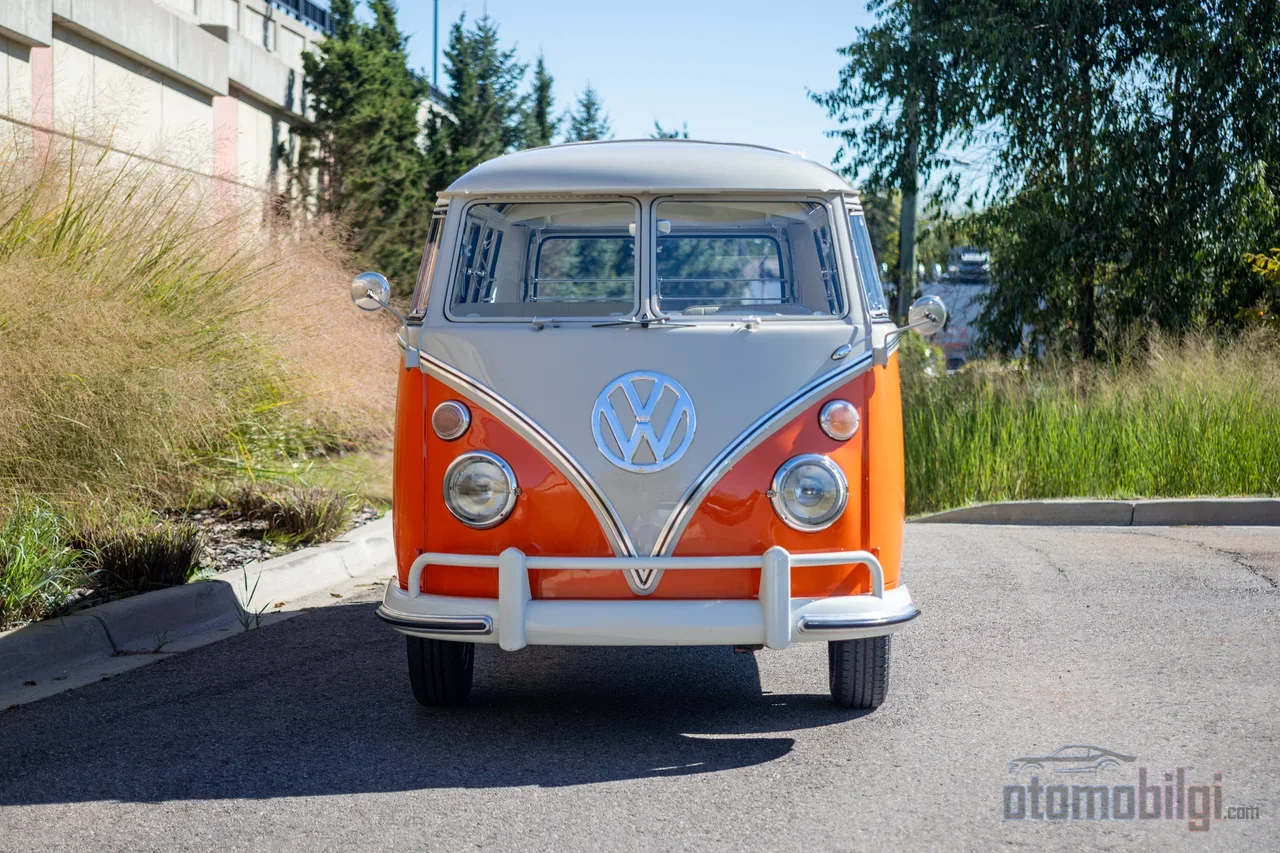
When model names are discussed in the T1 world, the window count matters a lot. North American enthusiasts identify the vehicles by their window count: 11, 13, 15, 21, 23 windows. And the top-of-the-line model is the Samba - officially the Kleinbus Sonderausführung. Introduced in 1951, this masterpiece of elegance, with its body that initially had 23 and later 21 windows, its roof windows, cloth sunroof panels and two-tone paint, is practically a rolling panoramic sightseeing train. In fact, that was exactly the design goal: it was conceived for Alpine tours, so that passengers could enjoy the view from every direction. In the US market it was sold as the Microbus Deluxe and Sunroof Deluxe.
Samba production ended with the arrival of the T2, but its legend never ended. Today, a Samba in good condition can fetch six-figure prices on the collector market. Not bad for a vehicle long assumed to have been hauling cargo, right?
Hippies, Surfers and Woodstock: The Birth of a Symbol of Freedom
Here comes the most colorful part of the story. The T1 became the undisputed icon of the 1960s counterculture movement. That's why it earned the nicknames "hippie van" and "hippie bus." Owners painted peace signs on their vehicles, had colorful murals done, and replaced the VW logo on the front with a peace symbol. A simple but important question: why a pickup truck? When you think about it, the answer actually makes sense - an affordably priced, reliable vehicle with a place to sleep in the back that wasn't seen as a status symbol. Wasn't that exactly what the people who rejected the system were looking for? It's even said that the T1 "became popular among those who rejected the system" and thus earned the title "hippie bus."
There's another front as well: Southern California surf culture. For surfers who loaded their wooden boards in the back and headed to the beach, the T1 became a mobile base. And of course there's the music... One of the iconic images of Woodstock is those big-bodied, painted Buses. Its story is rich in cinema too: Arlo Guthrie's microbus in Alice's Restaurant, the yellow van setting off on a journey with its family in Little Miss Sunshine and the Herbie films. It even Futurama has a guest appearance! And from the toy world to pop culture, Hot Wheels left its mark with die-cast Panel Bus models produced under licenses such as Grateful Dead and The Muppets.
Chicken Tax: The Chicken Tax That Ended the US Market
Most people don't know why the T1's US adventure ended early, and the story is somewhat absurd: the chicken wars! In the 1960s, commercial tension arose between the US and Europe over chicken exports, and in 1964 President Johnson imposed a 25% tax on imported light trucks. This tax essentially devastated imports of German-made panel vans and pickups. The result? After 1971 Type 2 commercial vans and pickups practically disappeared from the US market. Interestingly, that famous "Chicken Tax" is still in effect today. Who would have guessed that a chicken dispute would affect an automobile market for decades?
A Sixty-Three-Year Production Journey and the Farewell in Brazil
The T1 was phased out of production in Germany at the end of the 1967 model year; in Brazil, it was produced until 1975 , then continued as the "T1.5" until 1996 . But the Bus story didn't end with the T1 - the T2, T3 and further generations followed. In 1990, with the T4, the layout shifted to a front-mounted engine and front-wheel drive, and the "Type 2" name was dropped in favor of "Transporter." To date, more than 12.5 million VW Buses have been produced in total. The comparison with Citroën within this number is also interesting: the French rival's H Van was produced for 34 years between 1947 and 1981 and counts among the first "forward control" vans along with the Type 2 - but no one followed the rear-engine devotion.
The truly emotional finale happened in Brazil. The Brazilian plant, as the world's last facility producing the T2 series, ended its mission on December 31, 2013 due to the country's tightened safety regulations. The last Kombi rolled off the line on December 20, 2013. For the farewell, 600 units of the "Last Edition" were produced, at approximately $36,000 sold. Thus, the rear-engine VW era stretching back to the 1935 Type 1 prototypes was officially closed. A chapter had ended - but the iconization was complete.
Collectible Value in 2026 and the ID. Buzz Legacy
The T1 is today one of the most beloved figures of the collecting world. Despite being slow and noisy, the Buses from 1950-67 have continued to be loved for years and their values have generally increased. But the market does not always move in one direction: in early 2026, market indicators showed that some T1/Transporter values had lost 25-40% In other words, the classic car market is also volatile - it is worth following current prices before buying. There are currently 21 T1 Microbuses for sale on the market, and a sample listing 89,950 EUR is priced around that figure. Let's not forget that a Samba in good condition speaks of six-figure prices.
So what does the future hold? Volkswagen, ID. Buzz is reinterpreting the Microbus as an electric vehicle. This electric grandchild, introduced in 2025, experienced a production pause in the US market for the 2026 model year - not a cancellation, just on hold. This legacy chain stretching from the T1's 25-horsepower heart to the ID. Buzz's electric motor is proof of how universal a vehicle can be.
Conclusion: Why Is It Still So Beloved?
The story of the T1 reminds us of a truth: iconic status is earned not with speed or power, but with character. A vehicle born from a doodle on a notebook page, hitting the road with 25 horsepower, remaining in production for nearly thirty years, and making its mark on history while hosting hippies and surfers. If you see a T1 at a car museum or a summer festival today, I say stop and take a look - behind it lie 12.5 million vehicles, a dream of freedom across generations, and the genius of a single Dutch importer. If it were you, what would you have drawn on that notebook page?
Sources
- Volkswagen Type 2 - Wikipedia
- How the Volkswagen Bus Became a Symbol of Counterculture - Smithsonian Magazine
- VW bus, icon of counterculture movement, goes into production - History.com
- The History of Volkswagen Commercial Vehicles - Volkswagen Group
- Born a Humble Workhorse, VW's Original Bus (1950-67) Is a Prince Among Collector Cars - Hagerty
- 5 Cars Taking Losses to Start 2026 - Hagerty
- Volkswagen Type 2 Microbus - T1 Market - Classic.com
- VW's ID Buzz Electric Microbus Is Dead for 2026 - MotorTrend
- Volkswagen announces 2026 lineup - VW Media
- End of the road for the VW bus - CBS News
- Celebrating 75 years of the Volkswagen Bus - Retro Rides
- Legendary: VW T1 Samba Bus - DW
- 70 Years of Volkswagen T1 Samba - Secret-Classics
- The Most Famous Volkswagen Buses - Car and Driver
- Driving the Counterculture: Buses, Vans, and Beetles - Bethel Woods Center
- Citroën H Van - Wikipedia
- Model Types: I, II, III, IV. What? - GoWesty
- The Brazilian VW Kombi - vwbusesnbugs.com