Why Was the Bugatti Type 57SC Considered a Work of Art Half a Century Later?
Share This Page
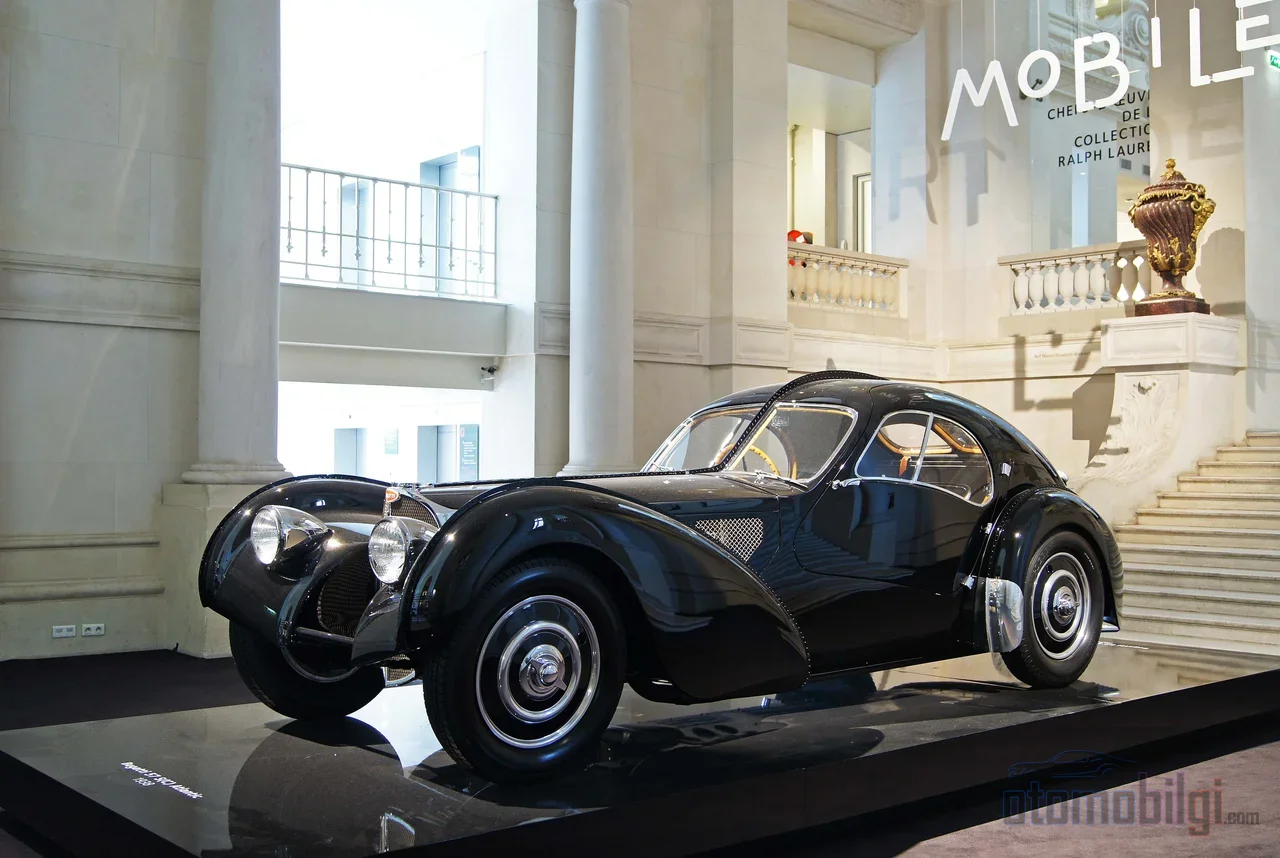
The Bugatti Type 57SC Atlantic is a car of which only four examples were produced between 1936 and 1938, considered the pinnacle of Jean Bugatti's design genius; while it went through a commercially challenging sales process in its day, decades later it became a legend that reached "work of art" status in the automotive world with auction records and world-renowned concours awards. Today only three examples are known to exist, and the fourth, the lost black coupe, stands as the holy grail sought as one of the greatest mysteries in automotive history. So how does a car turn into art after half a century? Let me tell you, because this story is truly crazy.
Highlights
- Total 4 units of the Atlantic were produced; today 3 are known, and the 4th has been missing since 1938.
- SC, surbaissé (lowered chassis) and compresseur (supercharger) are abbreviations of these words.
- The seam along the spine was born from joining a magnesium alloy that could not be welded with approximately 1,200 rivets .
- In 2010, an Atlantic changed hands with a sale that broke the car auction record; according to experts, the lost car's value is over €100 million.
- With its 3.3-liter inline eight-cylinder engine, it could exceed 200 km/h - in the 1930s!
Jean Bugatti's Revolution: One Chassis, Endless Imagination
First, let's refresh a bit of history. Bugatti was founded in 1909 by the Italian-born industrialist Ettore Bugatti, and the brand's principle still gives us goosebumps today: "Nothing is too beautiful, nothing is too expensive." How lovely it sounds, doesn't it? Ettore's son Jean, however, completely transformed the brand's model policy in the 1930s. His idea was a very modern one: instead of dozens of different models, to offer variants derived from a single base model. Type 57 was designed as both a road car and a racing car as the product of this strategy, and was produced in Molsheim, France, from 1934 to 1940. With a production of approximately 800 units, it became one of the brand's most produced models.
There's a hidden code in the naming; let me explain, because it may seem confusing. The letter "S" comes from the French surbaissé, meaning lowered chassis. "C" stands for compresseur, meaning supercharger. When the two combine, SC is formed: a monster that is both low-slung and breathes with the help of pressurized air. While the low-chassis versions of the Type 57 were sold under names like Galibier, Stelvio, Ventoux and Atalante, the Atlantic was born as the most extreme, most daring member of this family.
The Spine Seam Born from the Aérolithe: The Anatomy of Design
The Atlantic's story actually begins with a prototype: Aérolithe, meaning "meteorite". This vehicle was first unveiled at the Paris and London motor shows in 1935, and the world was left utterly speechless - in other words: the moment words ran out. Jean Bugatti had chosen a material from the aviation industry for the body: Elektron alloy, containing 90% magnesium and 10% aluminum. Super light, super strong... but there was a problem: this alloy could not be welded.
So what do you do if you can't weld? You rivet! The body panels were joined with approximately 1,200 rivets joined together, and thus that famous seam running along the car's spine was born. Here's the detail I absolutely love: the production Atlantics were made of more ordinary aluminum and the rivets were actually no longer needed. But Jean Bugatti chose to keep that seam as an aesthetic signature. So that spine line we admire today is an engineering constraint transformed into art. Achim Anscheidt, the current head of Bugatti's design lineage, describes this car as "a design manifesto by Jean Bugatti" and says the riveted aluminum seam is still a signature feature today.
"The Type 57 SC Atlantic is a design manifesto of Jean Bugatti... The riveted aluminum seam remains a signature design feature today."
The other details of the design are equally legendary: the split front hood, the raised seam running all the way to the tail, the six thin exhaust tips completing the rear, and the doors extending up to the roof to make it easier to get in and out of the low coupe. Length is only 3.70 meters - about the size of a hatchback today! The wheels are set apart from the body and the hood is unmanned in length. The inspiration was science fiction and the Art Deco fashion of the era; when you look at the car, you literally see how people of that period imagined the future.
Atlantic in Numbers: Too Good for 1936
As for the technical specs, get ready; because these figures are mind-boggling for the 1930s. The 3.3-liter inline-eight engine produces approximately 200 hp in SC versions, and the car can reach speeds above 200 km/h. To grasp how crazy that is, think of it this way: in an era when horse-drawn carriages still roamed the roads, this car accelerated like a sports aircraft. Fortunately, the brand was also proving its claim on the racing side; Type 57-based cars won the 24 Hours of Le Mans twice, in 1937 and 1939.
And here comes the bittersweet part: the Atlantic was not a race car, but a showpiece, and it seriously struggled to find buyers in its time. So this automobile was brilliant even while it lived, but no one understood it the way it deserved. Those who did understand it were the ones who built the legend afterwards.
The Four Cardinals: Three Known, One Lost Atlantic
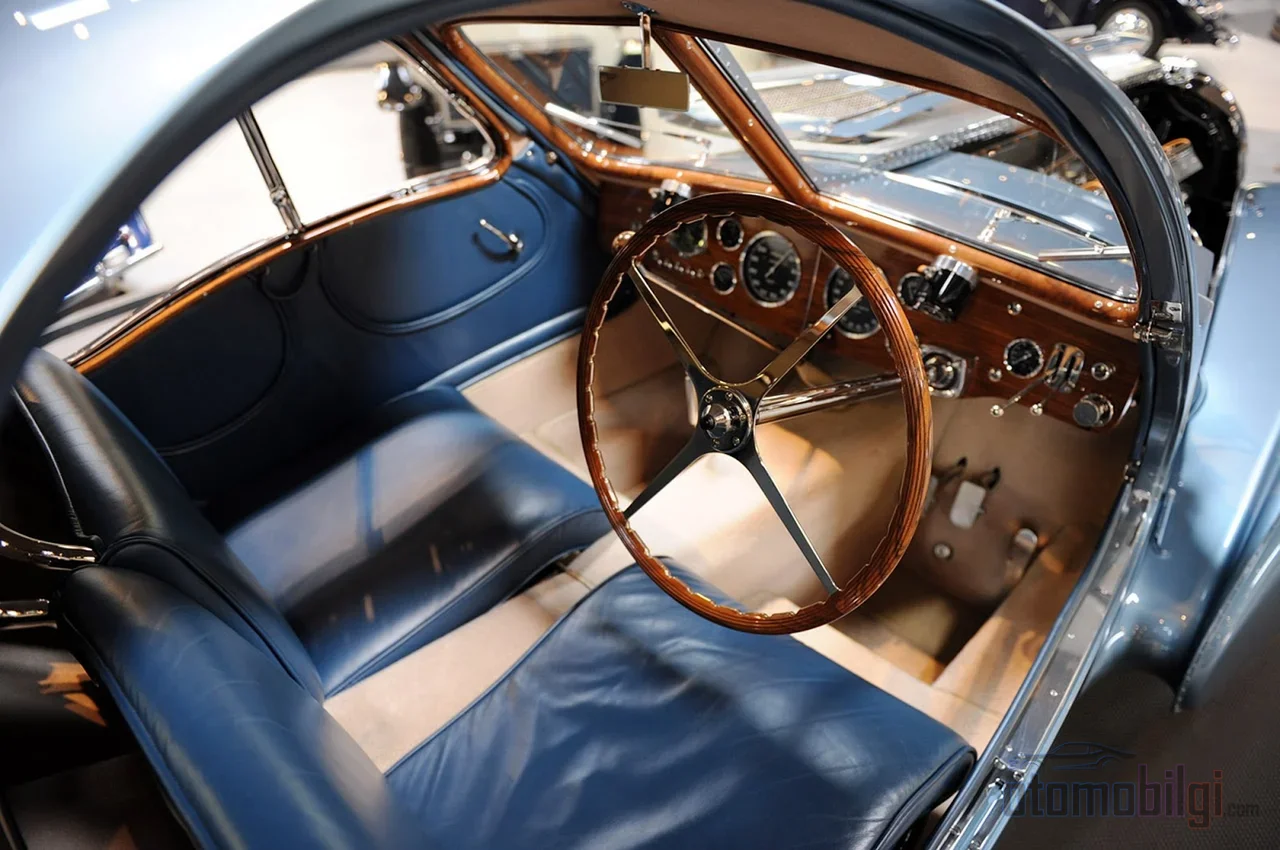
A total of four Atlantics were produced from 1936 to 1938. Bugatti sold only three to customers; the fourth was reserved for Jean Bugatti himself and his racing friends. Each of their stories reads like a film script:
- Rothschild Atlantic: Built without a supercharger in 1936 for the British banker Victor Rothschild, a compressor was added at the factory in 1939, converting it to an SC. After the war, its body was controversially altered at a body shop but was later restored. It passed through legendary names like Briggs Cunningham and Peter Williamson; it won "Best of Show" at the 2017 Chantilly Arts & Elegance and the Peninsula Best of the Best award in 2018.
- La Voiture Noire: The black coupe Jean Bugatti had built for himself. It set world records with Robert Benoist at Montlhéry and was used in brochures and at auto shows. When the German army occupied Alsace, it was intended to be sent to a safe zone, and after 1938 it completely vanished. Its value is estimated at over €100 million.
- The Holzschuh Atlantic: It was delivered to the Frenchman Jacques Holzschuh in October 1936. Its second owner had an accident at a railway crossing; unfortunately, the owner died and the car was almost completely destroyed. Decades later it was revived through a complex restoration, but the engine could not be saved. It was displayed at the 2010 Pebble Beach Concours.
- The Pope Atlantic: It went to the British pilot R.B. Pope in May 1938 and is today in the Ralph Lauren collection. It was named "Best of Show" at the 1990 Pebble Beach and 2013 Villa d'Este concourses - meaning it is a car that won both of the world's most prestigious beauty contests!
Does the Lost Car Really Exist? The Two Faces of the Legend
This is where the story turns into a true detective novel. Experts are divided on the fate of La Voiture Noire. According to one theory, the black coupe and the Holzschuh car destroyed in the accident were actually the same vehicle; in other words, there is no lost Atlantic, and the legend is a misunderstanding. The other theory is more chilling: there were two separate cars, and the black one was hidden in a hangar as the Bugatti family fled to Bordeaux, and it disappeared from there in 1941. According to some accounts, the car had been taken to Nice by Robert Benoist before the war. An interesting clue emerged at the 1951 Paris Motor Show: the plate "57453" appeared on a Type 101 chassis, and that car is on display today at the Mulhouse Automobile Museum. But the vanished black coupe itself still has not been found.
In 2025, "La Voiture Noire has been found" headlines circulated on social media; it was claimed that a clue had been confirmed as the lost car, but these claims were not officially verified, and it was stated that the announcement "could not be made for political reasons." So there is reason to get excited, but nothing is confirmed yet. In my opinion, the mystery of the lost car is fascinating precisely for this reason: perhaps one day it will emerge from a dusty corner of a French hangar, or perhaps it never will. Both possibilities feed the story.
How Was the Status of a Work of Art Built?
Now let's come to the real question: how does a car get declared a "work of art"? The answer lies in the combination of several pieces. First, rarity: only four were made, and one is lost. Second, design: a form drawn by a genius who died at 30 (Jean Bugatti lost his life in 1939 while testing the Type 57C) during a period when Art Deco and science fiction were at their peak. Third, engineering ambition: creating a signature riveted from an alloy that could not be welded. And fourth, time: the world only began to see this car again decades later, on concours lawns and in auction halls, and only then realized its value.
The 2010 sale was the turning point for this: Rothschild Atlantic changed hands for an officially undisclosed but reported figure in the 30-40 million dollar range, exceeding the previous car auction record of 12.7 million dollars. Just imagine an analogy: it is like a painter's breaking the auction record for a painting a hundred years after his death. In the Atlantic's case there is even more than in the painting's - because this painting can still drive on the road!
Today, expert assessments say that a solid Atlantic is worth more than the 30-40 million dollar range as the most valuable historic Bugatti; for the lost car, estimates can stretch beyond 40-100 million dollars. The figures vary depending on the measurement method and assumptions about the car's condition, but the main message is clear: it is very obvious that the market prices this not as a car but as a work of art.
Atlantic in Popular Culture and Modern Bugatti DNA
The Atlantic's legacy lives on not only in auction halls but also on screens. The Bugatti Atlantic Concept appears in video games such as The Crew Motorfest, and design studios are still offering modern interpretations. Bugatti's official channels also emphasize that the Atlantic's design language lives on in the modern brand DNA - being able to still feel that riveted seam motif in today's models is truly impressive.
And in my view, the most touching part of the story is this: the Atlantic is a car that struggled to find a buyer while its creator was alive. Combined with Jean Bugatti's early death, this automobile became a kind of elegy, an unfinished farewell to genius. Perhaps that is exactly why it feels like a "work of art" to us - because true art, too, is often misunderstood in its own time and only discovered later.
Conclusion: Brilliance or Legend?
The story of the Type 57SC Atlantic teaches us two things at once. First, truly pioneering design goes ahead of its time; a car found strange, even unsellable, in 1936 is today considered the world's most valuable automobile. Second, legends need a bit of loss, curiosity, and incompleteness too. If La Voiture Noire had been found, would the story of the four brothers have been carved into our hearts so deeply? I am not sure. If it were up to you, would you want the lost car to be found, or would you prefer it to remain a mystery? I think we should discuss it now and then - this story deserves exactly that.
Sources
- The Bugatti Type 57 SC Atlantic – a style icon (Bugatti Newsroom)
- Bugatti Type 57 SC Atlantic - Photo Gallery, History
- The Bugatti Type 57 SC Atlantic and the mystery of the Black
- Bugatti Type 57 Market
- $30m Bugatti beats car auction record
- 1936 Bugatti 57SC Atlantic Sells for World Record Price
- The Jean Bugatti legacy (Bugatti Newsroom)
- Bugatti Type 57SC Atlantic named world's best car
- 1936 Bugatti Type 57SC Coupe Atlantic Wins Peninsula Best of the Best
- Bugatti Type 57 SC Atlantic "La Voiture Noire" Has Been Found!
- The Lost Holy Grail Of Bugattis Has Been Found
- Bugatti Prices 2026
- The timeless passion for Bugatti racing cars (Bugatti Newsroom)