Would the DeLorean DMC-12 Be Remembered If It Hadn't Been a Time Machine?
Share This Page
No, it most likely would not have been remembered. The DeLorean DMC-12 doesn't resemble any car on our list: It owes its icon status not to its engineering or sales figures, but to a single film and a commercial disaster. Only about 8,975 units of this stainless steel-bodied sports car with gullwing doors were produced between 1981 and 1982 - it sank its own company, then became immortal as Doc Brown's time machine. So does a car have to be good to become a legend, or is it enough to appear in the right film at the right time? Let's tell it from the beginning.
Highlights
- Total production: approximately 8,975 vehicles (December 1980 – December 1982)
- The target price was 12,000 dollars; the actual MSRP started at over 25,000 dollars
- DMC-12 was actually just a pre-production internal code - it was never an official sales name
- The company went bankrupt in 1982; its founder John DeLorean was arrested on drug charges
- Thanks to the movies, an estimated 6,500 DeLoreans were still on the road as of 2015
John DeLorean and the Birth of a Dreamer's Company
At the center of this story is an incredibly colorful man: John Zachary DeLorean. One of General Motors' star engineers and executives, he suddenly resigned in 1973. He wanted to build his own car, his own city, his own legend. In October 1975, the DeLorean Motor Company was founded, and the man set about having his dream car designed.
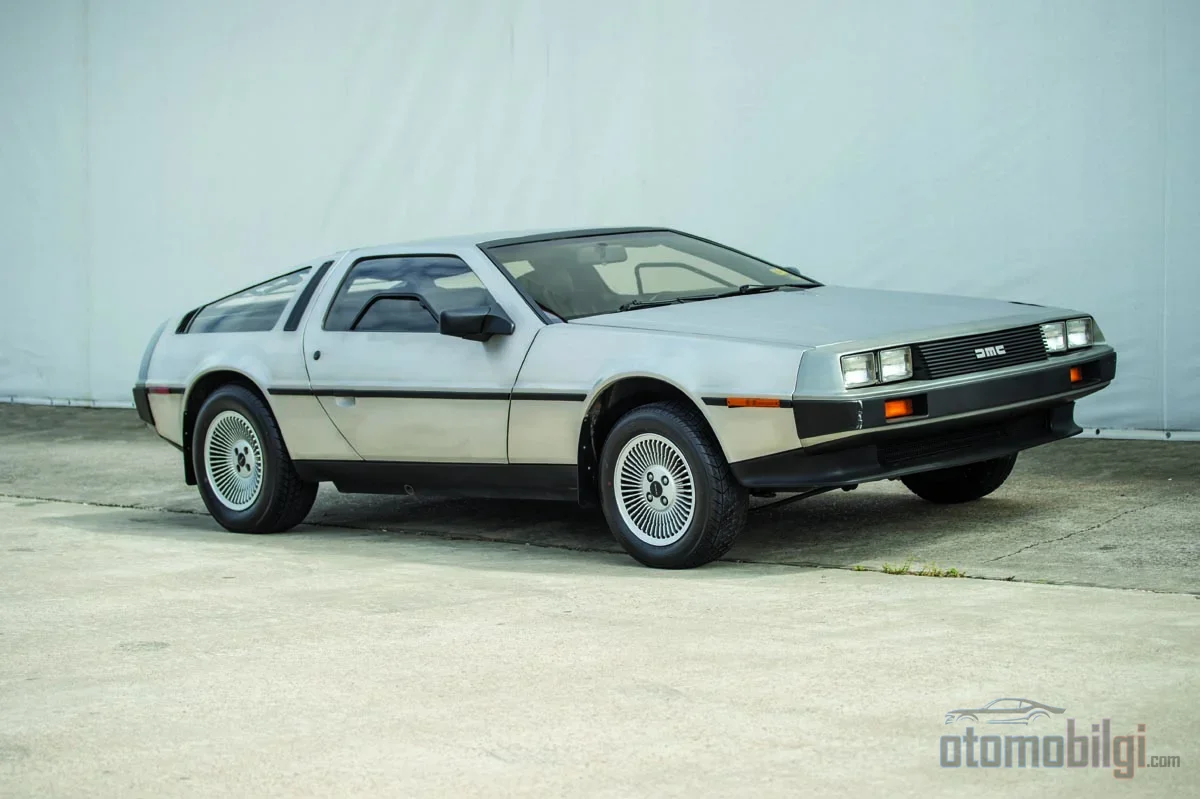
The design chair was taken by: the legendary Italian designer Giorgetto Giugiaro. You may or may not have heard his name before in the 1970 Porsche Tapiro concept - the lines drew inspiration from that concept. The result was a silhouette that, even today, makes you ask "is this from the '80s or from 2080?": brushed stainless steel panels, upward-opening gullwing doors, and a rear-mounted engine.
Here's the interesting part: The car's name is not what you think. "DMC-12" was never a marketing name; it was only the pre-production internal designation, and the number "12" came from the targeted list price of 12,000 dollars. So we're mistaking our favorite movie car's unofficial code name for its real name. Classic.
Why Stainless Steel?
When paint problems arose with the first plastic-bodied prototypes, John DeLorean and chief engineer Bill Collins, inspired by a steel manufacturer that made stainless steel promotional vehicles for Ford in the 1970s, decided on a steel body. The logic was simple: An unpainted, scratch-resistant, self-shining car. Imagine an automobile that never has to wait in line at the body shop. The only problem was that the stainless steel would oil-can in the body shop like a copper pot - every panel had to be flattened by hand.
What's There and What Isn't, Technically?
The body is fiberglass, and underneath lies a steel backbone chassis re-engineered by Colin Chapman's team from Lotus - meaning its basic structure is related to the Lotus Esprit. As for the engine, it's quite an adventure story: First a mid-mounted Wankel rotary was considered, when that was cancelled a Ford Cologne V6 was tried, then the drivetrain of the Citroën CX, and finally the 2.85-liter PRV V6 was decided and the engine was moved to the rear. In short, the engine choice wasn't a plan, it was a domino effect.
| Feature | Value |
|---|---|
| Engine | 2.85 L PRV V6, Bosch K-Jetronic injection |
| Power | 130 hp, 153 lb·ft torque |
| Transmission | 5-speed manual or 3-speed automatic |
| Body | Fiberglass + stainless steel panels |
| 0-60 mph (claimed / measured) | 8.8 sec / 10.5 sec |
| Top speed (claimed / measured) | 130 mph / 110 mph |
| 1981 base MSRP | $25,000 (~$89,000 in 2025) |
But I need to say something here: It wasn't fast. Especially the catalytic converter-equipped US version fell behind the claims in test magazine measurements and received comments saying "not fast for a sports/GT car in this price category." Buying a sports car and hitting 60 mph in 10.5 seconds... it's hard not to glare at anyone who paid that money in 1981. The standard equipment, however, was generous: air conditioning, AM/FM cassette player, power windows, Bridge of Weir leather seats. The only extra-cost option was the $650 automatic transmission.
The Production Nightmare: How Did Everything Go Wrong in Northern Ireland?
The factory was set up in Dunmurry, a few miles from Belfast. Production started in December 1980; the first production car was announced on January 21, 1981. Buyers in the queue before launch were ready to pay above MSRP, and in October 1981 a peak of 720 cars per month was sold. On the surface, everything was great, right?
No. Early production cars required up to 200 hours of extra labor at quality centers before going to dealers. Four recalls were made. The early Ducellier alternator drained the battery with all electrical consumers on - even investors, including TV star Johnny Carson, were left stranded. By the end of 1981, it was switched to Motorola's 90A alternator. Dealers, wary of the company's warranty debts, avoided doing warranty work, and the official service manual was never published. The price of working with a workforce with no experience whatsoever in automobile manufacturing was being paid line by line.
The numbers were brutal: by the end of 1981, 7,500 cars had been produced but only 3,000 of them had been sold. In January 1982, monthly sales dropped to 350. In March 1982, telegrams were sent to 343 dealers, each to take six cars - none responded. By the end of May 1982, production stopped. It had already gone into receivership in February 1982; bankruptcy was declared on October 26, 1982.
The Scandal and the Beginning of the End
The event that hastened the end was the founder himself: John DeLorean was arrested on October 19, 1982, accused of trafficking cocaine to finance the company as a result of an FBI sting. It was days before the bankruptcy. He was eventually acquitted of the charges, but his reputation and his company were buried. Consolidated International bought the unsold and half-finished cars, completing about 100 of them and effectively shutting down production on December 24, 1982. The target price at the time was $12,000; the price tag on 1983 model cars showed $34,000. The math just never added up.
The car could never have sold in the numbers John DeLorean envisioned.
This single sentence, in my opinion, is the most honest summary of the wreckage. Demand didn't depend on one man's dream, it depended on real wallets.
What If Back to the Future Had Never Existed?
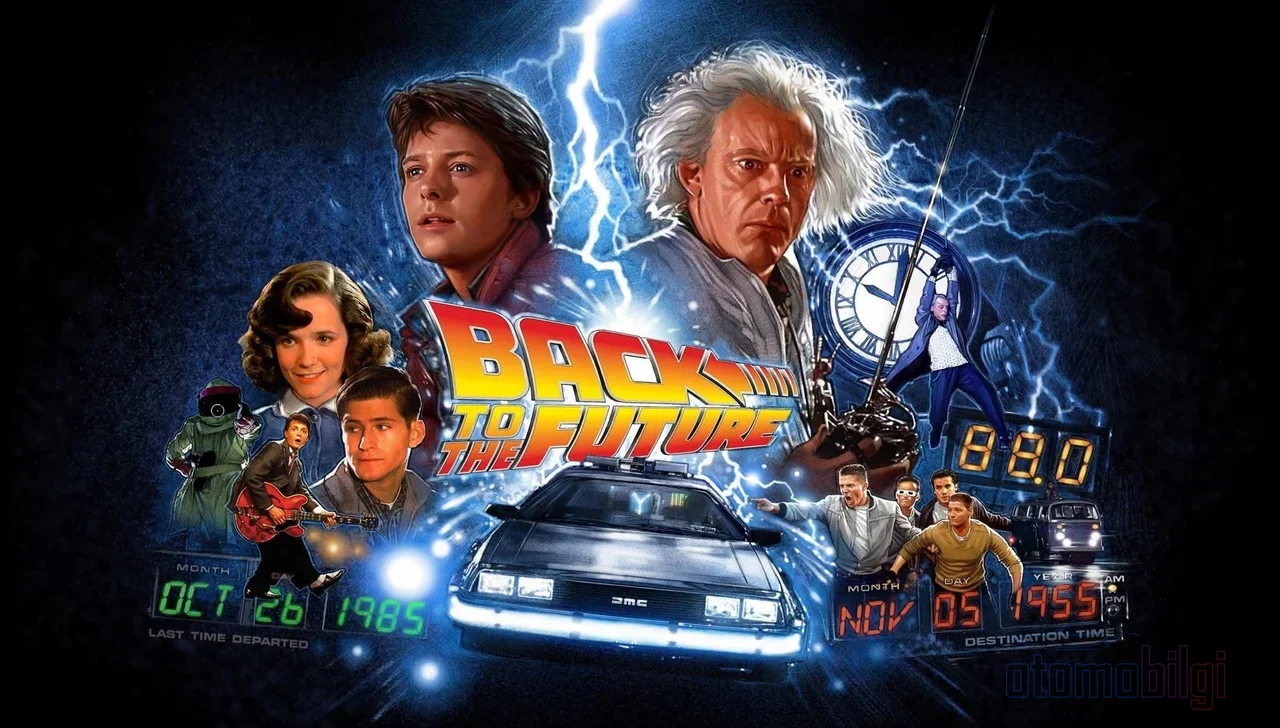
Now we come to the most interesting question about the classics. Models like the Ford Mustang, Mini, and Porsche 911 owe their iconic status to years of sales success, motorsport, and engineering reliability. The DeLorean DMC-12 has no such track record. In fact, quite the opposite: the car itself was a failure, the company was dead, and sales had collapsed. Then in 1985 a time travel film chose this car as its time machine - because they were looking for a vehicle that could carry time travel equipment and, with a few small tweaks, look like it had "come from the future."
You know the outcome: the car was turned by thousands of fans into faithful movie replicas, it gained a worldwide fan base, and a short-lived failure became a global pop icon. Without the films, today we would probably remember this car only on the "projects that inexplicably sank" page of automotive encyclopedias. Can a car's fate depend this much on a single scene? The DMC-12 is proof to everyone who says no.
So Is Iconic Status Born of Design or Film?
Let's be honest here: Giugiaro's lines and the gullwing doors were beautiful, but these features are also regarded as "evolutionary dead ends" - no manufacturer ever widely adopted a stainless steel body or these doors. The comparison is interesting: while the 1980s Porsche 911 is remembered as a symbol of true speed and driving sharpness, the DeLorean still leans on its movie car identity. So the answer seems clear: Design gave it beauty, pop culture gave it immortality. If failure meets the right story, it can turn into permanence - the DMC-12 is the most tangible automotive proof of that.
The Second Life of a Failure
Here's the beautiful part: the story isn't over. An estimated 6,500 examples are still on the road, and the car continues to be mentioned in the "cool vehicles" category alongside pre-964 Porsche 911s and Issigonis Minis. Recently emerged EV conversion kits are turning the old DeLorean into a silent electric car; moreover, current comparisons pitting the DMC-12 against the Porsche 911 Carrera still put it on the table as a rival to be taken seriously. As for the official DeLorean Motor Company, today it positions itself as a "legacy mobility" company, saying the vehicle "never intended to be static."
In fact, when driving a vintage DeLorean in 2026 was attempted, the conclusion was that the car passed the test of time. Let me share a chilling detail too: in 2015 an estimated 6,500 cars were on the road, meaning most of those produced are still alive. So stainless steel really does work - if only the engines had been just as durable.
Final Word: What Makes a Car a Legend?
My answer is now clear: engineering alone or beauty alone is not enough. The DMC-12 shows us that a car lives on if it can turn into a story in people's hearts - even if its factory has closed. A dream that sold poorly, was slow and problematic, but made of stainless steel. What makes us remember it today is that this dream became a time machine. If it were up to you, which failed car would you save?
Sources
- DMC DeLorean
- Back to the Future: The Rise and Fall of the DeLorean Motor Company
- 'Back to the Future' Turned This Failing Car Into a Pop Icon
- DeLorean DMC-12 | Iconic 80s Sports Car
- DeLorean DMC-12
- DeLorean Motor Company
- The Underpowered DeLorean DMC-12 Is Way Cooler as an EV
- What Is Driving a Vintage DeLorean Like in 2026?