Why Hasn't the Porsche 911 Changed in 60 Years?
Share This Page
The Porsche 911's engine is at the rear, because this layout increases traction and braking performance thanks to the weight over the rear-driven axle, and the absence of a front radiator grille gives the car its legendary silhouette. Produced continuously since 1963, the 911 has never abandoned this formula across eight generations, turning it into a design philosophy.
Highlights
- The 911 1963 has been produced continuously since then; it is one of the longest-lived sports cars in history.
- Its original name was 901; following Peugeot's objection, the name became 911.
- The current 992 is the model's eighth generation.
- The first 911 was as long as today's Golf and as narrow as a Volkswagen Up!.
- Steve McQueen's Le Mans film gave the 911 its most famous movie scene, minute by minute.
Almost Everything Changed, Only the Formula Didn't
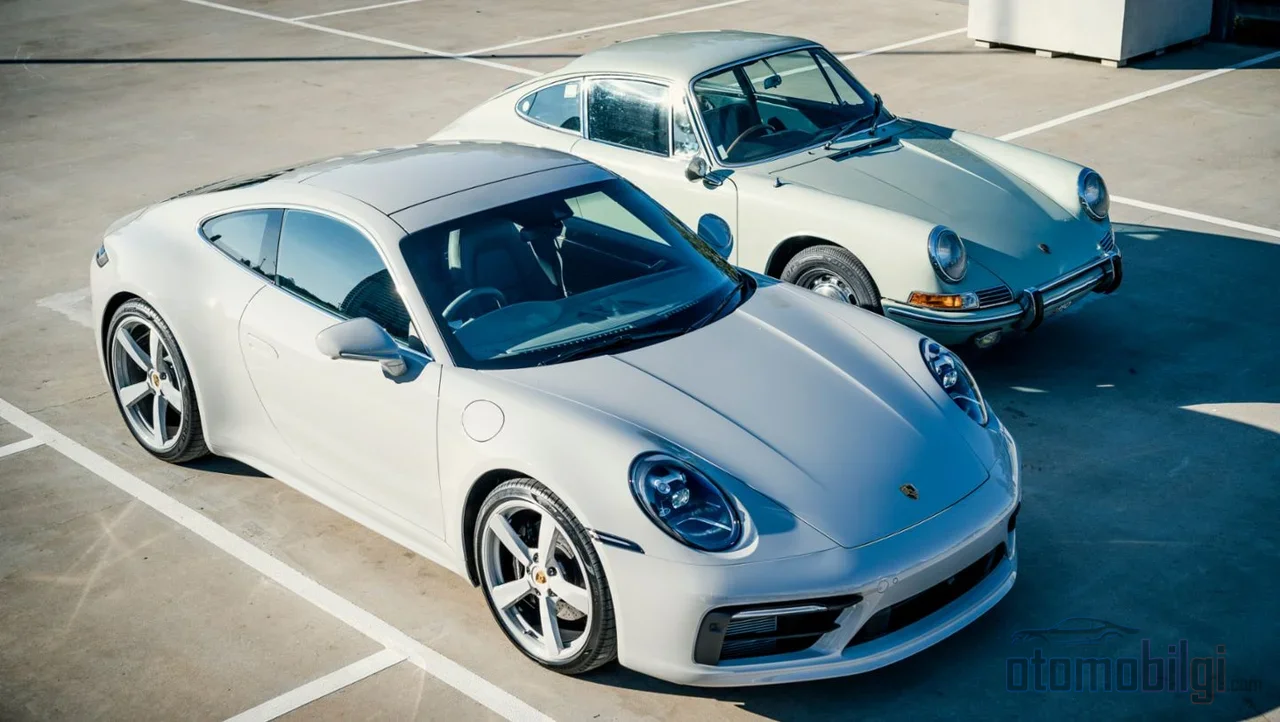
Think about a car: born in 1963, still on the production line. It was born before computers, and it has seen power brakes, turbochargers, digital gauges... all of it. But whether you look at it from the inside or the outside, it still gives itself away: round headlights, the bulging rear fender line, and of course that famous boxer engine sitting at the back. The story of the Porsche 911 is actually the story of the most stubborn experiment in automotive design. So why doesn't a brand change a formula that everyone called "wrong" for 60 years?
The answer is so interesting that I need to break it into parts. Let's start with the name fight, then dive into the physics.
From 901 to 911: How a Name Fight Created an Icon
When the 911 first came out, it wasn't called the 911. The car introduced in 1963 was named the 901 and production began in 1964. That is, until Peugeot stepped onto the scene. The French brand claimed rights to the zero in the middle of three-digit names and got what it wanted with the threat of a lawsuit: Porsche changed the name after producing only about 60 cars, and the 911 was born. A competitor's stubbornness created one of the most famous car names in history. Do you call it irony? I call it destiny.
The rear-engine idea wasn't initially a display of daring either; it was simply family heritage. The 911 inherited the rear-engine architecture intact from its predecessor, the Porsche 356. You can think of it like someone carrying their vacuum cleaner box to a new home: the contents are the same, the house is just a bit cooler.
Why Does the Rear Engine Work? A Physics-Based Advantage
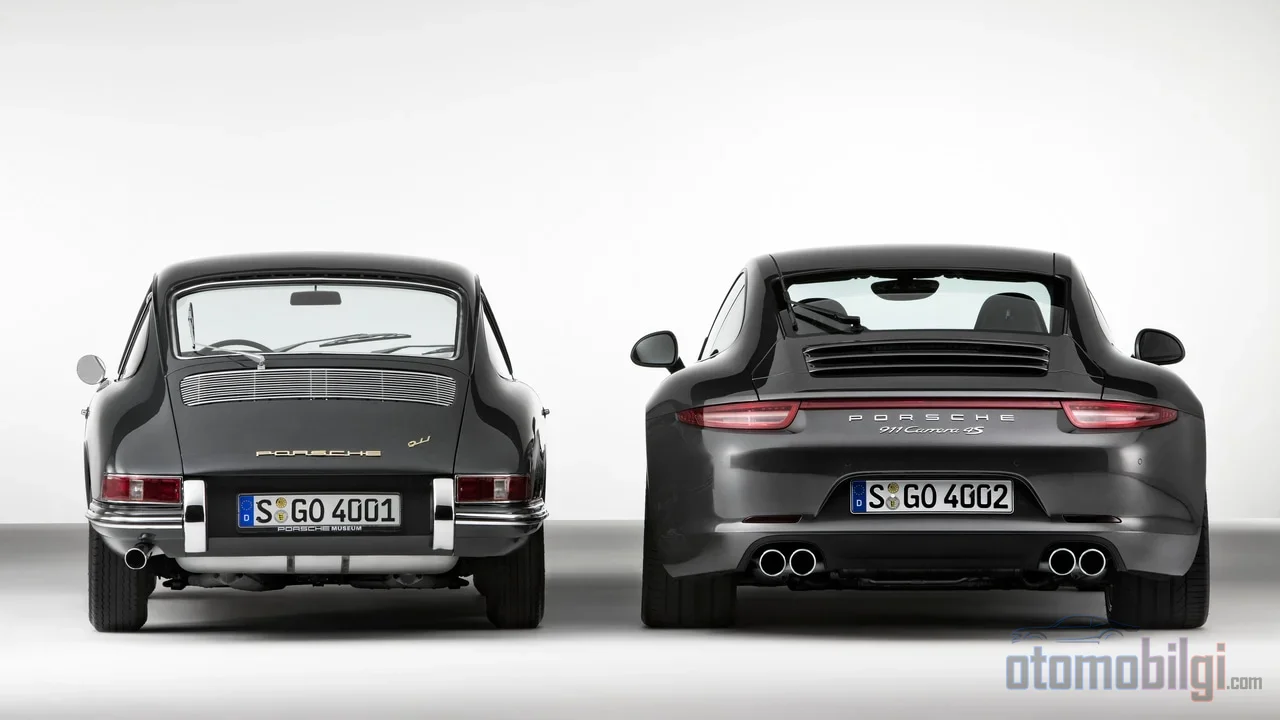
Now let's get to the technical side, but don't worry, I'll keep it simple. The force a tire presses to the ground is directly proportional to the weight passing over it. If the engine is at the rear, the engine's weight sits exactly on the driven axle. The result? Traction increases, especially in winter and low-grip conditions. It's like hanging a bag on your back while walking in snow: you don't slip, because the weight presses you into the ground.
The braking side is also interesting. When braking, the car's weight shifts forward, right? A 911, which already carries extra weight over the rear axle, can transfer more braking power to the rear wheels, and braking performance improves. When accelerating, the rear tires are pressed into the ground, so grip is superior, and high-speed stability is extraordinary. So when we say "engine in the back, everything is reversed," physics is actually working in Porsche's favor.
There is also an interesting design detail: since there's an air-cooled boxer engine at the back, there was no need for a radiator grille at the front. This combination shaped the car's entire layout and paved the way for that globular, instantly recognizable silhouette from anywhere in the world. Even the wings standing on the front hood are a consequence of the engine being at the back. Porsche's chief designer Michael Mauer has been defending this layout for years, and his words sum it all up:
The layout is so characteristic... If I had to fundamentally change the car, it would no longer be a 911.
Looking from the Inside: Was the 911 Really Designed Around a Rear Engine?
This is the part I love most, because every icon has its smudge too. According to an interesting view raised in 2015, the 911 was actually not designed around a rear engine. The main reason for the design was supposedly the requirement for rear seats to exist: the 911 is a 2+2, meaning it had to carry two small seats in the back. Placing the engine behind the rear axle opened up exactly the space for those seats. The driver's seat being high and the windshield sitting forward and high up were also results of this layout, supposedly.
The same view also approaches the "Porsche swears by the rear engine" idea with suspicion. The history goes like this: the predecessor of the 356 was mid-engined; before the 911, the 550 and 904, then the 914 were mid-engined; the 924 and 928 were front-engined. The 911 is the brand's second and last rear-engined design. So the brand's dedication to the rear-engine philosophy may be a product of the 911-focused perspective of later decades. My interpretation? Both could be true: the layout was born as a pragmatic decision but turned into DNA over time.
Another striking detail is the dimensions. The early 911 was as long as today's Golf and as narrow as a Volkswagen Up!; it was also 23 cm narrower than today's modern 911 and roughly 300 kg lighter. So the saying "the 911 never changed" applies to the shape, not the dimensions. Let me add this just to be nice: the 911 is not remembered as a purely "beautiful" car like the E-Type; it is rather found "attractive." But that very state of not-being-perfect is part of its charm. Those who love the flawed thing are the most loyal lovers of all.
Eight Generations, One Idea: From the 901 to the 992
The 911's internal codes are like its classic license plate: each generation has its own code, and all of them follow the "9-number-1" pattern. Today's 992 is the eighth generation. Bigger, faster, and much more "digital" than its predecessors. Here are the main outlines of the generations:
| Generation | Code | Character |
|---|---|---|
| 1st generation (1964) | 901/911 | The original; air-cooled boxer engine, classic proportions |
| Middle generations | G, 964, 993 | Modernization of the classic lines; the 993, the last air-cooled generation |
| Water-cooled transition | 996, 997 | The new engine era, the performance leap |
| The modern age | 991, 992 | A wider body, a digital cockpit, the 8th generation represents today |
And of course it's not just a road car. The 991 GT3 RS was the first GT3 to use the Turbo body and rear tires from the 918 Spyder; meaning racing technology trickled down to the street. This "from track to road" principle is the very embodiment of Ferdinand Porsche's principle of continuity: first the 917 shone on the track, then it went to the roads with the series-produced 930 Turbo. The 911's history also has classic moments on the rally side; the model, Monte Carlo Rally wrote its name into rally history with its victories.
Porsche's Answer to Those Who Say "The Engine Should Be at the Front"
For years the critics said the same thing: the engine should be at the front, it's more balanced. Porsche's answer was brilliant; it put the engine at the rear, and what was "wrong" became, over time, very right. Today, the GT3's philosophy has barely changed since its debut in 1999, it has simply been continuously refined. The 992 series continued this: there is evolution, no revolution. This stubbornness is perhaps the most important raw material of becoming an icon. Because iconic status comes from repeated courage; not from designing something sleek just once.
From the Silver Screen to the Badge: How Did the 911 Become a Cult Icon?
You can't talk about the 911 without mentioning the films. Steve McQueen had begun shooting Le Mans , the film containing the 911's most famous movie scene, exactly 50 years ago, and Porsche honored this moment with the 911 Targa 4S Heritage Design Edition. Have you heard of the term "cultural ambassador of the sports car"? That's Porsche's own description, and I think it's quite fitting. Even today, the 911 continues to exist as a status symbol that fuels dreams and is associated with film stars.
Iconic status lives not only on the road but also on tables: 1:64 scale GT3 R models, 1:43 racing collections, 1:12 Spyder models... Collectors want to own the 911 even in miniature. Events like Rennsport Reunion have turned into massive gatherings showcasing the brand's heritage. Porsche's comparison with the Jaguar E-Type is also legendary: the E-Type is a "rolling sculpture", the 911 is "precision". Both are icons, but it seems one is meant to be hung on a wall and the other to be driven.
What If It Were You? Would You Change It?
For 60 years, the same formula has offered a person two options: either a dinosaur habit or a perfectly on-target idea. I think it's the latter. The 911 became an icon not because its engine is at the rear, but because it is a brand that knows how to carry everything that engine brings, generation after generation. The physics are right, the silhouette is recognizable, the philosophy is clear. So I ask you: is standing your ground where everyone says "the engine should be at the front" courage, or madness? I think the answer is given by the fact that the 911 is still on the production line.
Sources
- Why is the Porsche 911 engine in the rear?
- A brief history of the Porsche 911
- Continuity as a principle: The philosophy of Ferdinand Porsche
- A Leap in Time: McQueen's Le Mans
- The Porsche Heritage Experience
- The Porsche 911 Was Not Designed Around Its Rear Engine
- 60 years on, the Porsche 911 remains a cultural icon
- Porsche 911 history: the complete timeline from 901 to 992
- Porsche 911 Buyer's Guide: Every Generation
- Porsche 911 - Ultimate Guide (Every Generation & Variant)
- Why does the Porsche 911 have a rear engine?
- How Porsche Kept Making a Better 911 GT3
- Jaguar E-Type vs Porsche 911 vs Mustang