The Car That Opened the Tailfin Era: How Did the Cadillac Eldorado Become America's Symbol of Luxury?
Share This Page
The Cadillac Eldorado is a model produced by General Motors' Cadillac division from 1953 to 2002, spanning twelve generations and standing as the longest-lasting personal luxury car in American automotive history. If the Corvette and Mustang are symbols of performance, the Eldorado is the symbol of luxury and flamboyance; an American icon that introduced the tailfin design to the world and appears everywhere from Hollywood to lowrider culture.
Highlights
- First Eldorado only 532 units were produced in 1953; the price was $7,750 - nearly double that of a Packard convertible.
- The name comes from Spanish words meaning "the gilded one" : El Dorado, the legend of the City of Gold.
- The tailfin idea in 1948 was inspired by the Lockheed P-38 Lightning fighter aircraft.
- The 1959 Eldorado, with its giant tailfins, is considered the pinnacle of the Harley Earl era.
- In 1975, engine displacement reached its peak at 500 cubic inches (8.2 liters) - then the era of downsizing began.
How Was the Eldorado Born? A Name from the City of Gold
Let's start with the name, because it tells the whole story. Eldorado is a combination of two Spanish words meaning "the gilded one"; it is also a reference to El Dorado, the city of gold in Colombian legends. As Cadillac celebrated its golden anniversary in 1952, it chose this name for a concept car, and in 1953 the name gave life to a limited-production convertible. In other words, from day one the Eldorado was given an identity crafted with gold, legend, and extravagance. Not a bad start, is it?
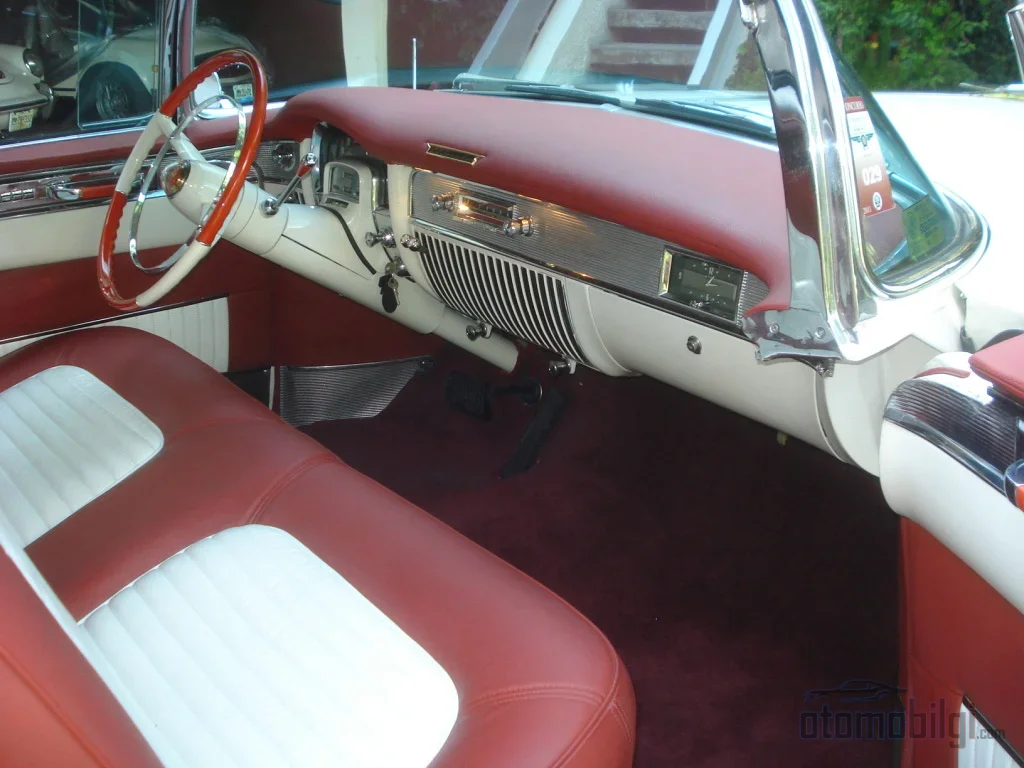
So what was the first Eldorado like? Designed by Harley Earl, the 1953 Eldorado was a giant convertible measuring 220.8 inches (about 5.6 meters) in length, with a curb weight approaching 2,300 kilograms. Under the hood sat a 5.4-liter OHV V8 and a four-speed Hydra-Matic automatic transmission. Inside, it featured a wraparound windshield, seen for the first time in the cars of that era, and bullet-shaped bumper ends taken from GM's Le Sabre concept. Even the color options were bold: Aztec Red, Alpine White, Azure Blue, and Artisan Ochre. But here's the interesting part: this car sold for $7,750. The figure may sound small, but it amounts to roughly $93,000 in 2025 dollars. That year, only one in every 200 cars Cadillac sold was an Eldorado. In other words, this was a car that made the neighbors' jaws drop when you parked it in your garage.
With the price staying that high, Cadillac made its move in 1954: the price dropped to $5,738 and sales jumped to 2,150 - nearly a fourfold increase. The following year came the first pointed tailfins, those famous sharkfins, and sales approached 3,950. In 1956, the closed version took the name Seville and the open version became the Biarritz; names inspired by Spain's city of Seville and France's coastal town of Biarritz, respectively. That year, total sales reached 6,050, and for the first time the Eldorado accounted for 4 percent of Cadillac's sales. A small detail, but it shows how fast the growth was.
Where Did the Tailfins Come From? From a Warplane to the Showroom
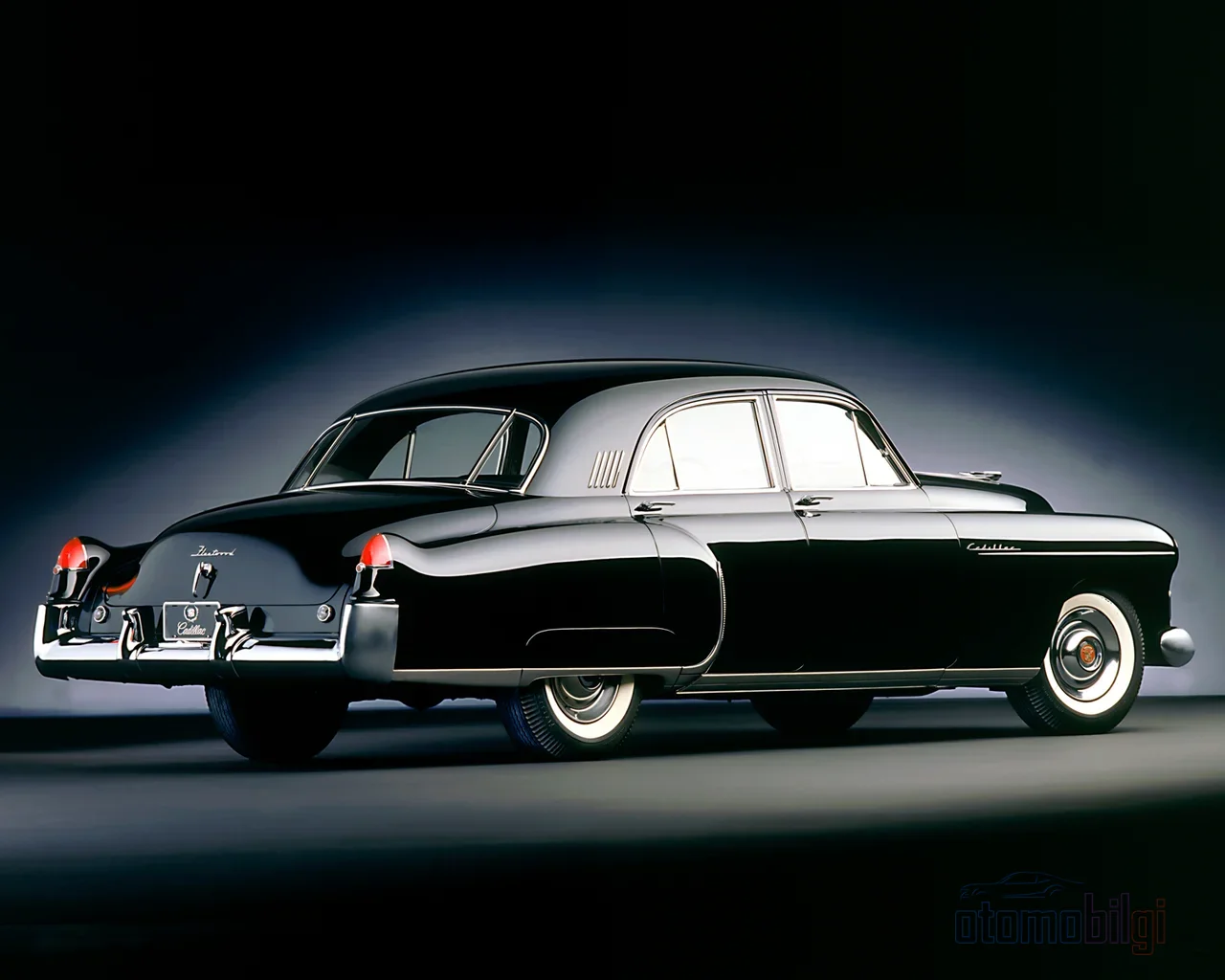
And here is the real hero of this story: tailfins. The story begins on February 3, 1948, because that is the day Cadillac produced its first car with tailfins. The inspiration? The Lockheed P-38 Lightning, that twin-boom, distinctive-looking fighter aircraft of World War II. GM's design boss Harley Earl had sent his team to a base at Selfridge Field around 1939; the aircraft they saw there would return years later as fins flying down American roads. Frank Hershey drew the design and Earl approved it. They were the first to bring wings to automotive design - just as aircraft rise on their wings in flight, the car now sold the feeling of speed with fins.
But don't worry, the story is not quite that clean-cut. It is also debated that the fins may have originally been drawn for a Vauxhall; it is known that Earl remained undecided about the fins for a while, and that the Cadillac studio's management passed to Bill Mitchell in December 1945. So those famous fins were not an idea suddenly conjured up by a single genius; they were a design gradually matured by a team, with post-war aviation excitement. I think that is exactly why they are so convincing: behind them lies a real story and the genuine spirit of an era.
Then Mitchell replaces Earl and takes over GM's design. And in 1959 comes the moment the fins take center stage. The fourth-generation Eldorado designed by Chuck Jordan was made longer, lower and wider in response to Virgil Exner's 1957 Chrysler refresh: a 130-inch wheelbase, 225 inches (5.7 meters) in length, a 345-horsepower 6.4-liter V8, and at the rear, huge sharp fins with twin bullet taillights. The 1959 Eldorado Biarritz is still cited today as one of the most extravagant American luxury cars of the 1950s. In 1960 the fins drop noticeably and the design gains a simpler air; the last Seville is also produced that same year. The fin fad essentially peaks and begins its descent - but it never quite dies.
Eldorado Brougham: Can a Cadillac Be More Expensive Than a Rolls-Royce?
Yes, it can. Produced in 1957 and 1958, the Eldorado Brougham (Series 70) was a hand-built, four-door ultra-luxury marvel designed by Ed Glowacke. You might find its contents surprising, because some of them are still considered modern today:
- The first quad headlights fitted even though they were banned in America at the time
- Self-leveling air suspension
- A V8 with dual four-barrel carburetors
- The world's first all-transistor radio (Delco, 13 transistors)
- The world's first all-transistor radio (Delco, 13 transistors)
And what was the price? $13,074 - about $150,000 in 2025 dollars. That was twice the price of an ordinary 1957 Eldorado, and belatedly, more expensive than a Rolls-Royce Silver Cloud. The result? 400 people bought this car in 1957 and 304 in 1958. Later Brougham production was moved to Italy, to Pinin Farina; the chassis were shipped to the port of Savona, and body assembly was done at the factory in Grugliasco. Even having the body of a Detroit-built Cadillac dressed in Italy is a spectacle in itself. The only weak point was the air suspension: when it caused problems, some owners converted their cars to classic leaf-spring suspension. The price of excessive luxury is sometimes paid on the repair shop bench.
Hollywood, Elvis and Lowriders: How Did the Eldorado Earn Its Place in Culture?
For a car to become an icon, it is not enough to look good; it also needs to appear on the right stages. The Eldorado was lucky in this regard. The 1953 Eldorado and similar-period Cadillac convertibles quickly turned into status symbols; a cult was born, associated with the era's stars and identified with images of pink Cadillacs in Las Vegas. The scenes of Robert De Niro driving the Eldorado in Martin Scorsese's Casino made the car a part of cinema history as well. In the 1990s, Maurice Minnifield on the TV series Northern Exposure drove a 1960 Eldorado Biarritz - and as for Cadillacs in general, the Corleone family in The Godfather represented their power with Cadillacs.
Then there is the lowrider culture, which holds a very special place in the Eldorado's story. Lowrider artists turned Eldorados into folk art: hydraulic, painted, upholstered, walking sculptures on the street. I think this point is very important, because the Eldorado earned respect in two different worlds at the same time: one was Hollywood's red carpet, the other the streets of Los Angeles. Performance icons like the Corvette or Mustang speak through speed; the Eldorado speaks with its presence, its shadow, and a tail fin recognizable even from afar. That is why both of these worlds admired it equally.
From 500 Cubic Inches to Shrinking Luxury: What Happened in the 1970s?
Now we come to the somewhat sad part of the story. From 1965 onward, the Eldorado with its Fleetwood body was welcomed as a modern revival of the pre-war Cadillac V-12 and V-16 roadsters - quite a compliment. The 1970 model, with its exuberant design, comfort and excess, was the peak of full-size American luxury cruising. Engine displacement grew and grew and grew: Cadillac engines, reaching 472 cubic inches in the early 1970s, peaked in 1975 at 500 cubic inches (that is, a full 8.2 liters!). Think of these engines this way: roughly four times larger than a modern family car's engine, but their purpose was not speed - it was softness and silence. That was the Eldorado's philosophy: the road, a lounge stretching between gas stations.
But then the world changed. The oil crisis arrived, new CAFE standards limiting fuel consumption came into effect in the US, and big-engined, big-bodied cars suddenly became outdated. This era is known in automotive history as the Malaise Era; roughly spanning from the early 1970s to the early 1980s, it was a slump in which low performance reigned. Cadillac prepared the antidote with the 1979 Eldorado: the model was significantly downsized, moved to an entirely new platform, and Cadillac became the first brand to launch this downsized luxury trend. Thus, in the period from 1970 to 1985, the Eldorado transformed from massive American luxury into a more compact, more refined personal luxury coupe. But was this a good thing? Honestly, it is a dilemma: engine displacement and body shrank, but the baroque flamboyance that formed the Eldorado's true identity also had to shrink itself. In 2002, production came to a complete end; its successor was pointed to as the Cadillac CTS coupe.
How Much Does an Eldorado Sell For Today? A Look at the Collector Market
Since it is so iconic, what is its market value right now? Auction data paints an interesting picture. The median verified sale price of Eldorado Convertibles is around $25,700; but the range is very wide - depending on year and mileage, it can vary from under $10,000 to $135,000. So the door is still open for someone wanting to buy their first Eldorado, but finding the right example is the key.
For top examples, the numbers get serious. A 1956 Eldorado Biarritz sold at an auction in October 2026 for $145,600; at the same auction, a 1956 Eldorado Seville fetched $81,760. A low-mileage 1978 Eldorado went for $33,000 at a live auction. On the other hand, the 2002 Eldorado ESC, the final chapter of the story, is around $7,500 in good condition; the Collector Series version trades at a median of around $14,800 and even appears in Barrett-Jackson's 2026 Scottsdale file. The highest demand is still for the most famous generation: the 1959 Eldorado and its more understated 1960 sibling are described as mid-century flagships whose values are trending upward in the classic car market. In other words, tail fins still move wallets.
| Model | Era | Why Is It Important? |
|---|---|---|
| 1953 Eldorado | First generation | 532 units produced; wraparound windshield, $7,750 price tag |
| 1957-58 Brougham | Series 70 | First quad headlights, transistor radio, more expensive than a Rolls-Royce |
| 1959 Eldorado Biarritz | 4th generation | Giant fins, 345 hp; the pinnacle of the Earl era |
| 1970 Eldorado | Full-size era | 472 cubic inch engine, the peak of luxury cruising |
| 1979 Eldorado | Downsizing era | New platform; launched the downsized luxury trend |
| 2002 Eldorado | Final generation | End of production; ESC around $7,500 |
The Eldorado Legacy: Why Do Tail Fins Still Matter Today?
The story of the Eldorado is more than the story of a car. It is a four-wheeled portrait of America showing itself at its brightest, most ambitious, most polished. If the Corvette and the Mustang are the heroes of speed, the Eldorado is the hero of showmanship; where one speaks under the hood, the other speaks on its tail. In this single model you can see how wings inspired by a fighter jet shaped an entire generation of cars, how a name (The Gilded City!) gave identity to a product, and how luxury, when taken to excess, led both to a peak and to a crisis.
The detail I love most is this: for 50 years, the Eldorado always stayed true to itself. The wings shrank, the engines shrank, the body shrank, but the Eldorado was produced as an untouched, show-hungry American dream. If I asked you to think of the one car that would make you stop and stare when you saw that tail from a distance at an auction catalog or a classic car meet today, the Eldorado would be at the top of my list. Which generation do you think is the most iconic? In my opinion, the only thing that can compete with the wings of 1959 is having enough money to bring one into your life.
Sources
- Cadillac Eldorado
- Harley Earl
- 1948: How the Cadillac Tailfin Was Born
- Were Cadillac's first tailfins originally destined for a Vauxhall?
- The Designer's Story: Harley Earl
- Malaise era
- The 1959–60 Cadillac Eldorado Continues to Push Forward
- 2002 Cadillac Eldorado ESC Value
- Cadillac Eldorado Convertible Auction Results
- Cadillac Classic Car Auction Results
- 2002 Cadillac Eldorado Collector Series
- Cadillac Eldorado (1953) specs
- Cadillac Eldorado Pop Culture: Elvis to Lowriders
- Cadillac Eldorado