Lewis Hamilton: I Can Still Race in F1 in 2030
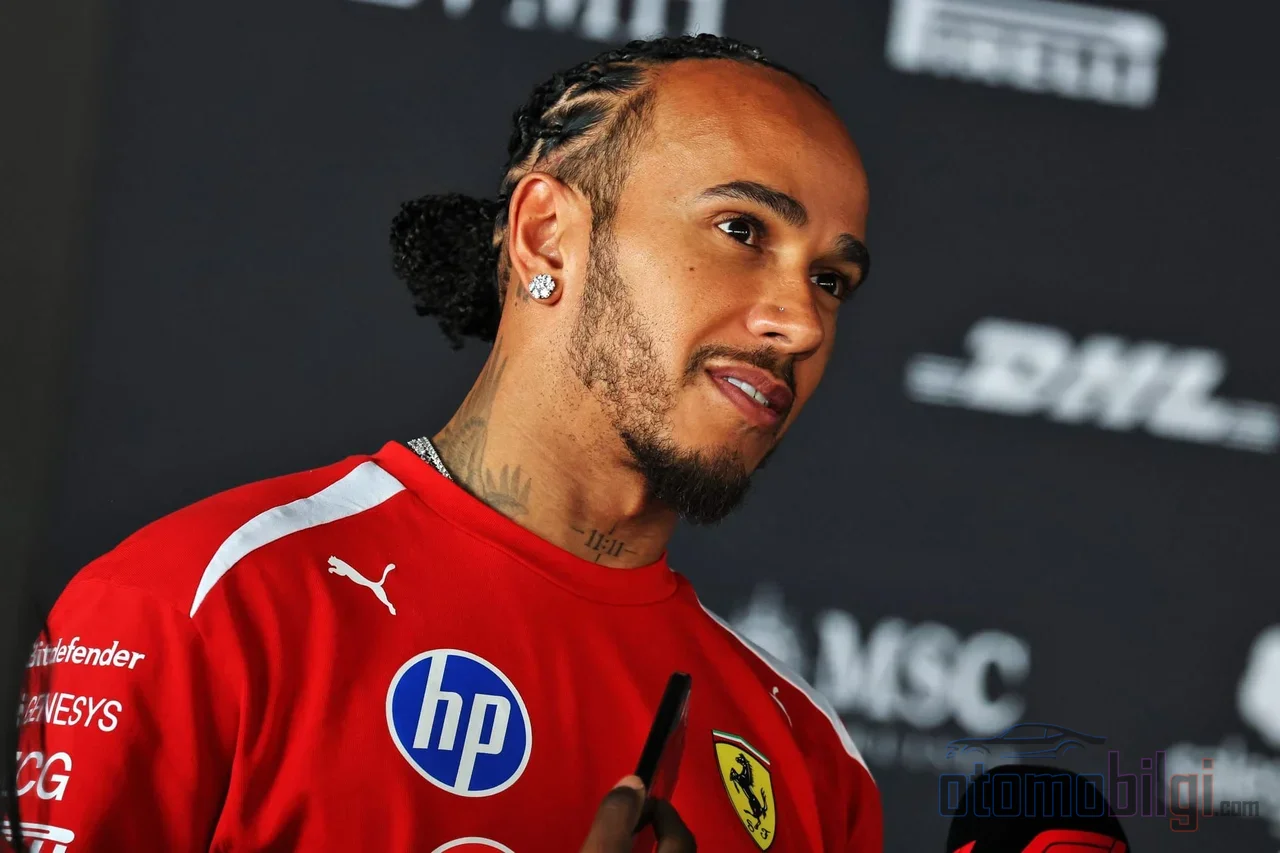
When microphones were extended at the edge of the track, the question was, as usual, about retirement; Lewis Hamilton's answer was much longer than we expected. The 41-year-old British driver, in the middle of his second season in the Ferrari seat, sees himself in a position to keep racing in Formula 1 until 2030, when he will be 45. This is not a statement to be read as a moment of anger or a bargaining tactic; behind it lies a concrete goal, a calculated physical preparation, and precedents proven by his peers. So how realistic a plan is staying on track for four more years for Hamilton?
Why Hamilton wants to race until 2030: The African dream
The real motivation behind Hamilton extending his calendar is not statistics or records, but geography. Formula 1's return to Africa in the 2030s is on the agenda; plans are being made to hold a Grand Prix in Rwanda, and despite criticism, this race is being included in the calendar. For Hamilton, this is the name of a dream: representing the continent in a race car, in Grand Prix format. In his answers to questions directed at him in Mexico City at the end of October, he stated that he rejects age limits and that there has never been a situation in which he did not consider extending his career toward this goal.
For longtime followers of this sport, the picture is familiar. Over the years we have seen repeatedly that great drivers do not always draw the end of their careers with their own hands; sometimes a goal, a team project, or a track keeps them on track. In Hamilton's case, this pull is tied to a measurable date: if the Rwanda race lands on the calendar, Hamilton will want to be on the grid that weekend. This makes it necessary to imagine the 2030 season, that is, a 45-year-old Hamilton.
Is the Ferrari contract guaranteed until 2027, and what comes after?
It is reported that Hamilton's current agreement with Ferrari is guaranteed until the end of the 2026 season, after which it can be extended to 2027 with a unilateral driver option. There are also reports that the Italian team announced a multi-year deal with him; some reports carry the claim that the new contract includes an extension until 2028, but this detail has not yet been confirmed by an official statement. So the first part of the road to 2030 is relatively ready contractually, while the final part is not yet on paper.
This uncertainty is actually not surprising. In Formula 1, long-term contracts take shape according to the appetite of both parties; getting a 45-year-old driver to sign for 2030 requires him to be part of Ferrari's long-term plan as well. Hamilton's message in May 2026, telling those trying to push him into retirement that he had no plans to leave Ferrari or Formula 1 anytime soon, was the clearest sign that the two sides are on the same page.
Highlights
- Hamilton says he can race in F1 even in the 2030 season, that is, at age 45.
- The main motivation: the dream of racing in the African Grand Prix planned to be held in Rwanda.
- The Ferrari contract is guaranteed until the end of 2026, with a 2027 one-sided driver option; The claim of an extension to 2028 has not been confirmed.
- With his victory in Barcelona, Hamilton became the oldest driver since 1970 to win a Grand Prix.
- Fernando Alonso, at 45 years old and with a 25-year career, is the strongest precedent on age.
Can a 41-year-old driver physically keep up until 2030?
The price of sitting in a Formula 1 seat has changed shape over the years. In the past, weight problems and reflex debates surrounding drivers nearing the end of their careers would make headlines; today, teams' performance departments monitor drivers over 40 in the same data set as their teammates in their 20s. In this sense, Hamilton continues to be an exceptional example: his training regimen covers cardio, HIIT and muscular endurance work, and mid-season his age reflects no weakness pronounced enough to speak of a physical cost.
Still, to be honest, physical endurance is only half of this job. The rest is motivation and performance. As Hamilton is well aware, the key to longevity is staying on the grid; if results stop speaking, neither the Africa dream nor contract negotiations carry the same weight. He has repeatedly implied that he is aware performance is at the center of this equation.
How rare is it to win a race over 40 in F1?

Hamilton's 2030 goal takes on meaning when combined with the precedents history offers him. For a driver past 40 to win a Grand Prix is almost unheard of in the modern era: it had not happened since 1994, when Nigel Mansell provided the last example that year. Throughout history, only four drivers have won a race over 40, and this century, the number of podium finishers over 40 is three: Michael Schumacher, Fernando Alonso and Lewis Hamilton. The oldest Grand Prix winner of all time is still Luigi Fagioli - 1951 French Grand Prix, 53 years and 22 days.
Hamilton extended that list on his own, too. By winning the Barcelona Grand Prix, he became the oldest driver since 1970 to win a race, and reached the position of the only F1 driver in history to take Grand Prix victories in each of his 20s, 30s and 40s. This is not the cliché that age is just a number; it is measurable, calendar-marked proof of performance.
| Reference | Detail |
|---|---|
| Hamilton's current age | 41 (as of October 2026) |
| His age as of 2030 | 45 |
| Oldest GP winner | Luigi Fagioli, 1951 French GP, 53 years 22 days |
| Oldest winner of the modern era | Hamilton, Barcelona 2026 (oldest since 1970) |
| Alonso | 45 years old, 25-year career record, 415 race starts |
| Average driver age in F1 | Around 27 (around 39 in the 1950s-60s) |
He planned not to continue beyond 40 in 2022: why did that position change?
Hamilton's statement today tells a more interesting story when placed side by side with his own past. In early 2022, during the period when contract negotiations with Mercedes were ongoing, Fernando Alonso stated that he did not plan to stay on the track into his forties, unlike drivers like Kimi Räikkonen. In October of the same year, he signaled that departure was not on the horizon, but in the following years the gap between these two statements steadily widened. Now he is thinking of racing until the age of 45.
In the past, a driver's retirement schedule was largely determined by what the body whispered; now the calendar itself - that is, where Formula 1 is heading - has become a significant input in the decisions. New markets, new races, and new projects are producing commercial and emotional reasons for veteran drivers to stay longer. Hamilton's U-turn comes exactly at this point: the age limit he drew in 2022 has bent before his 2026 dream of Africa. A dream breaking through a calendar limit is not the kind of closing that even the sport's oldest chroniclers would have expected.
How is the 2026 season going at Ferrari: a recovery year?
Behind this ambitious career plan lies Hamilton's second season at Ferrari, and the season did not follow a straight line. At the Madring in Spain, he experienced the season's first retirement due to brake problems; he explained that the car's performance was good enough to win, but the failure took that chance out of his hands. Starting in August, he began working with new race engineer Carlo Santi - Hamilton, who jokingly called him the Italian Bono over the pit wall radio, entered a period of visible recovery with this change.
The final stretch of the season did not completely erase the question marks either. At the United States Grand Prix, it emerged that he was struggling with heavy understeer - where the front tires struggle to grip when entering a corner and the car pushes wide - while fighting for a fourth-place finish. So the picture is that of a driver who has earned the right to extend his career but must re-prove the comfort of his seat every week: an occasional win, a rebuild with a deeply rooted technical team, and a pace potential that is still being talked about.
Will Hamilton really be on the grid in 2030?
The honest answer to the question is this: it is an equation that will be settled not by the plan owner's word, but by three factors. First, whether the Rwanda race actually secures a place on the calendar; the fact that it is still planned despite the criticisms keeps hope alive, but there is a community that knows calendars can be reversed too. Second, whether the contractual path with Ferrari remains open beyond 2027; to carry the current arrangement - 2026 guaranteed, 2027 optional - to 2030, at least two extension steps will be needed along the way. Third, and most weighty of all, is the continuation of performance.
And the precedents do not leave Hamilton alone. Fernando Alonso has turned 45 and, with a 25-year career and 415 races of experience, is still on the grid; his ability to endure so many years in this sport has shown that age is not an obstacle, but a resource to be managed. When Hamilton's physical regimen, the history he made in Barcelona, and his motivation at Ferrari are combined, a 45-year-old Hamilton on the grid in 2030 is no longer a fantasy but a scenario that deserves to be taken seriously. Of course, if Rwanda comes to pass as desired - until that day comes, we will decide on the driver, the calendar, and the tires together.
Sources
- Lewis Hamilton aims to extend career till early 2030s so he can race in African Grand Prix - The Guardian
- 'Built different' Hamilton claims he could still race in F1 in 2030 - The Race
- Lewis Hamilton: "I'm built differently" as he eyes F1 career into 2030s - Motorsport.com
- Lewis Hamilton Rejects Age Limits Over Racing in F1 Into 2030s - Yahoo Sports
- Lewis Hamilton makes bold F1 retirement prediction - Motorsport Week
- Lewis Hamilton 'planning to be in F1 for some time' - ESPN
- F1 driver contracts - Sky Sports
- Hamilton explains brake issues that caused Spanish GP retirement - Formula1.com
- Lewis Hamilton has found 'Italian Bono' at Ferrari - RacingNews365
- IN NUMBERS: F1's oldest drivers and Grand Prix winners - Formula1.com