Sebastian Vettel's 4 Championships: Season-by-Season Analysis
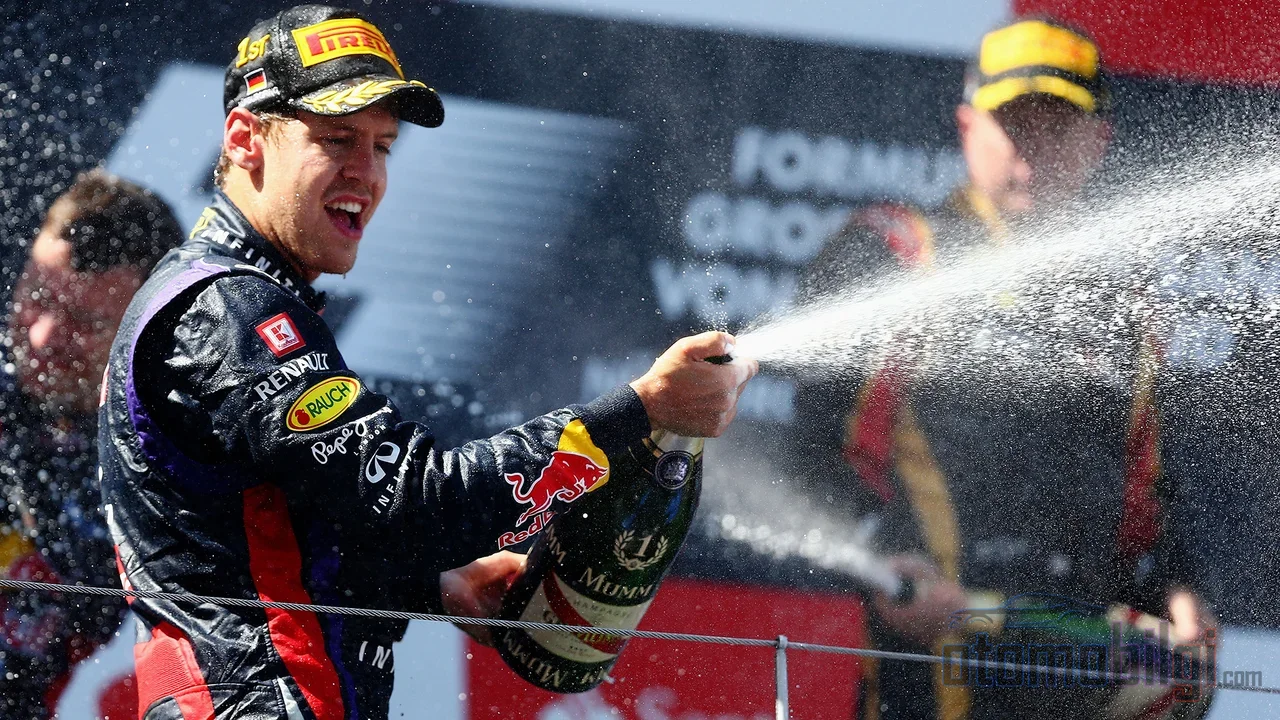
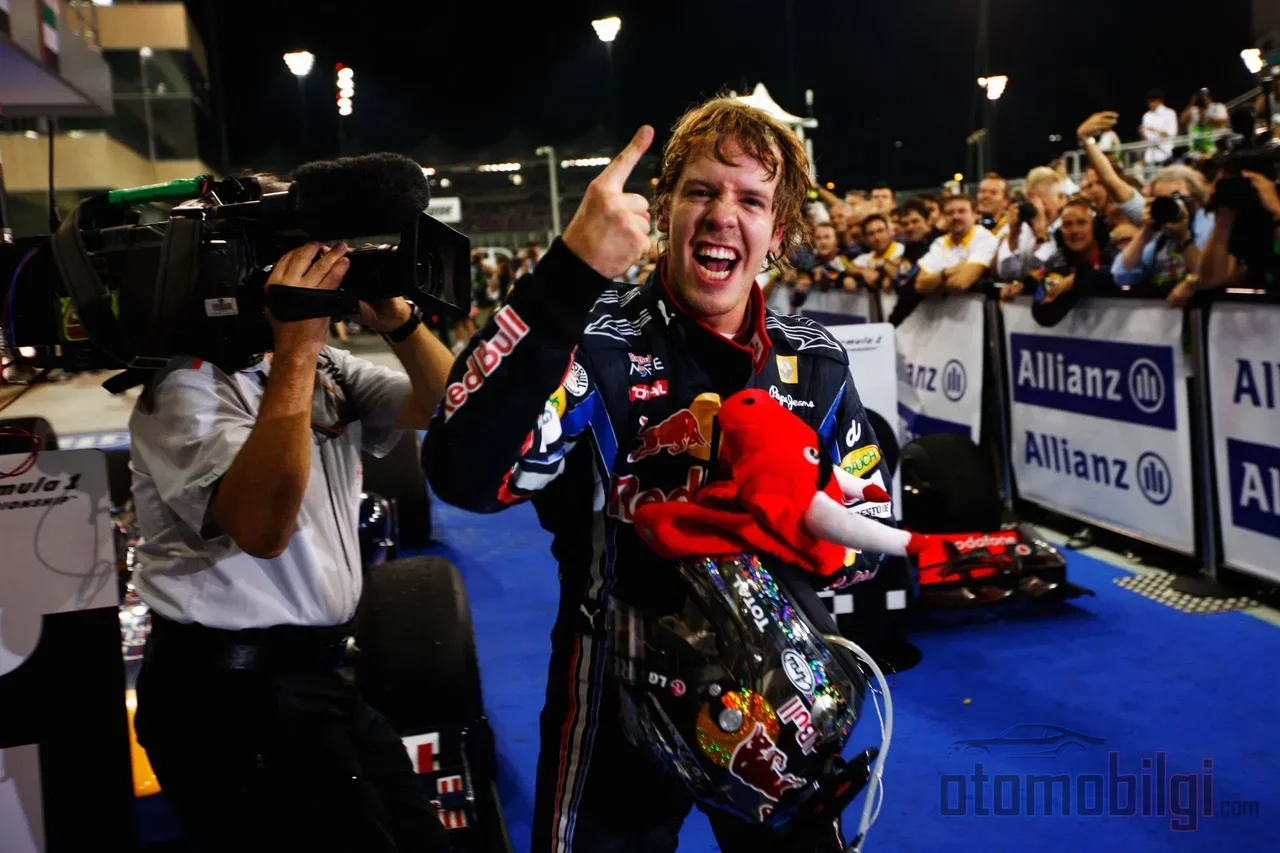
November 14, 2010, Abu Dhabi. You are third in the championship standings heading into the final race of the season, 15 points behind leader Fernando Alonso. Mathematically you have a chance, but nobody is betting on you. 55 laps later, in a way nobody expected, you are the world champion. Yes, exactly like this: Sebastian Vettel won the first title of his career in one of the most dramatic final nights in Formula 1 history, and in the three seasons that followed, nobody could stop him. So how did this young German carry himself to four consecutive championships? Come on, let me tell it season by season.
Highlights
Highlights
- Vettel won 4 consecutive world championships with Red Bull between 2010-2013.
- At 23 years and 134 days old, he became champion in 2010, making him the youngest world champion of the era.
- In 2013, he took 9 consecutive wins from Belgium to Brazil and won 13 races in a single season.
- Over his 16-season career, he accumulated 53 Grand Prix wins and 299 race starts.
- In his 6 years at Ferrari he took 14 wins, but the fifth championship he was seeking never came.
2010: How Was the First Championship Won in the Final Race Secured?
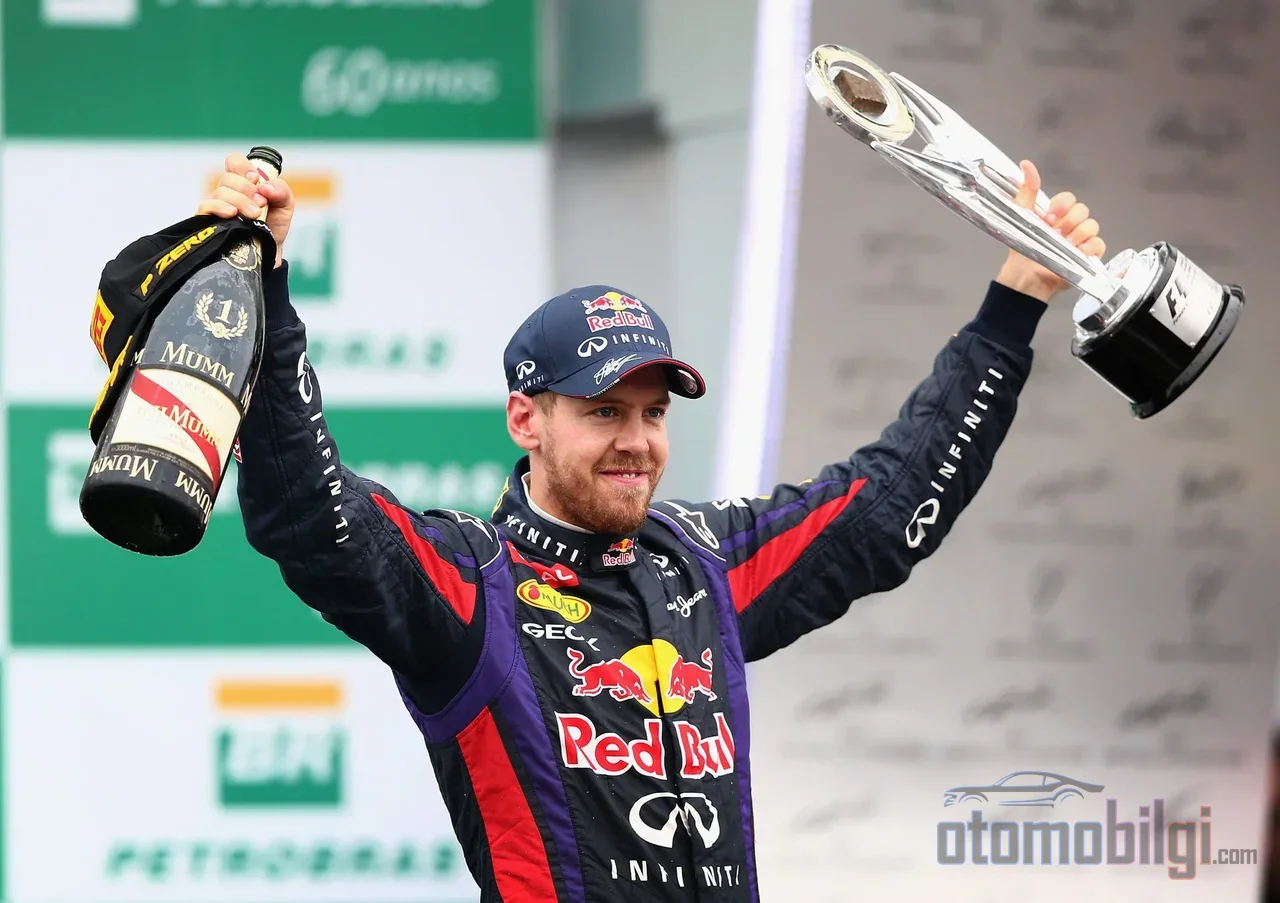
The 2010 season was the first year of the new 25-18-15 points system, and mid-race refueling had been banned for the first time since 1993. So while everyone was trying to adapt to the rules of a new era, the championship battle had opened up to four drivers: Alonso, Mark Webber, Vettel, and Lewis Hamilton. As the season progressed, Vettel's job got harder; By the end of August, following Hamilton's victory in Belgium, he had dropped to a full 31 points behind the leader. But there was no such thing as giving up. Three wins in a row came in Japan, Brazil, and Abu Dhabi, and the table was reset.
Going into the finale, the picture was this: Alonso led with 246 points, Webber was 8 points behind, Vettel was 15 points behind, and Hamilton was 24 points behind. At Yas Marina, Vettel started from pole position, and winning the race was enough; the real drama unfolded behind. Ferrari pulled Alonso in for an early pit stop to respond to Webber's strategy, and this move ended in disaster. Alonso got stuck behind Vitaly Petrov's Renault and could not pass, finishing seventh; Webber was eighth. When Vettel won, the championship, in the final race, went to a driver who had never led the standings on any weekend. This was only the third time in history that a driver entered the finale from third place and became champion; before him, John Surtees achieved it in 1964, and then Kimi Räikkonen in 2007.
At the end of the season, Vettel was champion with 256 points, Alonso had 252, Webber 242, and Hamilton 240. At 23 years and 134 days, Vettel took over the title of youngest world champion ever from Hamilton. Red Bull Racing had also already secured the constructors' championship with a 1-2 finish in Brazil; moreover, that year marked the last constructors' championship won by an independent team racing with a customer engine, with no other example coming until 2024. There are claims that the young championship record was broken many years later by Kimi Antonelli, but this information is still single-source, so I won't present it as certain.
2011: The Year of Dominance with the RB7
The second championship came much more easily than the first, let's admit it. The RB7, signed by Adrian Newey, won 12 of 19 races and took 18 of the season's 19 pole positions; this car is considered one of the most dominant Formula 1 cars in history. An "evolution, not revolution" approach was followed in the development of the RB7: it was built on top of the previous year's successful RB6. The biggest challenge was fitting the returning KERS system into the car without disrupting the aerodynamics, and the engineering team solved that too. Another sign of its solidity: the RB7 won Autosport's Race Car of the Year award; it was the second consecutive year Red Bull received this award.
Rivals measured the gap not in tenths but in lost time; it was said that Red Bull, as a package, was ahead of all its rivals. Vettel won 11 of 19 races, stood on the podium 17 times and collected 392 points. He clinched the championship in Japan before the season ended, and pocketed the title of youngest two-time world champion as well.
2012: A Fierce Battle with Alonso
2012 was the most balanced and most tense of the four seasons. This time there was no crushing car like the RB7; over 20 races Vettel managed 5 wins and 6 pole positions, collecting 281 points. Facing him all season was a magnificent Fernando Alonso, and the title remained up in the air until the final race of the season. In the final race, amid variable weather conditions, Vettel managed to climb to sixth place and won the championship exactly 3 points ahead of Alonso. Thus he became the youngest three-time world champion in history. Looking at the teammate comparisons, the size of the gap becomes clear: Webber finished the same season with 179 points, that is, fully 102 points behind.
2013: A Nine-Race Winning Streak
And now we come to the fourth and final act. Newey's RB9, with Renault's 2.4-liter naturally aspirated V8 engine, won 13 of 19 races; all 13 of those wins belonged to Vettel. In a season where his teammate finished with zero wins, this picture shows not only the car's power but also the driver's weight. The most absurd statistic of the season is this: Nine consecutive wins from Belgium to Brazil. With this streak he matched Alberto Ascari's 60-year-old record for consecutive wins and became the first driver to masterfully win nine races in a row within a single season. The season total of 13 wins also matched Michael Schumacher's single-season win record.
In numbers, 2013 looked like this: 19 races, 13 wins, 16 podiums, 9 pole positions, 397 points. The RB9, like the RB7, was chosen as Autosport's Race Car of the Year and was regarded as Red Bull's most dominant design to date. With a fourth consecutive title, Vettel became only the third driver in history to achieve this. At the moment he clinched the championship, his career tally stood at 36 wins (35 with Red Bull, 1 from the Toro Rosso era) and 59 podiums.
Comparing the Four Championships in Numbers
| Season | Races | Wins | Podiums | Pole Positions | Points |
|---|---|---|---|---|---|
| 2010 | 19 | 5 | 10 | 10 | 256 |
| 2011 | 19 | 11 | 17 | 15 | 392 |
| 2012 | 20 | 5 | 10 | 6 | 281 |
| 2013 | 19 | 13 | 16 | 9 | 397 |
The Newey Synergy: The Meeting of the Perfect Driver and the Perfect Car
The technical key to the four championships was the synergy between Vettel and Adrian Newey. As Red Bull Racing's chief technical officer, Newey set the overall design direction of the RB6, RB7 and RB9. The signature innovation of the era was the exhaust-blown diffuser: exhaust gases were continuously directed into the diffuser through the corner, recovering most of the lost downforce and providing great stability at the rear on corner entry. That is where Vettel's job came in, since the system demanded a specific driving style; using the car to channel hot exhaust gases without interruption for maximum downforce required an unusual driving technique, and Vettel executed it flawlessly. So the answer to the "car or driver" debate is really how well the two matched each other: he was one of the drivers who could best translate Newey's genius onto the track. On the pit wall, his engineer Guillaume Rocquelin, with their radio exchanges, formed one of the most famous driver-engineer pairings of the era.
What Did the Vettel vs. Schumacher Comparison Mean?
From the very start of his career, Vettel was compared to Germany's legend and nicknamed "Baby Schumi". But how fair was this comparison? In fact, neither side was ever keen on it. Young Vettel, at 21, was saying it was far too early and that such a comparison was unnecessary. Schumacher too stressed after his third consecutive championship that the comparison should not be made, that everyone did their own job in their own era; yet he did not hesitate to say he believed Vettel could reach his seven titles. The bond between them was not just a nickname: as a young racer, Vettel admired Schumacher, and together they won several Race of Champions titles. The first great proof of his talent goes back to 2008: his win at Monza, in the rain, with Toro Rosso - Red Bull's mid-field team - was a sign of just how special a driver he was, even before the Newey era began. From Ferrari's corner, too, comments came that Vettel resembled Schumacher in some ways. By the end of his career, the picture became clear: the seven titles never came, but four consecutive championships - along with details like sharing Schumacher's single-season win record matched in 2013 - cemented the bond between the two legends historically.
The Ferrari Years: The Fifth Title Nobody Believed Would Come
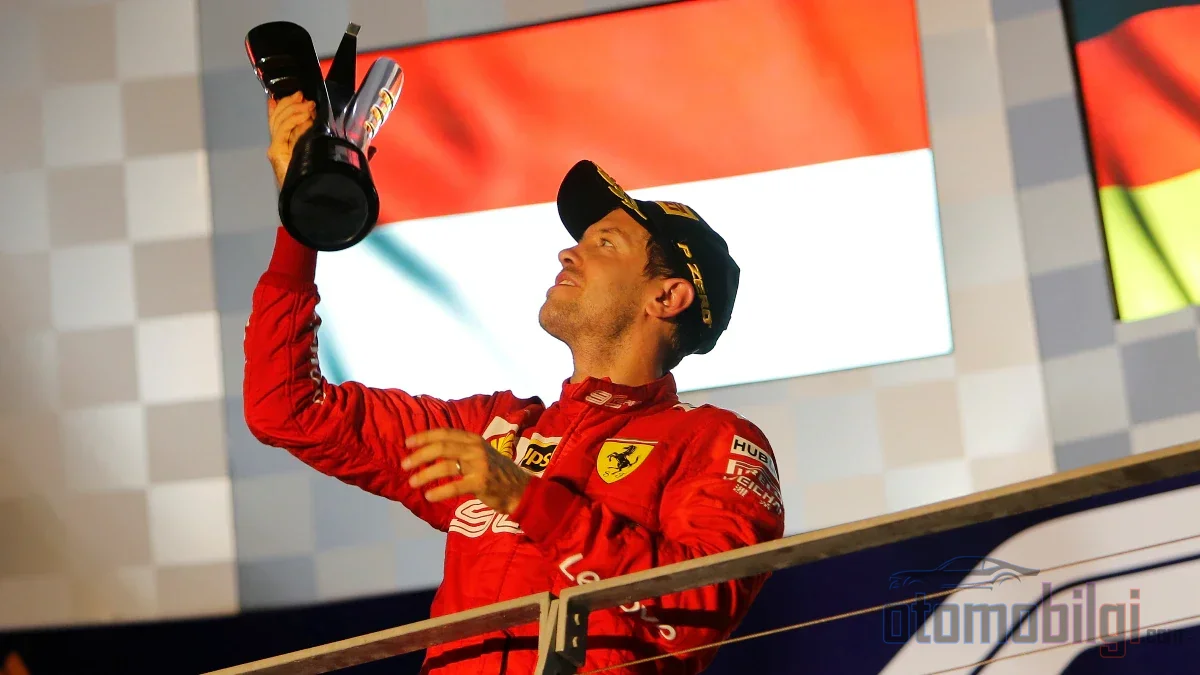
Vettel moved to Ferrari in 2015; With this separation announced after the 2014 Japanese Grand Prix, the 15-year bond that began with Red Bull officially ended in Abu Dhabi. The goal was clear: To bring to Maranello the drivers' championship that had not come since Kimi Räikkonen, that is, since 2007. Over six years he took 14 wins, finished second in the championship in 2017 and 2018, those two seasons were full of mistakes, and Lewis Hamilton came out stronger both times. Vettel evaluated the post-Vettel era honestly: he admitted they had failed because the championship they aimed for could not be won, and confessed that he had entered some battles he should not have. The moment he put the car into the gravel at the 2018 German Grand Prix became the symbol of that period; he said that a victory where the tifosi were not rejoicing brought him no joy either. Despite all this, he said he felt an emotional bond with Ferrari and chose to describe his six years with a characterization comparing them to a roller coaster ride. After his Ferrari years he moved to Aston Martin, saw no victories there, and closed his career with 299 race starts, 53 wins and 57 pole positions.
Conclusion: How Did He Win Four Championships?
The short answer is this: Vettel won four championships in a row as a driver whose luck brought his first title through the door in the final race, who then had two dominant seasons with cars designed by Newey and practically tailored to his driving style, and who gritted his teeth against Alonso with a 3-point margin to finish 2012, his hardest year. On one side, two of the most dominant cars in history; on the other, a young driver who flawlessly applied the extraordinary driving technique those cars demanded. Beyond being the last ruler of the pre-Hamilton era and the first young champion of the digital age; with his nine-race streak in 2013 he left a standard that is still hard to match. The fifth title did not come at Ferrari, but four consecutive championships earned him eternal membership in a club granted to few drivers.
Sources
- BBC Sport - Red Bull's Sebastian Vettel kept Formula 1 title belief
- Sebastian Vettel wins Formula One world championship in Abu Dhabi
- 16 years ago: Vettel wins dramatic 2010 F1 title in Abu Dhabi
- Adrian Newey on memorable Red Bull Racing car models
- Sebastian Vettel is the 2013 F1 World Champion
- By The Numbers: Vettel's Record Year in F1
- Red Bull Racing wins 2013 Formula 1 World Championship
- BBC Sport - Sebastian Vettel wins Abu Dhabi GP to capture F1 title
- Adrian Newey explains how studying fighter jets helped Red Bull understand trick that almost never happens in F1
- Vettel Becomes Youngest World Champion