Lewis Hamilton: The Story of Seven Championships
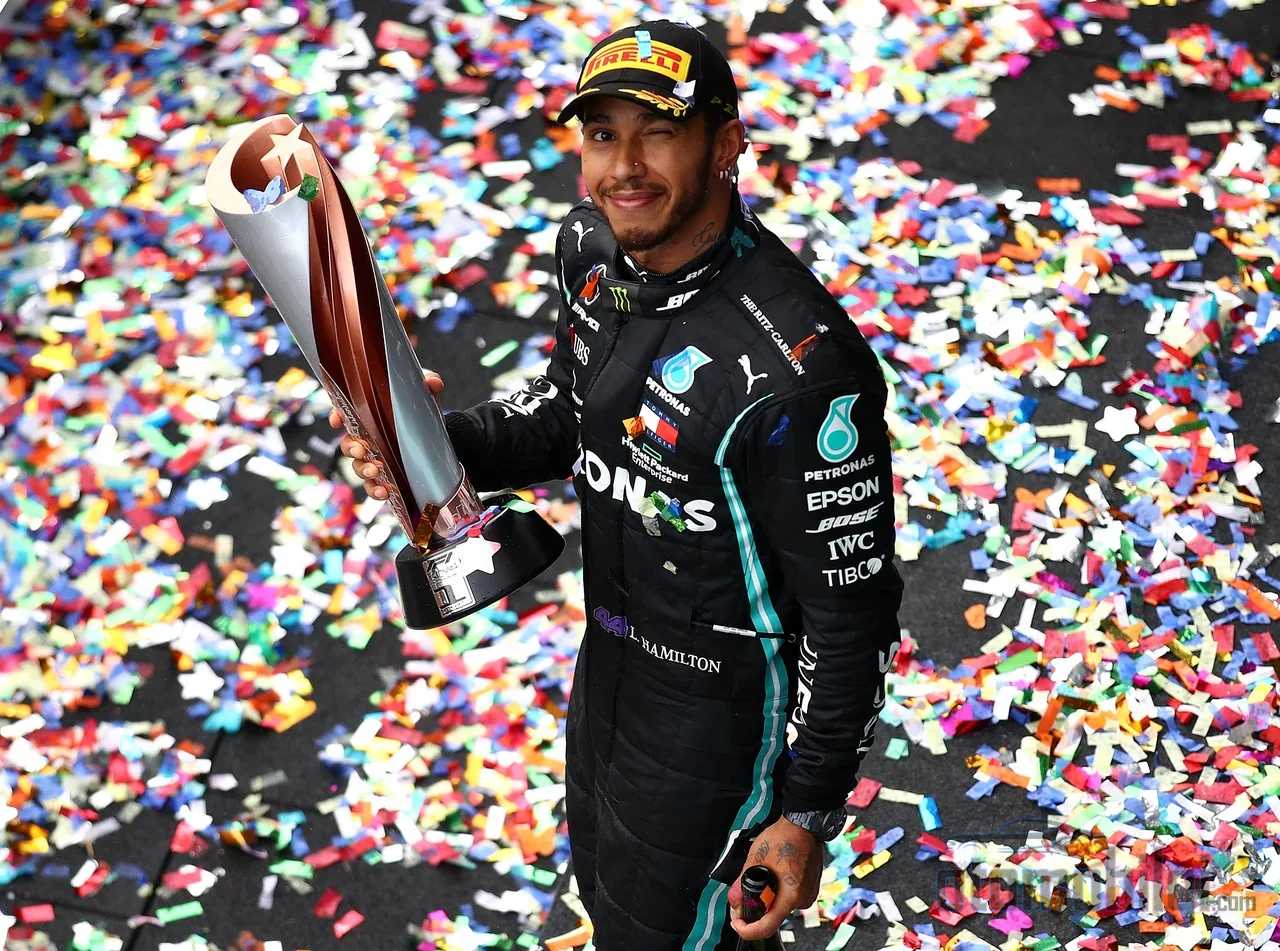
November 2, 2008, the Interlagos circuit, Brazil. Felipe Massa won the race and the grandstands began to celebrate. But the championship was not Massa's. Lewis Hamilton passed Timo Glock's Toyota, which was slowing down on a drying track in the final corners of the last lap, took fifth place and snatched the championship by exactly 1 point. Ahead of the 23-year-old still lay six world championships, more than a hundred wins and one of the greatest careers in Formula 1 history. So how did Hamilton reach those seven championships? If you're ready, the story begins with a remote-controlled car.
The Karting Days: From a Remote-Controlled Car to Ron Dennis's Door
Lewis Hamilton was born on January 7, 1985, in the town of Stevenage, England. His father Anthony bought him a remote-controlled car at the age of five, and the following year young Lewis finished second against adults in the BRCA national championship with these cars. Receiving a go-kart as a Christmas present at the age of six, Hamilton started kart racing in 1993, and two years later, at just 10 years old, he became the youngest driver ever to win the British cadet karting championship.
His father made serious sacrifices to finance this talent: He took redundancy money from his IT directorship and moved to contractor work, at one point holding four different jobs at the same time, from selling windows to washing dishes. So yes, Hamilton's career was carried forward not only by talent but also by a family's incredible effort.
And then that famous moment: In 1995, at the Autosport Awards, Hamilton went up to McLaren boss Ron Dennis, introduced himself and said he wanted to race his cars one day. Dennis wrote in his autograph book that he should call him in nine years. Indeed, in 1998, after two Super One series championships and British titles, Hamilton, at 13, was admitted to the McLaren-Mercedes Young Driver Programme. He was the youngest driver ever to sign a contract with a future Formula 1 seat option.
He climbed the junior ladder quickly: In 2000 he became European karting champion with maximum points, in 2003 he took the Formula Renault UK title with 10 wins in 15 races, in 2005 he dominated the Formula 3 Euro Series with 15 wins and 13 pole positions from 20 rounds, and in 2006 he won GP2 at his first attempt, beating Nelson Piquet Jr. The door to F1 was now wide open.
Highlights
- 7 world championships: 2008 (McLaren), 2014, 2015, 2017, 2018, 2019, 2020 (Mercedes)
- Sole holder of all three major all-time records with 106 wins, 105 pole positions and 209 podiums
- He shares the championship record with Michael Schumacher
- First championship: At Interlagos in 2008, on the final corner, by 1 point
The McLaren Era: The Rookie's Championship (2007-2012)
Stepping into F1 at the 2007 Australian GP, Hamilton became the first and still the only Black driver to have raced in the series. He began his rookie season alongside two-time world champion Fernando Alonso, and contrary to everyone's expectations, he was not crushed: Nine consecutive podiums, 4 wins and a rookie-season record of 109 points. He missed the championship to Kimi Räikkonen by 1 point, and finished second behind Alonso even on a points tie. He had already taken his first win that same season, at the 2007 Canadian GP.
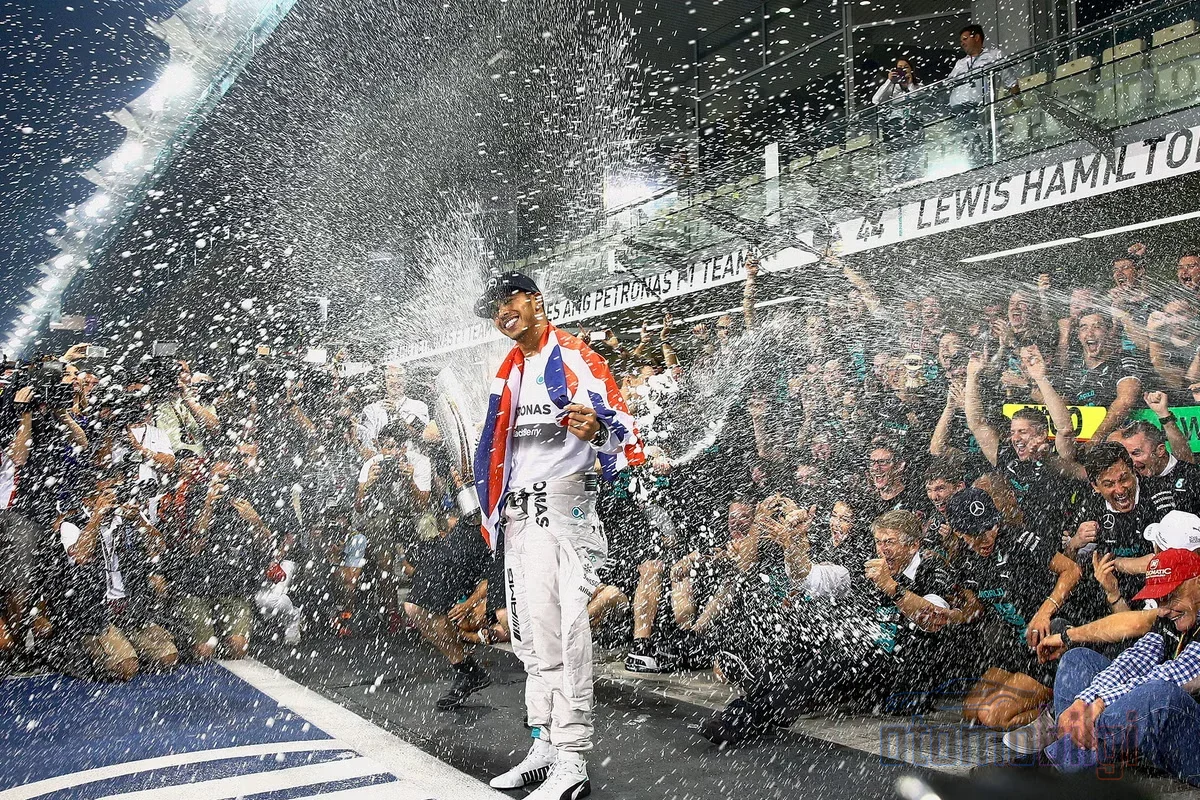
In 2008 he sealed the deal - and what a way to do it! He took 5 wins throughout the season; His charge at the British GP, beating his rivals by more than a minute in wet conditions, is considered one of the best wet-weather performances in F1 history. The finale was the Interlagos drama we described above: A fifth place at the final corner meant the championship by 1 point ahead of Massa. With this, Hamilton became the youngest world champion of his era and the first British champion since Damon Hill in 1996.
The signals that followed were mixed: After a difficult start in 2009, he recovered with major upgrades at the German GP and took 2 wins; in 2010 he entered the four-way championship battle contested by Button, Alonso, Vettel and Webber, finishing fourth. In 2011 he finished fifth, and in 2012 he had a notable season with 4 wins and 7 pole positions, but lost roughly 110 points due to technical failures and accidents. The split from McLaren was approaching.
The Mercedes Gamble: Knocking on the Right Door (2013-2024)
At the end of 2012, Hamilton gratefully closed his 15-year McLaren chapter and moved to Mercedes, replacing the retiring Michael Schumacher. Back then, this move looked like a gamble to many; Mercedes was a team that had not achieved major success in recent history. His teammate was Nico Rosberg, whom he knew from his childhood karting days. But it would soon become clear that this was one of the most astute transfer decisions in F1 history.
The Hybrid Era and the Rosberg Rivalry
In 2014, the mandatory turbo-hybrid engine regulations came into force, and Mercedes - with a car built precisely around these new rules - began to dominate the grid: The team won 16 of the 19 races that season. Hamilton took his first Mercedes championship with a career-best 11 wins, and added a second in a row in 2015. The Hamilton-Rosberg duo won 51 of 59 races between 2014 and 2016; this internal rivalry ended with Rosberg's championship in 2016, and Hamilton missed the triple crown.
Two Defenses Against Vettel and the Final Three Championships
After Rosberg's retirement, the rival changed: Sebastian Vettel at Ferrari. In 2017 and 2018, Hamilton turned around mid-season points deficits with incredible comebacks to win his fourth and fifth championships. In 2019 he claimed his sixth crown.
2020 became the season that went down in history: Hamilton sealed the championship with victory at the Turkish GP, broke the all-time wins record at the Portuguese GP, and reached his seventh world championship, equaling Schumacher. That season's 11 wins, 11 pole positions and 17 podiums in 21 races also brought Mercedes its fifth consecutive Constructors' championship. The moment he crossed the finish line in tears was etched into the memory of sports fans.
| Year | Team | Season highlight |
|---|---|---|
| 2008 | McLaren | The final corner at Interlagos, a 1-point gap |
| 2014 | Mercedes | 11 wins, the first crown of the hybrid era |
| 2015 | Mercedes | Second consecutive championship |
| 2017 | Mercedes | Comeback from a points gap against Vettel |
| 2018 | Mercedes | Defending against Vettel again |
| 2019 | Mercedes | Sixth world championship |
| 2020 | Mercedes | Seventh crown with the Turkish GP, equaling Schumacher's record |
The 2021 Drama and the Ferrari Journey (2021-2026)
In 2021, Hamilton became the first driver to surpass the 100 wins and 100 pole positions milestones, but the championship went to Max Verstappen in the controversial Abu Dhabi finale. 2022 and 2023 passed without wins, and in 2024, in his final season with Mercedes, he won the British GP, taking a record 9th victory at that circuit; At Abu Dhabi 2024, he started 16th and finished fourth, closing out his Mercedes era.
In 2025 he switched to red: Ferrari. His contract runs until at least the end of 2027. While heading into the 2026 season third in the championship, he has taken one win, 7 podiums and 1 pole position during the season; his latest win came at the Barcelona-Catalunya GP. His career wins have reached 106, pole positions 105, and podiums 209, and with 399 race starts he holds countless records.
How Is Hamilton Read Alongside Senna, Prost and Schumacher?
In our series where we introduce F1 legends one by one, after Senna, Prost and Schumacher it was Hamilton's turn - and that order is no coincidence. Hamilton shares Michael Schumacher's record with 7 championships; he holds the records for wins, pole positions and podiums on his own. Hamilton also broke the all-time wins record that belonged to Senna for a long time. A nice detail: In 2001, Schumacher, who returned to the karting track for a one-off, raced on the same track as the young Hamilton and praised his talent. Twenty years later, he had no idea who the driver he would share records with was back then.
Hamilton's impact is not limited to statistics. Hamilton, credited with expanding F1's global following and a leading advocate for racial justice and diversity in motorsport, made the Time 100 list in 2020, was named the most influential Black Briton on the Powerlist in 2021, and received a knighthood in the same year's New Year Honours.
Short Answer: How Did Hamilton Reach Seven Championships?
Lewis Hamilton won the first of his seven world championships with McLaren in 2008, by a 1-point margin he claimed at the final corner, and the other six with Mercedes, which dominated the turbo-hybrid era between 2014-2020. He moved to the right team at the right time; with the discipline that came from karting, his mastery of wet conditions and his ability to fight back during the season, he set records with 106 wins, 105 pole positions and 209 podiums. As the name who equaled Schumacher's record of 7 championships, he wrote his name permanently into the legends ranking.