Ayrton Senna and the Story of Three Championships
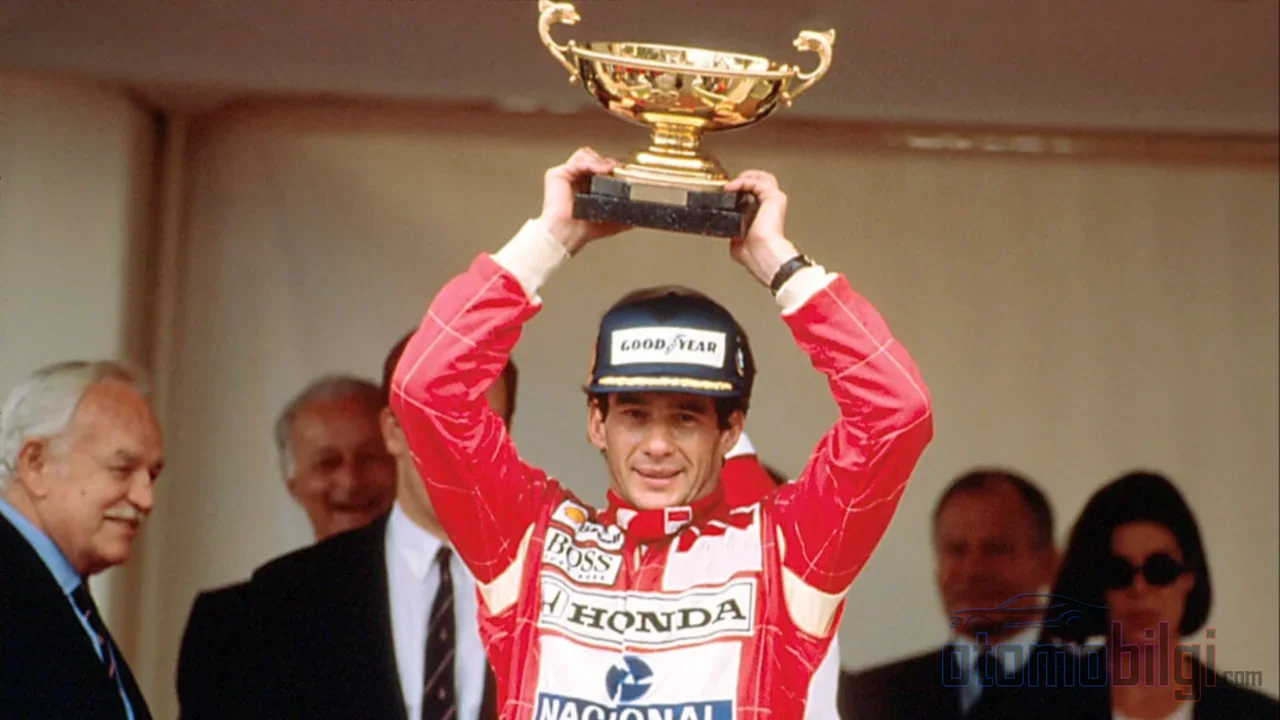
May 1, 1994, the San Marino Grand Prix. By that day, Senna had won 41 races, 65 pole positions and three world championships. But even that day, he was still in the middle of an unfinished story. So how did a boy who won his first go-kart race at Interlagos at age 13 become one of the most talked-about names in Formula 1 history? We've gathered his career, his driving style and the story of his 1988, 1990 and 1991 championships on a single page - are you ready?
From the Karting Track to Formula 1: How Did Senna's Journey Begin?
The story begins in São Paulo. Ayrton Senna da Silva, born March 21, 1960, stepped into karting at age 13; his first kart had been built by his father with a lawnmower engine. He entered his first race at Interlagos on July 1, 1973, and won. No, you didn't misread: first race, first victory.
The junior years were not idle either: 1977 South American Kart Championship, and two runner-up finishes in the Karting World Championship in 1979 and 1980. In 1981 he moved to England and collected both the British and Townsend Thoresen championships in Formula Ford 1600. In 1982, he won 15 of 17 races and dominated the British and European championships. In 1983, he won the British Formula 3 championship in a fierce battle with Martin Brundle that went down to the final corner, followed by the Macau F3 Grand Prix.
One more detail: Because "da Silva" is Brazil's most common surname, he chose his mother's surname, "Senna", as his career name. And so the door to Formula 1 opened.
Highlights
- 3 world championships: 1988, 1990, 1991 - all with McLaren
- 41 wins, 65 pole positions (a record at the time of his death) and 80 podiums
- First win: 1985 Portuguese GP, last win: 1993 Australian GP
- 6 victories in Monaco - the undisputed king of the street circuit
The Toleman and Lotus Years: When Talent Becomes Inevitable
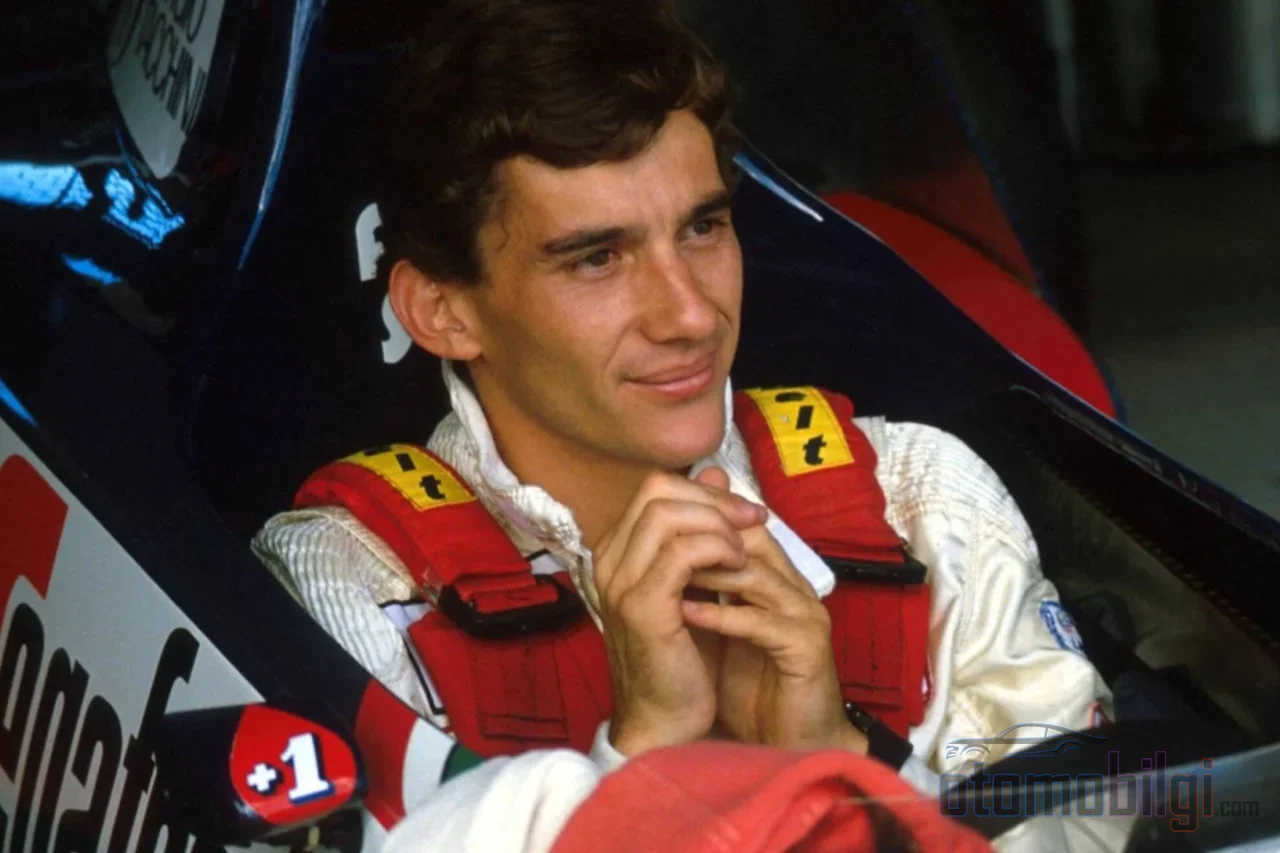
1984: The Name Announced to the World in Monaco
Senna entered Formula 1 in 1984 with the small Toleman-Hart team. He had turned down McLaren's long-term contract offer; due to sponsor preferences and Nelson Piquet's veto, his path led to Toleman. The car was modest, but the driver was not.
Proof: Monaco 1984. Senna started 13th; as the rain poured harder than on anyone else, he climbed through the field one by one, passed Niki Lauda on lap 19 and settled into second place. When the race was stopped on lap When the race was stopped on lap 31 First season of his career, on a street circuit, on a wet track - all the Senna signatures in a single frame. That season he also showed how detail-oriented he was in Dallas: he noticed the wall was shifting by millimeters, warned his mechanics and was proved right. By season's end he was already suspended by Toleman for negotiating with Lotus - the big teams were lining up. By the end of the season he was already suspended by Toleman for negotiating with Lotus - the big teams were queuing up.
1985-1987: First Wins and First Pole Positions at Lotus
The 1985 Portuguese Grand Prix was Senna's first pole position and his first victory - and what a victory it was: in the rain-soaked Estoril, he lapped everyone from third place, finished more than a minute ahead of second, and claimed the first Grand Slam of his career. Senna regarded this race as the best of his career. In the same year, he also won in Belgium in mixed wet-dry conditions and closed the season with the most pole positions in the field: 7 times.
In 1986, 8 pole positions, the Detroit victory, and a 0.014-second gap over Mansell in Spain - one of the closest finishes in Formula 1 history. The Lotus 98T's qualifying engine produced approximately 1,300 horsepower; an absolute uncontrollable beast of power. After Detroit, he asked for a Brazilian flag from the stands and took a victory lap with it; this ritual was repeated at every one of his wins. In 1987, he took his first Monaco victory (the first of six in total) with the Honda-powered Lotus, and the first win for a car with active suspension in Detroit.
The McLaren Era: The Story of Three Championships
1988: The Legendary MP4/4 and the First Crown
In 1988, Senna joined McLaren as Alain Prost's teammate. With Honda power, the MP4/4 won 15 of the 16 races that season - one of the most dominant cars in history. The split within the team ended 8-7 in Senna's favor, and the first world championship came by a margin of 3 points.
The symbol of this season was undoubtedly Monaco's qualifying laps. Senna took pole position with a gap of 1.427 seconds ahead of Prost; an incredible margin for that era. He ran his final lap in 1:23.998, and that lap was never captured on camera - perhaps that is why its legend grew even bigger. The two McLaren drivers, trading fastest laps one after another in the final qualifying session, created a moment still passed down by word of mouth today.
1989-1990: Suzuka and the Peak of the Rivalry with Prost
His rivalry with Prost became Formula 1's defining contest. At the 1989 Japanese Grand Prix, Senna needed to win both remaining races for his championship hopes; at Suzuka, the paths of the two drivers crossed, and the championship went to Prost. In 1990, Prost had moved to Ferrari, and the championship was once again set to be decided at Suzuka. Senna, starting from pole position, collided with Prost at the first corner; both drivers being out of the race brought Senna his second world championship and was seen as revenge for the pain of the year before. Two giants, two seasons, two collisions - the most tension-filled chapter of modern F1 history.
1991-1993: The Third Crown and the Years of Resistance
1991 brought his third championship with 7 victories, including the Brazilian Grand Prix. Afterwards, the balance of power shifted to Williams-Renault; but Senna continued to win every season, and in 1993 he took his sixth Monaco victory and finished the championship second behind Prost. When Prost retired, Senna moved to Williams in 1994 and became Damon Hill's teammate. The plan was a new reign; fate wrote a different script.
Qualifying Laps and Mastery in the Rain: Why Was Senna So Fast?
To understand Senna's career, it is enough to know two things: qualifying laps and wet conditions. 65 pole positions, the all-time record at the time of his death. According to the stories, after a poor wet performance in his first go-kart race he deliberately worked on his wet-track skills - meaning his mastery of the rain wasn't innate, but a talent polished through perseverance.
His list of standout wet-weather performances is a career in itself: 1984 Monaco, 1985 Portugal and the 1993 European Grand Prix (Donington Park). A statistic circulating on social media says Senna won more than half of the races held in wet conditions; even without firm primary verification, the picture is clear - the wet track was Senna's stage. The reason wasn't technical, it was psychological: rain shrank the gap between cars and brought courage and the sense of limits to the fore.
His driving style is described as reactive, bold and emotional; aggressive to the point of being called reckless at the limit. McLaren's own assessment is clear: this style only works with extraordinary talent - for an ordinary driver it would have been a recipe for disaster, not success. Whereas Prost took an effective but calm approach, Senna lived with adrenaline and risk in every corner. Nor were there no shadows to this aggression: the accusations in 1985 that he blocked rivals with slow laps (which he denied) and the tension with Mansell after 1987 Spa were both facets of his complex character. The ruthless competitor and the man full of love for people lived in the same body.
Imola 1994: May 1 and After
On May 1, 1994, while leading the San Marino Grand Prix, he lost his life at the age of 34 in the crash at the Tamburello corner in his Williams FW16. Around 3 million people attended his funeral; Brazil bid farewell to a hero.
So how did this loss change Formula 1? After the crash, the FIA quickly launched a process of reform: circuit layouts were changed following the fatal accidents of 1994, 75 mm side headrests became mandatory, and static load tests were introduced for the cockpit edges. Pit lane speed limits and tightened pit entries were among the later changes; the HANS device also became mandatory over time. To be honest, counting Imola as the sole reason for the radical turn in safety is too simple - the sport was already changing before that terrible weekend. But that was the breaking point where the transformation accelerated. After Senna, the next fatal accident in Formula 1 didn't come until the 2014 Japanese Grand Prix, with Jules Bianchi. That long silence is the most tangible measure of his legacy.
| Period | Team | Highlights |
|---|---|---|
| 1984 | Toleman-Hart | 2nd place in the rain at Monaco 1984 |
| 1985-1987 | Lotus | First victory (1985 Portugal), the first 2 of his 6 Monaco wins |
| 1988-1993 | McLaren | 3 championships, 35 wins |
| 1994 | Williams | 3 races until the fatal crash at Imola |
What Made Senna a Legend?
The short answer: three championships, 65 pole positions and his dominance in the wet set him apart from his rivals; but the real difference was the courage to see beyond the car's limits. On the road stretching from Toleman to McLaren, Senna achieved within a single career the ability to create gaps of seconds in qualifying, to reverse what seemed inevitable in the rain, and to manage the fiercest intra-team rivalry in the world against a genius like Prost. His death closed an era and transformed Formula 1 in the field of safety; the numbers he left behind, meanwhile, new generations of drivers have been trying to break for more than thirty years. Many are still trying.