Why Does the Minimum Weight of F1 Cars Keep Increasing?

What would happen if you tried to lift an F1 car with your hands? Nothing, because it won't budge. In the 2025 season, these cars weighed a full 800 kg including the driver, without fuel, and this figure was the peak in the series' history. Yet in the mid-1990s, the same category made do with 595 kg. In other words, over thirty years, an extra mass the weight of a motorcycle was loaded onto the cars. So how did a sport that lives by "lightness is everything" get this heavy in such a systematic way? The answer doesn't come down to a single reason; it rests on the intersecting decisions of safety, hybrid technology, and car dimensions. And it's such that in 2026, for the first time after a long interval, the scales will turn back.
How Does the Minimum Weight Rule Work?
First, let's clarify the mechanism, because "minimum weight" isn't as simple as it sounds. Article C4 of the FIA technical regulations governs this subject: minimum mass, mass distribution, ballast use, the ban on adding weight during the race, and rules concerning the driver's weight are all collected under this heading. The critical detail is this: weighing is done without fuel, including the driver.
The psychology here is also interesting. No team wants to build its car far above the limit, because in F1 every kilo means lap time. Engineers try to land their car right on top of the limit, gram by gram. What happens if the car comes in under the limit when weighed? No panic: the ballast permitted by the regulations, meaning extra weight placed at strategic points of the car, comes into play. This allows teams both to reach the legal limit and to position the center of gravity as they wish. In a sense, ballast is the teams' legal cheat card; place it where you want, adjust the car's balance.
Season by Season: How Did the Scales Keep Going Up?

No discussion proceeds without looking at the numbers. The table below shows the milestones of the minimum weight limit. Until 1995, driver weight was not included in this limit; from that date on it was taken into account, and this should be kept in mind when comparing.
| Period | Minimum Weight | Note |
|---|---|---|
| 1961-1965 | 450 kg | First official minimum, the 1.5L engine era |
| 1983-1988 | 540 kg | The turbo era |
| 1989-1993 | 500 kg | The lightest modern period |
| 1995-2008 | 595 kg | Driver weight included |
| 2010 | 620 kg | In-race refueling banned |
| 2014 | 691 kg | Hybrid V6 power units arrived |
| 2018 | 734 kg | The Halo became mandatory |
| 2022-2024 | 798 kg | 18-inch wheels, ground effect cars |
| 2025 | 800 kg | The peak, with an 82 kg driver allowance |
| 2026 | 768 kg | The first major drop in over 20 years |
When you read the table, one thing is plainly visible: since the year 2000, roughly 200 kg has been added to the cars. For the 2025 limit, some publications say 798, others 800 kg; the difference stems from small definitional differences in practice. But whichever figure you take, the trend is the same: steadily upward.
Highlights
- In 2025, the minimum weight climbed to 800 kg; in the 1990s the limit was in the 500-595 kg band.
- The adoption of hybrid power units added roughly 100 kg on its own; the minimum mass of the current power unit is 151 kg.
- The 2026 regulations raise the limit to 768 kg: the first noticeable weight loss in over 20 years.
- Wheelbase shrinks from 3600 mm to 3400 mm, and width drops from 2 meters to 1900 mm.
- Minimum driver weight rises to 82 kg; an allowance of 4 kg extra mass comes for driver cooling in extreme heat.
Why Did They Get So Heavy?

The Hybrid Revolution: 100 Kilograms on Its Own
The champion of the rankings is clear: hybrid power units. When the V6 turbo hybrid era began in 2014, the limit jumped from 642 kg to 691 kg in a single season. Batteries, two separate motor-generator units and the entire turbo system all loaded new mass onto the car. Today's hybrid power unit has a minimum weight of 151 kg on its own; heavier than the 3-liter V10s of the late 1990s. The joint assessment of expert engineers is clear: bringing a modern F1 car carrying batteries and safety equipment down to the late-90s level of 600 kg is nearly impossible. Even in the earlier era of the widespread KERS, the limit had risen to 640 kg in 2011; the bill for electrification was always written on the scales.
Safety: Non-Negotiable Weight
The second major factor is safety. Tougher crash tests, strong side-impact structures and the anti-intrusion panels added in 2015 together added roughly 50 kg. The contribution of the Halo system, made mandatory in 2018, is estimated to range from 1-2 kg to 7 kg; it is hard to give an exact figure, but the direction is clear: upward. There is also the banning of mid-race refueling in 2010. Cars now have to complete a race distance of roughly 300 km on a single fuel tank; which means bigger, heavier tanks. In 2017, car width had been narrowed to 1.8 meters in 1998; that decision was reversed and width rose to 2 meters, bringing wider tires, wider wings and of course a higher minimum weight.
Width Dimensions and 18-Inch Wheels
The ground effect cars and 18-inch wheels that arrived in 2022 pushed the limit to 798 kg. The logic here is simple: bigger tires and wheels mean more rubber and metal, and the new generation of wheels also carry additional mechanisms for brake cooling. In short, every technological leap added a few more kilos to the scales, and by 2025 the limit had reached 800 kg.
How Much Does the Weight Cost in Performance?

So what do these kilos cost out on the track? The clearest answer lies in the difference between qualifying laps and the opening laps of a race: the same car on a full fuel load turns several seconds slower per lap. On race day, fueled cars lap roughly half a dozen seconds behind the pole position time. The increased weight also increases tire and component wear; combined with the limited number of engine components, drivers are in a sense racing in economy mode.
The federation is known to be determined to resist the weight debate; approach, in short, is that cars need to slim down. Indeed, it was stated that teams' demands for the limit to be raised will be resisted during the 2026 process. Another perspective is this: hybrid-era cars are in better shape in terms of power-to-weight ratio than the V8 era; roughly 1360 hp/ton versus 1240. In other words, engines have become so powerful that lap times improved despite the weight increase. But that doesn't mean weight comes for free; it simply means the bill was paid against power.
Driver Weight and the Ballast Game
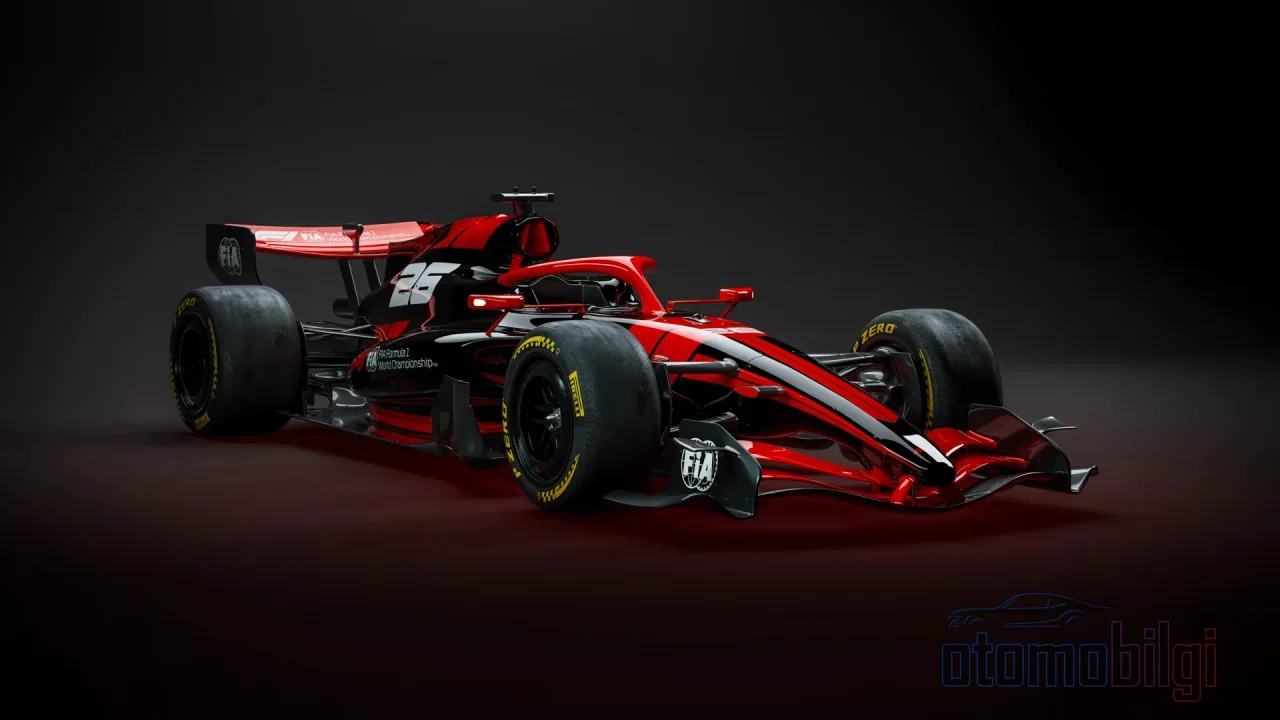
There is also a human side to the story. From 2019 onward, an 80 kg minimum driver allowance was introduced; in 2026 this rises to 82 kg. The logic of the rule is fair: a light driver shouldn't gain an advantage. If a driver weighs less than 82 kg, the difference is made up in the car with ballast. There is another detail specific to the new era: Heat Hazard, meaning a mass increase due to heat danger. In extremely hot conditions, up to 4 kg of additional mass becomes legal for the driver's cooling equipment. From the drivers' point of view, the playing field widens; from the teams' point of view, the ledger gets a bit thicker.
2026: The First Diet in Twenty Years
And here is the turning point of the story. The 2026 regulations bring the most comprehensive technical revision since 2014, and the limit drops from 800 kg to 768 kg. This is the first significant weight reduction in more than 20 years. How, exactly? First of all, the MGU-H is being removed, and the car shrinks considerably: wheelbase shortens by 200 mm, overall width narrows by 100 mm, floor width is cut by 150 mm. While the tires narrow by 25 mm at the front and 30 mm at the rear, the 18-inch wheel size is retained.
There are also major changes in aerodynamics: downforce is reduced by 30 percent and drag by 55 percent. DRS is going away; replacing it are active aerodynamics with movable elements on the front and rear wings, plus the Manual Override system that provides temporary electrical power from the MGU-K against the car ahead. Small and agile cars, representing a philosophy designed for sprinting.
But there is another side to the coin: the 768 kg target is considered very aggressive in technical circles and was achieved largely by shrinking the car's dimensions. While Williams boss James Vowles described the target as manageable, his broader assessment was this: most teams will initially remain above the limit. Indeed, when the 2026 car weights were announced, it was notable that Williams was 26 kg over the limit, while Mercedes and Ferrari came in under it. So the diet has started, but some still can't quite give up dessert.
So Why Did It Keep Increasing? The Short Answer
The clear answer to the question is this: The minimum weight of F1 cars kept increasing because of the roughly 100 kg contribution of hybrid power units, the roughly 50 kg burden of safety requirements such as the Halo and reinforced crash structures, and the extra mass from wider chassis and tires and the requirement to race on a single set of tires. In 2026, the removal of the MGU-H and the reduction of car dimensions are reversing this trend for the first time.
The debate is not over: while safety comes first in every negotiation, some fans and drivers want lighter, more agile cars. What do you think: should the series reduce the minimum weight even further in the future, or does safety come before everything else? Both sides of the debate may seem right, but the scales are currently clearly tipping toward lightness.
Sources
- How the F1 chassis is changing under 2026 regulations
- How much does an F1 car weigh? | F1 car weight explained
- FIA 2026 F1 Regulations - Section C Technical
- Why F1 cars have really gained hundreds of kilograms over the years
- F1 cars will hit 800kg next year. How far are hybrid engines to blame?
- Why F1 teams are braced for battle to hit "very aggressive" 2026 weight limit
- How F1 finally put its cars on a diet
- Hurry up and weight - F1technical.net