Why Is the Rev Limit 15,000 in F1 Engines?
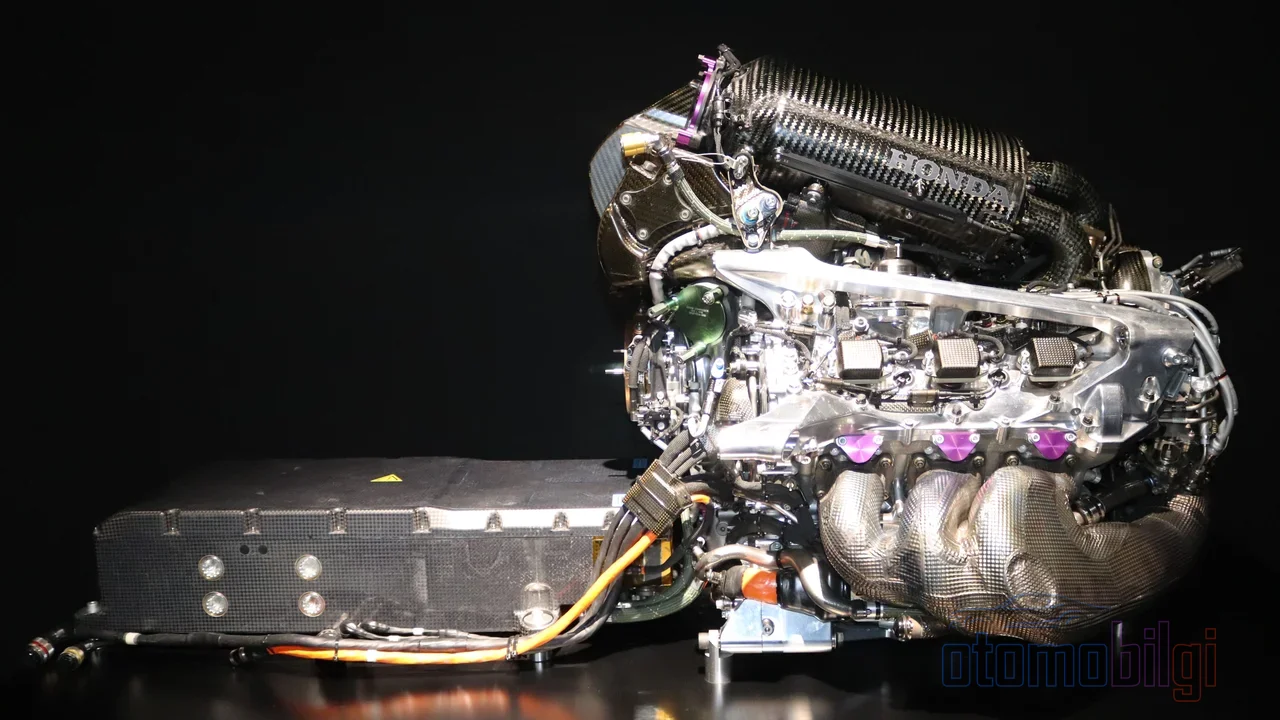
Think of it like this: In 2005, a Formula 1 car scratching out of a corner with a V10 engine at 19,000 rpm forced people in the grandstands to cover their ears. Today you are standing at that same grandstand, and the engine sound... is a bit quieter, a bit more "electric". So what happened in between? The short answer is actually three letters and one number: FIA and 15,000. But here is the really interesting part: Although today's engines have a rev limit of 15,000 rpm on paper, teams rarely exceed 13,000 rpm in races. Yes, you read that right. The limit exists, but no one even comes close to it. Why is it allowed yet no one uses it? The answer is a story built on sound, fuel, energy and money.
How Did the Rev Limit Reach 15,000?
First, a bit of history. In the early 2000s, F1 engines were almost unlimited. The V10 engines of manufacturers like BMW and Cosworth could exceed the 20,000 rpm threshold; the Cosworth CA engine of 2006 was a member of that legendary club. But this madness was madness with a price. Engines went to the trash after every race, and budgets were going through the roof.
The FIA made its first intervention into this picture in 2007, pulling the rev limit to 19,000 rpm. The real big change came on June 29, 2011: The World Motor Sport Council approved the switch to 1.6-liter V6 turbo-hybrid engines from the 2014 season onward. The rev limit of the new engines was initially considered to be 12,000 but was raised to 15,000.
And here is a detail most people do not know: The FIA clearly stated that the reason for raising the limit from 12,000 to 15,000 was not sound. The aim was to give engineers more flexibility in power and energy management. It was stated from the start that there would be no change in consumption, since the fuel flow limit stayed the same. In other words, the rule maker was thinking about the garage, not the grandstands.
The Real Boss Is Not Revs, But Fuel Flow
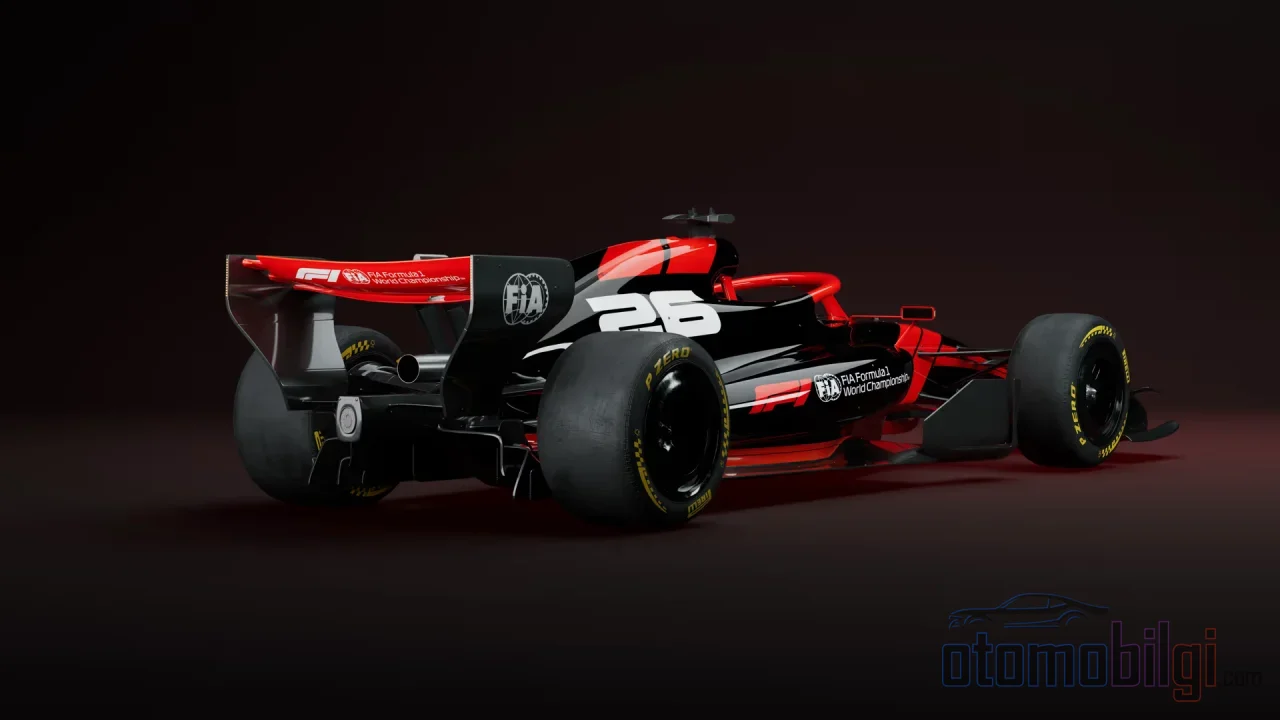
Now let us get to the most critical part of this story. In the hidden rulebook of the turbo-hybrid era, there is a formula that goes like this: (0.009 × revs) + 5.5 kg/hour, with a cap of 100 kg of fuel flow per hour. What does this mean? The higher the engine revs, the more fuel you can pump, but after 10,500 rpm the tap closes completely: 100 kg/hour and not a single gram more.
Key Highlights
- The written rev limit of the turbo-hybrid era is 15,000 rpm, in practice engines operate around 12,000-13,000 rpm
- The fuel flow formula: (0.009 × revs) + 5.5 kg/hour, up to a ceiling of 100 kg/hour
- In the V10 era, engines reached 20,000 rpm; the V8 period was limited to 18,000 rpm
- The rev limit was first raised to 19,000 rpm in 2007 due to cost
- In 2026 the MGU-H was removed and MGU-K capacity rose to 350 kW
Let me explain this with an analogy: Think of the engine as a cyclist. The faster the cyclist pedals, the faster they go, but there is an energy drink limit. At 12,000 rpm, you reach that limit. Even if you keep pedaling faster, you cannot produce extra power once your drink is finished. This is exactly where F1 engines stop: An engine hitting its fuel flow limit around 12,000 rpm finds no point in going higher in terms of power. Moreover, above 15,000 rpm the mixture becomes extremely lean (meaning less fuel in the air-fuel ratio), and this both reduces efficiency and is bad for engine health.
That's why critics say the 15,000 rpm limit remains only on paper, and that the engines in fact reach their ceiling at around 11,000-12,000 rpm. So the answer to the question, in a single word: economics. As rpm increases, friction and pumping losses grow, and the extra power extracted from the fuel cannot compensate for these losses. Completely logical for engineers, somewhat sad for those of us in the stands.
Why Could Old Engines Rev So High?
So how did engines rev to 20,000 rpm in 2006 but cannot do so now? The answer lies partly in technology, but mostly in the rules. On the technical side, the biggest hero was the pneumatic valve system. Steel springs caused a problem called "valve float" at around 12,000 rpm and above: the springs could not open and close fast enough, leaving the valves uncontrolled. In 1986, Renault broke down this wall by developing a pneumatic valve system running on pressurized nitrogen; the system was charged before the race at a pressure of 100-150 bar. And I used the word "charged" deliberately here, because this is a pressure system, not an electric battery.
The numbers collide head-on: In a 2.4-liter V8 at 18,000 rpm, the pistons were subjected to accelerations of about 10,000 G. Naturally aspirated V8s typically operated at 18,000 rpm between 2006 and 2013. But those engines could reach those rpm figures because there was no fuel flow tap limiting them. While pre-2014 engines consumed about 150 kg of fuel per race, in the new generation consumption is tightly squeezed by the flow limit. When the rules changed, the game changed completely.
What Did the 2014 Engines Consist Of?
The new generation power unit was a 1.6-liter V6 turbo configuration, had a minimum weight of 145 kg, and produced 750-800 horsepower. The Turbulent Jet Ignition (TJI) technology that entered F1 in 2015, with its pre-chamber logic, provided more homogeneous combustion and higher efficiency. The fuel conversion efficiency of turbo-hybrid engines at peak power reached about 45%. So these engines are not "weak"; on the contrary, they were the most efficient F1 engines in history. They simply obtained their power from a different place, in a smarter way.
How Did the MGU-H Shape the Era of Energy Recovery?
Now let's turn to the hybrid side of the story, because the 12,000-13,000 rpm choice relates not only to fuel but also to energy management. The MGU-H was a system that converted the heat energy of exhaust gases into electricity via a generator on the turbocharger shaft. As engine rpm increases, the energy exiting the exhaust also increases, and the MGU-H collected this energy and transferred it to the battery or to the MGU-K. Mercedes was proud enough of this technology to carry it over to its road cars. So high revs in this era are a line item not only in the combustion chamber but also in the energy budget calculation.
That is exactly why, when the FIA raised the rev limit from 12,000 to 15,000, it wanted to give engineers flexibility in power and energy management: teams choose the most efficient operating point themselves within the fuel flow limit, and this point almost always falls within the 12,000-13,000 rpm band.
Why the Sound Changed and What Will Happen in 2026?
Now let's turn to the topic that had everyone wiping away tears: the sound. Since 2014, the turbo-hybrid engines have been criticized for their technology, cost, and sound. The switch from naturally aspirated engines to turbocharged setups made the engines significantly quieter; the turbo was swallowing the exhaust's energy and absorbing the sound like a kind of sponge. Even Bernie Ecclestone did not hide his horror at the sound of the V6 turbo-hybrids. If the old rev ranges and the new rev ranges are placed side by side, the difference is clearly visible:
| Engine Era | Typical Rev Range | Sound Character |
|---|---|---|
| V10 (early 2000s) | Up to 20,000 rpm | An ear-piercing scream |
| V8 (2006-2013) | Around 18,000 rpm | Shrill and loud |
| V6 turbo-hybrid (2014-2025) | 12,000-13,000 rpm | Muffled with an electronic tone |
Of course, not everyone agrees; while some actually prefer the current V6 sound to the old V8s, it is also argued that the biggest reason behind the change in sound is the direction of the automotive industry. A small cylinder count and small displacement directly determine the sound character.
As for 2026, it promises hope on the sound front. The MGU-H was removed and the MGU-K's recovery capacity was raised to 350 kW. With the MGU-H gone, the component that spun the turbocharger electrically disappeared; there will be less back pressure on the engine, the turbo will draw less energy, and therefore an increase in sound is expected. Max Verstappen stated that he finds the 2026 engine sound clear and sharp. In the new era, the power distribution is targeted to be roughly half electric and half internal combustion. On the other hand, the early days were not polished: after Honda shared the first sound recordings, software and battery problems were reported, and a debate over a possible rule loophole among manufacturers is also ongoing.
The Federation's Real Concern: Fuel and Cost
In the rev limit story, there are two items that always remain in the background but are actually the most decisive: fuel flow and cost. The fuel flow limit was the technical reason the engines stayed at 12,000-13,000 rpm. On the cost side, the rule decision shows that the engine has been turned into a permanent policy tool. The F1 cost cap rose to 215 million dollars; in addition, in 2026 the power unit budget limit rises to 190 million dollars, with additional allowances available. Manufacturers are working under a strict engine cost cap that leaves almost no room for late design or reinterpretation. High revs mean more heat, more wear, and more expensive materials. The federation had also done this in 2007, when the limit went to 19,000, out of cost concerns. The 15,000 figure in 2014 was the same logic, adapted to the hybrid era.
Short Answer: Why Is the F1 Engine Rev Limit 15,000?
Let's sum it up. The rev limit in F1 was set to 15,000 to give engineers flexibility in power and energy management during the hybrid transition and to adapt to the new generation of engines without changing fuel consumption. But in practice, the engines don't use this limit, because the 100 kg/hour fuel flow ceiling pushes the performance peak to around 12,000 rpm; anything above that is just wasted fuel, a lean mixture, and unnecessary mechanical stress. So the 15,000 figure is not an invitation, it's a ceiling; the real limiting factor is not revs, but fuel.
With Ben Sulayem's announcement of a switch to simpler, louder V8 engines, 2026 is reestablishing these balances. In the era of engines without the MGU-H, louder and with a bigger electric share, the rev choice will also be reshaped. Will the 20,000 rpm screams of the V10s return? Probably not. But the chance for engine sound to once again shake the grandstands could at least be a noisier epilogue to this clever game played between fuel flow and revs.