How Many Engines Can Be Used in an F1 Season?
Say your favorite driver puts in a brilliant lap in qualifying and will start from pole position. The next day, you turn on the news and see this: hit with a 30-place grid penalty due to an engine change and sent to the back of the grid. In short, he has to fight his way forward through torrential rain on Sunday. The first time I saw this, I got really angry too; why should changing an engine result in a penalty? The answer is simple yet just as ruthless: in Formula 1, the number of engine components you can use in a season is limited, and if you exceed that limit, you pay the price on the grid.
So exactly how many engines can be used? Why do you take a penalty for some components but not others? Why do teams deliberately sacrifice some races to "clear" the penalty there? On this page, I explain all of it step by step, with the new rules of the 2026 season and real examples from this season. If you're ready, let's get started, because this topic is a chess game far more strategic than it appears.
What Is a Power Unit, and Why Is It Not Just One Engine?
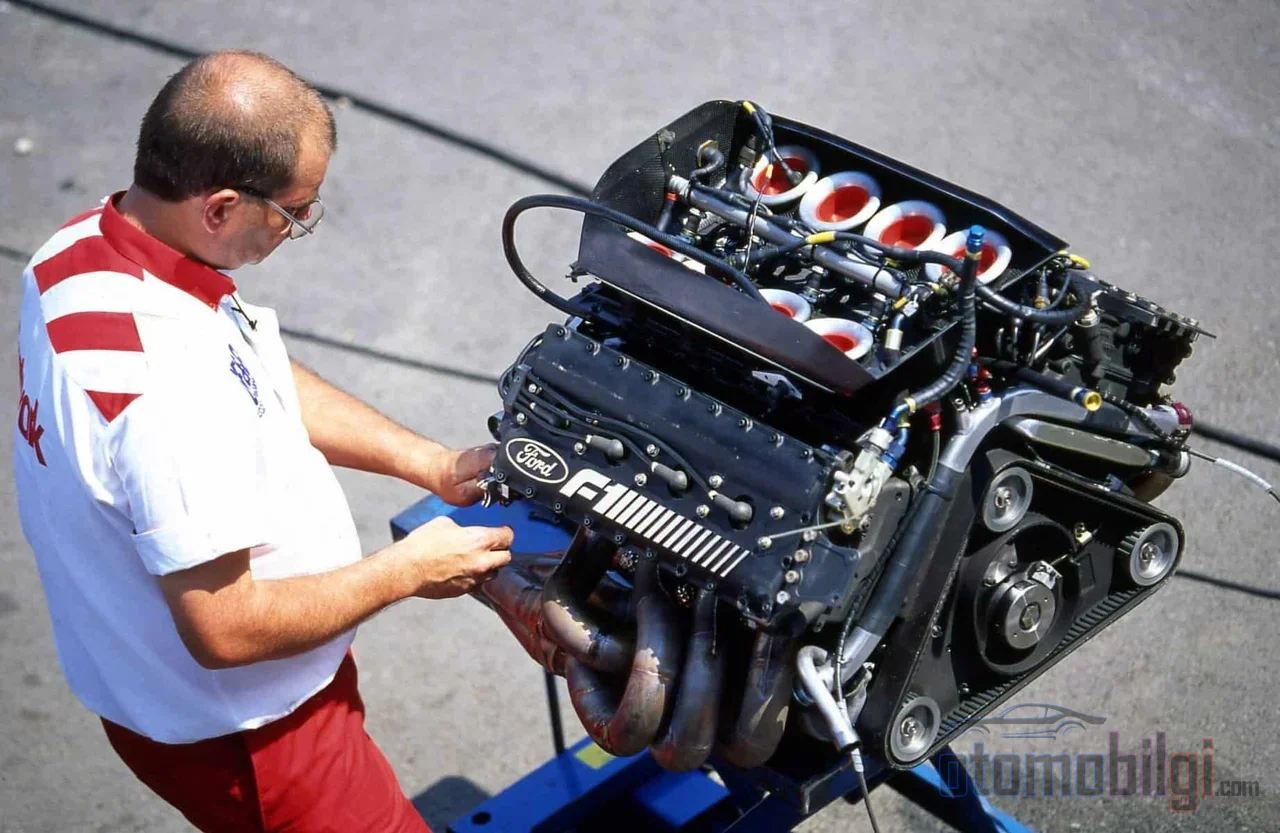
Let's first correct a common misconception: what we call the "engine" in F1 cars is actually not a single piece, but the sum of a bundle of components. In the FIA's technical regulations, this package is called the power unit and it consists of four main parts: the internal combustion engine (ICE), the turbocharger (TC), the energy recovery system components, and the control electronics that govern all of them. The electric side is handled by the MGU-K and the energy store (ES). So when we say "they changed the engine," usually only a few of these parts are replaced, not all of them.
The 2026 season marks a complete turning point in this regard. In the new power unit regulations, the MGU-H was completely removed, the fuel flow was reduced from 100 kg per hour to roughly 75 kg, and the share of the electric side grew significantly: the electrical power of the ERS-K cannot exceed 350 kW, while the mechanical torque of the MGU-K is limited to 500 Nm. On the internal combustion side, a four-stroke engine with a 1600cc, six-cylinder, 90-degree V configuration is mandatory. In other words, Formula 1 has turned into a hybrid creature splitting fuel power and electric power roughly in half; some drivers even made humorous comments comparing this new balance to karting games.
How Is the Engine Allocation Distributed in the 2026 Season?
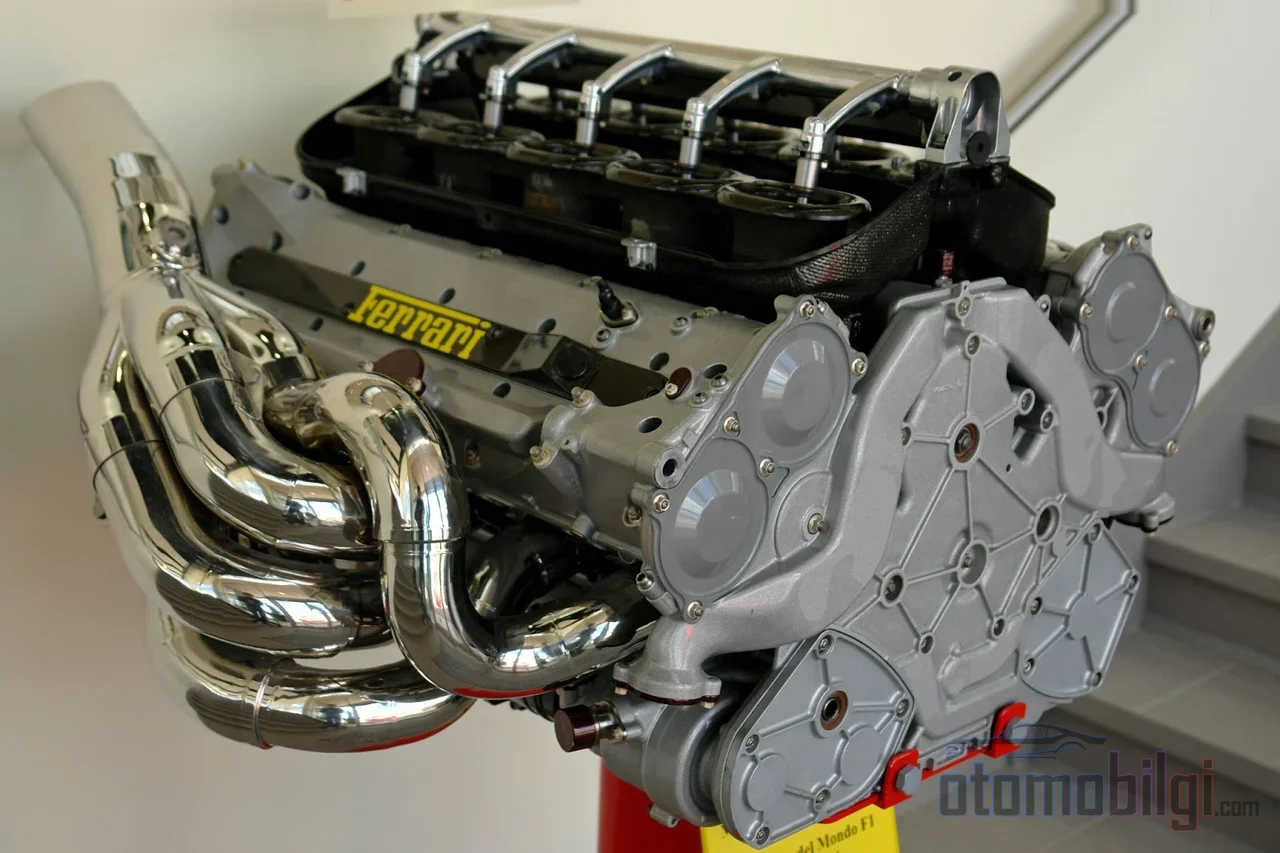
Here is the heart of the rule: each driver can use a certain number of "penalty-free" units of each component throughout the season. The 2026 figures are as follows: 4 internal combustion engines, 4 turbochargers, 3 MGU-Ks, 3 energy stores, 3 control electronics and 4 sets of exhausts. This allocation is driver-based, meaning it is deducted from the driver's account, not the team's. The point you need to pay attention to is this: engines and turbochargers have a higher allowance, while the MGU-K and energy store have a lower one. This is why strange situations can occur; for example, a driver may have used up his MGU-K allowance while his engine allocation is still intact.
Key Highlights
- In 2026, a driver is entitled to 4 internal combustion engines and 4 turbochargers throughout the season.
- The limit for the MGU-K, energy store and control electronics is 3 units, and 4 sets for exhausts.
- Every new component that exceeds the limit brings a 10-place grid penalty in the race where it is first used.
- If the total penalty exceeds 15 places, the driver starts the race from the very back of the grid.
- This season's example: Verstappen received a 30-place penalty in São Paulo for his fifth engine, turbocharger and exhaust set.
There is also a historical context, because these numbers were not always like this. Before 2026, 8 units per driver were allowed; in 2026 this number dropped to 4, and next season, in 2027, it will fall to 3. So every year we are getting a bit tighter. For teams, this means striking a fine balance between performance, cost and reliability; fewer engines mean both lower costs and more durability testing. Indeed, at the start of the season, serious concerns were voiced that some teams' cars might not even hold up through the first half of the season.
What Happens When the Engine Limit Is Exceeded? How the Penalty System Works
The rule's mechanics are actually very clear: every new component beyond the allowed number is reflected as a grid penalty in the race where it is used for the first time. The standard penalty is 10 places. If you exceed the same component group a second time, an additional penalty is added on top. And the bitter side of the medal: the moment your total penalty exceeds 15 places, it no longer matters how many places you received; you start the race directly from the very back of the grid. So there is practically no difference between a 20-place penalty and a 75-place penalty, both mean the very back row.
There is another detail announced by the FIA: drivers can continue using one extra unit of each component without penalty, so the fourth engine is seen as a kind of "bonus". But the moment you move to a fifth engine, things get serious. The best example of this this season was the São Paulo GP: Verstappen took a 30-place penalty from the stewards for fitting his fifth internal combustion engine, fifth turbocharger and fifth exhaust set. In the same race, Hamilton and Leclerc were also pushed back on the grid due to new power unit components; Hamilton's full engine change carried a 75-place penalty, taking him all the way to the very back. That Sunday, apart from Norris in pole position, the grid had been virtually reshuffled by engine penalties.
Examples like this came one after another throughout the season. Norris received a 10-place penalty at the Belgian GP for exceeding component limits. Russell started 5 places back in São Paulo, and then took an additional 20-place penalty for another infringement. Antonelli at the Italian GP, Lindblad in Austin, and Alonso and Stroll in Baku were all penalized with engine-related penalties. One criticism from a former driver that found plenty of resonance was this: these penalties punish the technical allocation rather than the racers, pushing good battles to the bottom of the grid. The criticisms were so intense that rethinking engine grid penalties for 2027 even came onto the agenda.
How Is the Engine Managed Within a Race Weekend?
Engine management is not just the question of "how many do we have"; the rules are also in effect during the weekend itself. Regulations also interfere with how the hybrid system is used: The MGU-K cannot be charged more than 100 kilojoules during a pit stop, and it cannot be engaged at launch until the car reaches 50 km/h. Pit lane starts are an exception to this rule. These details directly affect how teams distribute energy on every lap.
As for component changes: teams can change parts even during practice sessions throughout the weekend, but the moment a new unit enters the list, the penalty for that race is triggered. So a fifth engine fitted during Friday's third practice session disrupts Sunday's race grid. Because teams know this, they deliberately time the change to the most suitable moment, usually the weekend where it will affect their race the least.
How Do Teams Plan Their Engine Pool?
This is the cleverest part of the business. At the start of the season, teams do the math: there are around 24 races, we have 4 engines, so each unit must be planned to last roughly 6-7 races. Distributing the lifespan of spare parts according to the race track is one of the invisible but most critical jobs of the season. Teams track component usage like a ledger, per driver and per team; how many engines each driver has left, who is how close to a penalty - all of it hangs on the strategy room wall.
If a penalty becomes inevitable, the question changes: where is it least harmful to take the penalty? Russell's approach throughout the season is a good example of this. His team knew they would have to take a penalty and planned to place it at the most suitable point on the calendar; Russell openly stated that they would have to take a penalty at some point towards the end of the season, probably in Las Vegas. The Baku and São Paulo penalties were also strategically planned with similar logic, to minimize performance loss towards the end of the season. So some of those grid penalties were not accidents, but the result of calm planning.
There are also attempts to "dump" penalties onto a teammate. Since drivers' allocations are individual, it is not possible to transfer one driver's penalty to another; the regulations have closed that door. Even whether convoluted scenarios like a chassis change could circumvent the rules have been topics of discussion in technical circles.
Short Answer: How Many Engines Can Be Used in an F1 Season?
Here is the clear, quotable answer to the question: In the 2026 Formula 1 season, a driver may use at most 4 internal combustion engines and 4 turbochargers, plus 3 MGU-Ks, 3 energy stores and 3 control electronics, and 4 sets of exhausts over the course of the season. Each new component exceeding these numbers results in a standard 10-place grid penalty at the race where it is first used; if the total penalty exceeds 15 places, the driver starts the race from the very back of the grid. As long as the limits are not exceeded, parts can be rebuilt and serviced, so the cap is really a limit on physical material stock.
What Will Change in the Coming Years?
This topic is not static; on the contrary, it is changing rapidly. For 2027, the number of units is planned to be reduced from 4 to 3, and comprehensive changes to engine rules have been accepted in principle. Also, from 2027, the use of different wheel specifications between qualifying sessions and the race will be banned. Looking at the longer term, for 2030 an agreement has been reached on a V8 turbo architecture, lighter construction and simplified design. So the figures you learned today will change again within a few years; but the spirit of the system will remain the same: fewer parts, longer life, smart planning.
Let's sum it up. Engine penalties are one of the fundamental pillars of the sport's cost control - something even journalist colleagues complain about and fans sometimes find unfair. The 2026 season showed us that these rules can directly affect the championship fight: a driver starting from the back of the grid can climb all the way to the podium with good planning and a bit of luck. Have you ever wondered how many engines your favorite driver has used this season? Now you can understand whether their penalty-free allocation has run out much faster than through a news report.
Sources
- 2026 Formula 1 Power Unit Technical Regulations (FIA)
- Beginner's guide to F1 power unit penalties (Formula1.com)
- F1 2026 engine rules and penalties (RacingNews365)
- Power unit components used per driver in 2026 (Formula1.com)
- Norris's Belgian GP grid penalty (Formula1.com)
- Brazilian GP engine penalties (GrandPrix.com)
- Power unit regulation changes (Mercedes AMG F1)
- 2026 grid component usage statistics (AutoRacing1)