How Is a Grid Penalty Applied in F1?
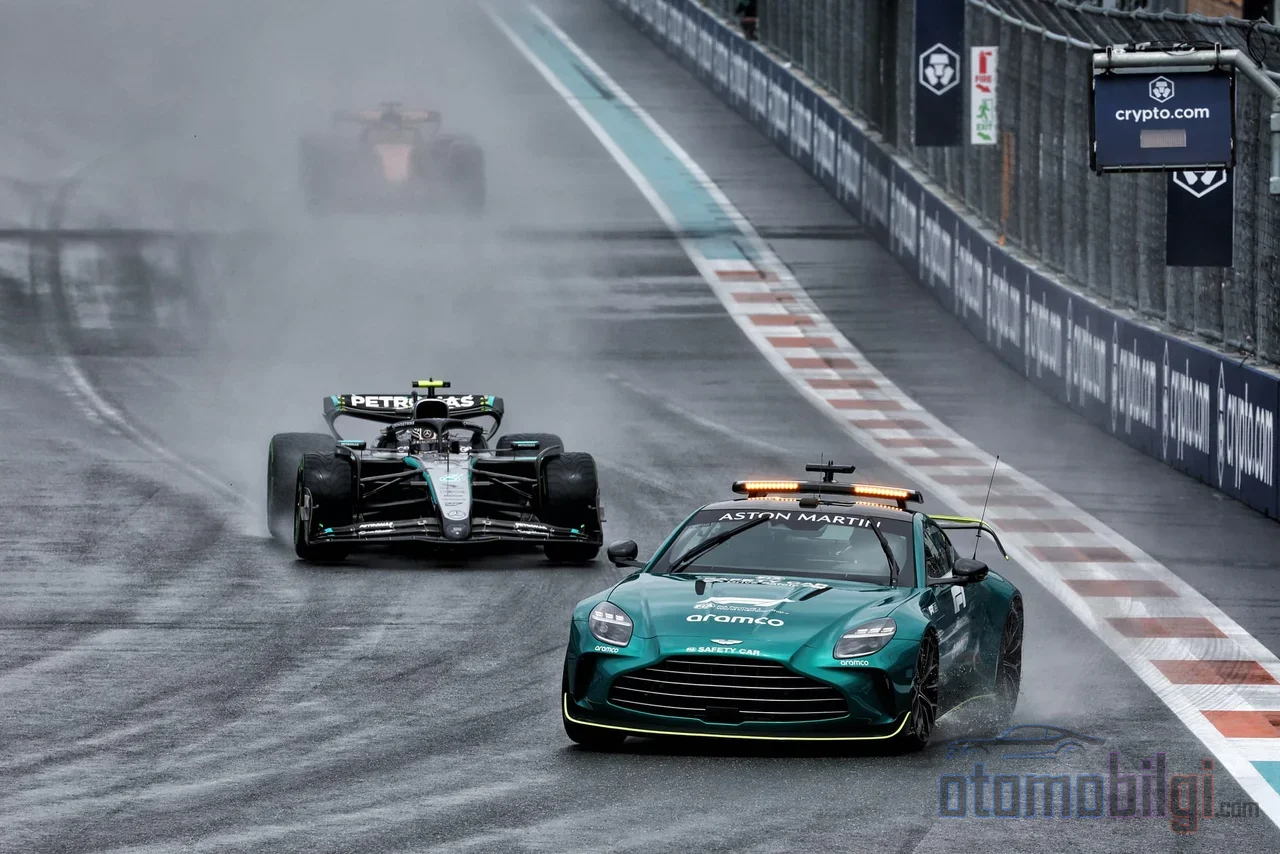
While being brilliant in qualifying sessions, starting Sunday completely from the back of the grid... This is one of the most brutal scenes you will see in Formula 1, and most of the time the engine is to blame. So how exactly is a grid penalty calculated? Why are some penalties 10 places, some 5 places, and others send the driver all the way to the back? What is more, the rules changed quite a bit in 2026. Let's dive into this penalty system below, because there is actually a much more systematic game here than you might think.
What Exactly Is a Grid Penalty and When Is It Applied?
A grid penalty means the driver starts a certain number of places behind their qualifying result in the next race they take part in. For example, a driver who puts in a stunning lap in qualifying and qualifies 3rd could line up 13th on the grid on Sunday if they have a penalty. The penalty kicks in after qualifying; that is, the driver runs the race weekend normally, only the starting position is corrected afterwards. Imagine having the fastest car on paper, but the reward is starting from the back. That is the painful side of it!
So where do these penalties come from? There are fundamentally two major sources: technical and sporting violations. On the technical side, the most common cause we see is power unit component changes; on the sporting side, there are violations on track. Let's break down both one by one, because it is exactly these categories that determine the size of the penalty.
Power Unit Components: How Does Exceeding the Quota Turn into a Penalty?
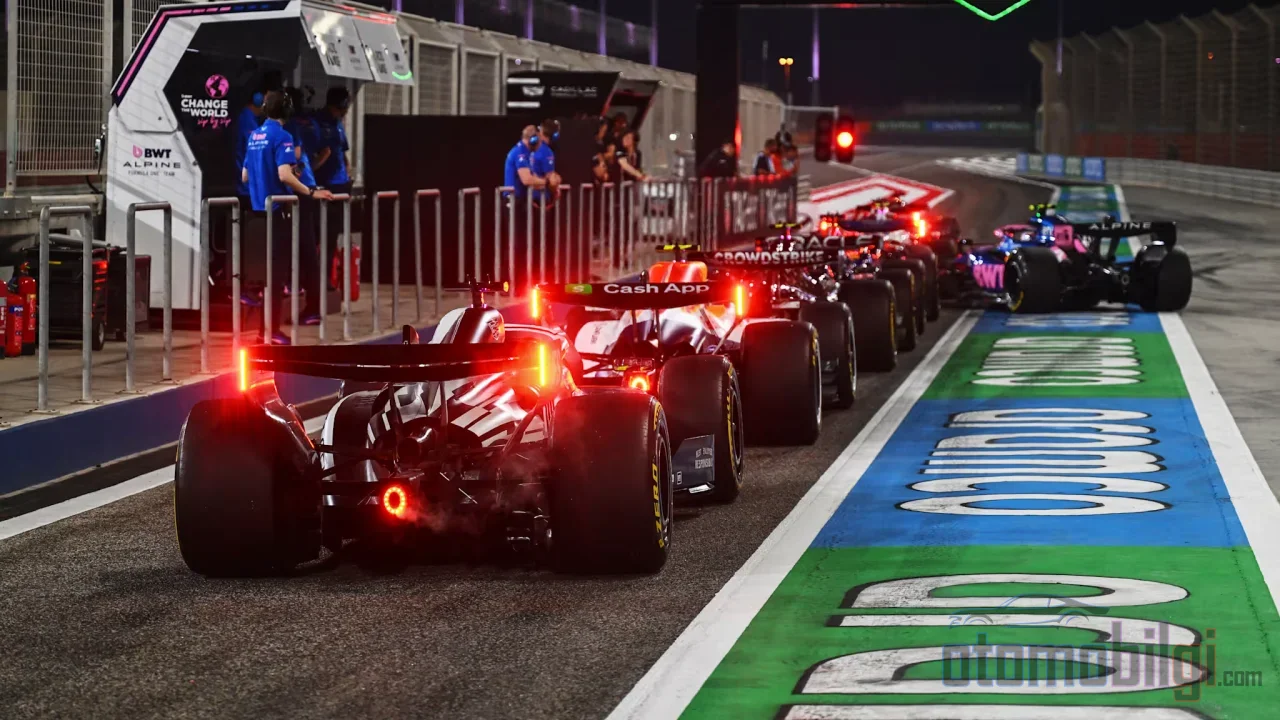
Every F1 car's power unit consists of a certain number of parts, and each part has a quota you can use throughout the season. If one of the parts fails or the team wants to bring a more powerful version, the quota comes into play. Components cannot be changed without the FIA's knowledge, because they are sealed; a new component is counted as "used" the moment it is detected by the transponder when the car leaves the pit lane during an official session. So it is impossible for anything to slip past anyone; everything is on record.
In the 2026 season, the number of components also changed, because the component called MGU-H was removed from the regulations to reduce cost and complexity. The remaining components and their seasonal quotas are as follows:
| Component | 2026 Quota | Bonus (penalty-free extra) |
|---|---|---|
| Internal combustion engine (ICE) | 3 | +1 |
| Turbocharger | 3 | +1 |
| Exhaust | 3 | +1 |
| MGU-K | 2 | +1 |
| Energy store (ES) | 2 | +1 |
| Control electronics (CE) | 2 | +1 |
This bonus quota is the most important innovation of 2026: you can use one extra part of each component penalty-free. From 2027 onwards, the quotas will decrease again and the points system will be simplified. In addition, manufacturers supplying a power unit for the first time earn bonus quota rights; Cadillac, which plans to use its own unit from 2029 onwards, will be among the manufacturers benefiting from this advantage. And one interesting detail: gearbox changes no longer incur a grid penalty; this penalty has been abolished since 2025.
Highlights
- The first time a quota is exceeded, the component brings a 10-place penalty; subsequent exceedances of the same component bring a 5-place penalty.
- If the total penalty exceeds 15 places, the driver starts the race from the very back of the grid.
- In 2026, there is one penalty-free bonus use for each power unit component.
- Power unit penalties are attached to the car, not the driver; even if the driver changes, the history stays with the car.
- Since 2025, a gearbox change no longer brings a grid penalty.
How Is the Number of Penalties Calculated? The 10-Place, 5-Place and Start-at-the-Back Rule
The calculation logic is actually quite simple. If you exceed a component's quota for the first time, you receive a 10-place penalty. A second and subsequent exceedance of the same component type means 5 places each. If multiple penalties accumulate in the same event, they are all added cumulatively. So if both a new internal combustion engine and a new energy store are fitted on the same weekend, two separate 10-place penalties can stack on top of each other - can you imagine what that means for a driver?
The harshest threshold here is 15 places: if the accumulated penalty exceeds 15 places, the driver starts the race behind all competitors who set a time in qualifying, i.e. from the very back of the grid. From that point on, the question "which position am I in?" becomes meaningless; the answer is always "at the very back". That's why, when a penalty already requires starting from the back, some teams strategically choose a completely different route: starting from the pit lane. We'll come to that shortly.
Another frequently asked question: does a penalty prevent participation in qualifying? No. Penalized drivers run qualifying as normal, their time is recorded, and their starting position is corrected afterwards by the penalty amount. Also, if a car fails before the race starts (such as an engine failure in qualifying), the car can still take part in the race but starts with a 10-place penalty.
If Multiple Drivers Receive Penalties, How Is the Grid Rearranged?
Here is one of F1's most confusing moments! When multiple drivers carry multiple penalties at the same time, how do we arrange the grid? After the major confusion at the 2022 Italian GP, the FIA clarified this process and now uses a method known as the "empty grid". It works step by step like this:
- Each driver with a penalty of 15 places or fewer receives a "provisional grid position" equal to their qualifying result. For example, a driver who qualified 10th and carries a 15-place penalty drops to 25th provisional position.
- Penalty-free drivers are first placed in their own actual positions.
- Then the penalized drivers are shifted forward to fill the gaps in between.
- If two drivers share the same provisional position, the one who was slower in qualifying keeps that position; the faster one is placed right in front of it.
In 2026, the FIA also updated the International Sporting Code to give stewards additional flexibility: stewards can now adjust penalties and, if necessary, convert 5-second penalties into grid penalties. This is still a debated and current area of penalty application; but the goal is clear: for the grid to line up consistently and predictably under all conditions.
When Does a Pit Lane Start Come Into Play?
Grid penalties also have a "box": the pit lane start. Under parc fermé conditions - meaning the period when teams are forbidden from making major changes to the cars - if a team has to make significant interventions such as bodywork, suspension adjustment, or chassis or setup changes, the car starts the race from the pit lane. Starting from the very back of the grid and starting from the pit lane produce a practically similar outcome; in fact, if the penalty already requires starting from the very back anyway, teams can prefer the pit lane for its cosmetic advantages and setup freedom.
One more distinction needs to be made: time penalties given during the race, such as 5-second, 10-second, stop-go, and drive-through, are an entirely different category from grid penalties. A 5-second penalty is applied either during the pit stop or added to the time at the end of the race. In other words, a grid penalty answers the question "where will you start", while a time penalty answers "how many seconds will you lose".
How Do Teams Incorporate Penalty Risk into Strategy?
Here is the truly clever side of the matter. A grid penalty is not a disaster for teams, but a calculable cost. The strategy is this: if a component change is going to incur a penalty anyway, the team pulls the other component changes that will be needed later into the same race. Because when the driver is already starting from the very back, the marginal effect of an extra 5-10 places is nearly zero. This way, the rest of the season is cleared of penalties.
The 2026 Italian GP was a textbook example of this. At Monza, Liam Lawson accumulated a total of 35 places in penalties - three separate 5-place penalties for the internal combustion engine, turbocharger, and exhaust, and two separate 10-place penalties for the new MGU-K and power unit. A relevant detail: Since Lawson used Hadjar's car, the component history was carried over to him along with the car. Kimi Antonelli, on the other hand, fitted a 5th internal combustion engine, a 4th energy store, and a 4th set of control electronics, and since each was a first addition, he received 10-place penalties for each, totaling 30 places. Alexander Albon also started with a 5th internal combustion engine and 4th control electronics, with a 20-place penalty - all three were effectively at the very back of the grid.
Mercedes consciously accepted Antonelli's penalty at Monza; because the track's long straights and the possibility of benefiting from the slipstream of the car ahead make overtaking easier. George Russell also openly stated that he expects to receive a grid penalty in the future, having reached multiple component quotas during the season, and with similar reasoning, he believes such a penalty would be less damaging at the Las Vegas track, which has long straights. McLaren, meanwhile, secured the fourth component for Norris before the Belgian GP and announced the upcoming 10-place penalty in advance - they didn't want anyone to be caught by surprise. In contrast, Ferrari, McLaren, Haas, Audi, Alpine, and Red Bull were among the teams that could change components without penalty at Monza, as they remained within their quotas.
Penalties arising from sporting infractions, however, can be much smaller. At the Mexican GP, Verstappen and Lawson, 2. received a one-place grid penalty each due to contact during practice sessions. So grid penalties aren't just about engine changes; if you cross the line on track, there's a penalty for that too, but only the one-place version.
Does the Penalty Follow the Driver or the Car?
This is one of the questions readers ask most, and the answer is critical to understanding penalties: power unit penalties are attached to the car, not the driver. If the driver changes during the season, the power unit usage history stays with the car, and the new driver is assessed based on the original driver's quota. The logic behind Lawson's 35-place penalty at Monza is exactly this: the car's component history comes with it, no matter who is in the seat.
There's also a corner case: if more than one penalized instance of the same component is fitted, only the last instance fitted can be used without additional penalty in subsequent events. The FIA has considered harsher penalties in the past to discourage tactical power unit changes, but with the 2026 regulation it chose to provide some breathing room, leaving one extra instance per component penalty-free.
How Is a Grid Penalty Applied? Summary of All the Rules
As promised, here's the clear answer in a single paragraph: If a driver exceeds the season quota of a power unit component for the first time, it brings a 10-place grid penalty, and each subsequent exceedance of the same component brings a 5-place penalty; penalties are accumulated, and if the total exceeds 15 places, the driver starts from the very back of the grid. In 2026, there is one penalty-free bonus usage per component. If there are multiple penalized drivers, the order is rearranged using the "empty grid" method, and power unit penalties are attached to the car, not the driver.
As you can see, a grid penalty may not seem fair, but it is definitely not random. It's a spreadsheet, a cost analysis, and a risk management game. The next time you see a driver winning a race or scoring points from the back of the grid, you'll now know the math behind it. Do you think this system is fair, or do teams slip through the cracks of the rules far too easily? My opinion: the side that knows the rules well wins - both on track and on the pit wall.
Sources
- The beginner's guide to F1 power unit penalties
- 2026 F1 Penalty Guidelines - FIA
- Formula One regulations
- F1 teams make power-unit changes at Monza as Lawson, Antonelli and Albon face grid penalties
- FIA clarifies 'empty grid' method for applying F1 penalties
- F1 2026 engine rules and penalties explained
- FIA confirm multiple grid penalties ahead of Belgian Grand Prix
- FIA announces: Verstappen and Lawson take grid penalties at the Mexico GP
- F1 Penalties Explained
- How do F1 penalties work?