A Guide to Qualifying, Sprint and the Points System in F1
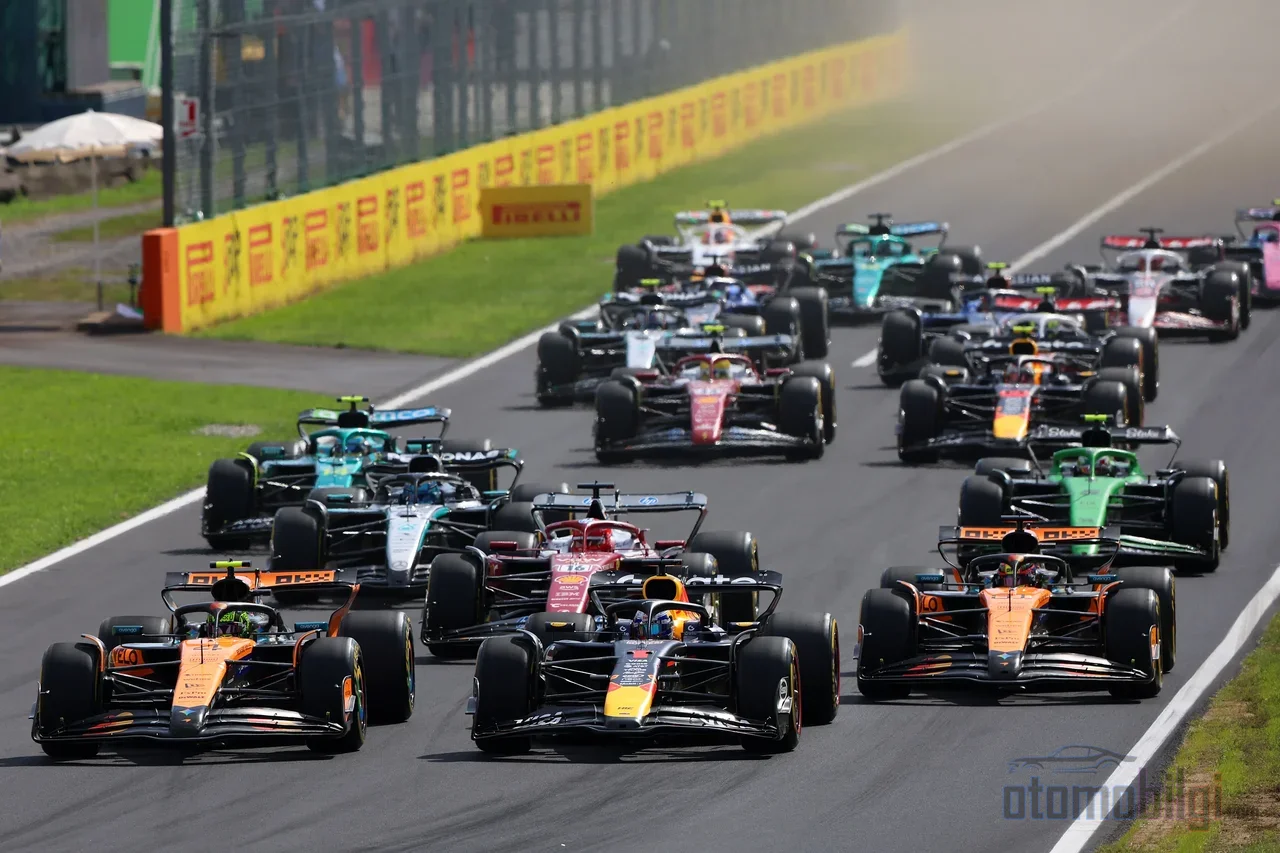
Share This Page
An F1 race weekend begins with Friday's practice sessions, sets the starting grid with Saturday's qualifying, and peaks with Sunday's Grand Prix; on some weekends, a short Sprint race squeezed into Saturday also awards extra points. The top 10 finishers collect points from 25 down to 1, while the fastest lap point has been gone since 2025. This guide walks anyone new to the series through the weekend from start to finish.
Highlights
- The standard weekend is three days: Friday practice, Saturday qualifying, Sunday race
- Qualifying has three stages: Q1 18 minutes, Q2 15 minutes, Q3 13 minutes
- Grand Prix points: to the top 10, 25-18-15-12-10-8-6-4-2-1
- The Sprint race 100 km and awards points to the top 8, from 8 down to 1 ; pit stops are not mandatory
- The fastest lap +1 point was abolished from the 2025 season onwards
If you too have sat down in front of the TV on a Sunday afternoon and asked yourself "wait, what was qualifying again, and why is there practice on Friday?", you're in the right place. Getting started with F1 is really like learning the rules of a game: once you know the rules, everything becomes more fun. Let's go step by step.
How Does the F1 Race Weekend Schedule Work?
A standard F1 weekend lasts three days and usually starts on Friday. Friday has two practice sessions (FP1 and FP2), Saturday morning has one more practice session (FP3) and qualifying in the afternoon, and Sunday is the big race. As the name suggests, it's a "Grand Prix": the star of the week is the race run on Sunday.
Practice sessions have lasted one hour each since 2021; before that, the Friday sessions were 90 minutes. So what happens in these sessions? FP1 is mostly spent on checking the car and setup adjustments. In FP2, teams try long stints and qualifying simulations; in other words, answers are gathered to questions like how the tires behave over race distance and how fast a single flying lap can be on an empty track. FP3 is the session of short runs in preparation for qualifying.
Behind it all lies a huge ocean of data: cars carry more than 250 sensors, and over a race weekend more than 1 terabyte of data is generated per car. So the engineers aren't just changing tires - they read thousands of rows of data on nearly every lap.
There's also a nice rule: every driver must give up their seat in two FP1 sessions during the season to a "rookie," meaning a driver who has competed in no more than two F1 races. This way, young names get the chance to learn the track, at least in practice.
How Qualifying Works: The Q1, Q2 and Q3 Knockout System
Qualifying is the stopwatch duel that determines who will start at the front in Sunday's race. Since 2006, a three-stage "knockout" elimination system has been used, and it works just as its name suggests: in each stage, the slowest ones are eliminated.
In 2026 there are 11 teams and 22 cars on the grid, so the format of qualifying has changed a bit:
- Q1 (18 minutes): All 22 cars are on track; the slowest 6 cars are eliminated and take up grid positions from 16th place backwards.
- Q2 (15 minutes): The remaining 16 cars battle it out, and again the slowest 6 cars are eliminated.
- Q3 (13 minutes): The remaining 10 drivers battle for the first 10 grid slots; the fastest takes pole position.
Until 2025, in a 20-car grid, 5 cars were eliminated each round; the 22-car field in 2026 raised these numbers to six. And here's an interesting detail: cars eliminated in Q1 must set a lap within 107% of the fastest Q1 time. This rule is not applied in wet sessions. So you could call it the "even if we're really slow, show some effort" rule.
There was a time when tires were also a strategy in qualifying: those who made it into the top 10 had to start the race on the tires they used in Q2. Since 2022 this requirement has been removed, and everyone can start on the tire of their choice regardless of their grid position.
Was the qualifying format always like this?
No! Its history is quite colorful. Before 1950, the grid was determined by a draw; between 1950 and 96, two separate one-hour sessions were run, in 1996 it moved to a single one-hour session with a 12-lap limit, and between 2003 and 05 a one-lap format was tried. In 2006, today's three-stage system arrived. In 2016, a strange 90-second elimination system was even tried for a short time but was reversed after two races. And there's a legendary moment: at the 1997 European Grand Prix, Villeneuve, Schumacher and Frentzen set the same lap time (1:21.072); pole went to Villeneuve, who set it first. So even championships have their coincidences.
Pole Position and Grid Penalties: Who Starts Where?
Pole position is the foremost spot at the start occupied by the driver with the fastest time in qualifying. Starting at the front in the race is a huge advantage, especially on tracks where overtaking is difficult; that's why drivers give it their all in Q3's final ten.
But it doesn't always go that smoothly. A grid penalty means a driver drops a certain number of positions in the next race they enter. Engine component changes or track violations are the main causes of these penalties. The mechanics are simple: if a driver who would normally be on pole receives a 5-place penalty then they start from P6, and everyone behind them moves up one position each. So don't be surprised when you see drivers who led qualifying starting mid-pack on Sunday; a penalty is probably in effect.
What Difference Does a Sprint Weekend Make?
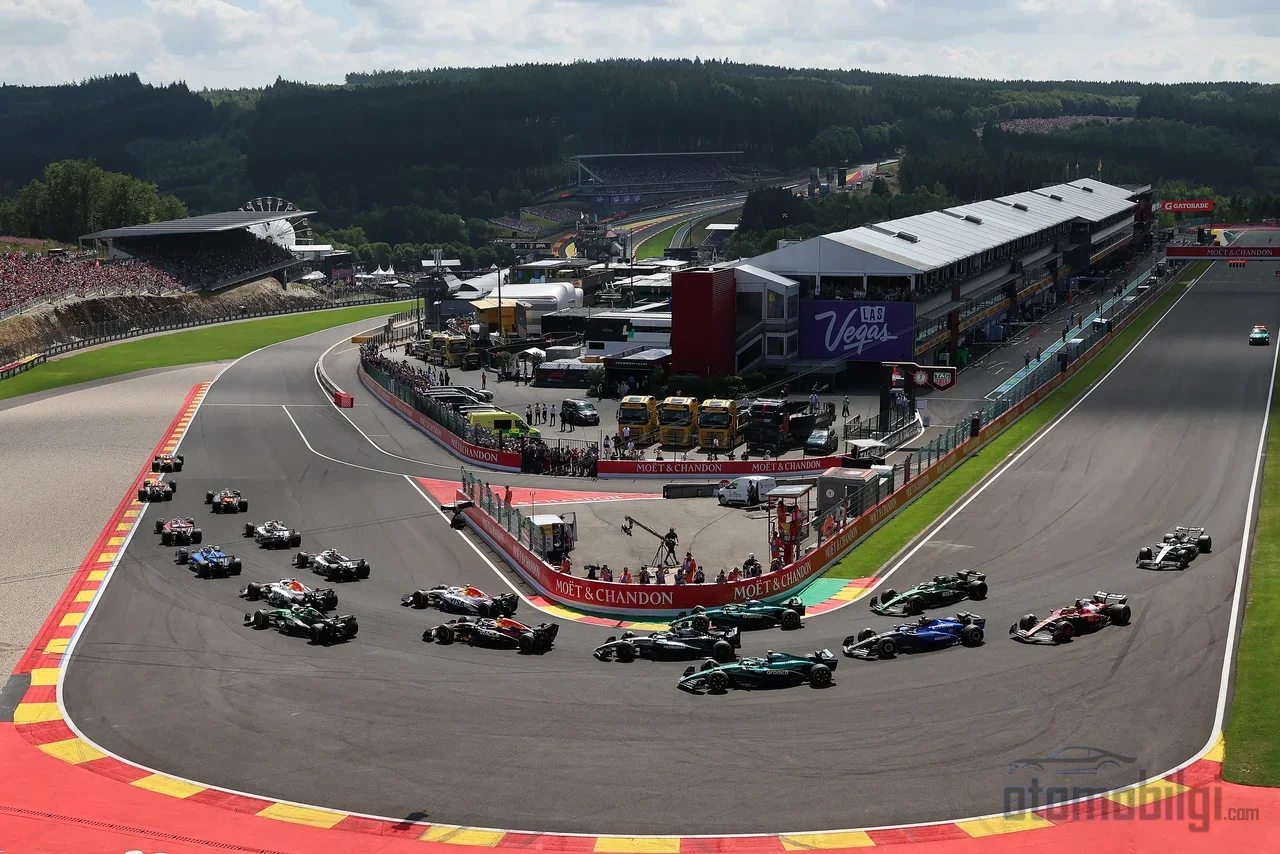
Now let's get to the spicy part: the Sprint! On some weekends, alongside the normal race, a short and crazy race of approximately 100 km in length is added. There is no mandatory pit stop in the Sprint; whoever finishes ahead, that's it. Points are awarded to the top 8: 8-7-6-5-4-3-2-1.
The schedule works a bit differently on a Sprint weekend. On Friday, only a single one-hour FP1 is run, followed by Sprint Qualifying: SQ1 12 minutes, SQ2 10 minutes, SQ3 8 minutes and these sessions set the sprint grid. On Saturday, the Sprint is run first, then the classic qualifying that sets the grid for Sunday's race takes place. So there are two separate qualifying sessions and two separate races over the weekend, like a two-layered cake.
The 2026 calendar features 24 GP weekends, six of which are Sprint events; China, Miami, Canada, Silverstone, Zandvoort and Singapore are among them. The Sprint idea was first trialed in 2021 at three events under the name "sprint qualifying"; that year, the sprint winner was credited with pole and the top three were awarded 3-2-1 points. In 2022 it was renamed "sprint" and the points were extended to the top 8. Since 2023, the sprint has been a standalone event: the sprint result does not set the grid for the main race. In 2024, sprint qualifying moved to Friday and two separate parc fermé periods were defined. In the 2026 Singapore GP's sprint qualifying, pole went to Verstappen, with Russell starting second.
F1 Points System: Who Gets How Many Points?
The real question is this: after all that racing, how are the points distributed? In a Grand Prix, the top 10 drivers receive, in order, 25-18-15-12-10-8-6-4-2-1 points. While the winner walks away with 25 points, even the driver finishing 10th puts 1 point on the board.
The fastest lap point was once the star of controversy: from 2019 to 2024, a driver finishing in the top 10 who set the fastest lap of the race was awarded +1 point. That rule was abolished from the 2025 season onward. The reason? Criticism that drivers outside the top 10 were "stealing" the point with a strategic advantage (a short pit stop) had been discussed for months. Today, no matter who sets the fastest lap, there is no extra point.
And there is one thing that should not be forgotten: points are awarded not only to drivers but equally to the teams (constructors) chasing the championship. In other words, on Sunday you are watching not one championship but two championships at the same time.
| Race type | Distance | Points distribution | Pit stop |
|---|---|---|---|
| Grand Prix | Lap count exceeding 305 km (260 km in Monaco) | 25-18-15-12-10-8-6-4-2-1 for the top 10 | Mandatory in dry races |
| Sprint | 100 km | 8-7-6-5-4-3-2-1 for the top 8 | Not mandatory |
Race Rules and Team Strategy: The Plan Isn't Discussed on Sunday, It's Made on Wednesday
The Grand Prix distance is defined as a minimum number of laps exceeding 305 km; Monaco is the sole exception, because 260 km is considered sufficient on that narrow street circuit. The race lasts a maximum of 2 hours; excluding red flag stoppages, the total time including stoppages cannot exceed 3 hours. (A note for the curious: in 2027, this three-hour clock will be removed in favor of a hard finish rule.)
The start procedure is a ceremony of its own: first the recognition laps, then the formation lap, followed by five pairs of red lights lighting up in sequence on the starting line. The wait before the lights go out is randomly set between 0.2 and 3 seconds so that no one jumps the start. No need to even think about the heart rates at that moment, right?
Tires and the strategy game
In a dry-weather race, every driver must use two different dry compound tires; which in practice means at least one pit stop. Soft tires are faster but wear out sooner; hard ones are slower but more durable. Teams work to strike the balance here: how much time a pit stop costs on track, tactics like the "undercut" and "overcut," and whether a safety car will come out can change the plan from start to finish. A driver who cannot pass the car ahead sometimes chooses to do a long detour lap, sometimes to pit right away. That's exactly why, while watching the race, the engineering team's radio conversations feel like a season finale scene.
Another concept that comes into play right after qualifying: parc fermé. These restrictions, which begin after the third practice session, ban most work on the cars. In other words, teams can't say "let me rebuild the car" on Saturday evening; the setup they've chosen is what carries them into Sunday. There's no making a move instead of making a plan - like cramming for an exam.
Now You Can Read the Weekend Like a Champion
You now have the full framework in hand: Friday warms up with practice, Saturday takes the tension to its peak with qualifying, and Sunday is the grand finale. On sprint weekends the schedule tightens but the excitement doubles; the points table shapes the championship in both races. At the next race weekend, you'll look with different eyes at who gets eliminated in the final moments of Q2 in qualifying, at an unexpected position on the grid, at penalties, and at strategy talk when the pit window opens. Who do you think will win this season's first sprint? From here on, it's you and your favorite driver.
Sources
- The beginner's guide to the F1 weekend
- Formula One race weekend
- How Does the F1 Sprint Race Weekend Format Work
- F1 Qualifying Rules: Simply Explained
- The beginner's guide to F1 penalties
- 7 rule changes for the 2025 F1 season
- List of Formula One points systems
- F1 sprint races 2026: Format, points & races
- F1 Guide for Those New to Formula 1
- Formula 1 Points System 2026
- The 2026 Formula 1 season
- 2026 Singapore GP sprint qualifying
- F1 Qualifying Format Explained