What Is Parc Fermé: The Logic Behind the Rule That "Locks Up" the Car
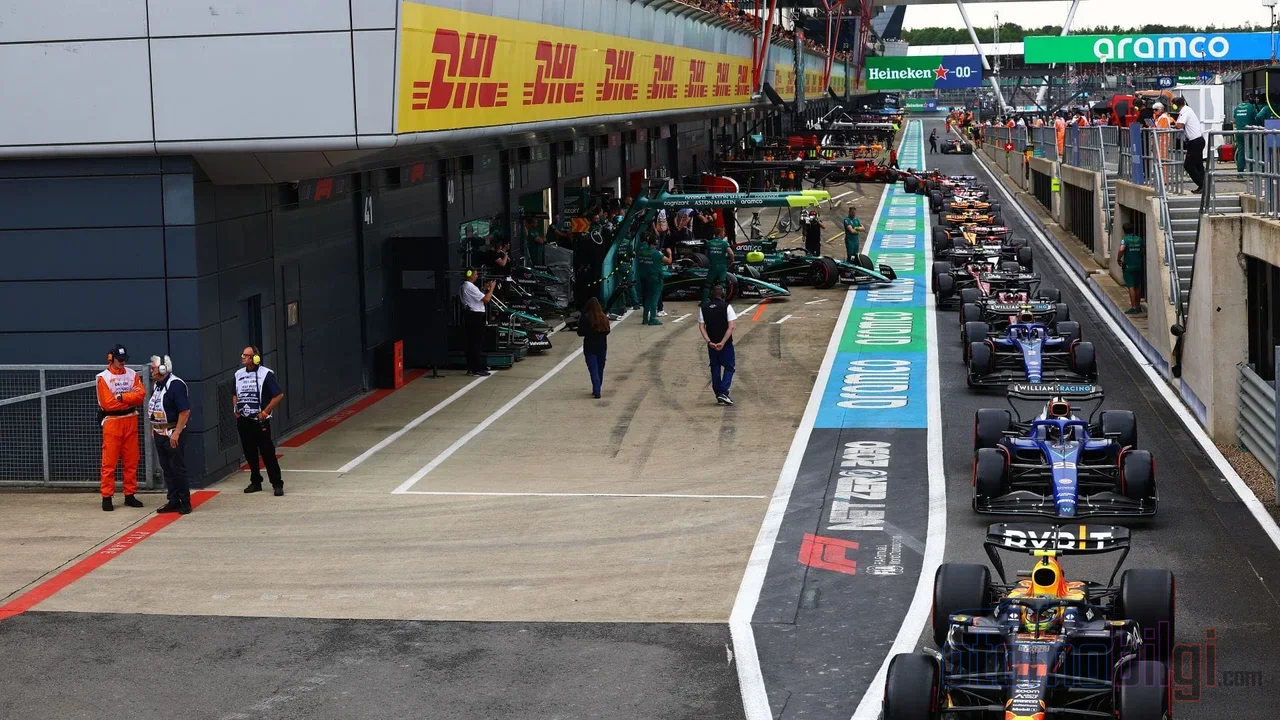
Saturday evening qualifying ends, the moment the driver locks up pole position social media explodes - but by Sunday morning the same car has turned almost into a locked display piece overnight. Mechanics cannot touch the car, the suspension setup cannot be changed, and even removing a single bolt is not a simple job. The name of the rule that makes this possible is parc fermé. So why does the parc fermé rule in F1 lock the car, and what happens to a team that breaks this lock? If you're ready, let's explore together the least talked about but most consequential rule of the race weekend.
First, a small language note: "Parc fermé" means "closed park" in French, and the name is a legacy remaining from our sport's French rulebook. Its pronunciation is roughly "park fair-MAY" - the spelling "park ferme" you often see online is a classic spelling mistake. But what's really interesting is not the name; it's the fact that this rule is more of a state than a place.
When Does Parc Fermé Start, When Does It End?
Most people think parc fermé starts after qualifying ends; but the trigger is pulled much earlier. The rule comes into effect with the car's first exit from the pit lane in qualifying (Q1) and lasts until the start of the race. So from the driver's first out lap onward, the car is locked. There's no worry for a car that never leaves the pit lane either: that car counts as being in parc fermé at the end of Q1 - there is no escape from the rule.
So where does the car physically stay during this process? After qualifying ends, the cars are taken to the parc fermé area within three and a half hours, covered up, and secured with FIA seals. The covers are removed five hours before the race's formation lap, but the seals and parc fermé conditions remain in effect until the start. The rules have been applied since the 2003 season and are found in Article 40 of the F1 Sporting Regulations ( Article B3.5 in the 2026 regulations).
Highlights
- Parc fermé begins the moment the car first leaves the pit lane in qualifying and lasts until the race start.
- The rule has been in effect since 2003; its purpose is to prevent building special cars for qualifying.
- The classic penalty for a violation: the gained grid position is lost, and the race starts from the pit lane.
- Each car is assigned a scrutineer; a total of 20 scrutineers monitor all procedures.
- In 2026, if the chance of rain exceeds 40%, a Rain Hazard can be declared and some restrictions are lifted.
Why Does the Rule Exist? The Era of Qualifying Engines
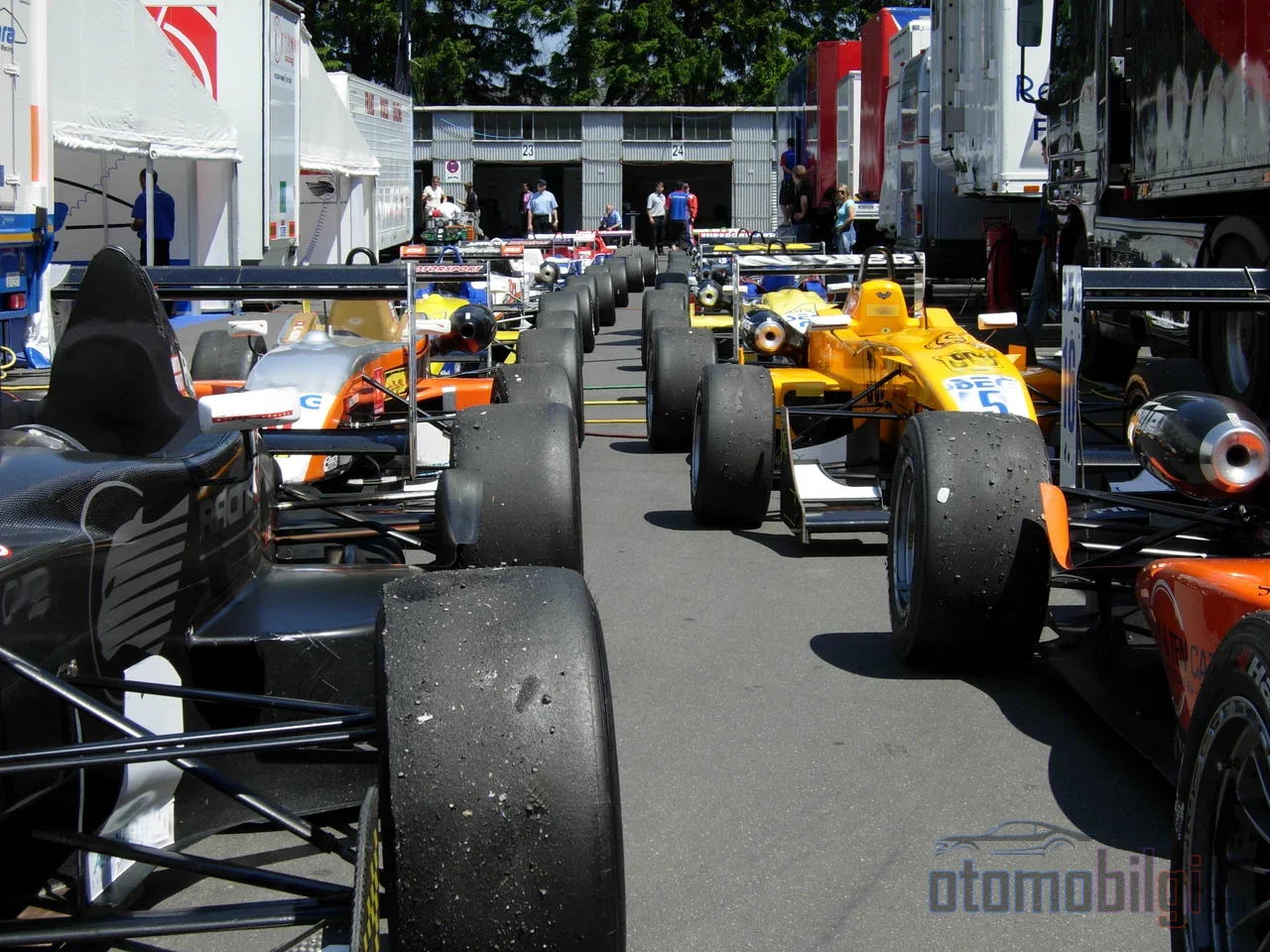
Now let's take a short journey through time, because the best way to understand parc fermé is to imagine the era when it didn't exist. Before 2003, wealthy teams effectively built two different cars: one was a specialized car optimized solely for qualifying, the other was a race car rebuilt overnight. In fact, "qualifying engines" that would last only ten laps were common. Think about it: the car you saw on Saturday and the car you saw on Sunday were almost two different animals.
This meant both an astronomical cost and made the Saturday grid misleading for Sunday. Parc fermé arrived in 2003 together with the single-lap qualifying system, and it has changed the picture ever since: the car that qualifies is the car that races. The FIA's rationale is two-pronged - competitive equality and cost control. In the same year, cars had to qualify with the fuel they would start the race on; in other words, the rule directly affected strategy as well.
What Is Allowed and What Is Forbidden Under Parc Fermé?
Everything seems clear so far, but the real question everyone wonders about is this: what can the mechanics do while the car is locked? The answer is a bit like "open-book exam" logic - closed book, but ink allowed on certain topics. Teams must declare a setup sheet for each car before qualifying (camber angle, toe setting, corner weights, and the like); in the event of post-crash repairs, the FIA checks that the same values are preserved.
Work that is permitted
- Adjusting the angle of the front wing flap
- De-glazing the brake pads and brake bleeding procedures
- Repairing damaged body parts with patching or bonding
- Cooling adjustments after changes announced by the FIA according to weather conditions
- Non-destructive (NDT) damage inspections, replacement of certain fluids, starting the engine, and driver comfort modifications
Work that is strictly forbidden
- Suspension adjustments or ride height changes
- Adding, removing, or replacing parts on the front wing
- Fitting parts of a different design (except for the six approved exceptions per season)
- All setup and configuration changes other than these
Replacing a failed part of identical design can be passed without penalty with the approval of the technical delegate. In other words, in the world of regulations there is a world of difference between "the part blew up" and "we quickly found this part."
How Does the FIA Keep the Lock? Seals, Cameras, Scrutineers
So can't the teams secretly do something? In theory it is hard, because the inspection system is quite tight. A scrutineer is assigned to each car, and a total of 20 scrutineers monitor and record every operation on the cars. Moreover, each car carries a parc fermé camera that sees the entire car, records continuously, and is monitored in real time. In other words, every move the mechanics make is on camera.
Within two hours from the end of qualifying or the sprint, all work must be completed; the cars must be covered and made ready for the FIA seals. Seals are applied to at least the gearbox, power unit, energy recovery system, body panels, and driver's seat - the FIA orders up to 40,000 seals for a season. Even the number is proof of how seriously the rule is taken. In addition, at least three cars are selected for extra checks after qualifying, and those cars cannot leave parc fermé until the checks are complete.
If work outside parc fermé is required, the team must make a written request to the technical delegate; the spare part must be identical in design, mass, inertia, and function, and the removed parts are kept by the FIA.
The Penalty for a Parc Fermé Violation: The Grid or the Pit Lane?
Now let's turn to the penalty side, where the rule does its work. Understanding the distinction here truly changes the F1 viewing experience. A classic setup change made at a normal time during the season doesn't matter to anyone - teams do it non-stop during practice sessions. But when the same change is made under parc fermé, the price is heavy: the driver starts the race from the pit lane instead of the grid position they earned. Taking pole position means nothing; you don't even join from the very back of the grid, you enter the race from the pit lane.
Here's the subtlety: in some cases the penalty can turn into a grid drop instead of a "pit lane start". The team can request a pit lane start within three hours after qualifying; and the FIA reports the changed parts and parc fermé procedures and makes them public. If a power unit component or exhaust change exceeds the team's allocation, this can also incur a penalty - in case of damage, the team is sometimes forced to accept a grid drop as a "lighter penalty". There are also real-world examples: At the Italian GP, Fernando Alonso and Liam Lawson's changes under parc fermé reshaped the grid, and both started from the pit lane. It was also reported that Lawson received a 50-place grid penalty due to an engine change made under parc fermé.
The 2026 FIA Penalty Guide includes a separate clause for "Breach of TTCS Parc Fermé" (B3.5.7), and when multiple penalties accumulate, stewards can convert 5-second penalties into grid penalties. For the curious, there's another interesting point of debate: the rule violation is tied to the car, meaning if an employee of a rival team touches the car, whose responsibility it is is a gray area - that's exactly why it creates debate among fans.
Sprint Weekends and 2026's Innovation: Rain Hazard
On sprint weekends, the rule's schedule changes. Parc fermé applies from sprint qualifying until the end of the sprint; teams are given freedom between the sprint and main qualifying, and it comes back into effect with main GP qualifying. The logic here is simple: a violation before the sprint means a pit lane start in the sprint, while a violation after GP qualifying means a pit lane start in the race.
2026, however, brought the rule's biggest update: Rain Hazard. If the probability of rain during the race exceeds 40%, or if the Race Director deems it necessary, Rain Hazard can be declared up to two hours before qualifying at the latest. While it's in effect, teams can carry out the additional work listed in a separate FIA technical document without a pit lane penalty - according to pre-season reports, wing and suspension adjustments are also included in this list. But note: the goal is to make the car compatible with rain; it is not permission for a complete rebuild between dry and wet setups. So the rule was softened, not abolished.
Should Parc Fermé Be Abolished? The Controversial Question
Since the rule is this strict, the question "why doesn't it bend?" naturally comes up. Those advocating for the removal of the rule argue that the qualifying engine and qualifying gearbox practices, which were once meant to be prevented, are already blocked by cost caps on the engine and gearbox. Others put forward the argument that if post-qualifying setup changes were allowed, race results would align better with qualifying. The other side's answer is clear: parc fermé is one of the main pillars that controls costs and gives meaning to qualifying. The Rain Hazard exception of 2026 also fueled the "was the rule reduced?" debate - at least for a single scenario.
Short Answer: Why Does Parc Fermé Lock the Car?
Let's wrap up, because this page's promise was a clear answer. Parc fermé locks the car with its first exit from the pit lane in qualifying and prohibits suspension, setup, and part changes until the race start; its purpose is to guarantee that the car that qualified is the car that races and to prevent the "qualifying-specific car" cost. If the rule is broken, the classic consequence is a pit lane start; in some cases the penalty turns into a grid drop. In short, that lap time you see on Saturday evening is exactly the car you'll see on Sunday - and this honesty is worth all the rule's hassle.
Next time a friend asks "can the team touch the car after qualifying?" you can smile and give the answer: it can, but only by a certain amount - and there's a camera watching its every move, twenty scrutineers, and tens of thousands of seals.
Sources
- FIA Insights - Parc Life: How the FIA's Parc Fermé Regulations Make Sure the Car That Qualifies Is the One That Races
- The Beginner's Guide to the Formula 1 Weekend
- Parc fermé - Wikipedia
- Red Bull Racing's Guide To: Parc Fermé
- What Is Parc Fermé in F1? Rules Explained
- F1 shake up sees 'parc ferme disappear' but only in one scenario - GPfans