Behind the Scenes of a Pit Stop: What Do 20 People Do in 2 Seconds?
Share This Page
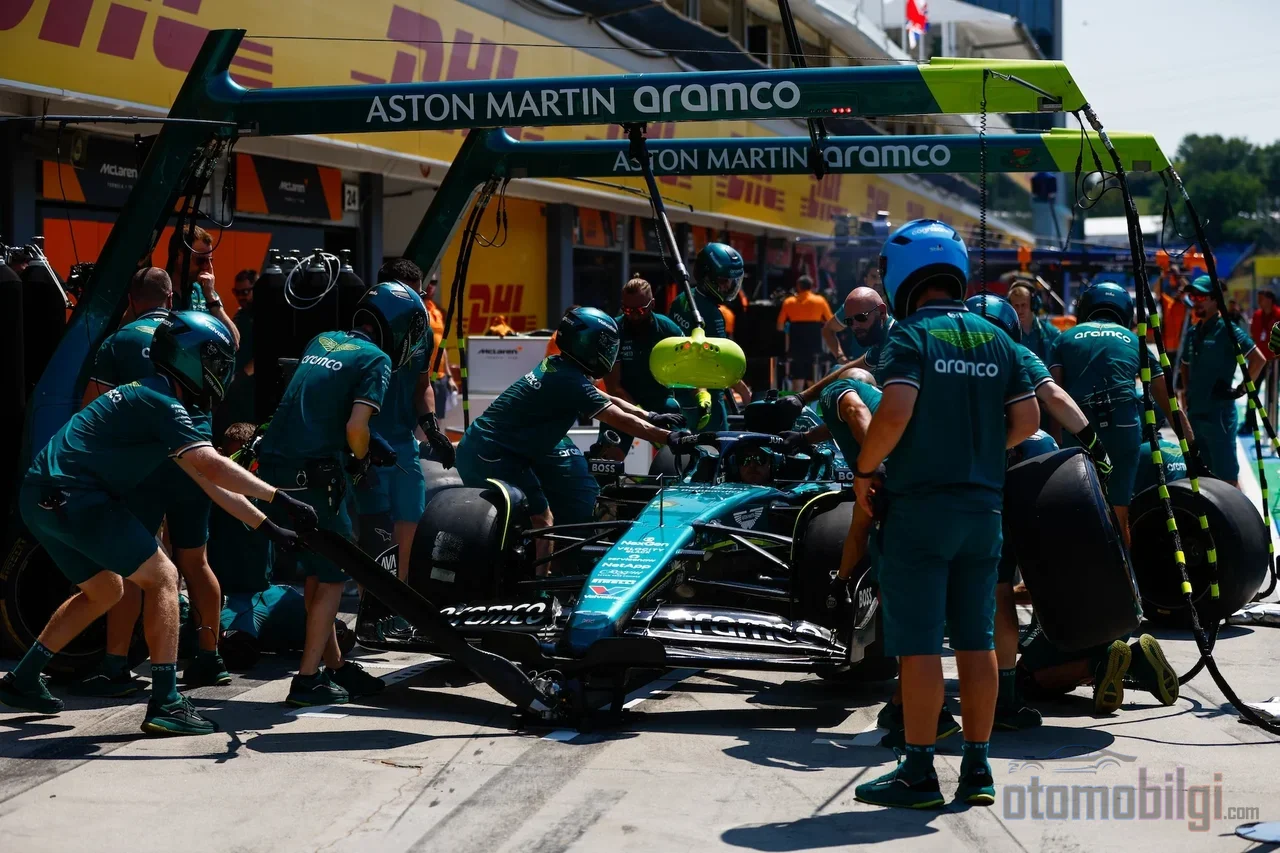
An F1 pit stop is completed with about 20 people in roughly 2 seconds: one gun operator per wheel, pairs of pullers and carriers, two jack operators, stabilizers, front wing adjusters and a light system operator, all engaging with the car simultaneously in fractions of a second. In this article, we break down those 2 seconds second by second, explaining what everyone does and how this team trains. If you're ready, we're approaching the pit wall - rest assured, the coordination here is the most scrappy magic you'll see flash before your eyes in every race you watch.
Highlights
- The official pit stop record is 1.80 seconds - by McLaren and Lando Norris at the 2023 Qatar GP.
- A modern pit crew consists of about 20 people; in the 1950s, that number was only 4.
- The average stop time in the 1950s was about 67 seconds; today it falls in the 2-2.5 second range.
- The timing starts from zero: the stopwatch starts the moment the car's nose touches the front jack.
- The pit crew is not a specialist cadre; it is selected from mechanics and technicians and trained in multiple positions.
How Many People Are in a Pit Crew and Who Makes It Up?
The first shocking piece of information is this: The pit crew is not a separate profession. These people are the team's ordinary mechanics and technicians - the same crew working on the engine side, on the chassis, and setting up the car in the garage. When race day comes, however, they pull on their helmets and become the world's fastest orchestra. The total number is about 20 people. So what do these people do? The role distribution is roughly as follows:
- Front and rear jack operators (2): They lift the car. The front jack operator takes position before the car has even stopped, and lowers it once the wheels are secured.
- Wheel gun operators (4): One at each wheel. With the pneumatic gun, they remove the center nut in a fraction of a second, then tighten it again and press the confirmation button.
- Pullers (4): They remove the old tire and position the new one in place.
- Carriers (4): They bring the new tires from the garage and take the old ones away. Their timing is critical - if you carry them slowly, everyone waits for you.
- Stabilizers (2): They hold the car steady from both sides. They have a second job as well: wiping the visor, changing the steering wheel, cleaning the radiator, and using the side jack when needed.
- Front wing adjusters (2): Known in English as "wing-winders". They preset the torque drivers and adjust the angle of the wing flap.
- Light system operator: The person who decides when the car will leave - details just a bit further down.
Imagine this detail too: The gun operators working at trackside cannot see the car. So they rely entirely on the touch on their shoulders. Working with seconds in a job where you cannot see... It's like dribbling a ball blindfolded - with one difference: if you add a single mistake, a multi-million dollar car gets damaged.
How Does a Pit Stop Progress Second by Second?
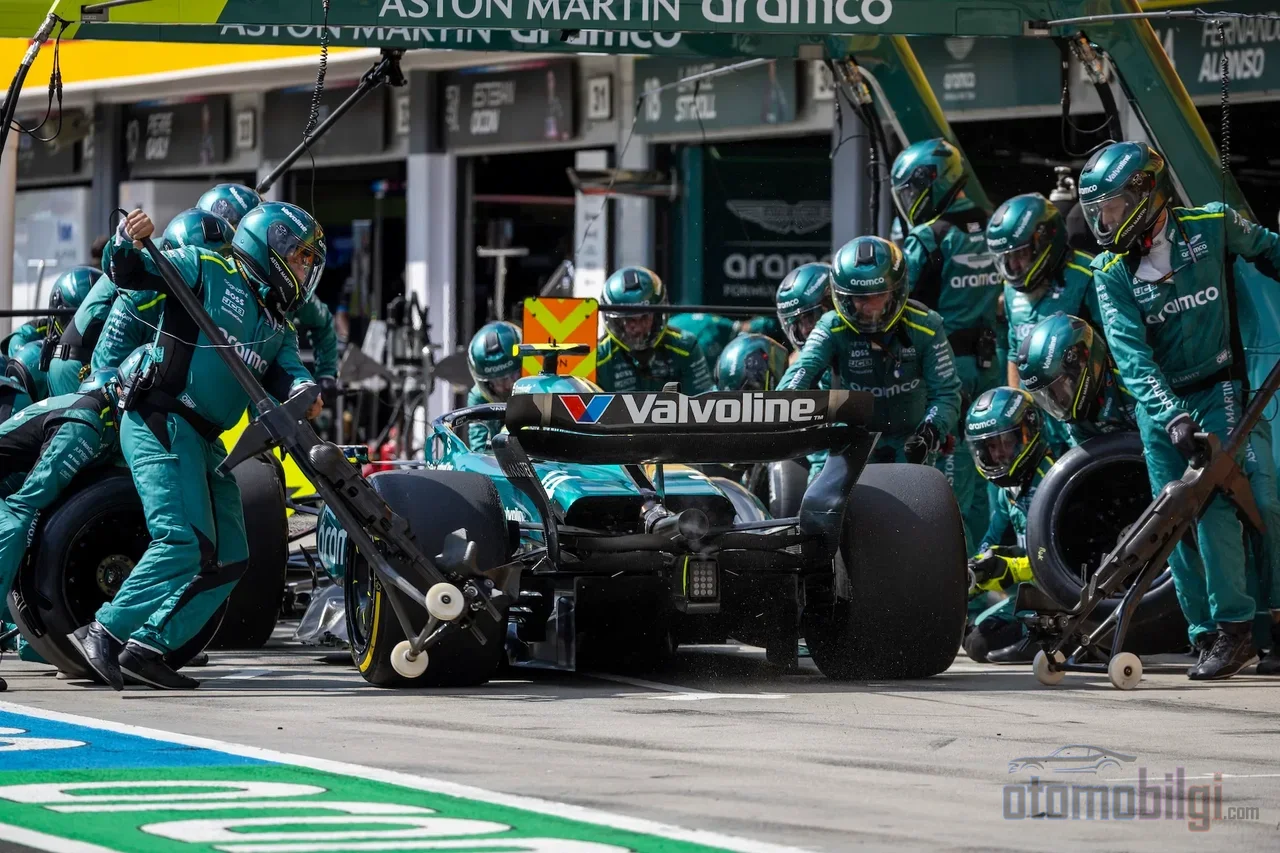
Let's start from zero, because the stopwatch really does start from zero: the stopwatch starts the moment the cone on the car's nose touches the front jack. Shall we break down a classic, solid 2.2-second stop? Here we go:
- 0.0 seconds: The nose cone hits the front jack, the chronometer starts.
- 0.3 seconds: The front jack is fully engaged; at 0.8 the operator pulls the car slightly to the side.
- 0.4 seconds: The rear lifts off the ground. With today's ground-effect, low and heavy cars, this is one of the physically hardest jobs.
- 0.6 seconds: The wheels come off (the fronts slightly ahead).
- 1.2 seconds: The new wheels go on.
- 1.4 seconds: The wheel guns return to their holsters; at 1.9 they are pulled back and the confirmation buttons are pressed.
- 2.1 seconds: The front jack operator drops the car - the car can launch into the pit lane while the jack is still swinging.
So in what you call "about two seconds," 20 people are changing four tires and preparing the car for exit even while it's still in the air. The crew has already taken their positions 15-20 seconds before the car's arrival and checked the wheels and spare wheel guns. The call is made by the pit wall: the sporting director or team manager says "box" over the radio. In some cases - such as a wet track - the driver can call their own pit stop. There is also a classic maneuver called "box-to-overtake": you are called into the pits to pass the car ahead, and with fresh tires you overtake it on the out lap.
How much can the driver get wrong here?
A lot, and the first mistake comes as soon as they arrive at the crew: The driver must stop exactly at the pit box mark. If they miss by a few centimeters, the jack operator has to adjust their position and the whole chain slips. That's why garages have laser markers and scale lines where drivers practice. Besides, exceeding the 80 km/h pit lane speed limit means a drive-through penalty; so discipline begins even before you enter the pit lane.
Who Was the Lollipop Man, and What Does the Light System Do?
Old-timers will remember: A man holding a sign used to stand in front of the pit box. When the driver saw the sign, they braked; when the tire change was done and the sign was raised, they left. This was called the lollipop - named for its resemblance to a candy on a stick. But those days are gone: Most teams now use a semi-automatic traffic light system. The torque confirmation lights for each wheel, a general surrounding check, and a check of the gap in the pit lane exit all work together. Yet the interesting part is this: The final decision - that is, the authority to press the go/no-go button - stays with a senior crew member such as the chief mechanic. No matter how far technology advances, no one has taken over that split-second human judgment. That's why "unsafe release" penalties remain one of the classic nightmares of racing.
From 67 Seconds to 1.80 Seconds: How Did Pit Stop Records Evolve?
Let history speak a little so we can appreciate today's 2-second stop. In the 1950s, a pit stop took an average of 67 seconds and the crew consisted of only 4 people. Then the times regularly kept dropping: Around 45 seconds in the 1960s, 27 seconds in the early 1970s. With refueling returning in the early 1980s, the average dropped to about 11 seconds, and to 6 seconds by the early 1990s. In 1993, Benetton broke new ground with 3.2-second stops; from 1994 to 2009, the refueling era settled at around 8 seconds. When refueling was banned in 2010, the doors opened and averages fell to 2-2.5 seconds. To roughly sum it up: Since the 1950s, pit stops have shrunk by approximately 96 percent.
So who holds the record? The official world record belongs to McLaren, with a stop of 1.80 seconds set with Lando Norris at the 2023 Qatar GP. Red Bull was right behind, with a near-record 1.82 seconds just one lap earlier. DHL has also been awarding the fastest pit stop prize since 2015; the standings usually mirror the Constructors' Championship, because a good pit stop is never cheap: it requires custom-designed equipment, practice gantries at the factory, electric mule vehicles, motion analysts and team physiologists.
The worst pit stop in history: Bottas and Monaco 2021
Overshadowed by the records, but one of the most unforgettable moments in pit stop history: Valtteri Bottas was called in to pit on lap 30 at Monaco 2021 - and never made it back into the race. was called in to pit - and never returned to the race. A hardened nut ("machined nut") made the wheel impossible to remove; the team tried everything, nothing worked. Bottas stayed in the pit lane with his car, and the stop effectively lasted 43 hours. So sometimes, when Bottas's name comes up alongside records in the briefs, it is quite the opposite of the story: The only record broken on that day in Monaco was the record for patience. This story also shows something: The fact that a twenty-person system works in such an interlocking way that a single bolt can bring it down makes the system both strong and fragile.
How Do Pit Crews Train for This Speed?
Here is the most interesting part: These people do not practice pit stops eight hours a day. Quite the opposite. There are two types of practice on a race weekend: "live stops" during practice sessions and dedicated pit stop drills. After the cars are set up, practice happens every day, but a typical session lasts only 8-10 repetitions. Why so few? Because too many repetitions tire and dull the crew - the muscles and reflexes lose an edge that needs to stay fresh. The prevailing philosophy is "too little practice is bad, and so is too much"; work at the track is mostly aimed purely at maintaining sharpness.
The real preparation happens in winter: crew selection before the season, equipment development, and daily training starting from January. At the teams' performance centers, crew members do strength and conditioning work. On race day, physiologists warm up the crew, analysts examine every stop one by one, and personnel go through health and hydration monitoring. In other words, a pit crew member's body is managed like a sprinter's - only the sprint distance is a few meters.
The rotation era and the rise of the reserves
As the season grew longer and triple-headers (three race weekends back to back) became routine, pit crews wore out too. Today, team members can miss 3-4 races per season; which is why backups are no longer a necessity, but a performance tool. And here's the trick of the trade: Crew members are mostly trained in multiple positions. The person who is the front-left gun today could be the carrier two weeks later. Imagine a football team where every player can play two or three positions - that's exactly how the F1 pit wall works.
A single moment sums up just how seriously this training infrastructure is taken: In 2023 Qatar, where McLaren set the 1.80-second record, the team had largely cut back on pit practice in the scorching heat. In other words, the record came not from a groundbreaking training day, but as the natural result of reflexes built over years. There's also the reward side: At Abu Dhabi 2024, Norris's 2.07-second stop on lap 25 repelled Sainz's undercut attempt and brought McLaren its first constructors' championship since 1998. Yes, a 2-second job - but it can decide a championship.
Are Pit Stops Still in Human Hands, or Automated?
Today's wheel guns work with torque sensors, the light system is semi-automatic, and every movement is measured and analyzed. Yet the most critical link in the chain - the decision of when to release the car - rests on a human finger. This also brings with it a lingering tension: No matter how safe the system is, unsafe release penalties find their way to us every season. The FIA's rule is clear: The car may only be released when it is safe, the equipment must be specific, and motorized auxiliary devices are banned. In other words, F1 is deliberately refusing to hand over the pit stop entirely to machines. I think that's a good decision - because the excitement of that 1.80 seconds comes from humans achieving it together.
One final touch before closing the article: If you ever wondered why pit stops in F2 take 4-7 seconds, the answer is not mechanic incompetence - it's the rules and equipment differences. And yes, at least one pit stop is mandatory on dry tires, a typical race sees 1-3 stops, and there is no upper limit. Now rewatch the race and watch the pit crew; you'll see the 2-second ballet of 20 people.
Sources
- Anatomy of a pit stop: How do F1 teams service their cars in less than two seconds?
- Explained: This is how a Formula One pit stop works
- DHL Fastest Pit Stop Award
- A Thorough Analysis of the Pit Stop Strategy in Formula 1
- F1 Pit Crew Explained: Roles, Pressure and Fast Stops
- How Bottas' pitstop ended up being 43 hours long
- 2026 DHL Fastest Pit Stop Award results
- F1 and F2 pitstops compared
- How Many Pit Stops in an F1 Race?