How Does DRS and the Overtaking Battle Work in Formula 1?
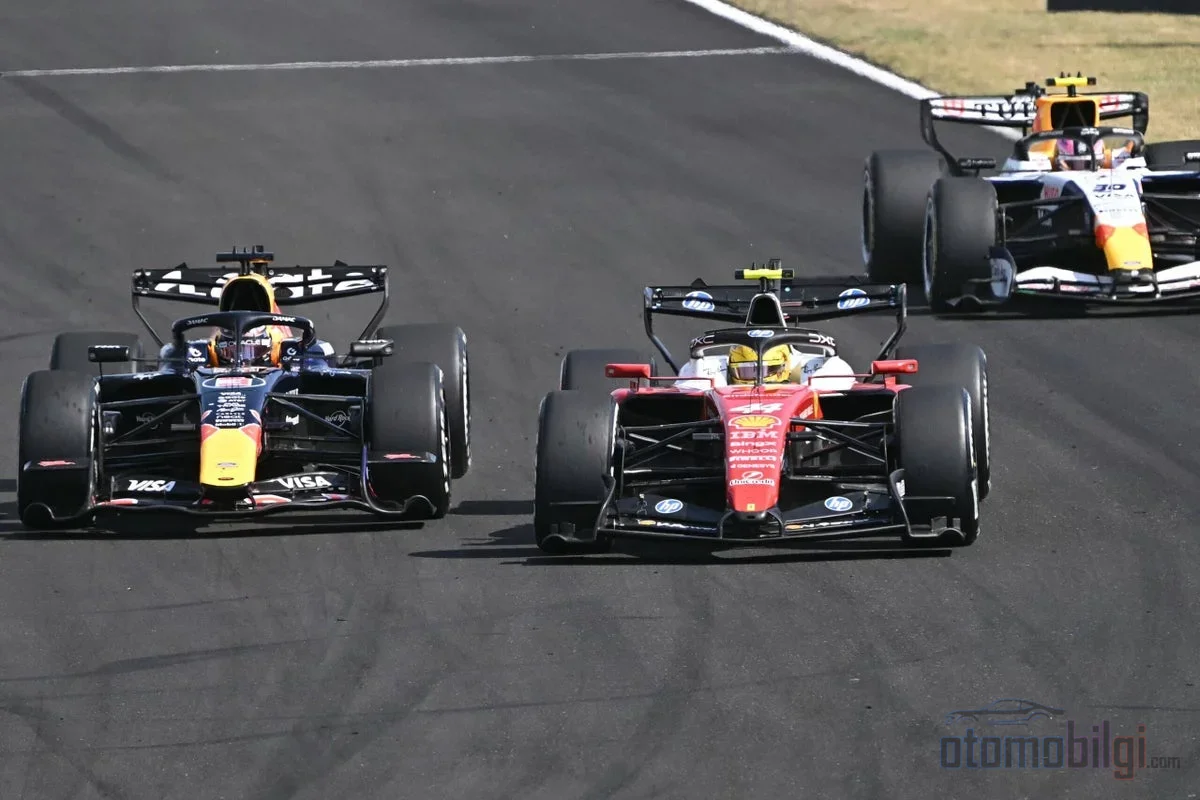
Share This Page
DRS was a system that opened the flap on the rear wing of a Formula 1 car on straights to reduce air resistance and helped the following car overtake; it was used from 2011 until the end of the 2025 season, and in 2026 it made way for active aerodynamics and Overtake Mode. But the real story is why overtaking is such a difficult engineering problem in F1.
Highlights
- DRS was used in all F1 seasons between 2011 and 2025; the first to use it was Jenson Button, and the last was Kimi Antonelli.
- When the flap opened, the speed gain at the end of the straight was around 10-12 km/h according to FIA estimates.
- The 2022 ground effect rules aimed to reduce the downforce loss when following from 35% to 4%; but teams gradually "broke" the rules.
- In 2026, DRS passed into history; it was replaced by Active Aero and Overtake Mode, which provides approximately 0.5 megajoules of extra electrical energy.
How Exactly Does DRS Work?
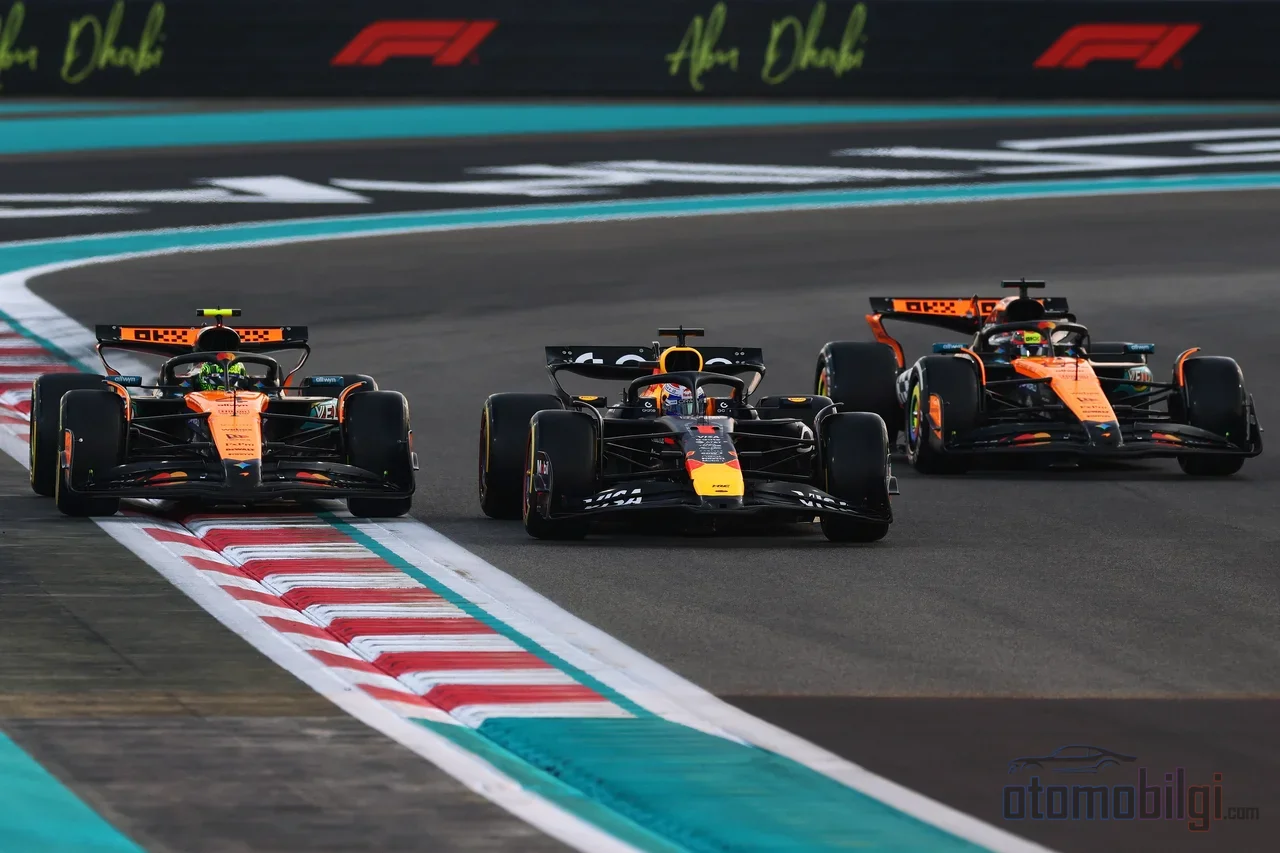
It stands for Drag Reduction System, in other words, a system that reduces drag. The rear wing of an F1 car actually works like a kind of brake on the straights: it bends the air upward, pressing the car to the ground, but at the same time creates serious air resistance. DRS eliminates that upward-bending angle by opening the upper element of this wing (the flap). The car pushes less air, slows down less, and speeds up.
The technical side is surprisingly simple: The driver presses a button on the steering wheel, the signal goes to the FIA's standard electronic control unit, and from there it is transmitted to the actuator in the middle of the rear wing. The flap rises a maximum of 85 mm from the fixed main plane. The system has no intermediate position other than open and closed; it is either fully open or fully closed. The moment the driver brakes, the flap closes automatically, the downforce returns, and the car becomes ready to enter the corner.
The importance of this closing mechanism was only fully understood after an accident: Marcus Ericsson had a violent crash in 2018 Monza practice with a car whose DRS remained open. After that accident, designing the system to be "fail-safe," meaning it would move the flap to the closed position in the event of a failure, became a requirement. Safety comes before speed.
The interesting part is this: F1 rules had banned moving parts that affect the car's aerodynamics for years. DRS was the biggest exception to this ban in history.
The One-Second Rule: When Can DRS Be Activated?
Not everyone can activate DRS whenever they want in a race. The basic rule is as follows: The following car must be within close to one second of the car ahead when passing the timing line known as the detection point. This gap is measured regardless of which car it is; even a driver approaching a car on a lap earns this right.
Don't miss the critical detail here: The detection point and the activation zone are not the same thing. The detection point is the line where the gap between them is measured. The activation zone is usually the long straight a little further ahead. In other words, earning the right is one thing, using it is another. Once you're eligible, you press the button on the straight and the wing opens.
The rule changed a bit over the years. From 2011 to 2023, DRS could not be used for two laps after the race start and a safety car restart; in 2024 this was reduced to one lap. On a wet track, the system was completely banned; the 2011 Canadian GP is the best-known example of this. The defending side had no rights either: A driver who wasn't within about a second of the car ahead could not open DRS, meaning the system only favored the attacker.
Why Was DRS Easier in Qualifying?
In qualifying and practice sessions, there was no one-second rule at all. Drivers could open the flap at any moment in the activation zones, because they were lapping the track alone and needed no help from anyone. The goal here was something else entirely: Speed. It was estimated that DRS gained roughly half a second per lap in a single flying lap. In a race, this aid was an overtaking tool; in qualifying, it was a lap-time device.
The number of zones also varied from track to track: Monaco had one zone, Silverstone two, Bahrain three, and Melbourne four. Over the years, the zones multiplied; in 2018–2019, a third zone was added to six tracks, the fourth zone added to Melbourne in 2022 was removed on safety grounds and returned in 2023, and in 2024 Singapore gained a fourth zone. In 2023, the FIA readjusted the zones in Bahrain, Jeddah, Melbourne, Baku, and Miami so that overtaking would be neither too easy nor too hard. In other words, the DRS map of the tracks was a living tuning matter, reviewed every year.
Dirty Air: The Real Enemy That Makes Overtaking Hard
So why was DRS needed in the first place? The answer is a two-syllable word: downforce. Modern F1 cars can corner at incredible speeds, pressed to the ground by the air flowing over their wings and floors. But this creates one of the world's hardest braking problems. The car ahead turns the clean airflow behind it into turbulence; they call this dirty air. When the approaching car's front wing enters this disturbed air, its efficiency drops, grip in corners decreases, braking suffers, and things get worse as it gets closer. Think of it like you feel on a solo lap: You're trying to draft a friend coming from behind on a bicycle, but there's a windbreak in front and you're right in its vortex.
Dirty air hits not only grip but also the tires: In a chase, the car slides more, more energy is transferred to the tires, and the tires heat up and wear out faster. In series like NASCAR, where cars race wall to wall, the situation is reversed; there, following the car ahead's line even gives the pursuer a slight advantage. In F1, a series dependent on high downforce, overtaking is naturally difficult and rare. DRS was exactly an artificial solution developed against this problem.
2022 Ground Effect Rules: War Was Declared on Dirty Air
DRS was a patch; in 2022, the FIA tried to operate on the actual disease. The technical regulations that year brought the return of ground effect, and the most aerodynamically efficient section of the car was no longer the wings but the new floor design. The goal was clear: To reduce the following car's downforce loss from 35% to 4%. When the rules were written, the overtaking probability calculated at 20% in 2021 was expected to rise to 92% in 2022.
In the first year, it really worked: The average number of overtakes per race rose from 31.09 to 38.00, and drivers immediately noticed that following had become easier. But the rest of the story offers a lesson: In the development race, the teams gradually "broke" the logic of the rules. In 2022, a following car within 10 meters retained 85% of its aerodynamic efficiency, but by 2025 that figure had fallen to 65%; at 20 meters, it dropped from 95% to 80%. In other words, the dirty air problem slowly returned over the years.
| Year | Downforce loss target | Aero efficiency when following (10 m) | Average overtakes/race |
|---|---|---|---|
| Pre-2021 period | 35% | - | 31.09 |
| 2022 target | 4% | - | - |
| 2022 actual | - | 85% | 38.00 |
| 2025 | - | 65% | - |
The overtaking statistics also show the overall picture: 2011, the first year of DRS, was the series' busiest season with an average of 65.7 passes; the quietest season was 2005. It is also clear that DRS has noticeably pushed up seasonal pass totals since 1990. In 2025, Lewis Hamilton became the driver with the most passes, with 52 on-track passes in a single season.
"Artificial Overtaking" Criticism and DRS Trains
DRS did not please everyone. Juan Pablo Montoya described the system as something like giving Photoshop to Picasso; Sebastian Vettel said in 2018 that he would prefer Mario Kart-style banana throwing instead of DRS, mocking the system's artificiality. The essence of the criticism is this: Is the driver pressing a button and passing the car ahead a genuine driving duel, or a reward? On the other hand, the defending side is not fair either; the driver ahead cannot defend with DRS, and battles are fought with one-sided weapons.
There is also the DRS train problem. Five or six cars lined up within a second all earn DRS rights, but when they all open it at once, the advantage cancels itself out; nobody can pass, and the procession just gets longer. The long DRS train led by Alex Albon at the 2023 Canadian GP is a classic example of this. Also worth remembering is McLaren's flexible rear wing controversy in 2024: At high speed, the wing flexed enough to open the main plane, creating a DRS effect without DRS, and it was changed at the FIA's request. The teams' creativity is always one step ahead of the rules.
Of course, there is a positive side to its character: Over its lifetime, DRS provided far more passes than the previous era and much more watchable races. Most of the classic battles between 2011 and 2025 happened thanks to this system.
2026: DRS Retires - What Is Coming Instead?
DRS bid farewell with the Abu Dhabi GP, the final race of the 2025 season. The first to press the button was Jenson Button (2011), the last was Kimi Antonelli; the last successful DRS pass was made by Lance Stroll. In 2026 the system's two roles were split in two:
- Active Aero: Both the front and rear wings are movable. Low-drag X-mode on the straights, high-downforce Z-mode in the corners. Key difference: Every car can use it every lap. This is not a follower's privilege, but a feature of everyone's car.
- Overtake Mode: The real passing aid. A driver within one second of the car ahead at the detection point gains about 0.5 megajoules of extra electrical energy; with no aerodynamic penalty. The "Boost" term, meanwhile, lets the driver freely deploy their stored energy at any point they choose.
The 2026 cars are also smaller and lighter; the power unit takes roughly half of its output from electricity, and flat floors with wide-mouthed diffusers arrive instead of long ground-effect tunnels. At the season opener in Melbourne, the picture was mixed: Carlos Sainz described active aerodynamics as a patch for the new power unit's energy demands, Max Verstappen summed up the race as chaos; the drivers of the teams at the front spoke more positively. But there was also a bright side to the story: The number of passes at the season opener increased noticeably compared to the previous year. The FIA has committed to reviewing the rules throughout the season and has already made adjustments. The new rules, which weight electrical output, create differences between cars in straight-line speeds before corners; this will be one of the most interesting balances to watch as the season progresses.
DRS Closed an Era, 2026 Opens a New One
For fifteen years, DRS was F1's most controversial yet most effective button. It could not solve the dirty air problem at its root, but it opened a door on a track that made passing difficult; the 2022 rules tried to kill it at the root, but teams left it behind in the development war. Now it's the turn of Active Aero and Overtake Mode: The shift from aerodynamic aid to energy aid shows just how much F1's answer to the passing problem has evolved. Do you think this new system will be able to preserve the excitement of pressing a button and passing? I'd love to hear your thoughts in the comments!
Sources
- Drag reduction system - Wikipedia
- What Is DRS in F1? How It Worked and What Replaced It
- Formula 1: What is the Drag Reduction System and how does DRS work?
- How F1 teams broke the ground effect era
- Slipstream and 'dirty air' explained
- F1 2026: What are the new regulations, engine changes and how will the racing be with no DRS
- What is DRS in Formula 1 and what's coming next?
- EXPLAINED: The key terms for F1's new-for-2026 rules
- Six key areas of F1 2022: How overtaking will change
- Overtaking Fundamentals: Action packed 2022 F1 season?