Rain Tires and Wet Track Rules in F1
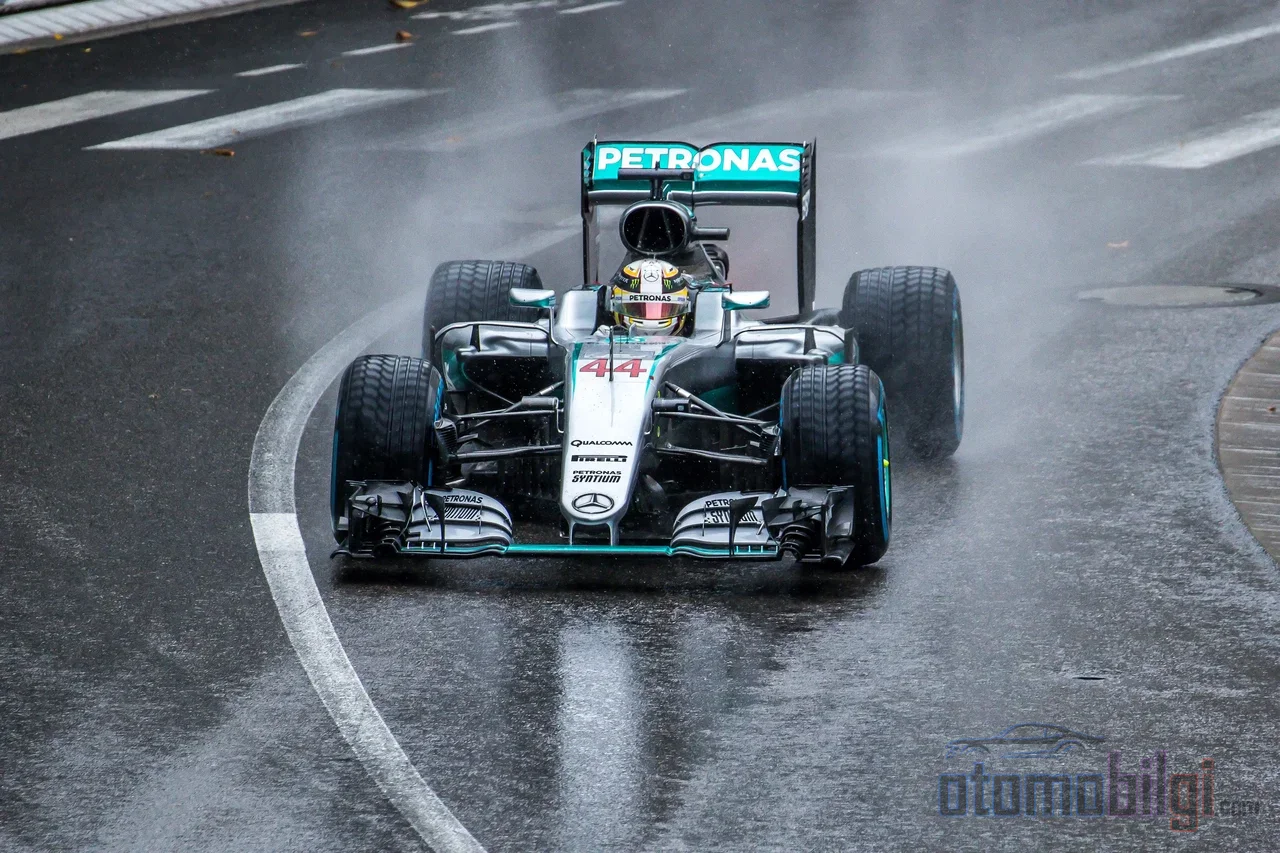
The sky is darkening, the screens on the pit wall are filling with radar images, and the engineers are on the verge of a decision: which tire, and when? In Formula 1, rain is a variable that can rewrite even the qualifying order. So how exactly do the tires and rules work on these rainy days? Come on, let's take a close look at the world of rain tires.
Most people think of F1 as a dry asphalt sport; yet you know that a good share of the season's most memorable moments happened on wet tracks. When the rain kicks in, tire strategy, safety car procedures, and even red flag rules instantly take center stage. That's precisely why understanding the rain-specific rules is the key to truly grasping what's going on while watching the race.
Highlights
- Pirelli has been F1's sole tire supplier since 2011; the deal is valid until the end of the 2027 season.
- Wet-weather sets: at every Grand Prix weekend, drivers use 5 sets of intermediates and 2 sets of full wets.
- The intermediate tire is recognized by a green band, the full wet by a blue band.
- If the chance of rain exceeds 40%, the FIA can declare a "Rain Hazard".
- The moment intermediate or full wet tires are fitted, the cars' rear lights must be switched on.
What Are Rain Tires Like? The Difference Between Intermediates and Full Wets
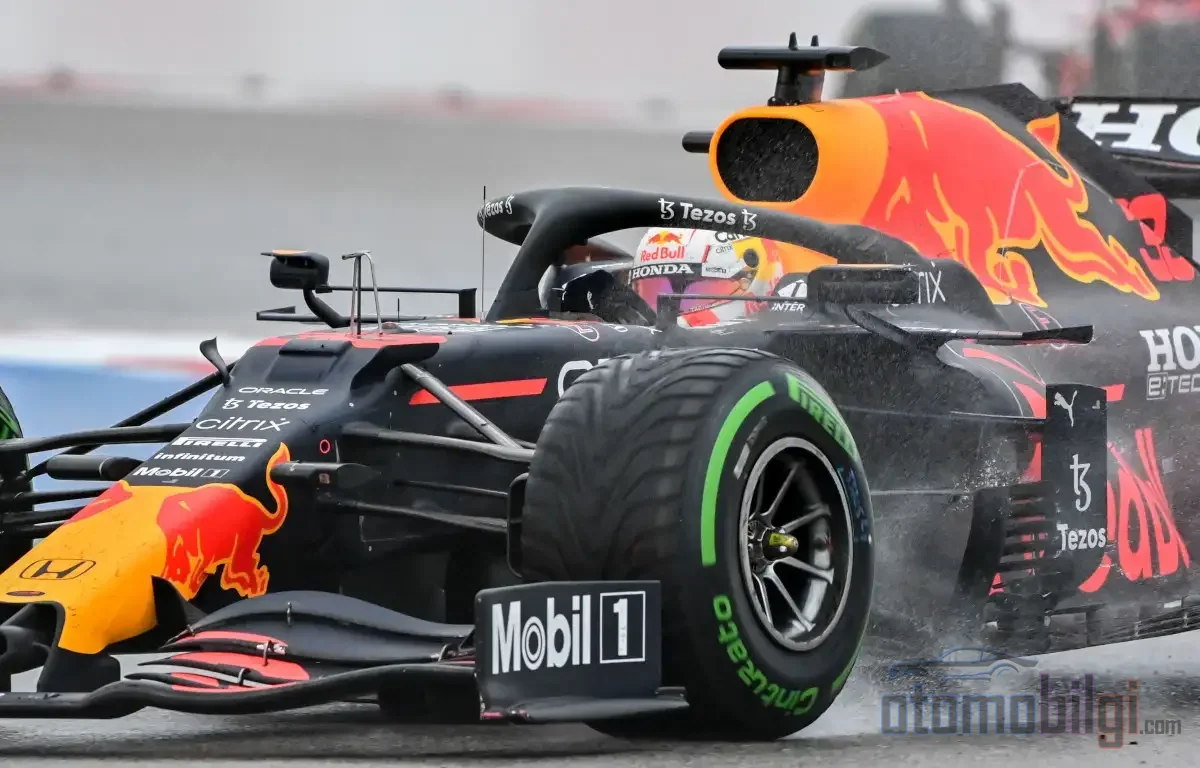
In F1, dry tires are "slicks", meaning treadless tires; for 2026, Pirelli's range has five compounds from C1 to C5, ordered from hardest to softest. At every Grand Prix, three of these five compounds are selected; the softest is marked with a red band, the medium with yellow, and the hardest with white. But when the rain enters the picture, the scene changes: two treaded tires come into play.
The first is the intermediate: the one with the green band performs best when the track is wet but standing water is not yet serious. The other is the full wet tire, the one with the blue band; as the name suggests, it is used when the track is submerged in water. The deep grooves of these tires channel water out from under the tire, allowing it to grip the asphalt; if the water is not dispersed, the tire begins to float on the water - this is called aquaplaning, and the driver's connection to the steering is almost completely lost.
An analogy from everyday life: a slick tire is like a summer tire that grips on dry ground; while a full wet tire is like a deeply treaded winter tire. The intermediate in between is that transitional, almost all-season situation. When F1 teams decide which tire to fit and when, they look at the amount of water on the track and the weather conditions; the wrong tire not only costs seconds per lap, but can also cause the tire to overheat and blister.
Tire Allocation: How Many Sets Are There Over the Weekend?
Drivers can use 13 sets of dry tires, 5 sets of intermediates, and 2 sets of full wets at a standard Grand Prix weekend. At sprint weekends, the number of dry sets drops to 12 while the number of wet sets increases: 8 sets in total, meaning 6 intermediates and 2 full wets. In Monaco, due to the narrow and difficult-to-pass nature of the circuit, an additional 3 sets of rain tires are added to the standard allocation.
There is one more rule: In dry races, drivers must use at least two different slick compounds. But if rain comes into play and intermediates or full wets are fitted, this requirement is lifted. In other words, rain essentially resets the strategy.
| Tire | Sidewall Color | Usage Conditions |
|---|---|---|
| Slick (C1–C5) | Red / Yellow / White | Dry track |
| Intermediate | Green | Wet but not very wet track |
| Full wet | Blue | Track with puddles, very wet |
The FIA's Wet Weather Rules: Rain Hazard and the Mandatory Rear Light
When there is a rain hazard, the FIA activates certain rules. "Rain Hazard" can be declared when the official weather service predicts that the chance of precipitation during the Sprint or race will rise above 40%, or at the race director's discretion. For the Sprint, this declaration is made at the latest 2 hours before the start of the Sprint Qualifying sessions and remains valid until the end of the session; for the race, it similarly comes into effect from 2 hours before qualifying. When Rain Hazard is declared, certain operations can be performed on cars under parc fermé conditions.
Another important rule on wet surfaces concerns lighting: the moment intermediate or full wet tires are fitted, the car's rear lights must be switched on. These lights allow drivers approaching from behind to notice the car ahead in conditions where visibility is reduced due to water spray. It is also required that all rear lights be working when first leaving the pit lane.
When Do the Safety Car and Red Flag Come Into Play?
When the track becomes too wet or unsafe, the safety car is deployed. When the starting procedure is suspended, cars entering the pit lane behind the Safety Car line up in the order they entered. The use of the safety car and the decision to suspend the race are at the race director's discretion.
If the situation becomes more serious, the red flag is waved; this flag is waved on the start line and at every marshal post around the circuit when the race director decides to stop a session. During a red flag period, teams are allowed a free tire change, and this rule is a serious topic of debate. Brought to attention after the 2024 São Paulo GP with Lando Norris's complaints, this regulation raises questions of fairness that could change the outcome of a race. Imagine: your team gained the advantage with a perfectly executed strategy, the red flag came out, and the rivals fitted new tires for free.
How Does Rain Change Pit Strategy?
In dry conditions, strategy is largely built on two- or three-stop plans, compound choices, and undercut-overcut moves. When the rain starts, that plan goes in the trash. Teams watch the radar and try to predict when the rain will arrive and how heavy it will be; switching to intermediate tires at the right moment wins you positions in one lap, while being a lap late can ruin the entire race. This is exactly the biggest fear of the engineers on the pit wall: calling the driver into the pits not the instant the rain starts, but the moment the tires can no longer hold on.
Tire temperature on a wet track is another matter entirely. F1 tires deliver their best performance within certain temperature ranges; rain cools the tire down and weakens its connection with the road surface. For this reason, teams may ask drivers to weave zigzag to keep tire temperature up in wet conditions, or to avoid slippery areas as much as possible. Rain also affects qualifying sessions; when qualifying is held on a wet track, drivers waiting for the track to dry completely to set the fastest lap wait until the very end, because grip increases as the track dries.
History is full of races where rain turned strategy upside down. Among Red Bull Racing's best wet-weather performances are the 2008 Italian GP, 2009 Chinese GP, 2014 Hungarian GP, 2016 Brazilian GP and 2019 German GP; and Max Verstappen's Brazilian performance last season is hailed as "rain mastery." These races show how the combination of the right tire strategy and driver skill goes down in history.
What Do the 2026 Regulations Change in the Rain?
With the 2026 technical regulations, the tires have shrunk slightly: although the rim diameter remains 18 inches, the tread width has decreased by 25 mm at the front and 30 mm at the rear; the overall diameter has also been shortened by 15 mm at the front and 10 mm at the rear. This reduction will change the car's handling dynamics, and it is a matter of curiosity what difference it will make on wet surfaces. So much so that even fans are debating whether the new regulations can save the wet race.
On the Pirelli side, two major changes are being discussed: a more aggressive C6 compound and a full wet tire with fewer grooves. The aim is to make the full wet tire more usable. Because in recent years there have been wet races in which the full wets were almost never used, and this led to debates questioning the tire's very reason for existence. In addition, with the 2026 rules, F1 made a change that explicitly bans exploiting tire cooling tricks; this closes the door on teams building strategy by deliberately cooling the tires.
Frequently Asked Questions About Wet Tire Rules
What does the full wet tire do?
The full wet tire ensures that the tire can evacuate water and grip the asphalt when the track is flooded. Its deep grooves are designed to reduce the risk of aquaplaning on tracks with standing water. Considering that the intermediate is the most used tire in races, the full wet appears on stage infrequently, but its function is critical.
Are F1 cars slow in wet weather?
On the contrary, F1 cars perform incredibly well on wet surfaces; It reaches lap times that almost no car in the world can match, even on intermediate tyres. But that doesn't mean they are fast in every condition; if the rain is heavy, the race management steps in due to visibility, standing water, and safety.
Why is there a free tyre change under the red flag?
The free tyre change during a red flag period is a provision in the FIA sporting regulations. Teams can change tyres while the race is stopped, but this sparked fairness debates in some races; Norris's complaint in São Paulo is the best-known example.
Conclusion: Rain: F1's Most Fair and Most Brutal Balancing Act
Rain is, according to some, a fairer stage in F1 because it slightly erases the technological gap between teams; but at the same time it is a brutal game where a single wrong tyre decision can ruin the entire race. Once you know these rules, from the structure of intermediates and full wet tyres to the Rain Hazard announcement, from the rear light requirement to tyre changes under a red flag, watching a wet race becomes a completely different experience. The next time you see engineers worrying in front of the radar, you'll know exactly what's going on. So if it were you, when would you call your driver to the pits upon seeing the first drops of rain?
Sources
- The beginner's guide to F1 tyres
- FIA 2026 F1 Regulations - Section B [Sporting]
- The beginner's guide to F1 flags
- F1 red flag tyre-change rules explained: Lando Norris
- F1 tightens 2026 rules to close off tyre cooling tricks
- How does the weather impact F1 teams and drivers?
- Red Bull Racing: best F1 performances in wet weather
- F1 tyre types: colors and Pirelli rules 2026
- What Happens When It Rains in F1?