What Is Super Clipping? 4 Ways of Battery Charging in F1
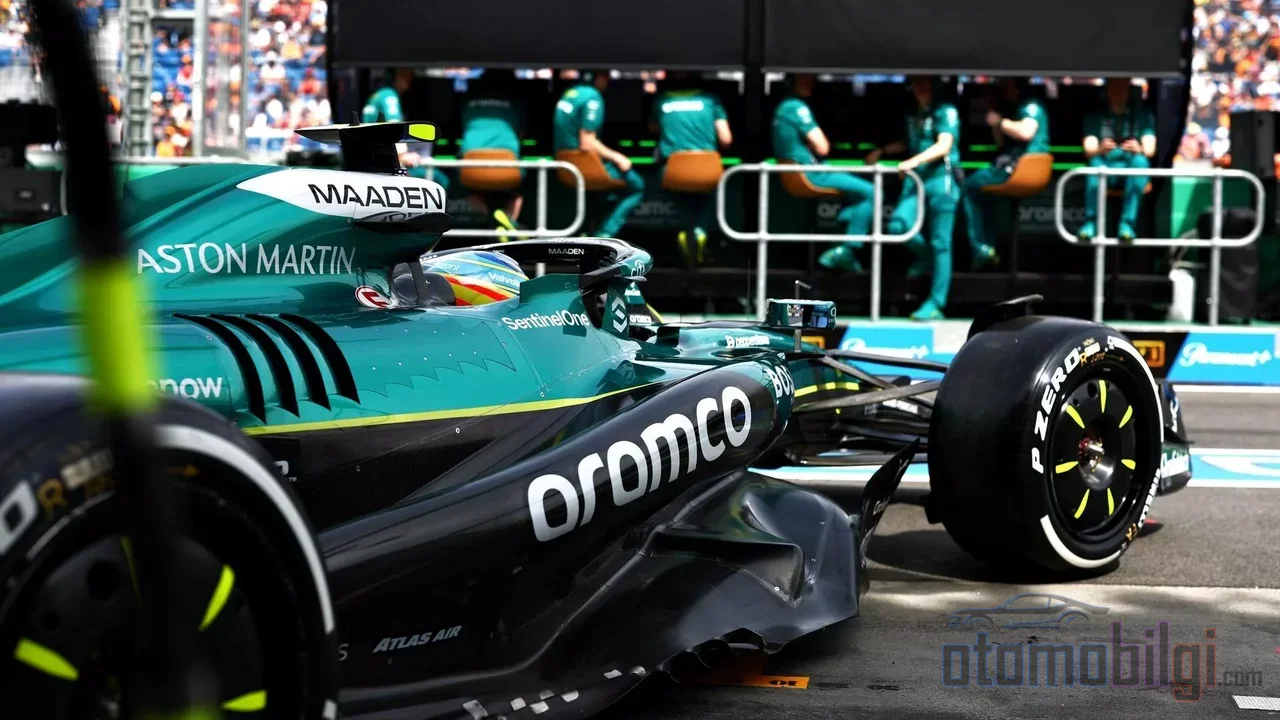
Have you ever wondered why a Formula 1 car suddenly loses power at the end of a straight, or why a driver gets extra electrical deployment for just one lap in qualifying? You won't see any trace of it on television; but in the team radio, on the engineers' screens in the garage, and in those little buttons on the driver's steering wheel, a whole battle is raging. The answer to the question of when ERS energy is deployed in F1 is actually hidden in two words: constant calculation. If you're ready, let's dive into this hidden world that counts megajoules per lap.
In the turbo-hybrid era that began in 2014, F1 cars were equipped with two electrical units: the MGU-K, which harvests braking energy, and the MGU-H, which generates electricity from exhaust heat. In 2026, however, it was rebuilt from scratch on paper: the MGU-H was removed, the MGU-K's power roughly tripled, and the energy management game became something entirely different. On this page we'll talk about the driver's side of things: where energy is stored, where it's spent, and why flooring the throttle isn't always the fastest way?
What Is ERS, and What Do MGU-K and MGU-H Do?
ERS, the Energy Recovery System, is the structure that converts energy the car would normally waste into electricity and stores it in a lithium-ion battery, known as the Energy Store (ES). Think of it this way: like a person who turns everything off on their phone to save battery, an F1 car jealously harvests the energy lost in braking and in the exhaust.
The MGU-K is connected to the crankshaft; when braking, it works like a generator, converting the car's kinetic energy into electricity, and when accelerating, it kicks in as an electric motor. During the 2014-2025 period, its output was 120 kW (approximately 160 hp), with a maximum torque of 200 Nm. The MGU-H, on the other hand, sits on the same shaft as the turbocharger; it converts the heat of the exhaust gases into electricity and, by regulating the turbo's speed, also eliminated turbo lag. Thanks to these two units, Mercedes became the first power unit to exceed the 50% thermal efficiency threshold on the dyno in 2017; an ordinary petrol road car is around 30% efficient, meaning F1 engineering truly plays in a different league.
What Changed in 2026?
The 2026 regulations removed the MGU-H entirely; it was dropped because it was expensive, complex, and had little relevance to road cars. The MGU-K, meanwhile, took the leading role: output of 350 kW, torque of 500 Nm. The electrical contribution now makes up roughly half of the total power; while the internal combustion engine delivers around 400 kW, the total power reaches approximately 1,000 hp. Recoverable energy per lap rose to 8.5 MJ (7 MJ on some circuits), storable energy to 9 MJ, and usable energy to up to 4 MJ. Where previously there was only a single deployment window per lap, now multiple 4 MJ deployments are possible as long as the battery lasts.
Highlights
- In 2026, MGU-K power is 350 kW and torque is 500 Nm; electricity accounts for roughly half of the total power.
- Usable energy per lap is 4 MJ; at full MGU-K power, that equates to roughly 11.5 seconds.
- There are four ways to charge the battery: braking, partial throttle loading, lift-and-coast and super clipping.
- If energy is spent too early, the car is left powerless at the end of the straight; this is called de-rating.
- The driver whose power unit element exceeds its limit first receives a 10-place grid penalty.
How Does the Battery Charge During a Lap? Four Charging Paths
Here's the least talked about but coolest part of the whole affair: spending energy is easy, harvesting it is the real skill. 2026 cars have four ways of charging the battery, and the driver is constantly choosing between them.
- Braking: The MGU-K switches to generator mode and converts the kinetic energy of the decelerating car into electricity. Since it effectively brakes the rear axle, the rear brakes were downsized in 2026. On tracks with sharp chicanes like Monaco, charging through braking is almost routine.
- Partial throttle loading: In sections where the driver doesn't need full throttle, the battery draws power from the motor. In medium-speed corners like Suzuka's 130R or Silverstone's Maggotts-Becketts sequence, the MGU-K alone can provide sufficient deceleration.
- Lift-and-coast (Li-Co): The driver lifts off the throttle well before the braking zone; while the car slows through air resistance, the MGU-K harvests energy. The price? Giving up the active aerodynamics advantage and increased closing speeds.
- Super clipping: The most talked-about innovation of 2026. While the driver is at full throttle, the car automatically redirects up to 350 kW of power from the motor to the battery at the end of long straights; the car slows down on its own through power loss. Active aerodynamics stays open, the price is a lower top speed. Its duration is limited to roughly 2-4 seconds per lap.
If you've noticed cars slowing down by themselves just before entering a corner on a long straight, you were most likely watching super clipping. The driver's foot is on the throttle, but the car is deliberately banking energy. It looks crazy, but the math is simple: you win back part of the second you gained on that straight with the electric power on the next one.
Discharge on the Straight, Bank in the Corner: The Deployment Logic
So where is the energy spent? The logic is this: on corner exits, electric power matches the combustion engine and adds extra push under the time spent along the straight. Electricity is where torque is needed most at the exit; with 500 Nm of torque, the 2026 MGU-K plays a key role in launching the car out of the corner. But there's one detail: The MGU-K only engages from 50 km/h onwards, meaning the car can't launch with electricity from a standstill.
As speed increases, the electric contribution is also trimmed. According to the speed-dependent power reduction rule, MGU-K power is limited by reducing 1,800 kW by 5 kW per km/h; from 340 km/h onwards, the reduction accelerates fourfold. The full 350 kW is available only up to 290 km/h, and above 345 km/h there is zero electric power. With Overtake Mode, full power lasts up to about 337 km/h and ends completely at 355 km/h.
De-rating: What Happens When the Battery Runs Out?
The energy harvested is not free power. The battery has limited capacity, and if you burn the deployment early, the car runs out of steam at the end of the straight; this is called de-rating. For the driver, it feels like this: the throttle is pinned to the floor but the car isn't going anywhere, and everyone behind you is closing in. Teams therefore don't chase a full battery; battery usage determines both lap time and the lifespan of the power unit.
Deployment is largely automatic; however, the driver can take manual Boost control when attacking or defending, and this overrides the MGU-K deployment map. Also, in 2026 Overtake Mode replaced DRS: extra power deployment is provided when within one second of the car ahead, opening up the overtaking window. So on the straights, behind that famous closing speed, there is now direct electricity instead of a shield.
Qualifying Lap vs Race Lap: Two Different Energy Games
In qualifying, the strategy is clear: ERS is generally used at full power for a single fast lap. Boost Mode can be engaged during qualifying, and the driver pours all the energy at their disposal into that one lap. In the race, things are completely different; energy is managed sparingly for switching positions, defending, or staying away from the car ahead. Just as a sprinter and someone running a 50-60 lap marathon have different nutrition plans, so do F1 cars' energy plans.
A critical detail: the charge amount in qualifying is limited, and this limit changes from track to track. While the basic regulation says 8.5 MJ per lap, the rule revision in May 2026 lowered the deployment threshold from 8 MJ to 7 MJ; the FIA can cut this limit down to 5 MJ at tracks suffering from energy scarcity (like Monza). An extra 0.5 MJ allowance for factors like Boost Mode can also be added.
The 2026 season's qualifying charge limits clearly show track character: Monaco 9, Singapore 9, Azerbaijan 8.5, Miami and Spain 8, Belgium 8, Canada and Austria 6, Italy just 5 MJ. The logic is simple: on Monza's long straights there is little braking, so charging opportunities shrink and teams are forced to rely on super clipping; while in Singapore's twisty maze, the battery charges comfortably anyway. Track character now directly determines the energy strategy.
The Fastest Lap May No Longer Be the Cleanest Lap
Perhaps one of the most unusual realities of 2026 is this: the fastest lap may not be the lap with the cleanest braking and deepest throttle application. At some tracks, the braking alone provides the recovery needed for the ideal lap; at others, there isn't enough braking in certain sectors. So the fastest lap is the one that deliberately sacrifices a bit of time at one point of the track to guarantee maximum electrical deployment at another. Sounds counterintuitive, doesn't it? But that's the math of the new rules.
The Price of Wasted Energy: Grid Penalties
Energy management happens not only within a lap but throughout the entire season. If the allocation limit for power unit elements is exceeded, the penalty comes knocking at the door: A 10-grid-position penalty on an element's first overspend, with additional penalties applied on the second and subsequent overspends. From 2025 onward, gearbox housings were excluded from the penalty scope. The FIA confirmed that after 2026, one extra example of each engine element can be used without penalty, and that this practice will last until 2028. Even so, accumulated engine penalties in a single race can typically reach 40-50 grid positions; dropping to the back of the grid is not out of the ordinary.
Short Answer: When Exactly Is ERS Energy Used?
Let's wrap it up, because you've earned the clear answer we promised. ERS energy is equalized with the combustion engine on corner exits and discharged along the straights; it is harvested in braking zones, during partial throttle moments, through lift-and-coast, and via super clipping. In qualifying, the whole tank is spent on one single fast lap, while in the race it is saved for Overtake Mode and boost moments; if the energy runs out early, de-rating leaves the car powerless on the straights. That's why speed in F1 lies not only in the throttle, but hidden in that invisible plan that spends megajoules in the right place.
After the opening races of the 2026 season, the system itself became a subject of debate: differences in energy deployment between drivers and charging interruptions in qualifying were raised on safety grounds; for 2027, a reduction of around 50 kW in usable ERS power is planned. So this energy balance at the driver's fingertips looks set to remain one of F1's most critical topics in the years ahead.
Sources
- Evolution of Hybrid Technologies (MGU-H, MGU-K) - Honda
- F1 Power Unit 2026 Explained: How It Works
- MGU-K, megajoules, and managing the battery: F1's 2026 energy system explained
- The beginner's guide to the 2026 regulations - Formula1.com
- Energy Recovery System - Physics of Formula 1
- 2026 Formula 1 Power Unit Technical Regulations - FIA
- The beginner's guide to F1 power unit penalties - Formula1.com
- FIA confirm future F1 engine penalty rules after 2026 change - RacingNews365
- The art of ERS: F1's strategic power play - Dive-Bomb