Why Will F1 Cars Look So Different in 2026?
Share This Page
The 2026 F1 cars will look very different from before because of the complete overhaul of the technical regulations: thanks to active aerodynamics, they are becoming machines whose wings move on track, whose dimensions and weight have shrunk, and which generate half their power from electricity. The ground-effect tunnels have been removed, DRS has retired, and a new system in which the driver manages the energy themselves has taken its place.
Highlights
- Minimum weight from 800 kg to 768 kg dropped
- MGU-K power from 120 kW to 350 kW increased; roughly half the power is electric
- DRS is history; replaced by active aerodynamics and Overtake Mode
- Wheelbase 200 mm, width 100 mm shorter
- Fuel is produced entirely from sustainable sources
Why Will the Cars Look So Different?
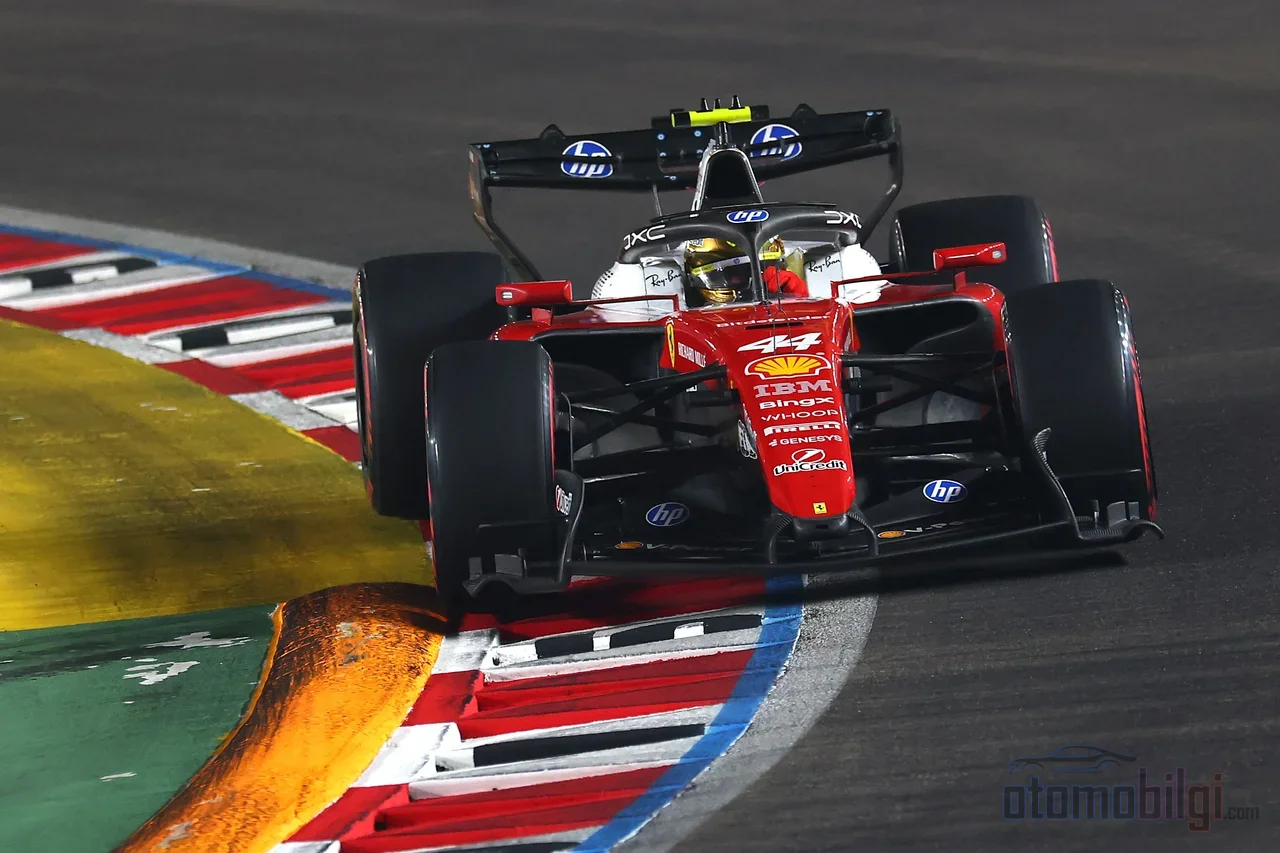
Let's first talk about the difference your eye catches, because anyone in front of a screen will see the first thing right there. The 2026 car's front wing is much simpler: a move to a plainer design with fewer elements. Those tiny "eyebrow" winglets above the front wheel and the rear beam wings have been removed entirely. The floor has been flattened, and at the rear there is an unbelievably large diffuser.
So why has it been simplified so much? The aim is very clear: to reduce the turbulence that is thrown outward and cuts off the front of the car following behind. Under the old order, the driver stuck behind the car ahead was struggling in pursuit because of the dirty air. The new philosophy wants a cleaner airflow to produce more frequent position changes. And of course the dimensions have shrunk: the wheelbase has shortened by 200 mm to 3.4 meters, and the width has narrowed by 100 mm to 1.9 meters . Even the tires have slimmed down; they are 25 mm narrower at the front and 30 mm at the rear.
The weight issue is my favorite, because after putting on roughly 200 kg over 20 years, the F1 cars have finally entered a slimming camp. The minimum weight dropped from 800 kg to 768 kg - the first serious weight-reduction move in years. This is still a massive engineering exam for the teams; there is no guarantee they will be able to reach the minimum weight.
| Feature | Old | 2026 |
|---|---|---|
| Minimum weight | 800 kg | 768 kg |
| Maximum wheelbase | 3.6 m | 3.4 m |
| Width | 2.0 m | 1.9 m |
| MGU-K power | 120 kW | 350 kW |
| Electricity's share of power | Small | Approximately 50% |
Active Aerodynamics: DRS for Everyone, All the Time
Now let's move on to the most brand-new part of it all. In 2026, for the first time in F1 history, there is full-time active aerodynamics. The front and rear wings adjust their own angles according to the car's position on track. There are two modes, and both reveal what they do from their names.
Straight Mode, that is, the straights mode: the flaps open, the wings flatten, air resistance decreases, and top speed increases. When entering a corner, the system Corner Modeswitches to "closed" position, bringing back downforce. The official explanation compares it to Venetian blinds, and in my view it is exactly like that: with the blinds closed there is downforce but plenty of drag, and when they open both decrease. Just like opening and closing the blinds at home, only done at 300 km/h.
Remember the DRS we've used since 2011: only cars following within 1 second, only on designated straights. The new system removes these restrictions entirely - all cars can use the wing position at any point on the track. So why does the front wing also move? For balance. Stability coordinated with the rear is needed; otherwise the car starts to sway at corner entry. Meanwhile, a small piece of history: the driver-adjustable front wing was also tried in 2009, but it didn't catch on back then. The technology waited 17 years, apparently.
Overtake Mode: What Replaced DRS?
DRS is gone, but we're not completely helpless when it comes to overtaking. The system that replaces it is called Overtake Mode: if the attacking car gets within 1 second of the car ahead at a designated point on the track, it earns the right to use more electrical power for the following lap. Concretely, the driver gets +0.5 MJ of extra charge and can deploy an electrical power profile that maintains higher speeds for longer.
Think of the difference from DRS like this: overtaking opportunity used to be a "reward" given only to those who met certain conditions. Now the attacking car has a bit more control; the driver decides where and how to spend the electrical energy. There's also a defensive side - the Boost button. The driver manually takes over energy use for attack or defense; either reverting to maximum power or to a profile prepared in advance by the team. The energy can be deployed all at once or spread across the lap. The result? Overtaking is no longer the monopoly of long straights; attack attempts at unusual points on the track and more frequent position changes are expected.
50% Electric: MGU-K Reaches Its Peak
The change on the engine side is truly striking. The remaining constants are familiar: the engine is still a 1.6-liter V6 turbo-hybrid, the rev limit is 10,500 RPM, and estimated power is around 1000 horsepower. But the distribution has changed: roughly half the power now comes from electricity. The star making this possible is the MGU-K, the unit that converts braking energy into electricity. Its power has risen from 120 kW to 350 kW - nearly a threefold increase. Its minimum weight, including cables, has also jumped from 7 kg to 16 kg, with an additional 4 kg allocated for the gearbox connection. So the electrical side is no longer a supporting act, but the lead role.
Meanwhile, the MGU-H has been removed entirely. The rationale is simple: this complex and expensive unit inside the turbo was a daunting entry barrier for manufacturers wanting to join. A smaller unit, a growing entry list - because the new regulations are attracting Ferrari, Mercedes, Audi, Red Bull-Ford, Honda, and from 2029, GM/Cadillac as well. Cadillac already joined as the grid's 11th team in 2026; a 22-car field is being seen for the first time since 2016.
The fuel story is also worth hearing: production from fully sustainable sources is mandatory - non-food biological material, municipal waste, or sustainable carbon capture can be used. The fuel flow limit is 3000 MJ per hour above 10,500 RPM, and the injection pressure limit has dropped from 500 bar to 350 bar. So 2026 is not just a speed story, but also a story of environmental sustainability.
Recharge and Boost: The Driver Now Does Accounting Behind the Wheel
Since the battery's electricity is limited, where you spend it is as critical as where you charge it. That's why two energy modes have entered our lives. Recharge mode fills the battery in four ways: braking, partial throttle, lifting off the throttle, and a technique called "super clipping," which recovers energy while at full throttle at the end of a straight. Usually the ECU handles this automatically; the only thing the driver directly controls is lift-off regeneration, that is, lifting off early on a straight to charge. But beware: lift-off regeneration disables the active aerodynamics. Since super clipping works at full throttle, the wings stay open - a delicate balancing act.
The age-old problem is this: the battery is powerful but short-lived. Even in qualifying sessions, where power is spent and where it is recharged has become almost as important as race strategy. Drivers may have to "manage" the race; whether energy saving will reduce the excitement of racing is one of the questions awaiting an answer during the season. On the other side, there is the expectation of more frequent position changes.
Is the Ground Effect Era Over? The New Aerodynamic Philosophy
You remember the ground effect regulations that began in 2022: the Venturi tunnels under the car glued it to the road, but we were also introduced to the bouncing plague called porpoising. Those tunnels are gone now. In their place came a flat floor and a much larger diffuser at the rear. So is the ground effect era over? Yes, those regulations ended - but on a flat floor these forces don't disappear entirely, they are significantly reduced.
As for how much downforce and drag are reduced, the figures vary depending on the measurement definition: downforce reduction is in the range of about 15-30%, while drag reduction is cited as between 40% and 55%. The difference largely depends on which reference point is taken; roughly speaking, the cars are noticeably less sticky in corners, and on the straights they hit the air wall less than before. That means slightly slower on the track but harder to handle in corners. On the sound front, there is a pleasant surprise: the cars are reported to be louder.
So What About Safety?
If you're asking "The car got lighter, the wings move - was safety compromised?", the answer is clear: no. The crash tests were not relaxed; in fact, the roll-hoop's vertical impact test from 16g to 20g removed. The new two-stage nose cone is also an important idea: if the car hits the wall after the first impact and keeps spinning, it continues to provide protection in the second collision as well. So the car that looks different is also one that passes the demanding tests.
There is also a small change in qualifying: the number of cars eliminated in Q1 and Q2 has gone up from 5 to 6, while Q3 continues with 10 cars as before. That makes sense once the grid grows to 22 cars.
In Short: How Will the New Rules Change the Races?
- More frequent passing: Active aero works for everyone at all times; Overtake Mode adds energy to the attack.
- Strategy has deepened: The Recharge/Boost balance will be talked about as much as pit stop plans.
- Harder-to-handle cars: Less downforce, a smaller margin for error.
- Lighter and more compact: 768 kg, 3.4 m wheelbase - agility is coming back.
Which one is your favorite? My head is still spinning thinking about a driver lifting off at the end of a straight and charging while their wings stay open. But this very confusion might be the best part of 2026: once again, we are relearning how everything is played.
Sources
- The beginner's guide to the 2026 regulations
- All you need to know about F1 aerodynamics for 2026
- All you need to know about F1's new power units
- 2026 FIA Formula 1 Regulations Hub
- Formula One regulations
- 2026 F1 Tech Regulations in focus – the Power Unit
- 2026 Formula 1 Regulations Overview
- FIA reveal 2026 F1 rules
- The 2026 Formula 1 Regulations: A New Era
- F1 2026: What are the new regulations, engine changes and how will the racing be?
- Overtake Mode, Boost: F1's new terminology explained
- F1 car designs for Melbourne 2026