From Senna to Hamilton, Formula 1's Legendary Drivers
Share This Page
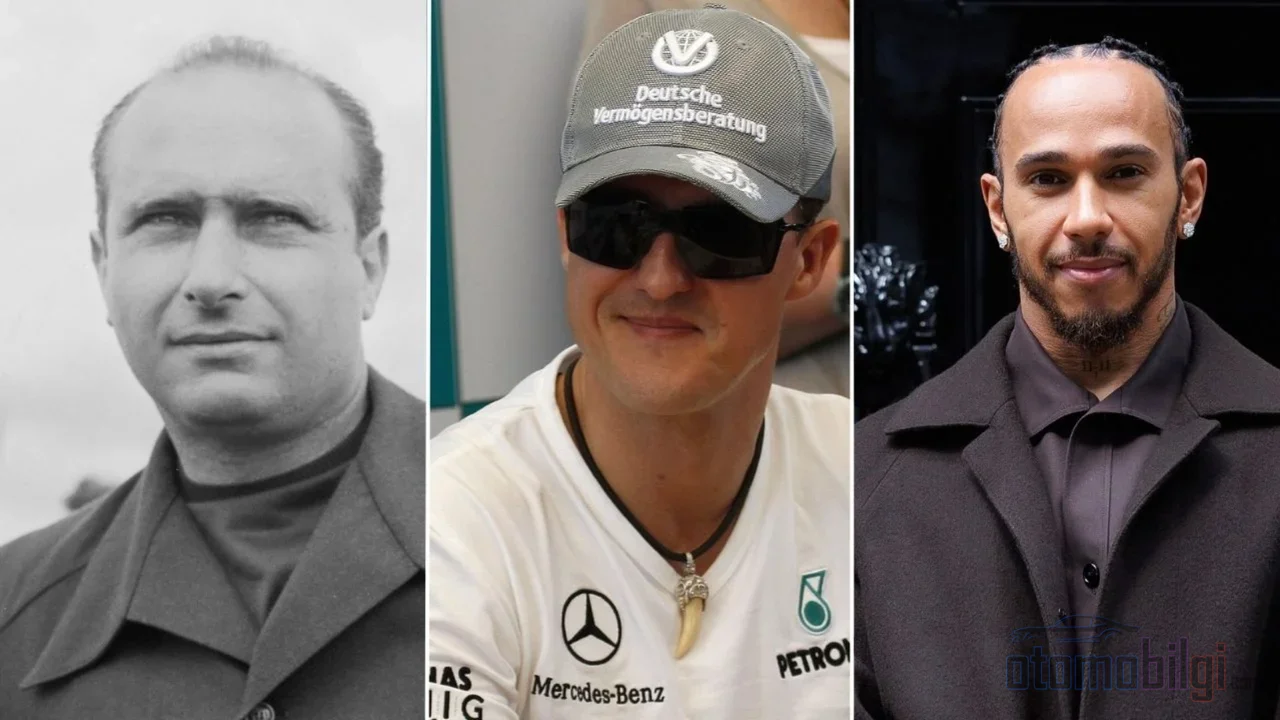
Formula 1's legendary drivers did not become legends just because statistics were kept: every name on the list stretching from Juan Manuel Fangio to Lewis Hamilton and Max Verstappen made history by racing against the vehicle technology, regulations and rivals of their own era. This guide explains why each driver is considered a legend, together with the conditions of their time.
Highlights
- With 7 championships Michael Schumacher and Lewis Hamilton share the record.
- Fangio's 5 championships went unbroken for nearly 50 years.
- Ayrton Senna: 41 wins, 65 pole positions and an unbeatable reputation in the rain.
- Max Verstappen, 18 years 228 days is the youngest race winner in F1 history.
Which Driver Is a Legend and Why?
Let's admit one thing first: if you love F1, you have had this debate in front of the bathroom mirror at least once. I have too, I admit. But here is the good part: the question "Who is the best?" has no single answer, because every champion raced with a completely different car, completely different rules and completely different rivals. Comparing Fangio to the hybrid monsters of 2020 is like comparing the inventor of the telephone with the maker of the smartphone - both are geniuses, but the game is completely different.
That is why on this page we will go through the drivers in chronological order and evaluate each one within the conditions of their own era. Safety, aerodynamics, hybrid technology... everything changed. The only thing that did not change is greatness.
Fangio: F1's First Giant
When the championship began in 1950, there was already a king in the ring: Juan Manuel Fangio. The Argentine driver won 5 world championships, setting a record, and that record went untouched for nearly half a century - until the 2000s. Just imagine: your record remains beyond anyone's reach for 50 years!
What made Fangio a legend? In an era when cars were not half computer and half rocket like today, it was his ability to work with multiple teams and adapt quickly to every machine. Today's drivers sit with one team for years and learn the car; Fangio switched between different squads and managed to win with all of them. And his fearless racing style was a bonus. Some modern assessments still see him as the number one of all time - and that is no coincidence.
Senna and Prost: Two Geniuses Destroying Each Other
Now we come to the late 1980s, and F1 history's most legendary rivalry begins: Ayrton Senna versus Alain Prost. Both at McLaren, in the same garage, racing while sharpening their knives against each other. This duo defined what F1 was at the end of the 1980s and the beginning of the 1990s.
Senna: The King of Rain
Senna was the kind of driver who lived by the greatest Turkish proverb in F1 history: it's do or die. Over his career he amassed 3 world championships, 41 wins, 65 pole positions, 19 fastest laps and 80 podiums. He started his career with a winless rookie season with Toleman, then reached the championship three times with McLaren.
What seemed to set him apart from his rivals wasn't raw speed; his real talent was finding new racing lines and tenth-of-a-second advantages that others didn't notice. His steering technique was also unique: he constantly modulated the throttle in corners, chasing grip with the smallest corrections. His performance in the rain became legendary - he never lifted off the throttle even on a wet track.
Prost: The Professor's Composure
Prost, on the other hand, was the complete opposite, and that's what made this rivalry so beautiful. His nickname was The Professor: smooth, calculating, composed. Instead of charging at the wall at full speed in every corner, he planned the race like a mathematician. Senna's boundless, aggressive style and Prost's methodical approach formed a complete contrast, and this contrast made both legends even more legendary. Prost ended his career with 4 world championships .
Let's not forget the painful side of this story: Senna lost his life in the tragic accident at Imola in 1994. This is one of the most heartbreaking moments in the sport, and it will never be forgotten.
Schumacher: Master of the Red Machines
When the 2000s arrived, the scene changed and a red storm blew through. Michael Schumacher won his first championship in 1994, with 8 wins - following his collision with Damon Hill in the final race of the season. But his real empire was built at Ferrari.
Schumacher brought Ferrari its first drivers' championship in 20 years in 2000 . That season, he took 9 wins despite retiring from four races (DNF). Then cars such as the F2000, F2001, F2002, F2003-GA and F2004 dominated the 2000-2004 period so thoroughly that Ferrari won 5 consecutive constructors' championships. At the end of his career, on the table sat 7 world championships - Fangio's record, which had stood for 50 years, had finally fallen.
Now here's a candid question for you: how much of Schumacher's dominance came from the car, and how much from talent? This debate still burns bright in F1 forums. The answer is probably a mix of both: the car was genuinely good, but everyone else driving the same car was left behind.
Hamilton: The Name Who Broke Records One by One
Then Lewis Hamilton took the stage and rewrote the statistical tables. Today he holds three giant records: 106 wins, 104 pole positions and 206 podiums . In 2020, he surpassed Schumacher's legendary tally of 91 wins and equaled the German star's championship count: 7 world championships. What's more, he managed to win races with three different teams - which isn't as easy as you might think.
But did Hamilton only win in the best car? That's the most common criticism you hear about him. The other side's argument is equally strong: an incredibly fast driver with superb racing intelligence - the decision is yours. And there's more beyond the statistics: as the first Black driver in F1 history, Hamilton became one of the most prominent voices for diversity and inclusion in the sport. He combined raw talent with relentless determination - the combination rivals hate the most.
Verstappen: The Child Prodigy of the New Era
And the current era: Max Verstappen. This kid has literally shattered the youth records that made history. 18 years and 228 days he became the youngest race winner in F1 history, 17 years and 180 days the youngest points scorer. Since 2021 he hasn't let the championship slip from anyone else's hands and 4 world championships has reached. In 2022 he took 15 wins in a single season, breaking yet another record. In terms of career totals after races, we're talking 72 wins, 50 poles and 135 podiums - and he's still counting.
His driving style? Fearless and aggressive. Technical analyses say he brakes a bit later than others, flows smoothly through corners and gets on the throttle early. It's also often said he may have the most versatile skill set on the grid. One more detail: according to some analyses, he prefers overly front-balanced setups - meaning he sits in a car that makes most drivers' "hair stand on end" and accelerates it.
The Technology of the Eras: How Did the Cars Change?
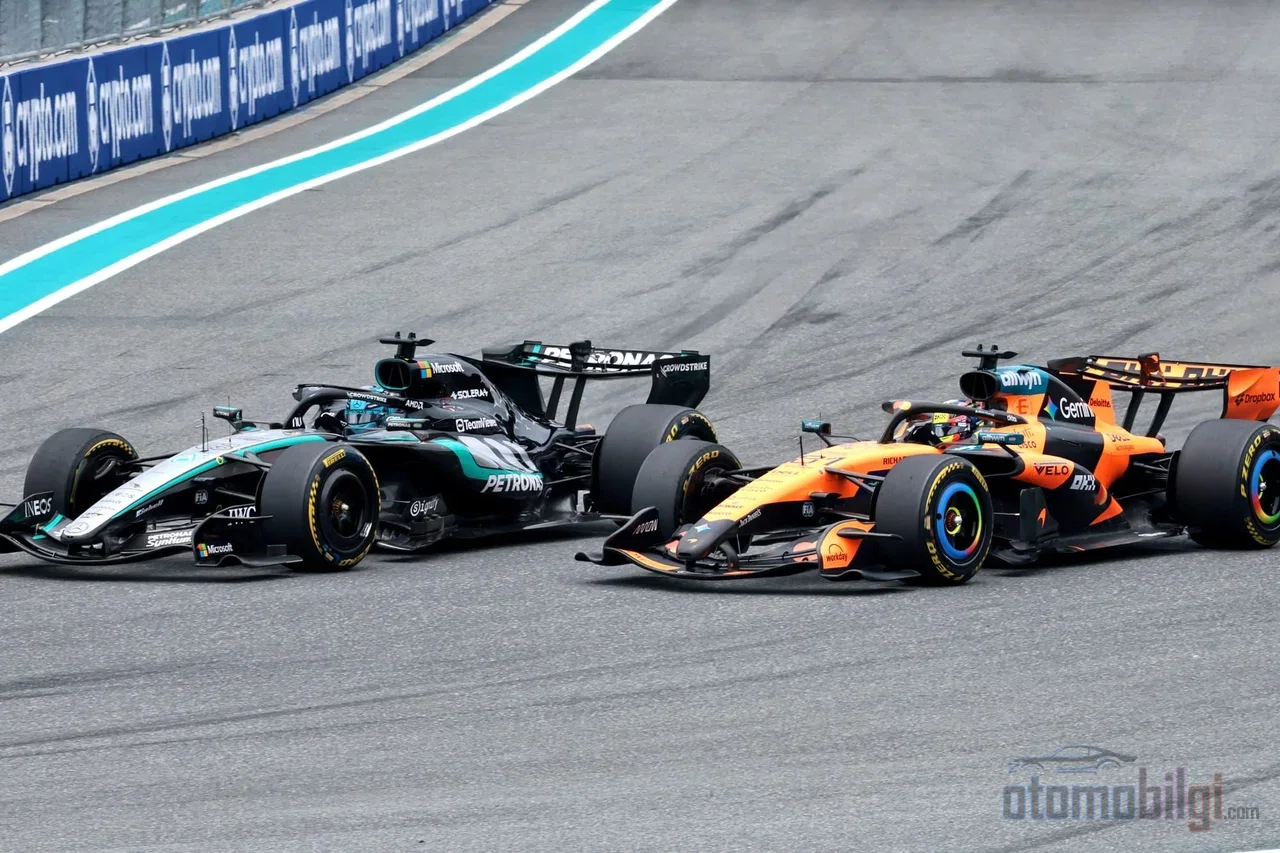
When comparing champions, you can't skip the cars, because in F1 the car is the biggest weapon in a driver's hands. Here's a quick timeline for you:
| Era | Technology / Regulation | Mark of the Era |
|---|---|---|
| 1950s | The founding years of F1 | Fangio's 5 championships |
| 1978 | The arrival of ground effect | Lotus found massive downforce with airflow from below |
| 1983 | Ground effect ban | Designers looked for new ways |
| Late 1980s | The Senna-Prost rivalry | The sport was defined by the battle between these two |
| 2000-2004 | The Ferrari dominance era | 5 consecutive constructors' championships |
| 2014 | The V6 turbo-hybrid era | Initially criticized, then became one of the sport's greatest technological achievements |
| 2022 | The return of ground effect | Comprehensive regulation change |
Let me explain ground effect simply, because it's a cool term but the idea is very clever: you use the airflow under the car to stick it to the road. It's as if an invisible hand is pressing the car to the ground. It was banned in 1983 and returned in 2022 with comprehensive rule changes. So in F1, technology sometimes comes full circle back to old ideas.
Then there's the turbo-hybrid era, which I think is also a good lesson: when it was introduced in 2014, everyone said "It's too complicated!" Later these engines became one of the sport's greatest technological achievements. Changes that look bad at first glance can, over time, turn into works of art.
Why Is the Comparison So Hard?
And now to the real question: after all this, who is the best? Here's the honest answer - this question stays alive as if it were designed never to be solved. Because the technology changed, the tracks changed, the rules changed and safety levels have reached a completely different point. In the cars Fangio won with, you were entrusting your life to a fragile machine; today, drivers are protected like astronauts at high altitude with their helmets. A direct comparison is therefore not fair.
Different rankings offer different orderings: some put Fangio first, while in others Jim Clark, Senna, Schumacher, Stewart, Prost and Hamilton appear very close to one another. The picture that emerges makes perfect sense to me: Schumacher and Hamilton, the record-holders, Senna, considered the most talented, Fangio, who turned his era upside down... greatness isn't measured by numbers alone; legacy and impact are also part of the equation.
Who Would You Choose in Equal Cars?
Among F1 fans there is a classic thought experiment: putting Senna, Schumacher and Prost in their prime into identical, equal cars and asking who would win. The answers differ every time and the debate never ends. My opinion? That is exactly what makes it so beautiful - everyone stands by their own favorite and no one can convince anyone else. Perhaps the all-time greatest F1 driver debate is what keeps people attached to the sport just as much as the races themselves.
Final Word: Legends Are Children of Their Own Eras
If you have read this far, you now have the basic framework in hand: Fangio owes his place to the first multi-team era, Senna to raw talent and mastery in the rain, Prost to calculated intelligence, Schumacher to the Ferrari empire, Hamilton to breaking records endlessly, and Verstappen to shattering youth records. Each of them grew up within the technology and rules of their own era; considering one superior to another is impossible without understanding the games they raced in. In my view, this is a far more compelling story than a mere counting contest. Which legend would you like to explore in more depth next?
Sources
- Ayrton Senna - Wikipedia
- Michael Schumacher - Wikipedia
- Lewis Hamilton - Wikipedia
- Max Verstappen - Wikipedia
- Key regulation changes in F1 history - Formula1.com
- The evolution of F1 cars - Red Bull
- Everything you need to know about Max Verstappen - Red Bull Racing
- How good actually was Ayrton Senna? - McLaren
- The Ferrari that started the Schumacher F1-dominance era - Autosport
- How Lewis Hamilton transcended Formula One stardom - The Athletic
- F1 tech history - Mercedes-Benz Magazine
- List of Formula 1 World Drivers' Champions - Wikipedia
- Do driving styles really explain these drivers' 2026 F1... - The Race
- The Greatest F1 Drivers of All Time - Belushi's