From Monaco to Suzuka: What These Tracks Wrote into F1 History
Share This Page
Formula 1's identity is made up not only of cars and drivers, but also of the asphalt they speed across. There are some circuits that remain in place even if the rest of the calendar changes and have shaped the series' character for years: Monaco's narrow streets, Suzuka's figure-eight layout that crosses over itself, Spa's Eau Rouge tucked into its hills, and Silverstone, where the championship was born. Here is the story of four legendary circuits that wrote F1 history.
Highlights
- The Monaco circuit opened on April 14, 1929 and has remained largely unchanged since that day; the track width is only 8-12 meters.
- Suzuka is the only figure-eight layout on the calendar; it crosses over itself.
- The first Formula 1 World Championship race was held at Silverstone on May 13, 1950.
- Michael Schumacher became the only driver to claim his seventh and final championship at Spa in 2004.
- The lap record at Monaco belongs to Lewis Hamilton (2021) with 1:12.909 .
Monaco: Where Racing Is Squeezed Between Walls
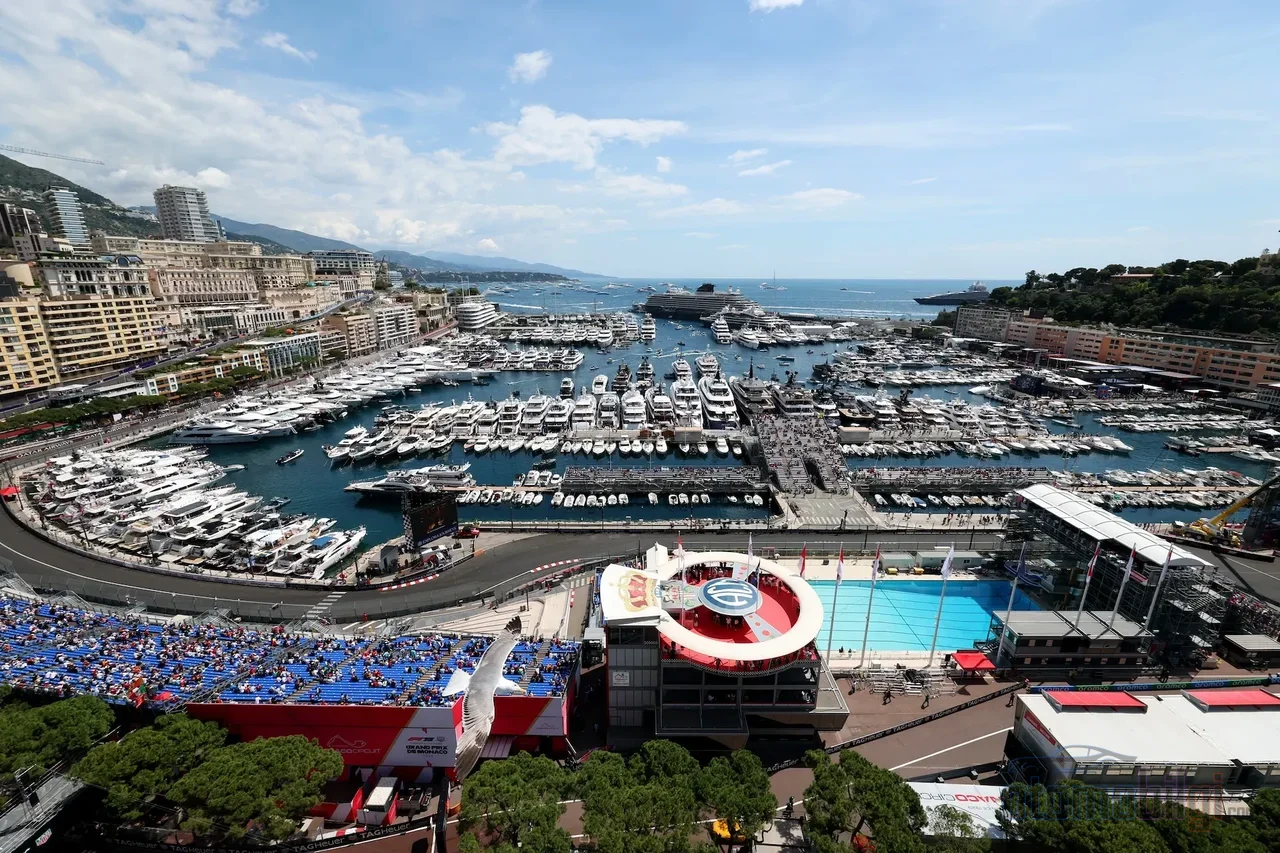
Do you know what sets Monaco apart from other circuits? It's not that the race goes there, but that the circuit has adapted to the city. Winding through the streets of Monte Carlo and La Condamine, around the harbor, this 3.337-kilometer street circuit came to life in 1929 thanks to Antony Noghès' idea. William Grover-Williams won its first race in a Bugatti, and since that date the layout has actually remained almost the same. The final corner bears the name of the man behind the idea: Virage Antony Noghès.
The track has 19 corners and the width varies between 8 and 12 meters. It may sound ordinary, but think of an F1 car: nearly 2 meters wide, and if you put two cars side by side, they barely fit between the walls. What's more, there is no long straight either. That's why overtaking in Monaco is almost impossible; the most realistic opportunities arise at Fairmont Hairpin and the Nouvelle Chicane at the tunnel exit. Alpine's race director Dave Greenwood sums up the situation nicely:
Overtaking is not impossible, just very, very difficult.
That's why Saturday's qualifying laps effectively determine the race result. Strategy works differently too: usually a single stop is planned, tire life is easy to manage, but the possibility of a Safety Car is always on the table. History has shown us how rewarding this can be: in 1996, Olivier Panis, starting from 14th place took the only victory of his career with Ligier, and this remains the only win from outside the top 10 at Monaco.
Is the criticism of Monaco justified?
There is a two-camp debate about the circuit. Critics call it a "parade," because the outcome is often decided on qualifying day. Defenders, on the other hand, say that despite the lack of overtaking, this is the purest test of precision, nerve, and character. In Pirelli's words, it is "the jewel in the crown of Formula 1." And there is a paradox: while the difficulty of overtaking reduces the excitement on track, that same difficulty gives it an air of mystery. Teams have to work not on the pit wall but above the garages, and the hospitality areas rise vertically. And here's the beautiful part: in 2024, Charles Leclerc became the first Monegasque driver to win the Monaco GP. Just imagine, etching your name into history on the streets of your own city, grazing the walls inch by inch...
Suzuka: The Only Track That Crosses Over Itself
Suzuka in Japan has a feature unique among the world's calendars: the track crosses over itself and has a figure-8 layout. Don't think of it as a simple oval or a flat circuit; the figure-8 layout is formed by one section of the track passing over another like a bridge, and Suzuka is the only circuit on the calendar with this arrangement.
So why is the layout itself so technically famous? Because the figure-8 means the driver takes clockwise and counterclockwise corners one after another, almost without a break. The track is fast and flowing; it has sections that demand precision and technical expertise. Chief among these is the famous 130R left-hand corner. Even its name comes from its speed: taken at very high speed, this corner is, in a driver's eyes, one of the most courage-demanding moments on the track. Suzuka is also a setup exam for the teams; since both long fast corner combinations and technical sections coexist in the same layout, finding a single balance becomes difficult. Let me give you an analogy: if Monaco is a parking maneuver, Suzuka is slalom skiing. Both are challenging, but they require completely different muscles.
Spa-Francorchamps: Eau Rouge and Belgium's Crazy Weather
Winding through the forests of Belgium's Ardennes region, Spa-Francorchamps is known for its elevation changes, long straights, and most importantly, its unpredictable weather conditions. While the sun shines at one end of the track, it may be raining at the other; this sentence is not poetry, it is something that really happens at Spa. And the weather here is not just atmosphere; it is an actor that changes the outcome of the race.
The star of the track is of course Eau Rouge/Raidillon; it is often called "the most exciting corner in F1." This section, where you dive downhill and climb toward the crest like an adrenaline bomb, has evolved over the years; the circuit even dropped off the F1 calendar in the 1990s for 13 years, with the Belgian round moving first to Nivelles and then to other circuits. Fortunately, Spa returned and Eau Rouge regained its present-day form.
Rain, setup risk, and unforgettable moments
Spa's weather conditions directly affect the teams' setup strategy: should they run dry tires or rain tires, keep downforce low? A wrong prediction can cost all the points. And this risk has also produced moments that went down in history. Michael Schumacher's rain mastery in 1996 is still talked about; the pile-up on the first lap of 1998 is a lesson of its own. In 2012, after the red lights went out, 13 cars crashed into each other in an accident remembered as one of F1's most iconic pile-ups. It was also here that Schumacher announced his seventh and final championship in 2004. Now ask yourself: at which circuit can a corner, a rain cloud, and a setup decision hold so many legends at the same time?
Silverstone: Where the Championship Was Born
It all happened on May 13, 1950. The race run at Silverstone that day was the first round of the Formula 1 World Championship, and the British race is still the oldest on the calendar today. A small but important detail: "the first Formula 1 race" and "the first championship race" are not the same thing; the 1950 race was the opening round of the first championship season. The first race carried the badge of a supercharged 1.5-liter pre-war design Alfa Romeo.
The circuit itself is a story of its own. Silverstone was built on an airfield, and motorsport use began long before anything official, in September 1947 with an informal race by a group of friends. That crew, including Maurice Geoghegan, were unknowingly planting the seeds of today's championship. The fast layout brought by the airfield's design practically marked out Silverstone as the natural home of the first championship race.
The Setup Battles: Every Circuit Wants a Different Face of the Same Car
When you put these four circuits side by side, you understand why teams have to think from scratch every race weekend. At high-downforce circuits (Monaco is the peak of this), cornering grip and braking stability come to the fore; at low-downforce circuits, straight-line speed. In Monaco, since there are no straights for brake cooling between the braking zones, the power unit and brakes are constantly stressed, while at Spa the real question is what the weather will do. In short, the setup is an answer given to the character of the circuit.
| Circuit | Why It's Known | Technical Signature |
|---|---|---|
| Monaco | Narrow streets, overtaking almost impossible | 8-12 m width, 19 corners, maximum downforce |
| Suzuka | Figure-eight layout | 130R corner, fast and flowing sectors |
| Spa | Unpredictable weather, elevation changes | Eau Rouge/Raidillon, long straights |
| Silverstone | Home of the first championship race (1950) | Airfield-derived fast layout |
The 2026 regulations also touch this balance: the new cars are narrower than in previous years, with a lower overall downforce level. There is no Straight Mode zone in Monaco and active aerodynamics are not used; since the cars are small, it is said the race could be better than in previous years. The circuits are old, but F1 keeps changing - and that is exactly why these four stops are still the heart of the calendar.
Why Are Circuits Part of F1's Identity?
Think about it: cars are redesigned every few years, drivers come and go, the rules change. But Monaco's Fairmont Hairpin is still there, Suzuka still crosses over itself, Eau Rouge still launches you up the hill, and Silverstone still carries the spirit of 1950. This continuity works like the memory of the sport. Every new generation of car faces the test of these circuits, and every champion writes their name into history by passing these tests. If it were up to you, which one would you declare "untouchable"? My list would be long, but four are clear from the start.
Sources
- Circuit de Monaco
- The Risk Perspective: How F1 drivers, engineers and strategists tackle the Monaco Grand Prix - Formula1.com
- Why Overtaking Is Nearly Impossible at the Monaco Grand Prix - Kym Illman
- Why there is more than meets the eye in a Monaco strategy - Alpine F1
- The jewel of Formula 1: history and glamour at the Monaco GP - Pirelli Press
- Everything you need to know about the Suzuka Circuit - Formula1.com
- Technical Brief: Suzuka - Atlassian Williams F1 Team
- The evolution of Eau Rouge - Formula1.com
- Memorable F1 Moments at the Belgian Grand Prix - Motorsport Guides
- Spa F1 Deep Dive: Eau Rouge, Weather and Setup Risk - TheF1DB
- British Grand Prix - Wikipedia
- Circuit History - Silverstone
- 76 Years of British GP History - Audi F1 Team
- 10 fascinating facts about the very first F1 race - Formula1.com
- High-downforce tracks vs power tracks in F1 - Motorsport.com