What Happens on an F1 Steering Wheel During a Race?
Share This Page
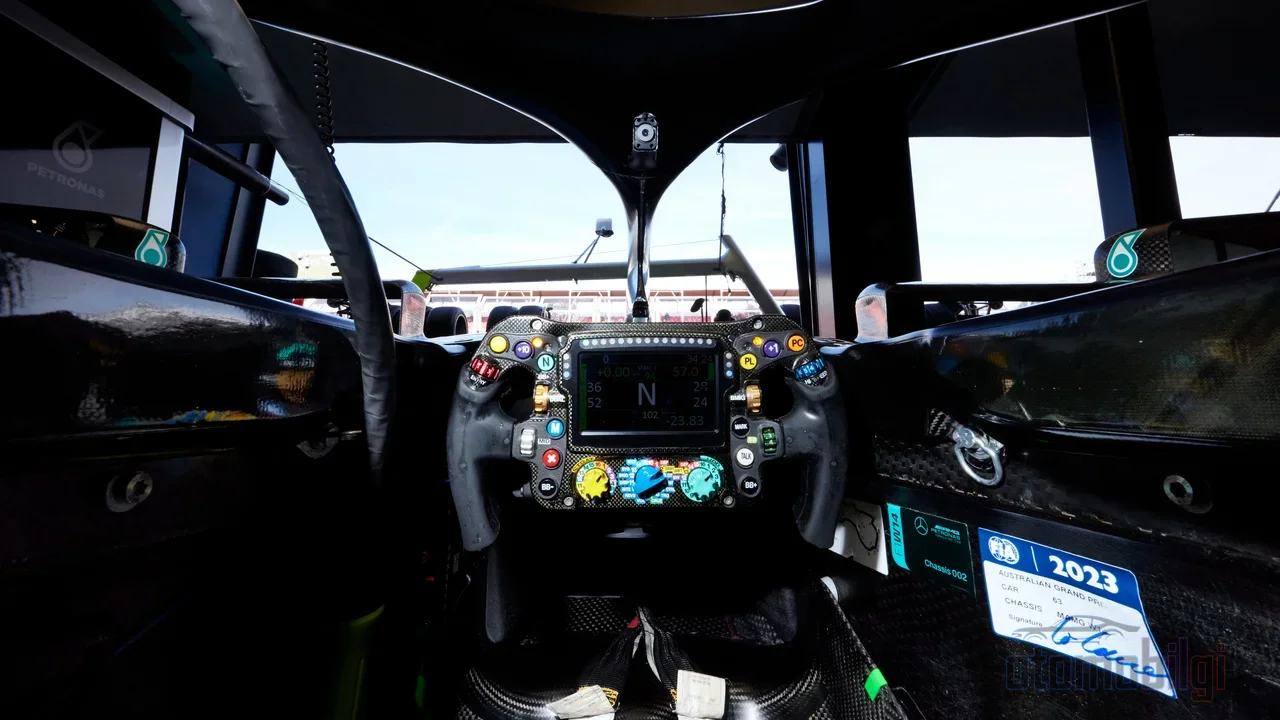
A modern Formula 1 steering wheel is no longer just a part that turns the car left and right; it is a real control center where the driver manages hundreds of settings at their fingertips. Engine modes, brake balance, differential settings, radio, pit limiter and more are all gathered on a single panel. So how much work does the driver have among all these buttons during a race? In short: dozens of decisions per lap, dozens of gear changes, and a constantly changing set of adjustments.
Highlights
- An F1 steering wheel can have 25 buttons and switches, plus clutch and gear paddles
- A driver uses the gear paddles approximately 50 times in a typical lap
- The pit lane limiter locks the car at around 100 km/h even if you floor the throttle
- The critical detail that determines performance at the start: finding the clutch's bite point correctly
What do the buttons on an F1 steering wheel do?
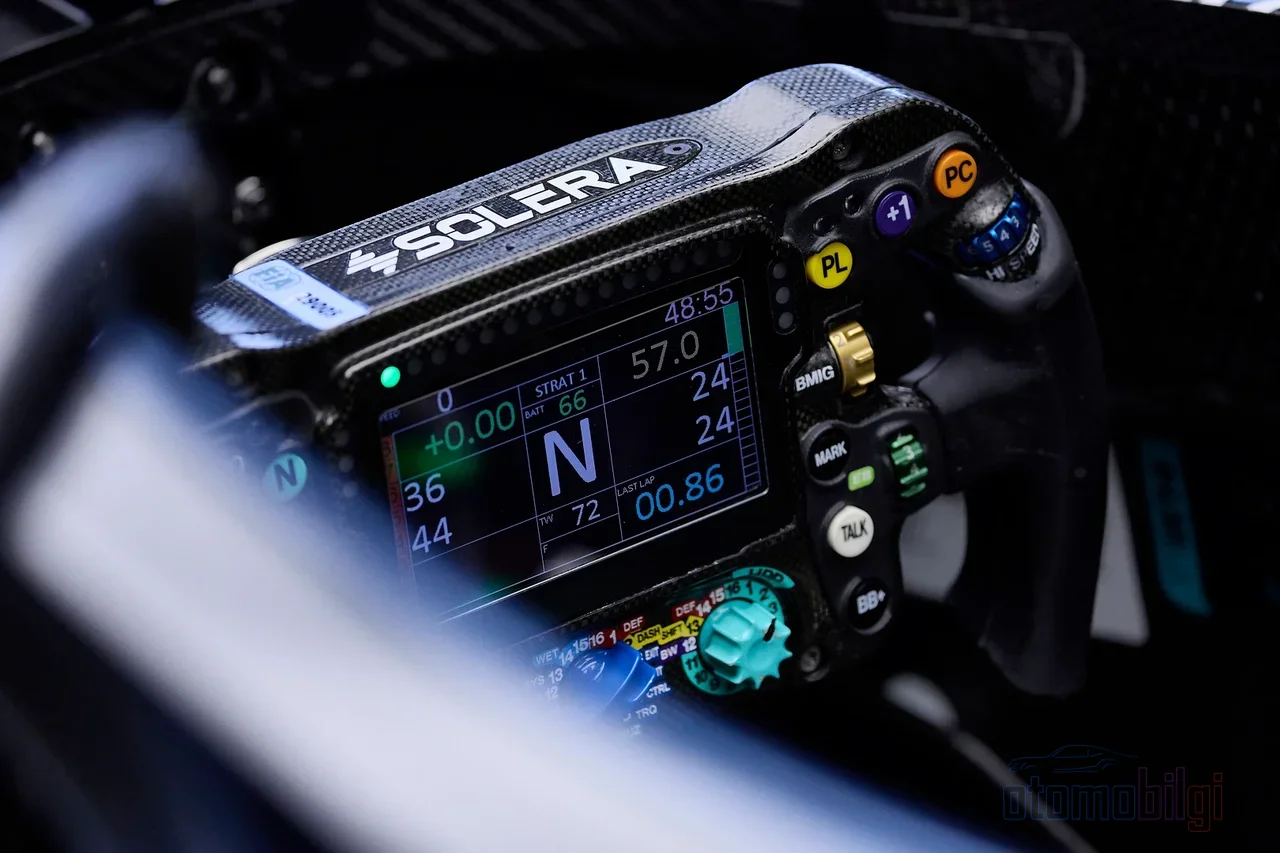
The easiest way to understand how complex today's F1 steering wheels are is to look at a concrete example. Mercedes-AMG's 2019 wheel had a total of 25 buttons and switches along with clutch and gear paddles. In other words, instead of the ordinary indicator and wiper stalks, a small computer keyboard sits at the driver's fingertips. Moreover, the cost of these wheels is nothing to sneeze at... they are said to be parts that can reach tens of thousands of dollars, but it is worth it for the teams because every button can affect the race result.
Brake settings: a balance game with five buttons
Five of these buttons are dedicated directly to brake settings. The driver can shift the brake balance from front to rear or vice versa, and can even set a brake balance specific to a particular corner. It is also possible to change engine braking; that is, the driver can adjust how much the engine slows the car when they lift off the throttle. There is also an interesting setting called brake migration: the harder the braking, the more the balance changes dynamically. You can imagine this by thinking of the feeling of your weight shifting forward the harder you squeeze the front brake on a bicycle.
Differential, power unit and DRS
Three separate switches control the differential. You can adjust the torque transfer between the rear wheels separately for corner entry, apex and corner exit. In other words, the power to the rear tires can be distributed differently when entering, in the middle of, and exiting a corner. The remaining buttons are for power unit settings, changing the data on the display, radio, pit lane speed limiter and DRS. DRS is activated with a single button, and in 2019 it created a stronger effect thanks to larger rear wings.
| Control Group | What Does It Do? |
|---|---|
| Brake settings | Five buttons: brake balance, engine braking, brake migration |
| Differential | Separate settings for corner entry, apex and exit |
| Power unit | Engine modes and energy usage |
| DRS | Rear wing opens with a single button |
| Radio and drink | Communication with the race engineer, pumping liquid through the tube |
| Pit limiter | Locks the car to the pit lane speed limit |
How much work does a driver do over a single lap?
The list of buttons is exciting on its own, but what is truly striking is how these controls are used during a fast lap. Let's take a typical lap in Melbourne as an example: a driver uses the paddle shifters there roughly 50 times . The screen in the middle of the steering wheel has 15 shift indicator LEDs; as engine revs rise, these LEDs light up, and the driver shifts at exactly the right moment. You can compare it to playing the guitar: if your fingers are in the right order but not at the right time, the rhythm falls apart.
Apart from shifting gears, the most frequent adjustment is changing the brake bias. Changing settings at least a few times per lap is normal; some drivers are even known to use different settings for most corners. To be honest here, there is also a view circulating on the forums that the drivers' actual adjustment workload is somewhat less than assumed; that is, not everything is constantly adjusted by hand, and the team's engineers manage most of the car automatically. But fine adjustments such as brake balance are still left to the driver's feel and fingertips.
Qualifying lap or race pace?
Settings also change depending on the type of race. In qualifying sessions, the driver selects a mode called push mode and spends all the energy allowed per lap. In the race, a more cautious race mode is used, because the same energy has to be managed over 60 laps. For this reason, leading drivers sometimes reduce the engine setting while controlling the pace, and sometimes drive more aggressively and brake late, building their strategy accordingly. Even before reaching for the buttons on the steering wheel when traffic appears or tire grip changes, the plan is already ready in their head.
The reflex buttons under the thumbs
There are some buttons on the steering wheel that drivers use without thinking; they have become reflexes. In this control group under the thumbs are the radio, drink, pit speed limiter, and pit confirm buttons. When the driver presses the radio button, they connect directly with the race engineer and communicate critical information such as tire grip, brake performance, car balance, weather, or traffic. Teams using encrypted messages to protect their strategies is not for nothing either; so that rivals don't listen in, of course.
The drink button may sound trivial, but it actually works extremely simply: it pumps liquid through a straw. In cockpit temperatures exceeding 60 degrees (sorry, I don't have data supporting that figure, so let me put it this way), in races lasting hours at high speed, dehydration directly reduces performance; that is why that little button is considered a lifesaver. There is also a neutral button: you can put the car into neutral instantly without having to downshift one gear at a time. It serves as a lifesaver when the car must not roll from where it is stopped, or in the event of a problem.
The moment of launch: why is the bite point so important?
F1 cars don't have a clutch pedal in the classic sense, but they do have a clutch; it just works via the paddles behind the steering wheel. Bite point is the exact moment when the clutch discs begin transmitting engine revs to the wheels. As the driver raises the revs, they try to feel the engagement point by partially releasing the clutch. It's actually like counting coins: if you count too fast, you miscount; if you're too slow, you lose. How good the start will be depends entirely on how accurately the bite point is found.
Toward the end of the formation lap, the driver performs the Bite Point Find procedure, initiated by a button on the steering wheel. In other words, the clutch's bite point is systematically located right before the start. The current rules are interesting too: two paddles are still allowed, but they can only be used for the start, and there must be no interaction between the paddles. At the race start, the driver holds the main paddle fully pressed; the other paddle is set to the exact bite point that will get the car moving. The lights go out, the paddle is released, and within a second a car weighing several tonnes launches forward. Think about that precision once more: when you're backing into a parking spot, you sometimes try two or three times; they do it in a single attempt at a race start.
How has the steering wheel changed driver development?
In the 1950s, a steering wheel really was just that: a steering wheel. You turn the car, that's it. Over time, buttons were added, and engine settings and pit speed limiter control moved onto the wheel. With the semi-automatic gearbox era came the gearshift paddles on the back. In other words, today's control center didn't appear overnight; it's even said that each decade saw major changes in design and technology. While there's no rule that has been fully proven, everyone agrees that steering wheels have grown more complex with each generation.
This complexity has also radically changed driver training. In F1 teams' simulators, the steering wheel is mostly identical to the one in the real car, so drivers and engineers can rehearse control sequences in advance. Even young drivers training at home use simulators set up with multiple screens, a real F1 steering wheel, and a pedal set. Modern simulators offer a high degree of personalization in components like the wheel and seat according to the driver's needs. So if you want to be an F1 driver today, knowing the buttons by heart isn't enough; you need to have etched into your muscle memory which button to press, when, and at what speed.
Final word: hundreds of decisions at your fingertips
An F1 steering wheel is a living vehicle control unit holding hundreds of adjustable parameters under the driver's hands. Dozens of gear changes over a lap, several brake bias adjustments, engine mode and DRS usage depending on the situation, constant communication with the engineer, and limiter management at the pit moment... all of it done at 300 km/h. Next time you're watching a race, take a look at the driver; the fingers will probably be touching a button while you're finishing that sentence. Now I ask you: could you manage that much control at once?
Sources
- How Does an F1 Steering Wheel Work?
- Explained: Driver Workload During a Lap
- Analysis: The Single-Clutch Race Start Returns
- The Complex Controls of an F1 Steering Wheel Revealed
- F1 Race Start Sequence: Lights to First Corner
- What Every Button on an F1 Steering Wheel Actually Does
- The F1 Steering Wheel Explained
- What Are Formula 1 Simulators Used For?
- How F1 Drivers Practise On and Off the Track
- Evolution of F1 Steering Wheels: From 1950 to Today
- What Is Bite Point on a Clutch?
- Analysis: Why F1 Drivers Will Struggle With New Rules on Starts
- How F1 Teams Use Radio for Strategy