How Did the Budget Cap Change Teams in F1?
Share This Page
In F1, the budget cap is a financial rule that limits from above what teams can spend on car development, production, testing and competition in a season; it came into force in 2021 and ever since then it has determined who really wins the race off the track. Its purpose is to protect the competitive balance, sporting fairness and the long-term financial health of the teams by preventing wealthy teams from buying an advantage on track with the power of their wallets.
Highlights
- Budget cap Started in 2021 at $145 million dropped to $140 million in 2022, then to $135 million.
- In 2026 the upper limit $215 million became - but this is largely neutral in practice due to newly covered expenses.
- Red Bull exceeded the cap in 2021 by $2.6 million its penalty was $7 million in money and a 10% reduction in aerodynamic testing.
- A separate cap for engines arrived in 2023 and was updated for 2026 to $190 million in total.
- The team finishing behind gains more wind tunnel and CFD time for aerodynamic development.
Why Was the Budget Cap Necessary?
Before the cap, there was no limit on spending in F1. Rather, the limit was the amount of money in the team's vault. Wealthy teams could buy the best engineers, the most advanced technology and the biggest facilities, and this translated directly to the track. In other words, the standings were shaped not only by engineering brilliance but by the width of the budget.
We can say we took the idea from completely different sports and adapted it to F1: in the NFL, NHL and NBA, salary caps have kept leagues balanced for years. The difference in F1 is this - what directly determines performance is not the players, but the car. That's why the cap watches not player salaries but the money spent on developing and producing the car. The goal is to close the door so that the difference in resources itself does not turn into an advantage, while preserving the technological challenge.
What Is Included in the Cap, and What Is Excluded?
So far so logical, but what exactly does the limit count? The essence of the rule is this: everything that directly affects car performance falls under the cap. R&D, production of aerodynamic parts, spare parts, fuel and oils, the salaries of most of the staff... In other words, every item that makes the car faster counts against your pocket.
What is left outside the list is interesting: driver salaries are not included in the cap. Moreover, the three highest-paid employees, such as the team principal and technical director, are also outside the scope. Legal, human resources, finance and marketing expenses, sustainability projects and race travel are not counted either. So there is no upper limit on the salary you can pay Lewis Hamilton - but there is a bill for every minute you spend in the wind tunnel.
How Much Is the Limit?
| Season | Team cap |
|---|---|
| 2021 | $145 million |
| 2022 | $140 million |
| 2023-2025 | $135 million + inflation adjustment |
| 2026 | $215 million |
The cap, which started at 145 million dollars in 2021, dropped to 135 million in the next two stages, partly including adjustments for the pandemic-era inflation. Then 2026 arrived and the figure was announced as 215 million dollars - a massive increase of 80 million dollars. No panic: the reason for this increase is that new expenses have been added to the base. Annual depreciation was included in the main base, and any time spent on the F1 project in the staff budget counts one hundred percent as an F1 expense. In addition, health and safety costs along with factory-to-race catering expenses were moved outside the cap. Once these items are taken into account, the cap is largely neutral; the doors are the same, the contents have changed.
A Separate Cap for Engines: The Power Unit Limit
You capped the car, but there is a huge engineering army developing the engine as well. This is exactly why a separate power unit cap came into effect in 2023: 95 million dollars per year plus inflation for 2023-2025. New engine manufacturers were granted an additional 10 million dollars in 2023-24 and 5 million dollars in 2025 - a handshake gift for newcomers to the market.
For 2026, the figure was initially planned at 130 million dollars; but with the removal of the capex (capital expenditure) limit, it rose to 190 million dollars. The pre-authorization granted to future new manufacturers also increased from 95 to 148.5 million dollars. The most beautiful side effect of this system is that, combined with the engine cap and the new-generation engine regulations (roughly 50% electric, 50% internal combustion), new names have entered the manufacturers' box: Honda's return, the partnership between Ford and Red Bull Powertrains, Audi's entry, and General Motors' 2029 engine debut are all direct results of this.
What about a manufacturer lagging behind with its engine? Since engines are locked by homologation, when the gap grows, a mechanism called ADUO kicks in: additional technical and financial allowances are granted according to the size of the performance gap. There is also the possibility of spending outside the cap for reliability updates. In other words, those trailing behind are continuously given a chance to catch up.
The Aerodynamic Sliding Scale: The Trailing Team Wins
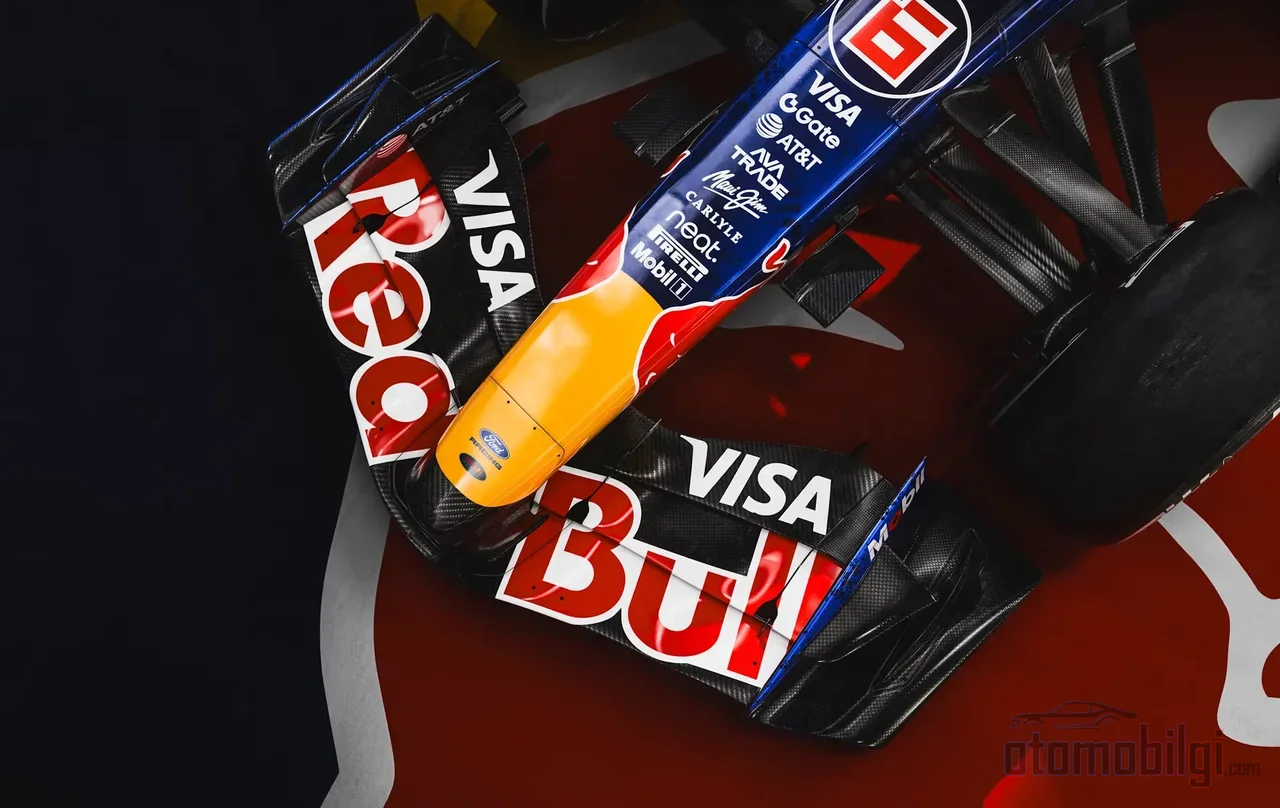
This is my favorite part, because the cap tries to balance not just money, but also the pace of development. In 2021, a sliding scale known as the "aero handicap" was introduced: each team's wind tunnel and CFD (computer-aided fluid simulation) allowance is determined by its finishing position in the previous championship. The team that finishes last gains the most development time.
Imagine the student with the lowest math exam score getting to take the next exam with open books. With exactly this logic, the default wind tunnel allowance was cut by more than 30% with the arrival of the cap, reduced to 40 runs. While the leading team cannot stand still at the factory during winter, the trailing team can run extra development laps. The goal is for the gap to close by itself over time.
What Happens on a Cap Breach? The Red Bull Example
How seriously the rules were taken became clear at the first real test: Red Bull declared that it had exceeded the cap by 2.6 million $ in the 2021 season, and its punishment was merciless - a 7 million $ fine and a 10% reduction in aerodynamic testing time for the 2023 season. The fine was bad, but the truly painful part was the second one: having to spend less time at the development desk the following season. Red Bull accepted the penalty. It was also discussed that the magnitude of the breach remained below 2% and could have been lower with some items being declared; additionally, a report circulated claiming the total penalty burden was 11 million $, but the widely accepted figure is 7 million $ plus the aero reduction.
Red Bull was not alone. In the same period, Aston Martin, which committed a procedural breach, paid 562,000 $, and Williams paid 20,000 $. In 2022, all 10 teams complied with the cap; in 2023, Honda and Alpine committed procedural breaches as engine manufacturers but did not exceed the limit and received no penalty at all. So the system works - and the price of a breach is paid on track.
Did the Cap Really Change the Competitive Balance?
Supporters present a strong argument: the cap genuinely narrowed the resource gap between the top-tier giants and the midfield, brought races closer together, and increased unpredictability. The numbers make the situation clear too - it is stated that before the cap, teams like Mercedes or Ferrari could outspend teams like McLaren or Racing Point with spending above 400 million $ per season. Such a picture is not possible today, because we all have the same upper limit in our wallets.
The effects also became visible in the financial picture: teams were forced to prioritize investments; while Alpine's profits fell noticeably in 2023, McLaren moved from loss to profit. On the other hand, there are debates lurking in the shadow of this picture.
Criticisms and Loopholes in the Rules
The most crucial problem is the talent market: within a limited budget, offering competitive salaries is becoming difficult. Legendary engineer Adrian Newey voiced concerns about being unable to compete with the higher salaries of other industries. Yet one of F1's most valuable assets is precisely these brains.
The second problem revolves around the "creative accounting" claims surrounding ambiguous items. One classic trick is the part-time project ploy: splitting a key engineer across a non-F1 project such as hypercar development in order to reduce the portion of their salary that counts toward the cap. Alpine's former team principal Otmar Szafnauer openly criticized that this loophole could be exploited without transparency. Add to that the ambiguity around inter-team resource sharing and the driver salary exemption, and the critics' job becomes easy. Observers also note that, despite the cap, the top teams continued to grow rather than shrink. The 2026 rule changes at least touch on this loophole: from now on, the full salaries of all employees count toward the cap.
How Did Team Strategies Change?
The pre-cap strategy was simple: be the fastest, and everything else comes later. Today, every expense is a choice. A short-term update, or investment in next year's car? Since budgets are tight, teams now distribute their wallets among engineering departments as if managing an investment portfolio. The invoice for a wind tunnel session directly affects the resources that can be cut from a driver development program.
In my opinion, this is the real change: F1 is now won not only on the track but also at the CFO's desk. The goal of financial stability is not in vain either - keeping teams sustainable makes the grid stronger and more balanced in the long run. So what would you do: would you invest every penny in this season's car, or in next season's championship? I would choose to buy the coffee for the engineer stuck between the two.
Sources
- What is the F1 cost cap and why has it gone up?
- 2026 FIA Formula One Financial Regulations for F1 Teams (official FIA PDF)
- F1 2026: Cost Cap Explained & Why It Increased to $215 Million
- F1 Cost Cap Explained
- Red Bull handed $7m fine and wind tunnel penalty
- F1 to have sliding development scale, $145m budget cap
- How F1's new sliding scale aero testing rules work
- F1 Cost Cap: What's Included and Excluded?