How Do Young Drivers Reach a Formula 1 Seat?

Share This Page
To reach a Formula 1 seat, a driver has to climb the ladder starting from karting, accumulate at least 40 super licence points over the previous three years, pass the theoretical exam, and be at least 18 years old at their first race. Money, performance, and academy backing are the three main components of this path.
Highlights
- The F2 champion is guaranteed the super licence with a full 40 points; the F3 champion is credited with 30 points.
- The minimum age for a first F1 race is 18, though in exceptional cases the FIA can grant permission at 17.
- The base fee of the super licence is 11,453 euros; roughly 2,313 euros is added per point.
- Verstappen paid a record 1,217,900 euros for his 2024 licence, based on his results.
- The F1 Academy champion earns 10 points, while the FIA Karting World Championship Senior winner gets 4 points.
Has this question ever crossed your mind: Those drivers we see on the grid didn't just wake up one morning and sit behind the wheel of an F1 car, right? There is a ladder in between, subject to very official rules. Moreover, every rung of this ladder has a price, a point value, and a politics of its own. Let's climb it from top to bottom, because this journey is more fun than you think, and more expensive than you think.
The Super Licence: F1's Official Key and the 40-Point Rule
Driving an F1 car has nothing to do with a stroll in the park; you first need to obtain the FIA's super licence. Think of it like an exam pencil: the single document that opens the door. So what are the conditions? You must hold an International Grade A racing licence, pass the FIA's theoretical exam on F1 sporting and technical regulations, and have completed at least 80% of a season in at least two of the championships listed in Appendix 1.
The really important part is this: within the previous three seasons, you need to accumulate 40 super licence points. You must also be at least 18 years old at your first F1 race; in exceptional cases, the FIA can grant permission at 17. For those curious: With the rule change made in June 2024, a regular driving licence is no longer required, which opened the debut path before age 18 for young talents. First-time applicants are also subject to a 12-month probationary period, and the licence must be renewed every year.
Where do the points come from?
Not every championship awards the same points; the table is completely different. Here are the super licence values of the main categories:
| Championship | Points awarded by the championship |
|---|---|
| F2 (champion to 3rd place) | 40 |
| F2 (4th place) | 30 |
| IndyCar champion | 40 |
| F3 champion | 30 |
| Super Formula champion | 30 |
| Formula Regional European champion | 25 |
| FIA F4 champion | 12 |
| F1 Academy champion | 10 |
| Karting World Championship Senior (maximum) | 12 (4 for the title) |
There are details too: You can collect points from a maximum of two series in a calendar year, and the second championship must begin after the first one ends. Driving 100 kilometres in an F1 free practice session earns 1 point each time, up to a maximum of 10 points per year. Finishing a season without penalty points earns 2 points, while winning the Macau GP brings 2 to 5 points depending on the category. Points that can be collected from karting are limited to 12, and these points are valid for 5 years. So even if you become a karting champion, you cannot open the door to F1 on your own; you must accumulate points in the lower formulas. There is also a small detail for F4: the driver must be at least 15 years old; those racing under 15 do not receive points.
From Karting to F4: The First Rungs of the Ladder
The story of almost all F1 drivers begins in karting. This is never a coincidence; karting is the school of speed and racing reflexes. The structured development path is quite clear: Karting → F4 → F3 → F2 → F1. In recent years, the FIA has also been consolidating the feeder series - that is, the series that feed into F1 - for a more linear progression with its approach called the Global Pathway.
Formula 4 is the first rung of this ladder and usually comes after years of national or international karting experience. Then comes F3, and things get serious; because F3 is a championship designed as the ideal training ground for F2 and ultimately F1. Young drivers must demonstrate not only speed but also tire management. In other words, learning to make tires that look dead in one lap last the entire distance is one of the most critical skills in F1. Think of it like science class in primary school: first the basics, then vocational high school, then university.
So what about the price? The figures researched should be expressed cautiously, but the estimates circulating in forums are as follows: an F3 season is roughly 1 million euros, and F2 around 2 million euros. It is said that the total path from karting to F1 can easily reach 5-6 million euros and span many years. These figures are not verified official numbers, but they summarize the reality of the ladder quite well. Moreover, the work is not over: the super license itself also costs money. As of December 2024, the base fee is 11,453 euros, with approximately 2,313 euros added per point. For champions with many points, this bill can open a gap as wide as the sky; Verstappen paid a record 1,217,900 euros for his 2024 license based on the 2023 results. History shows this is not a new story: in 2009, Hamilton paid 242,000 pounds for his license.
Team Academies: How Do the Ferrari and Red Bull Talent Factories Work?
There are structures that run to the aid of talents who cannot overcome the money barrier alone: the junior programs of F1 teams. The mechanism is simple but clever. Teams sign drivers at an early age, fund and guide them in F3 and F2, and keep priority call-up rights in the contract. In other words, they actually manage young drivers like managing an investment portfolio. Junior programs are typically offered to drivers aged 12-25 in karting and lower formula categories.
Academies no longer just provide money and moral support. F1 teams are embedding their own simulators, performance data loops, and software engineers into the junior formula teams where their young drivers race. You could compare it to a football club sending its first-team coaches down to the youth academy: the kid running in the academy develops with the first team's eyes and data on them.
Which academy is doing what for Kimi?
- Red Bull Junior Team: Jointly linked with Racing Bulls and Red Bull Racing; the program extends beyond F1 as well. Red Bull also launched the Red Bull Academy Programme in 2024 to support female racing talent.
- Mercedes: Announced its 2026 junior roster with Rashid Al Dhaheri, Ethan Jeff-Hall, Andy Consani, Luna Fluxá, Kenzo Craigie, and James Anagnostiadis. F1 Academy champion Doriane Pin, meanwhile, was promoted to the role of Development Driver at Mercedes in 2026.
- McLaren: Expanded its 2026 development driver program and added Ella Hakkinen; Ella Lloyd will race in the field. McLaren openly emphasizes that it developed Hamilton and Norris through this program. Yes, that Norris.
- F1 Academy: The 2026 season is the series' 4th season; an open-wheel championship at Formula 4 level, made up entirely of female drivers. The season started March 13-15 in Shanghai, runs 6 rounds, with 17 drivers and 6 teams on the grid. Currently, Red Bull Racing-backed Alisha Palmowski leads with 136 points; Prema holds the teams' championship. Ferrari-backed Alba Larsen and McLaren's Ella Lloyd are also on the grid.
As you can see, academies are now the natural feeder for championship rosters. By the time a driver arrives in F1, the seat there is often the product of a contract signed years earlier.
F2 and F3: The Final Exam at F1's Doorstep
The last two rungs of the ladder, as their superlicense point equivalents also show, are F2 and F3. The F2 championship awards the full 40 points; meaning winning F2 theoretically opens the door to F1 in a single stroke. Even 4th place is worth 30 points, leaving a points base that can be completed with another championship the following season.
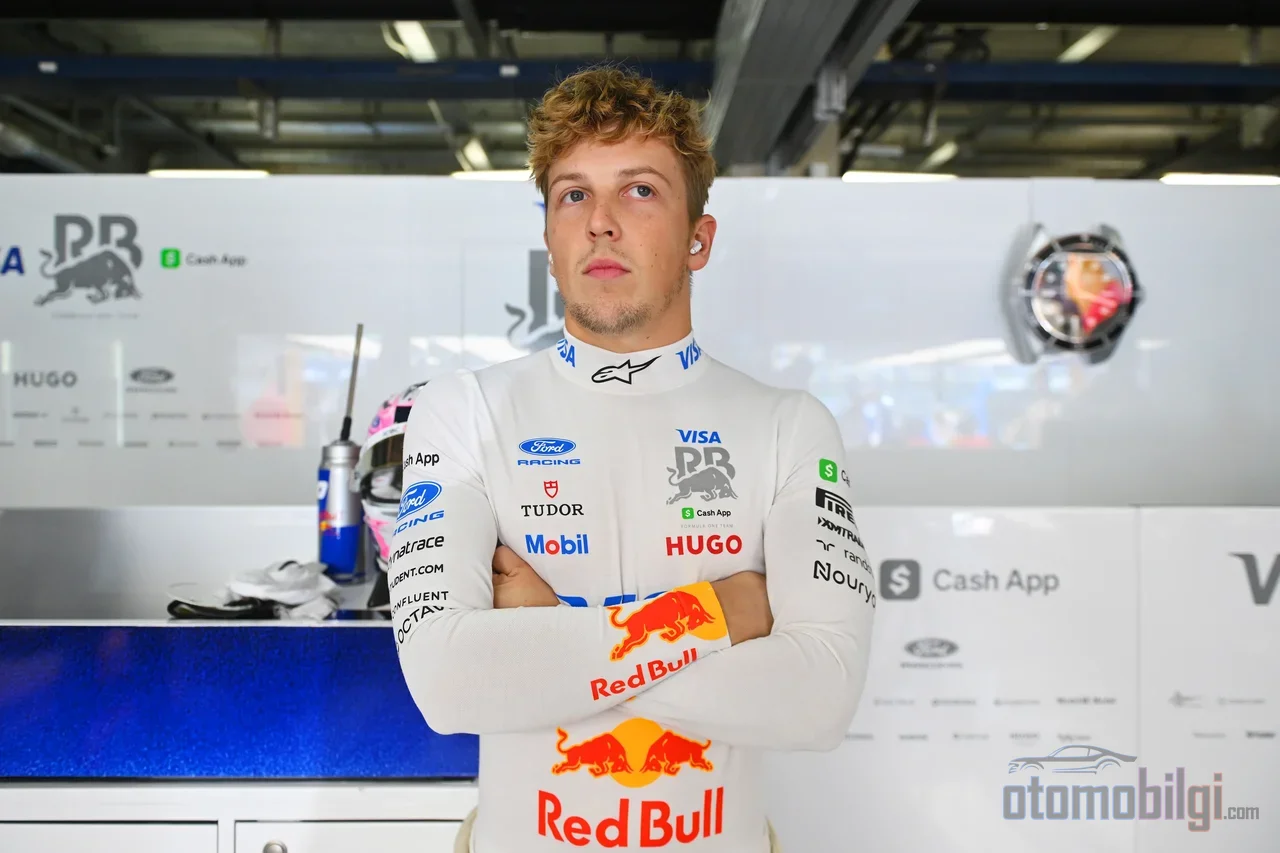
But it's not just about points. In F3 and F2, drivers are tested on things like tire management, race strategy, racing under pressure, and dealing with the media agenda. Teams also use this as a kind of live field research: they monitor every lap of their academy-affiliated drivers with data. As Liam Lawson also pointed out, most drivers join a team's young driver program and gain access to its facilities before stepping into F1. Knowing the door to F1 by heart is a very different advantage from merely knocking on it.
Simulator and Reserve Driver Duties: The Secret Mission of Those Without a Grid Spot
An F1 seat doesn't come to everyone at the same time, and in the meantime, the waiting room is very crowded. The reserve driver is one of the team's most important safeguards in cases of illness, injury, or unexpected situations. Their primary official duty is to step in if one of the regular drivers is unable to fulfill their role. But that's just the visible tip of the iceberg: reserve and development drivers conduct tests on the track and in the simulator, spending most race weekends in the simulator.
Simulator work is now taken truly seriously. Even Audi had signed a simulator driver ahead of its F1 entry in 2026; experienced names with five F1 seasons behind them can now focus solely on simulator, test, and development duties. Don't compare this to a computer game; hours of work in the simulator directly feed data into the team's car development cycle. For many drivers, this role is the most solid bridge to an F1 seat: you are inside the facility, you get to know the team, and you're ready when the phone rings. There is also a special super license type called Free Practice Only that fits this stage: it requires being 18 years old, an Grade A license, a theory exam, and on first application 6 races in F2 or 25 points over 3 years. So even covering 100 kilometers in a practice session is a separate strategy, both in points and in experience.
The Pay Driver Debate: Performance or Budget?
Now let's turn to the thorny side of the matter. A pay driver is a driver who brings money or resources for the drive instead of the team paying them a salary. This concept is not a new phenomenon in F1 or any of the major series; most drivers find a place on the grid backed by a budget, even if they don't pay out of their own pocket. A popular framing says there are three keys to reaching F1: lap time, 40 super license points, and someone to pay. And the realistic part is that a driver can only have two of the three. In my view, this sentence sums up all the tension of the ladder in a single line.
Both sides of the debate are strong. Most teams argue that it is highly unlikely for a paying driver to earn the points that a salaried driver would bring; that is, a budget doesn't guarantee sporting quality, but it cracks the door open. On the other hand, the view that replacing paying drivers with those who pay would harm the sport has been debated for years, and it is accepted that the pay driver phenomenon has existed in every era. Even the super license pricing date is a point of conflict: in 2009 the idea of drivers who couldn't pay racing elsewhere came up, fees were revised after talks with the GPDA, and advocates of the fixed fee haven't been idle either.
My reading is this: the system isn't perfect, but it works. Academies are on the rise, points are more transparent, and the balance between talent and budget relies a bit more on data every season. Still, the final word is spoken by the end-of-season results; for the academies' share in championship-winning lineups grows year after year.
Summary of the Road: How Does a Talent Reach F1?
Let's go step by step. Years of training in karting, the first 12 points with an FIA F4 championship, an exam in tire management and race craft in F3, locking in 40 points in F2, academy funding, and hours spent in the simulator. Then comes that phone call: the reserve driver role, free practice kilometres and, ultimately, the Super Licence. The age requirement of 18, the theory exam, 80% season completion, 40 points and, of course, the base bill of 11,453 euros. Which rung of this ladder are you watching from? In my opinion, the most fascinating rung is the simulator room; that's where the real work of the unsung heroes happens.
Sources
- FIA Super Licence
- F1 EXPLAINED: How does the Super Licence system work
- The beginner's guide to the F1 Super Licence
- What is F3? - FIA Formula 3
- FIA Global Pathway
- Driver development program
- Pay driver
- Introducing our 2026 Junior Driver Line-Up - Mercedes-AMG F1
- Who are McLaren's 2026 Development Drivers? - McLaren
- Red Bull Academy Programme - Red Bull Racing
- Red Bull Junior Team
- Heroes in the garage: The role of F1 reserve drivers - Red Bull TR
- F1 ACADEMY - Official site
- 2026 F1 Academy season
- From F4 to F1: The feeder series ladder explained - Feeder Series
- How does F1 driver academy support shift as drivers rise on the ladder - Feeder Series
- F1 junior teams in F2 & F3 - Grid and Formula
- Alliances between junior single-seater teams and F1 junior academies - Driver Club Management
- A complete overview of all the 2026 reserve and development drivers - Pit Debrief
- 2026 F1 reserve drivers - Motorsport Magazine
- Lawson emphasized the importance of simulator work in F1 - Motorsport TR
- FIA announced the new points system for the Super Licence - Motorsport TR
- How Drivers Actually Reach Formula 1 - FormulaDream
- The curious case of the F1 pay driver - Motorsport.com