From Ferrari to Brawn: Unforgettable Team Stories in F1 History
Share This Page
The most unforgettable team stories in F1 history form an institutional memory stretching from Ferrari's seasons, unbroken since 1950, to the one-year fairy tale of Brawn GP, and from the golden ages of Williams and McLaren to Lotus and Brabham's quiet exits. Drivers shine, but teams are the true architects of these stories: which legend did money, engines, and a bold technological decision create, and which one did they bury in history? Here, for the curious, is the grand narrative of F1 through its teams.
Highlights
- Ferrari is the only team racing in every season since 1950, and with 16 constructors' championships it is one of the most successful teams in history.
- Brawn GP raced for only a single season, but by winning 8 of 17 races it became both drivers' and constructors' champion.
- Honda sold the team to Ross Brawn for a symbolic price of 1 pound, and also provided a budget of 100 million dollars
- for the season. Team Lotus amassed 7 constructors' championships in 40 seasons; Brabham won 2 constructors' and 4 drivers' championships.
- The 2026 Concorde Agreement was signed by F1, the FIA and all 11 teams; the cost cap rose to 215 million dollars.
Ferrari: How Did the First Team to Enter Races Become a Legend?
Just think about it: no team on today's grid took part in the first modern Formula 1 race run at Silverstone in 1950. But if we had been on that grid, only one name would still be there today: Scuderia Ferrari. The Italian team is the only one to have raced in every season of the World Championship since 1950, and this continuity also makes it the oldest surviving F1 team. It is like a team taking the same exam for more than 70 years without ever falling into repetition; many have failed the class.
Success did not go unnoticed either: Ferrari displays 16 constructors' championships on its shelf, and this keeps it in the position of the most successful F1 team in history. But be careful, Ferrari's story is not just about trophies; it is the brand's ability to survive with constantly changing cars, rules, and ecosystems. Most recently, in the 2025 season, it was said that the SF-25 was a particularly difficult car for new signing Lewis Hamilton; so even a legend can go through hard times. The real test for teams is not reaching the top, but keeping the structure they built intact while getting there and not falling apart during the low period.
How Did Brawn GP Become World Champion in a Single Season?
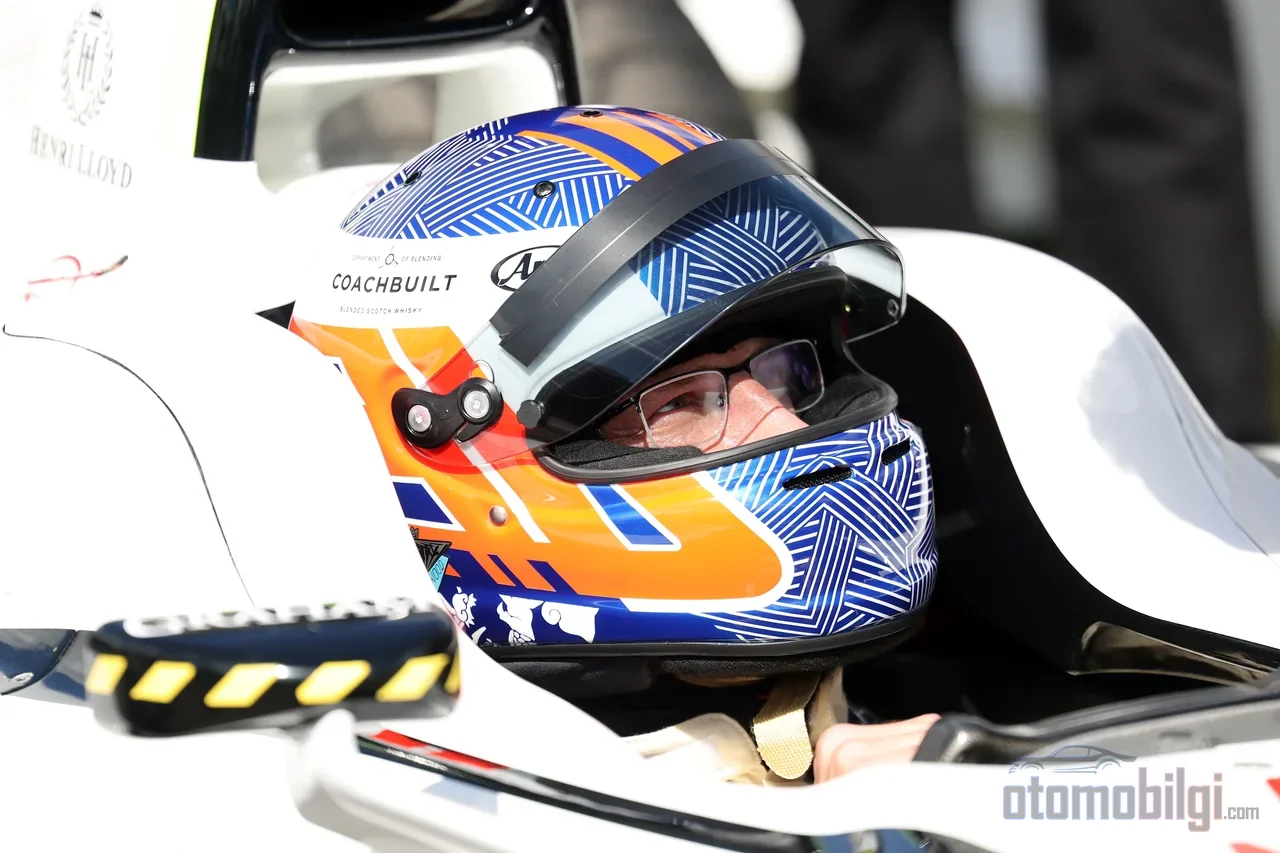
I think the craziest story in F1 history begins here. At the end of 2008, as the world wrestled with the financial crisis, Honda announced it was withdrawing from F1. The factory in Brackley and the car already designed for 2009 were suddenly abandoned to their fate. Then Ross Brawn stepped in, and on March 6, 2009, the team took the name Brawn GP. Do you know what the sale price was? From Honda to Ross Brawn: 1 pound. It sounds like a joke, but Honda also provided a budget of 100 million dollars so the team could complete the 2009 season. So there is serious money behind the fairy tale.
The car was initially designed as the Honda RA109; when it was adapted to the Mercedes customer engine, its name became BGP 001 happened. Nick Fry claims that the Mercedes engine accounted for roughly half of the performance gain; in his own words, the championship could not have been won with the Honda engine. But the numbers tell a story beyond just the engine: they won 8 of the 17 races, took 15 podiums, 5 pole positions and scored 172 points. Jenson Button won 6 of the first 7 races; the team finished 1-2 in its first race in Australia. Rubens Barrichello added two victories and a 3rd place in the championship.
The Double Diffuser War: Legal or Illegal?
Now let's get to the technological bomb. Brawn's key weapon was the double diffuser, a clever solution that boosted performance by managing the airflow passing underneath the car in two layers. What did the rivals say about it? As you can guess, they did not take it calmly at all: Ferrari, Red Bull and Renault filed objections, and Williams' and Toyota's diffusers were also at the center of the controversy. First the stewards, then the FIA, declared the design legal. In other words, the technological advantage stayed with the winner of the legal battle.
The best part of the story is this: even the team's own engineers had not calculated that the car would be this fast. The engineers say their calculations came out wrong and that they were themselves surprised by the car's real pace. Strange, yet so very human, isn't it? Button secured the drivers' championship at the 2009 Brazilian GP on October 18 by starting from 14th place and finishing 5th; the team also took the constructors' championship. Since Brawn GP competed for only one year, it became the only constructor with a 100% championship rate . No one can ever break this record, because to break it you would have to enter a single season and become champion.
Where Did the One-Season Champion Go Afterwards?
Within a year, by the Japanese GP, the team was half a point away from the constructors' championship when, on November 16, 2009, Daimler AG and Aabar Investments bought a total of a 75.1% stake ; the team was renamed Mercedes GP for 2010. In its single year, Brawn GP made a profit of 98.5 million £ , with 20 million £ in dividends paid to the directors. So the legend ended while making money and handing over its core to Mercedes. Ross Brawn remained team principal until the end of 2013. The team also won the Laureus "Team of the Year" award in 2010; its story became the subject of documentaries and Keanu Reeves' narration. Moreover, it is still in the news today: the three original BGP 001 chassis came together for the first time at the 2026 Goodwood Members' Meeting, Button drove the car again, and one chassis went up for auction.
Williams and McLaren: How Does the Decline Begin After the Peak?
Now let's move on to a somewhat sad part. Williams enjoyed dominance spanning the constructors' championships between 1979 and 2008 and a long period of drivers' championships; but afterwards it lost its edge in both areas. McLaren followed a similar path: at the end of 2012 it was a team with the fastest car, but it slipped noticeably in 2013, and then spent the 2010s in decline. The point analysts highlight is clear: after periods of great dominance, a relaxation, perhaps a fatigue, sets in within the teams' structure. It is as if when everyone works with the same inspiration for a while, that inspiration can run out.
One of the most interesting comments about McLaren's decline points to the team's period as a customer team against its rivals. A team that takes its engine from someone else partly gives up its technological independence and development speed; this difference becomes especially evident in periods when engines gain weight due to rule changes. You can think of it like this: a student eating in the cafeteria cannot decide the menu and is always one step behind those who cook in their own kitchen. So the system a team builds can shape not only that season's speed, but the next decade as well.
Lotus and Brabham: Why Did the Legendary Names Vanish from F1?
Now strain your memory a bit: in the 2011 grid, two separate teams raced under the name "Lotus." One was the continuation of the original Team Lotus heritage, the other was a project of a Malaysia-licensed organization. This name confusion shows how valuable and equally fragile names are in F1. The original Team Lotus raced for 40 seasons between 1954 and 1994 and 7 constructors' championships won; then it vanished from history. The short-lived Lotus F1 Team was born from the renaming of the former Renault structure, raced between 2012 and 2015, and Renault officials announced in 2015 that they had bought the team for about 100 million dollars.
Brabham tells a similar story. The team founded by Jack Brabham raced in F1 between 1962 and 1992 and won championships with 2 constructors' and 4 drivers' titles. It was technically pioneering: among the names that introduced carbon brakes and hydropneumatic suspension to F1. There is also strong evidence that Jack Brabham became world champion in a car bearing his own name. But the aggressive development race of the turbo era wore the team down; reliability problems occurred during the BMW-engined period and the team was not on the grid after 1987. So economic realities must ultimately align with technical capability, otherwise the grid's door can close in your face.
We can draw two general conclusions about why the legends vanished: first, what keeps a team alive in F1 is not just speed, but sustainable financing and the right strategic partnership. Second, teams that vanish from history also leave a legacy; their technologies, brands, and stories still feed the structure of today's teams. So when we read the stories of today's grid teams, we are actually tracing the footsteps of these lost names.
How the Grid Takes Shape in 2026: Concorde and the Cost Cap
Okay, we've covered history, but today's story continues too. Formula 1, the FIA, and all 11 teams signed the 9th Concorde Agreement covering the 2026-2030 seasons. This agreement determines both the commercial and governance side; it is also discussed that for the first time commercial terms are separated from governance. You can think of it like the teams' new collective contract: who will earn how much money, who will set the rules, whose responsibilities they will be. Debates about how many teams the grid will run with also continue; however, the official signature was given by 11 teams.
The financial side is also changing: the FIA has set the team cost cap for 2026 at 215 million dollars raised (up to 24 races and subject to indexation). This is a significant increase compared to the $135 million cap in 2025; inflation and recalculation were cited as the reason. On the Power Unit side, the cap also rose from $95 million to $130 million. This is a rule that rebalances the playing field between big teams and small teams. So the greatest lesson history has taught us still holds: in F1, it's not just the team that builds the fastest car that becomes champion - the team with the right costs and strategy stays on top.
From Ferrari to Brawn: What Can Today's Teams Learn From These Stories?
I think when you put these four stories side by side, two axes become clear: continuity and courage. Continuity is what keeps Ferrari standing; courage and timing are what carried Brawn to the top. The stories of Williams and McLaren show that the structure must be constantly renewed to stay on top. The ends of Lotus and Brabham, meanwhile, remind us how ruthless financial realities and strategic decisions can be. Technological innovation still makes a difference, but today's cost caps and regular Concorde Agreements provide a bit more security for those fragile balances. Let me ask you: how many teams from today's grid will still be there in 2030? I think even predicting is hard, but we know from history that surprises are always just around the corner.
Sources
- Scuderia Ferrari
- Ferrari – F1 Racing Team – Leclerc, Hamilton
- Greatest F1 Teams in History: Ferrari, McLaren and Beyond
- Brawn GP - Wikipedia
- Why Brawn GP's fairy tale is the F1 story that keeps on giving
- Brawn GP engineers' calculations turned out wrong - Motorsport Türkiye
- Brawn GP's championship story - NTV
- A Brawn GP F1 car is up for sale with Bonhams|Cars - Goodwood
- Williams Racing
- Is Mercedes on a Williams-style F1 decline?
- The aftermath of F1's biggest periods of dominance
- Team Profile: Lotus F1 - BBC News Turkish
- Renault's process of acquiring Lotus F1 - Motorsport Türkiye
- Brabham - Wikipedia
- Brabham | F1 Team History
- 2026 Concorde Agreement signed by F1, the FIA and 11 teams
- What is the F1 cost cap and why has it gone up?