How Does the Halo Protect Drivers in Formula 1?
November 29, 2020, Bahrain. Romain Grosjean's Haas came out of the corner and slid toward the barrier, and no one could have imagined that a few seconds later the whole world would hold its breath. The car split in two in the crash, turned into a fireball, and everyone began bracing for the worst. But Grosjean walked out of that fire on his own two legs. What saved him was neither luck nor reflexes: it was that titanium ring sitting above the cockpit, the one that had been mocked for years as "ugly." So what exactly does this ring do that lets it get a pilot out of a crash at around 250 km/h? On this page, we will talk about the story of the Halo, F1's most controversial invention, its material, and the moments when it saved lives.
What Is the Halo and Why Did It Come About?
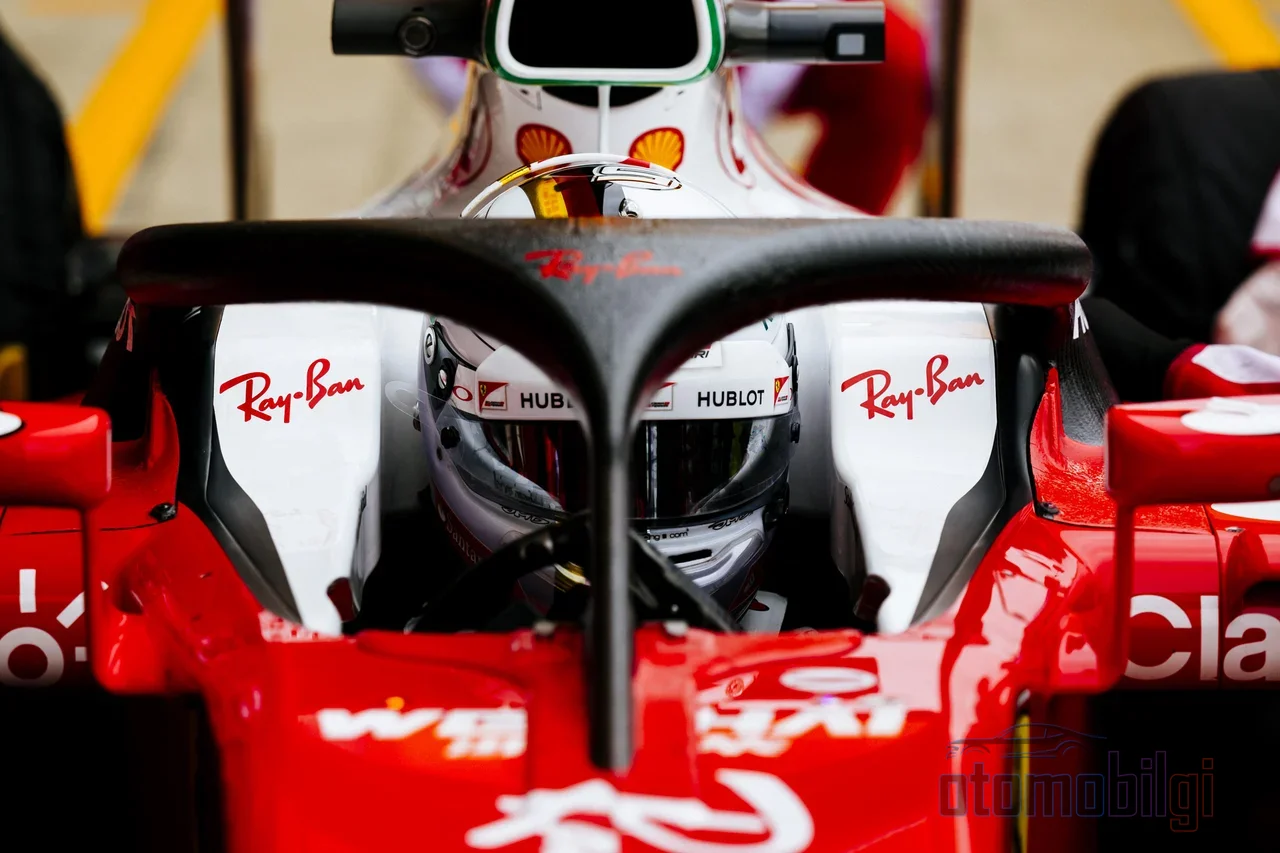
The Halo is a titanium ring-shaped protection device that surrounds the cockpit and shields the driver's head from debris and impacts in open-wheel race cars. In a way, it is the F1 version of a reinforced bicycle helmet; but the difference is this: a bicycle helmet absorbs one impact, while the Halo must keep its shape even in a crash that loads it with tons of weight.
The idea did not come out of thin air. Jules Bianchi's fatal crash at the 2014 Japanese Grand Prix pushed cockpit protection to the very top of the FIA's agenda. After years of research and development, the Halo became mandatory on all F1 cars in the 2018 season. The FIA explained its decision by the fact that the Halo had to offer the best overall safety performance available at the time.
But the road was not easy, not at all. Before reaching its current form, the Halo faced serious resistance and was disliked in the paddock for a long time. We will get into the details of that debate shortly; first, let's look at the engineering side of things, because that is where the truly astonishing part lies.
Highlights
- The Halo has been mandatory on all F1 cars since the 2018 season.
- Its Grade 5 titanium structure can carry a load of 125 kN (about 12 tons) from above for 5 seconds.
- With the 2026 rules, this strength requirement was raised to 140 kN (about 14 tons).
- It played a protective role in the crashes of Grosjean (Bahrain 2020), Zhou Guanyu (Silverstone 2022), and Hamilton (Monza 2021).
- One of the design goals: to withstand a 20 kg tire flying at 225 km/h.
How Is the Titanium Ring So Strong?
The body of the Halo is made of Grade 5 titanium, a favorite of the aerospace industry; it is an alloy known for its high strength-to-weight ratio. This ring weighs about 7 kg, which doesn't sound like much, does it? Some sources also mention that the entire titanium structure is around 9 kg (20 lb); the numbers vary depending on the design and measurement method, but what is clear is this: a piece weighing just a few kilograms is carrying tons of load.
So what is meant by "carrying"? In the FIA's official load tests, the maximum vertical load is 116 kN; that is roughly 12,000 kg, which in a popular comparison equals the weight of a London double-decker bus. The structure, mounting points and survival cell together must withstand an upward force of 125 kN for five seconds without deforming. With the 2026 rule set, this requirement was raised to 140 kN, i.e. roughly 14 tonnes.
| Load direction | Requirement |
|---|---|
| From above (peak load, structural test) | 125 kN, at least 5 seconds |
| From the front | 46 kN and 83 kN |
| From the side | 93 kN |
| Peak load under 2026 rules | 140 kN (approximately 14 tonnes) |
For comparison: the car's roll hoop is only rated to withstand 50 kN from the side. In other words, the Halo is subjected to harsher conditions than some of the car's own structural elements. According to Race Car Engineering, the design target is to withstand 15 times the static load of an F1 car and a 20 kg wheel arriving at 225 km/h.
Test procedure and production
The tests are carried out using a dummy structure instead of a real Halo; peak loads are applied in less than three minutes and held for five seconds. At the end of that period, there must be no damage to the survival cell or the mounts. Force India's technical director Andy Green says passing these tests is incredibly difficult, and that a car that fails cannot race. On the production side, CP Autosport in Germany, one of the FIA's official suppliers, speaks of the demanding timing and quality requirements.
One more detail: the carbon fiber look we see on the Halo from the outside is actually not the structure itself. A shroud designed by each team is wrapped around the titanium frame. So that sleek black surface is largely a cosmetic and aerodynamic layer.
A Controversial Birth: Why Did Nobody Want It?
In July 2016, the F1 Strategy Group, meeting in Geneva, unanimously opposed the Halo application planned for the following season. The objections centered on five main axes: safety, aesthetics, visibility, extraction of the driver from the car, and more broadly F1's "DNA". Some drivers complained about visibility; one driver even reported experiencing claustrophobia due to the central support pillar being in his field of view.
Alternatives were also on the table. The idea of an "active" protection system that would deploy in front of the cockpit using hazard detection technology was discussed; a transparent protection called the Shield was also put on the agenda. The objections of Mercedes executive Niki Lauda were also a backbone of the debate. In 2017, the FIA Commission confirmed a commitment to some form of cockpit protection and the decision was finalized: the Halo was coming in 2018, whether people wanted it or not.
Here lies the historical irony of the matter. After being trapped for minutes in an overturned car with fuel leaking at the 1966 Belgian GP, Jackie Stewart took on the leadership of a safety crusade, and was ridiculed for it at the time too. Stewart said he counted 57 people who had died - people who stayed at his home, ate at his table, went on holiday with him - and that this had to change. In the Halo debate as well, safety advocates faced similar mockery; but this time history proved the critics of that mockery right.
Was the Aerodynamic Effect Really That Bad?
Since the Halo was placed in a critical region where airflow was directed toward the cockpit, it initially looked like a nightmare for the teams in terms of aerodynamic engineering. The regulations allowed an aerodynamic fairing of 20 mm to be added around the device; Mercedes aimed to mitigate the effect of the Halo's turbulence with this fairing.
The result? Apart from the need to direct airflow toward cooling and the rear wing, the teams reported no serious problems. On the contrary, things turned around: Teams like Ferrari and Sauber opened the season with a single-piece "boomerang" arrangement on top of the Halo, and over time the Halo became a surface offering new aerodynamic possibilities. Engineers knew how to use even the thing they disliked.
Life-Saving Moments: Grosjean, Zhou and Hamilton
Bahrain 2020: Romain Grosjean
Grosjean, 3. crashed into the barrier 180 meters after the apex of the corner; the car split in two the moment it hit at approximately 250 km/h and immediately caught fire. Without the Halo, his head would have been directly exposed to the steel barrier the car struck. Grosjean clearly stated that the reason he survived was the Halo; he recounted that he lost consciousness for three minutes after the crash. He said that he lost consciousness for three minutes after the crash. Ross Brawn shared the same view. That scene, which ended with the fire extinguisher pushing back the flames and rescue crews pulling him over the barrier, became the strongest reference for the Halo.
Silverstone 2022: Zhou Guanyu
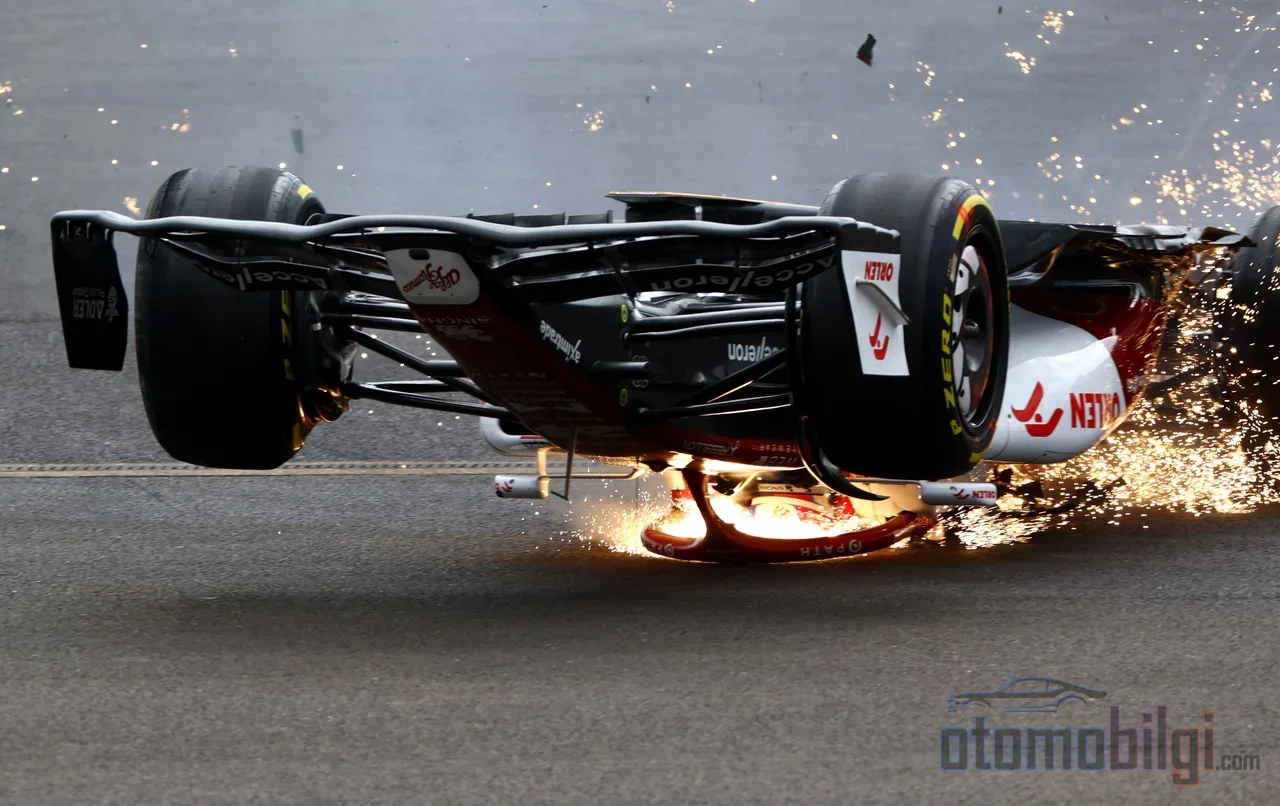
Zhou Guanyu's Alfa Romeo flipped after contact on the first lap and, sliding over the Halo, went beyond the tire barrier and the catch fence. The most critical detail is this: the car's roll hoop failed, leaving the Halo as the only structural component protecting Zhou. The driver's helmet had come dangerously close to the track surface. Zhou said that when he looked back, he saw that the Halo had saved him; On the same day, together with Roy Nissany's crash in F2, it was assessed that Carlos Sainz's car saved two lives at Silverstone. Zhou revealed that after the crash he also battled the fear of fire.
Monza 2021: Lewis Hamilton
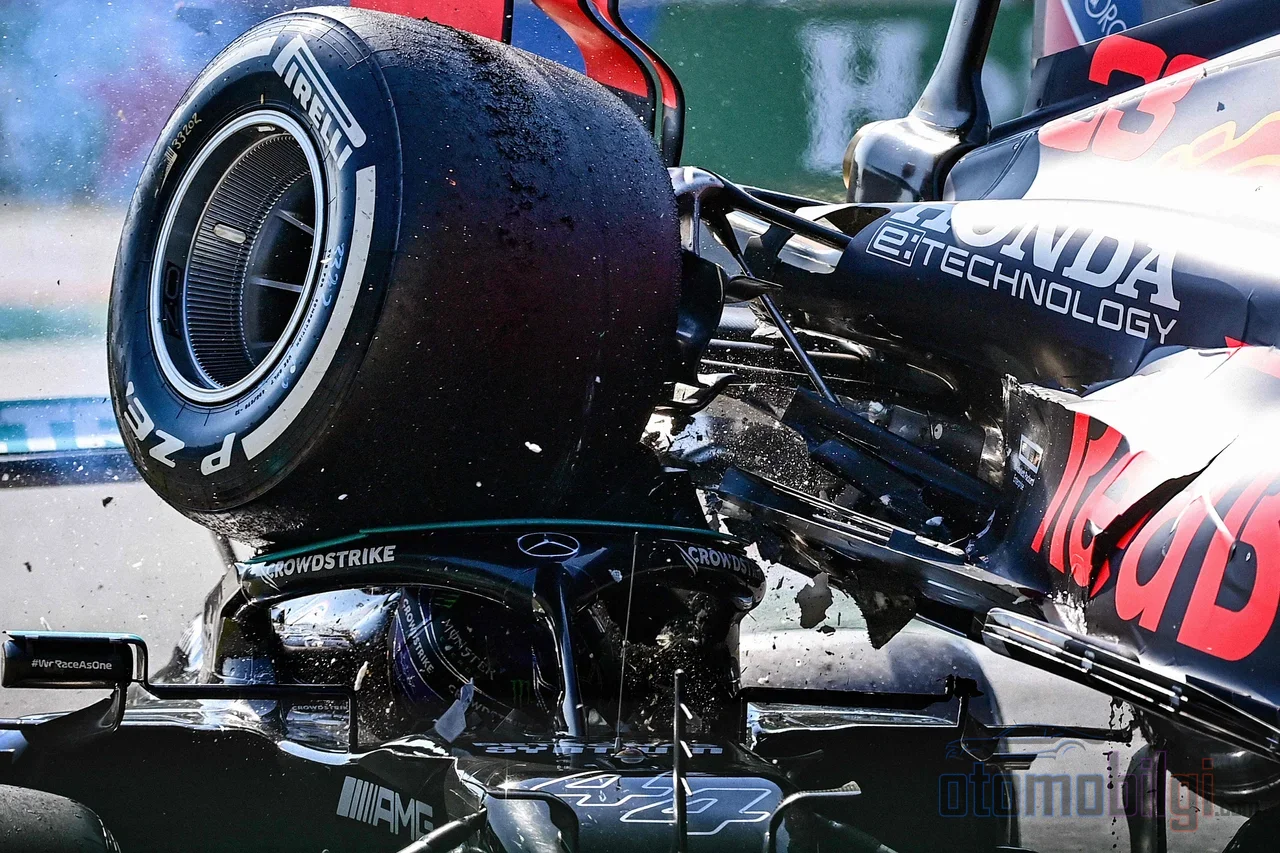
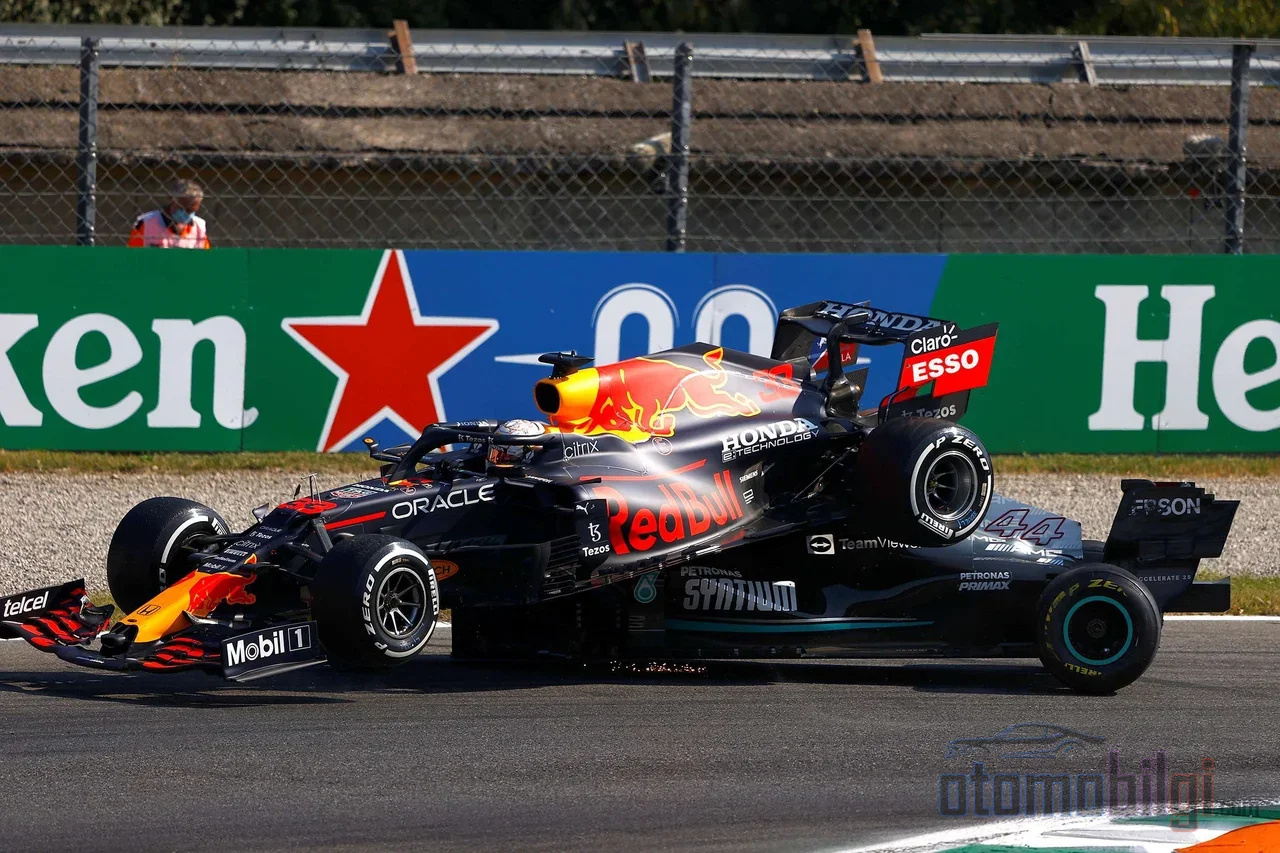
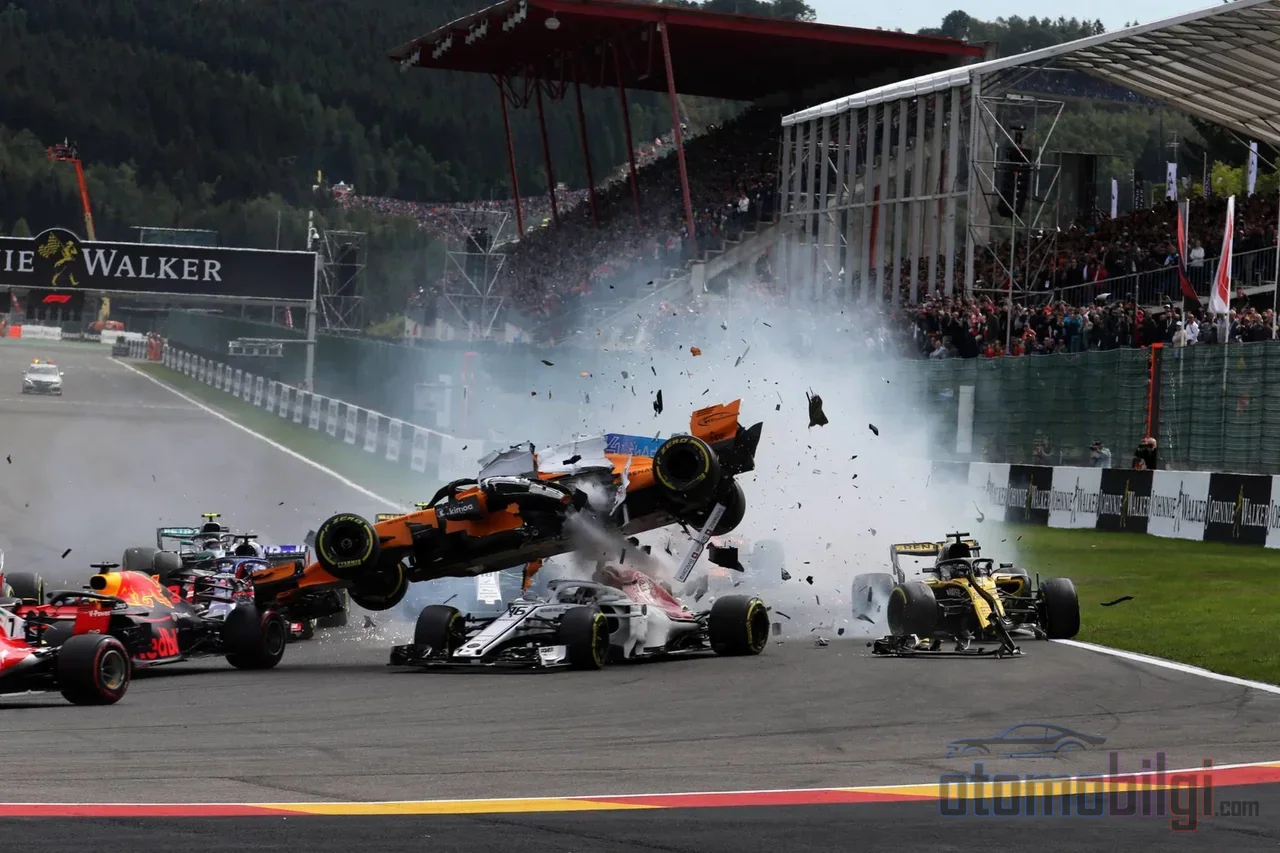
The load the Halo bore at that moment was precisely the bus-weight scenario it was designed for, and Hamilton emerged from this crash unscathed. The load the Halo bore at that moment was exactly the bus-weight scenario it was designed for, and Hamilton walked away from this crash without injury.
So How Exactly Does the Halo Protect Drivers?
Here is the short and clear answer: The Halo, a three-point titanium ring that covers the top and front of the cockpit, transfers loads such as another vehicle landing on top of the car, a barrier, or a flying wheel to the car's main structure rather than to the driver's head. This structure, which can withstand a force of 125 kN from above - about 12 tons - for five seconds, must meet requirements that have risen to 140 kN under today's rules; which turns it from a cockpit protection device into an integral part of the car's survival cell.
The mechanism is actually simple: redirecting the load instead of absorbing it. The Halo does not swallow energy by crushing like a bumper; by maintaining its shape, it physically prevents incoming mass from reaching the driver's head. In Grosjean's crash it was the barrier, in Zhou's crash the asphalt and barrier friction, and in Hamilton's crash the car that landed on top that met this obstacle.
Where Are We Today?
The Halo, once deemed ugly, rejected and mocked, is now a respected safety feature in the paddock. Over time, the aesthetic objections were forgotten, aerodynamic engineering learned to live with it, and in two dozen major crashes it allowed drivers to walk away or escape with only minor injuries. The search that began after Bianchi's accident bore fruit with Grosjean walking out of the flames in Bahrain. F1's open-cockpit tradition continues; but now, above that cockpit, there is a silent guardian that can carry 12 tons.
Sources
- How to Make an F1 Halo (FIA)
- FIA concludes investigation into Romain Grosjean's accident at 2020 Bahrain Formula 1 Grand Prix
- FIA defines Halo load test rules for F1 2018 cars
- All you need to know about Halo ahead of the 2018 F1 season
- How to build a halo (Autosport)
- Tech Explained: Formula 1 Halo (Race Car Engineering)
- Ross Brawn says Halo saved Romain Grosjean's life (Sky Sports)
- Zhou Guanyu says halo device saved his life after British GP crash (The Guardian)
- How strong is the F1 halo? (The Second Grid)
- Sir Jackie Stewart's Formula 1 legacy goes beyond success (BBC)