Jackie Stewart: The Champion Who Forced Safety onto F1
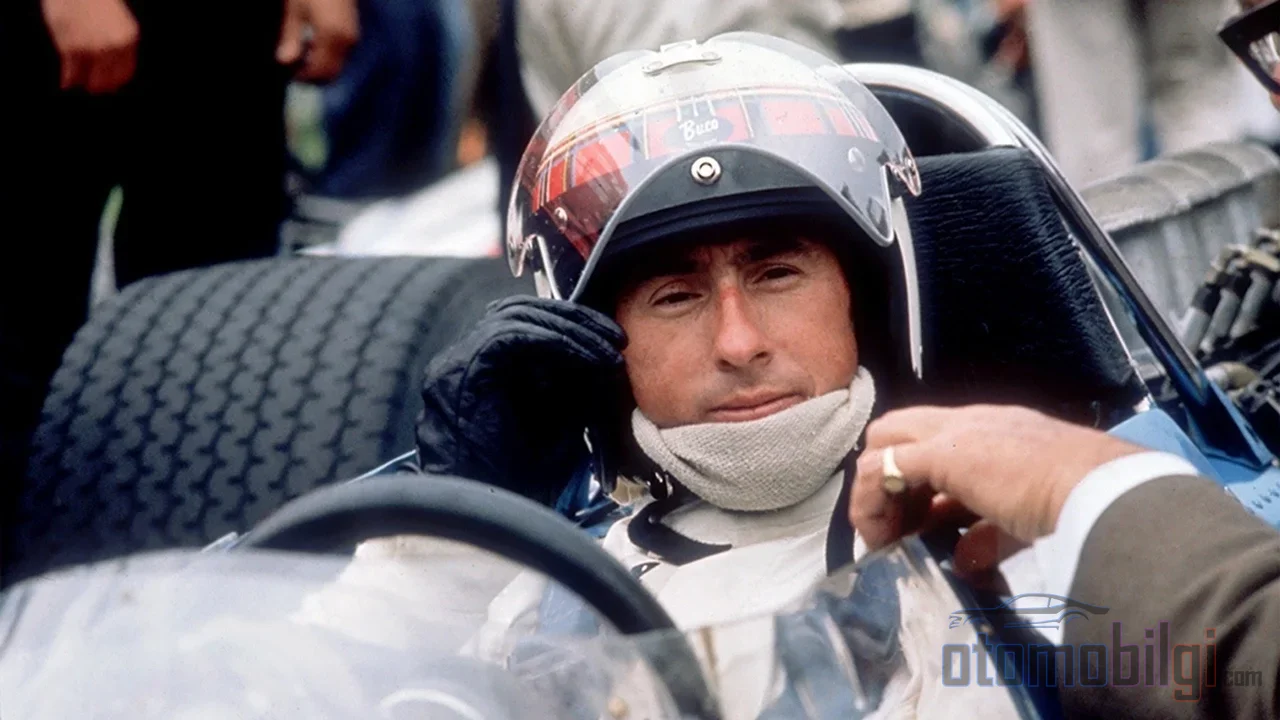
June 1966, Spa-Francorchamps. Driving rain, the misty Ardennes forest, and a BRM hurtling along at 266 km/h. A young pilot trapped in the cockpit notices fuel pooling around his feet; at the edge of the track there is no doctor, no proper tools, not even a decent ambulance. That pilot was Jackie Stewart, and that day would become a turning point not only for his career but for all of Formula 1. Stewart would later become the most successful driver of his era with three world championships and 27 victories; but his greatest victory would be won not on the track, but with the safety revolution he would build at the side of the track.
Who Exactly Is Jackie Stewart?
The Scottish driver, whose full name is Sir John Young Stewart, was born on June 11, 1939, in Milton, west of Glasgow. His nickname was "The Flying Scot". In his F1 career, which began with BRM in 1965, he raced for exactly nine seasons between 1965 and 1973; he wore the colors of BRM, Matra, March, and Tyrrell. Moreover, his dyslexia was not diagnosed until he was 41; in his own words, this is why he constantly had to think outside the box. Perhaps the ideas that changed F1 came precisely from there, from that necessity of "thinking differently".
Highlights
- 3 world championships: 1969, 1971, and 1973
- 27 victories, an all-time record at the moment of retirement
- 100 Grand Prix entries, 43 podiums, 17 pole positions
- Initiator of F1's safety campaign after the 1966 Spa crash
- Retired in 1973 as champion, at the very peak
From BRM to Tyrrell: What Kind of Career Was This?
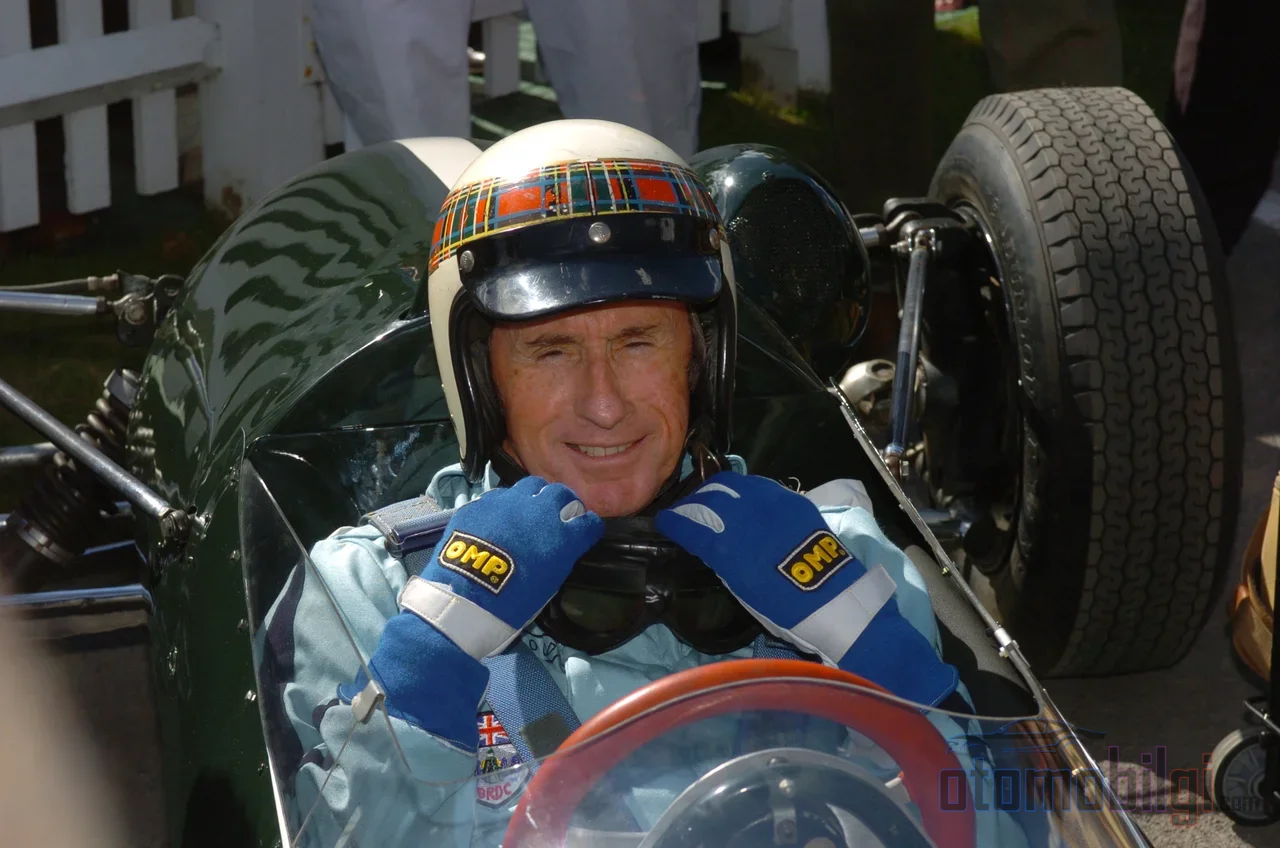
Stewart's story actually begins in 1964, in Ken Tyrrell's F3 team. In his first race at Snetterton, he gained a 25-second advantage in just two laps and won the race by a 44-second margin. He turned down F1 offers from Cooper and Lotus; there was no need to rush. In 1965, BRM brought him to F1 with a contract worth around 4,000 pounds, and in his rookie season he took his first win at Monza and third place in the championship. We are talking about a rookie who took his first win in just his 8th race - we are talking about a rookie.
In 1968, he moved to Tyrrell's Matra International team. With the Matra MS10-Cosworth he won at Zandvoort and at the Nurburgring, in the rain, each by roughly four-minute margins; he conceded the championship to Graham Hill, but no one doubted any longer that he was the fastest name in the series. In 1971, he had an utterly legendary season: while battling mononucleosis, he won five consecutive GPs (a year filled with victories in Spain, Monaco, France, Britain, Germany, and Canada) and crossed the Atlantic exactly 186 times during the year for media commitments. Yes, you read that correctly: 186 times.
Jackie Stewart's Career in Numbers
| Career statistic | Value |
|---|---|
| Active years | 1965-1973 (9 seasons) |
| Grand Prix entries / starts | 100 / 99 |
| World championships | 3 (1969, 1971, 1973) |
| Wins | 27 |
| Podiums / pole positions | 43 / 17 |
| Fastest laps / points | 15 / 359 |
| Teams | BRM, Matra, March, Tyrrell |
1969 and 1971: How Did the First Two Championships Come?
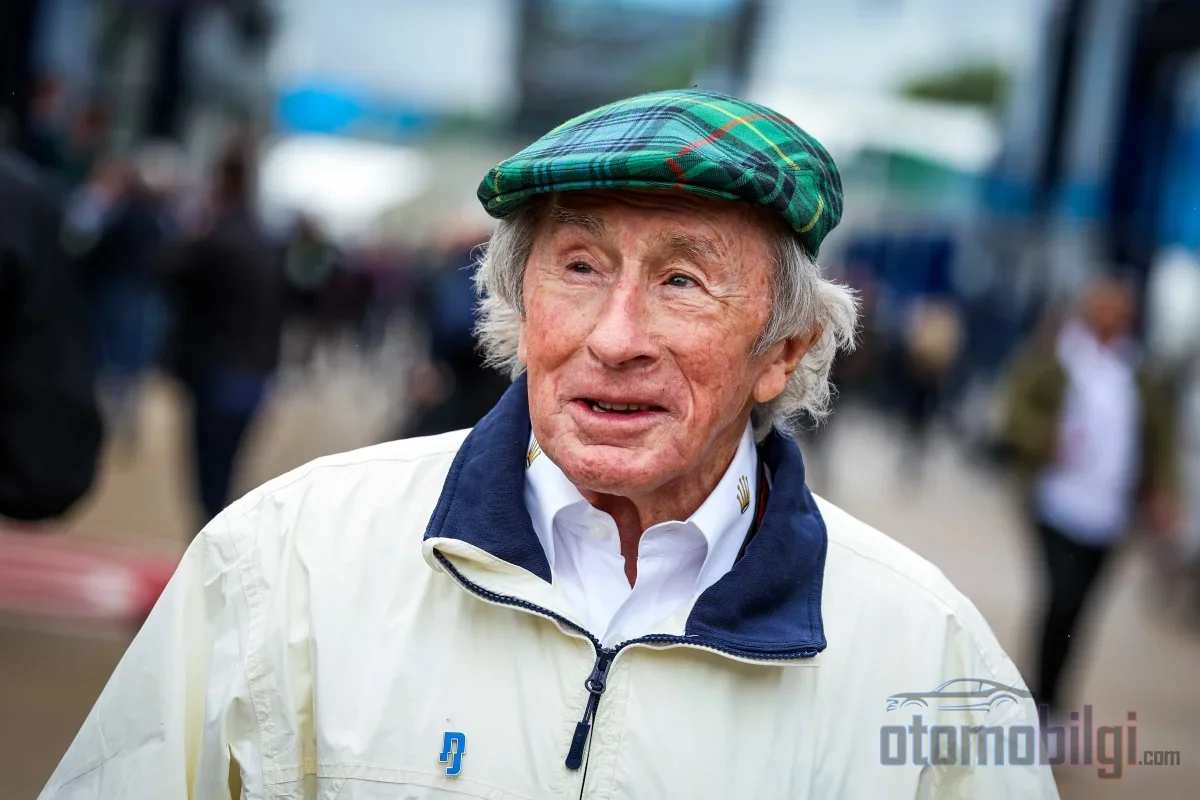
In 1969, with the Matra MS80-Cosworth, Stewart practically flew: He won at Montjuïc by 2 laps, at Clermont-Ferrand by 1 minute, and at Silverstone by more than a lap. He led at least one lap in every Grand Prix of the season; he is still the only driver to have achieved this. He is also the only driver (to this day) to become champion with a French-built car, and the only name to reach a championship with an independent team. Thus he claimed his first crown.
In 1971, when Matra insisted on its own V12 engine, Tyrrell first raced with the March 701, then built its own car. The second championship came with the Tyrrell 003. In 1972, although he missed the Belgian GP due to gastritis, he took four victories, finished second behind Emerson Fittipaldi, and received the OBE title. Everything would be carried to its peak in 1973, but first, let us write the most crucial sentence: this man's real race was outside the track.
The 1966 Spa Crash: The Day Everything Changed
June 12, 1966, Belgian GP. Rain sends seven drivers off the track in the very first lap. Stewart leaves the track at the Masta Kink corner at 266 km/h; after hitting a telephone pole and a shed, he can only come to a stop in a farm building. The steering column traps his leg, and the ruptured fuel tanks fill the cockpit with gasoline. There are no marshals, no doctor, and no medical facilities on the track. Graham Hill and Bob Bondurant struggle for a long time to get Stewart out of the car. Then the scene becomes absurd: the vehicle he is placed in, in a racing suitcase, arrives at a first aid center full of cigarette butts, and the ambulance driver who is supposed to take him to Liège gets lost. Stewart finally reaches England on a private jet; his crash causes him to miss the French GP.
After the crash, Stewart responds in his own way: he starts bringing a personal doctor to every race and tapes a wrench to the steering column of his BRM, to use if needed. Imagine, a driver competing for the world championship taping a wrench to his steering column because he fears he will not be able to get out of the car. That is exactly what F1 was like in that era.
The Safety Revolution: Seat Belts, Barriers, Medical Units
Stewart, together with BRM team director Louis Stanley, launches a systematic campaign to improve emergency services and barriers. His demands were clear: mandatory seat belts (made compulsory in 1972), full-face helmets, crash barriers, run-off areas, fire crews, proper marshalling, and real medical facilities. These were revolutionary ideas at a time when tracks had no barriers along the pit straights and fuel sat in open drums in the pit lane.
He did not just talk, he also wielded the weapon of boycott: at the 1969 Spa, 1970 Nurburgring (which his close friend Jochen Rindt also attended), and 1972 Zandvoort races, he refused to participate along with other drivers; until the tracks were equipped with barriers, run-off areas, and medical units. The cost of this struggle was heavy: many drivers and members of the press thought the safety measures were draining the excitement from the sport, while track owners and organizers resisted on grounds of cost. Stewart's own admission is striking: had he not spoken so much, he would have been a far more popular champion. He sacrificed popularity for the sake of his friends' lives.
Every run-off area, every barrier, and every medical unit we see on the grid today came about in the wake of that struggle. Let's be honest: safety culture was not created by a single person alone; the drivers, teams, and organizers of that era also contributed. But there is no question that Stewart was the most visible and most persistent face of this change. His hope was that, if he left a legacy in the sport, it would be in the field of safety.
1973: The Most Bitter Retirement, as a Champion
Stewart had long since decided to retire before entering the 1973 season. His reasons were heavy: the grueling pace of his racing life, having lost 57 friends over the years, mononucleosis in 1971, and severe gastritis. During the season he wins in South Africa, Belgium, Monaco, the Netherlands, and at the Nurburgring; the Nurburgring victory is his 27th and record-breaking win. At the Italian GP, he starts 20th and climbs to 4th, securing his third championship.
Then, on the weekend of October 6, 1973, at Watkins Glen. His teammate, considered his spiritual son, Francois Cevert, loses his life during practice. Stewart chooses to miss his 100th Grand Prix and retire one race early; the Tyrrell team withdraws from the race out of respect. On October 14, Stewart announces that he is no longer a racing driver, that he has retired, and that he is happy about it. He closed his career as a champion, at the very peak.
Why Is Jackie Stewart's Legacy Still So Great?
Let's give a brief answer: Jackie Stewart is the man who, at the moment of his retirement, was the most successful race-winning driver of all time with three world championships (1969, 1971, 1973) and 27 wins, and who permanently changed F1's safety culture through his fight for seat belts, full-face helmets, barriers, and medical units.
His records also became legendary: his record of 27 wins stood firm for 14 years and could only be broken by Alain Prost in 1987; his record among British drivers was not surpassed by Nigel Mansell until 1992. Until 2015, he was the only British driver to have won three championships; Lewis Hamilton matched him. The tracks where he won the most were Monaco, Zandvoort, and the Nurburgring; he has 3 wins at each of them. Between 1997 and 1999, he served as chairman of the Stewart Grand Prix team together with his son Paul.
Critics of that era blamed him for taking the excitement out of the sport, saying he was not someone who changed, but rather who stripped away its soul. Today, in an F1 where every driver races with barriers behind them and a medical unit just two steps away, that debate has answered itself. Stewart was so unique that the authorities of his era described him as a driver unlike any F1 driver ever seen before. And they were right.
Sources
- Jackie Stewart - Wikipedia
- Jackie Stewart | Formula 1 Hall of Fame
- Jackie Stewart Ends Driving Career While Champion - NYT (1973)
- From Auto #14: Jackie Stewart - FIA
- Jackie Stewart and his struggle to make F1 a safer sport - The Guardian
- F1 Safety Reforms: Jackie Stewart's Impact - F1 Briefing
- Jackie Stewart's last Grand Prix - TotalEnergies
- Jackie Stewart F1 wins - GP Racing Stats