Niki Lauda and the Story of Willpower Behind the Great Comeback
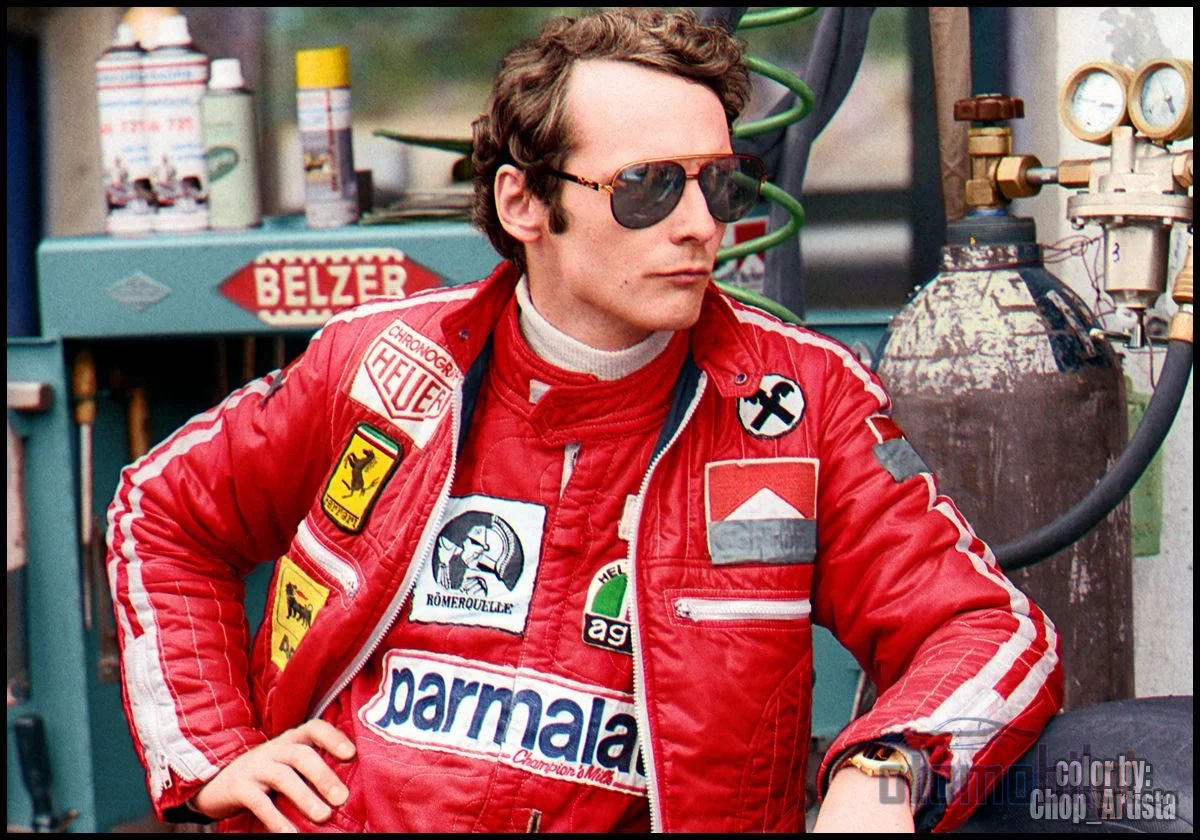
August 1, 1976, Nurburgring. In the middle of a massive 23-kilometer track, in a fast left-hand corner leading into the Bergwerk bend, a red Ferrari slams into the barrier and within seconds turns into a fireball. The driver trapped inside is Andreas Nikolaus Lauda, or as we know him, Niki Lauda. The favorite of that season, the man racing toward the championship. Six weeks later, the same man, his face wrapped in bandages, sits back into a Formula 1 seat at Monza. Having lost most of his ear and his eyelids. And he finishes that race fourth. Is there truly a tougher story of willpower in Formula 1 history? On this page, I will tell Lauda's life from start to finish, step by step, from his championships to his crash, from his legendary comeback to his final crown with McLaren. If you're ready, let's begin, because this story is built on character more than speed.
The Kid Who Made It to the Track with a Bank Loan: Who Is Lauda?
Niki Lauda was born on February 22, 1949, in Vienna, into a wealthy industrialist family that manufactured paper; his grandfather Hans Lauda was one of Vienna's well-known industrialists. So he was not a poor kid as the fairy tale goes - quite the opposite: his family was absolutely opposed to motorsport. Do you know what Lauda's answer was? Setting out on his own. When his career hit a standstill, he took out a 30,000-pound bank loan and entered Formula 2 with the March team in 1971. Yes, you read that right: he kept racing by taking out loans. He won the British Formula 2 championship in 1972 and moved to BRM in 1973. There, on the recommendation of his teammate Clay Regazzoni, he signed with Ferrari in 1974, and that was the moment everything changed. His first race was the 1971 Austrian Grand Prix, and his first victory came at the 1974 Spanish Grand Prix.
His career numbers were as follows: Between 1971-1979 and 1982-1985, across two separate periods, 177 Grand Prix entries (171 starts), 25 wins, 54 podiums, 24 pole positions, 24 fastest laps and 420.5 points. He is the only driver to win the world championship with both Ferrari and McLaren. His nickname? The Computer. Because Lauda was not a throttle-hero type, he was a man of data and analysis; a driver with an engineer's mindset who read the car's setup with a cool head and searched for perfection.
Highlights
- Niki Lauda won 3 world championships: 1975, 1977 and 1984.
- Only 42 days after the fiery crash at the Nurburgring on August 1, 1976, he returned to racing at Monza.
- He won the 1984 championship by just half a point ahead of Alain Prost (72 to 71.5); the smallest margin in F1 history.
- The only driver to become champion with both Ferrari and McLaren.
- In 1975, the first person to lap the Nordschleife in under 7 minutes.
1975: The First Championship, Delivered with the Ferrari 312T
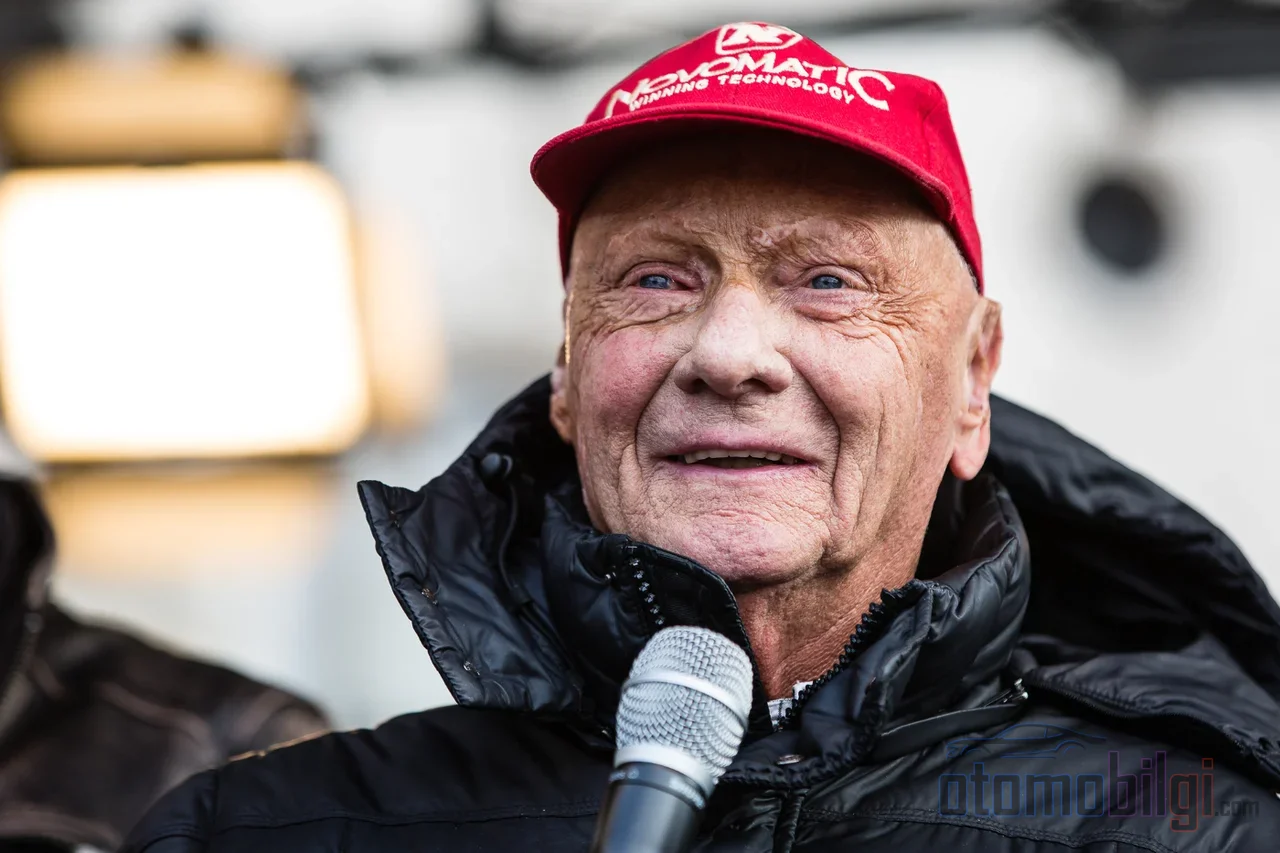
1974 had promised hope at Ferrari, but 1975 was Lauda's breakout year. In Monaco, the first race of the season, on May 11, he started from pole position with the Ferrari 312T and won; that victory was also brake supplier Brembo's first win in Formula 1. Then came the Belgian, Swedish, French, and US Grand Prix races: a total of five victories. By finishing third at Monza, he mathematically secured the championship and brought Ferrari its first drivers' title in 11 years; the team also lifted the Constructors' Championship that same year.
Another unforgettable moment of that year came during the German Grand Prix weekend: Lauda became the first driver to lap the Nordschleife in under 7 minutes. Keep in mind, at that time the track was two miles longer than today; even by today's standards, a spine-chilling asphalt snake. Lauda's sense of speed showed itself here as well, but on that same track, one year later, the darkest page of the story would be written.
August 1, 1976: How Did the Fire Crash at Nurburgring Happen?
Let's briefly answer this question, because it is the most frequently asked topic. The crash happened on the second lap of the 1976 German Grand Prix, in the fast left corner just before the Bergwerk section. The Ferrari 312T2 went off the track, hit the barrier, and caught fire; then Brett Lunger's Surtees-Ford crashed into the car. Arturo Merzario, Lunger, Guy Edwards, and Harald Ertl ran to the scene; Merzario undid the seatbelt and pulled Lauda out from among the flames.
Lauda suffered severe burns to his head and hands, and by inhaling hot toxic fumes he suffered lung and blood damage. Immediately after the crash he was standing and conscious, but he then fell into a coma; reportedly the hospital gave him the last rites, so how serious his condition was is clear. Because his modified helmet had shifted from his head during the impact, his face was directly exposed to the fire. As a result: he lost most of his right ear, the hair on the right side of his head, his eyebrows, and his eyelids. He allowed only the reconstruction of an eyelid and wore a cap for the rest of his life.
The Boycott Call One Week Before the Crash
The most bitter part of the story is this: one week before the crash, Lauda, despite being the fastest driver on track that season, had suggested to the other drivers that they boycott the race because the safety measures on the 23 km Nordschleife were inadequate (lack of fire marshals, equipment, and vehicles). The majority voted against the boycott. The corner where the crash occurred was later named Lauda Links, meaning the Lauda Left Corner. So Lauda showed his contribution to F1 safety culture not only with his life but also with his persistent criticism on track safety; that call is proof of how hard a struggle today's safety standards came from.
42 Days Later: The Legendary Comeback at Monza
Now let's come to the heart of the story. The early races of the 1976 season had passed with Lauda's dominance: he had won four of the first six races, and with his fifth victory of the year in Britain, he had reached twice the points of his closest rivals James Hunt and Jody Scheckter. Then came the crash and everything changed.
While Lauda was absent, Hunt closed the gap in the championship; with victories in Canada and the US, the gap had narrowed to 3 points as he arrived at the season finale at Fuji. And on September 12, 1976, exactly 42 days after the accident, Lauda returned for the Italian Grand Prix at Monza. He appeared at the press conference with his fresh burns wrapped in bandages; by his own account, he was extremely frightened. The result? Fourth place. A man with a half-burned face and damaged lungs fighting for points in an F1 car just six weeks after coming back from the dead is remembered as one of the greatest displays of willpower in sporting history; a performance that instantly entered the lists of F1's legendary races.
Rain at Fuji and the Championship Gone to Hunt
But 1976 doesn't end here. The Japanese Grand Prix at Fuji on October 24 was run in heavy rain. Lauda withdrew from the car after just 2 laps: he said that due to the problems the fire damage had created in his tear ducts and eyelids, his eyes were watering excessively and the conditions were unsafe. Hunt, meanwhile, finished third and won the championship by exactly 1 point. That withdrawal has been debated for years: was it fear, or strategy? Hunt later described Lauda's decision as an act of courage. It is also known that the two drivers were friends off the track and their rivalry was considered clean and fair; that famous contest moviegoers remember from the film Rush was exactly this. Lauda had finished second by one point, but what he gained was far greater: everyone's respect.
The 1977 Championship, Brabham and the First Retirement
In 1977, Lauda took his revenge not with sheer speed, but with consistency. By finishing the United States Grand Prix at Watkins Glen on October 2 in fourth place, he secured the championship with two races to spare, and left Ferrari at the end of the season; Ferrari's decision to run Gilles Villeneuve in a third car had accelerated this parting. Thus his second championship was on the shelf.
In 1978 he moved to Brabham-Alfa Romeo with a $1 million salary, and with that year's strangest car, the BT46B, the design known as the fan car, won the Swedish Grand Prix; this was the fan car's only victory, and the result officially stood. He added one more win in Italy after a penalty. But in September 1979, during practice for the Canadian Grand Prix, he told team boss Bernie Ecclestone, drawing circles in the air, that he did not want to continue the absurdity of driving cars in circles, and announced his immediate retirement. He returned to Austria and set about running the Lauda Air charter airline; the same year, he also won the BMW M1 Procar Championship. The usual Lauda: the man who knew what he wanted and didn't beat around the bush.
The McLaren Era: A Championship Won by Half a Point in 1984
Even a two-year break couldn't tear him away from the track. In 1982 he returned to McLaren with a $3 million salary, and won at Long Beach in only his third race back. Meanwhile, the name who organized the drivers' strike at Kyalami against the new Super Licence rules was, again, Lauda himself; his stance on safety and drivers' rights never changed.
The real finale came in 1984. In the championship battle with his teammate Alain Prost, that season Prost had won 7 races and Lauda 5; together the two of them won 12 of the 16 races. But the championship went to Lauda by half a point: 72 to 71.5. If you ask where the half point came from, the 1984 Monaco Grand Prix, shortened due to rain, was awarded points under the half-points system, and Prost had received that half point. This is the smallest championship margin in F1 history. Lauda secured the crown at the Portuguese Grand Prix: starting from 11th place, he finished second while setting the fastest lap. Moreover, the 7 years between his second and third championships broke Jack Brabham's 6-year record, making it the longest gap between championships. Bonus fact: The 1984 Austrian Grand Prix victory remains the only time an Austrian has won their home country's Grand Prix to date. He took his final win in the Netherlands in 1985 and retired for real at the end of the season.
After the Helmet: The Airlines, Jaguar and Mercedes Era
For Lauda, retirement meant moving behind the scenes, and he did it twice. First, aviation: He founded and ran three airlines: Lauda Air (1985-1999), Niki (2003-2011), and Lauda (2016 onwards); an aviation career spanning nearly forty years. After the 1991 Lauda Air 004 accident, he joined the investigation team and a major flaw was found in the thrust reversers; proof that Lauda's technical brilliance extended beyond the track as well.
Then came management: He returned to F1 in 1993 as a consultant at Ferrari, served as team principal of Jaguar in 2001-2002, and from 2012 until his death he was non-executive chairman and a shareholder at Mercedes. Lauda's signature was on Mercedes' 6 consecutive Constructors' Championships between 2014 and 2019. In 1993, he was inducted into the International Motorsports Hall of Fame. Health-wise, the effects of his 1976 injuries lasted a lifetime; in July 2018 he required a double lung transplant. Niki Lauda passed away in Zurich on 20 May 2019, at the age of 70.
So What Does This Story Tell Us?
Let's give a short and clear answer: Niki Lauda won three world championships, with Ferrari in 1975 and 1977, and with McLaren in 1984; he returned to Monza just 42 days after the fire accident at the Nurburgring in 1976 and finished fourth; throughout his life he never gave up his perfectionist technical approach or his advocacy for safety. With his helmet, his cap and his dry Viennese wit, he was etched into memories as Formula 1's respected but unsentimental analyst. A driver who more than earned the nickname "The Computer" while also setting a superhuman example of perseverance.
My takeaway from this story is this: speed alone doesn't make a legend. What made Lauda a legend was the stubbornness that carried the journey he started by taking out a loan to three championships, the courage to return to the cockpit within six weeks with a burned face, and the passion that led him back to the garage even after retirement to guide the younger generation. 2026 marks the 50th anniversary of that accident; precisely for that reason, remembering this story once again does good for anyone who wants to truly understand F1. Which do you think is greater: three championships, or that 42-day comeback? I believe the answer lies within each of us.
Sources
- Niki Lauda
- Niki Lauda - Wikipedia
- The Hunt-Lauda rivalry
- Niki Lauda | Formula 1 Hall of Fame
- Niki Lauda's 1976 comeback at Monza - F1's Best Drives
- 50 years ago: Niki Lauda's crash - Nürburgring
- Scuderia Ferrari Hero - Niki Lauda
- How F1 driver Niki Lauda survived a devastating Grand Prix crash - BBC