How Is the Number 1 Driver Determined in F1?
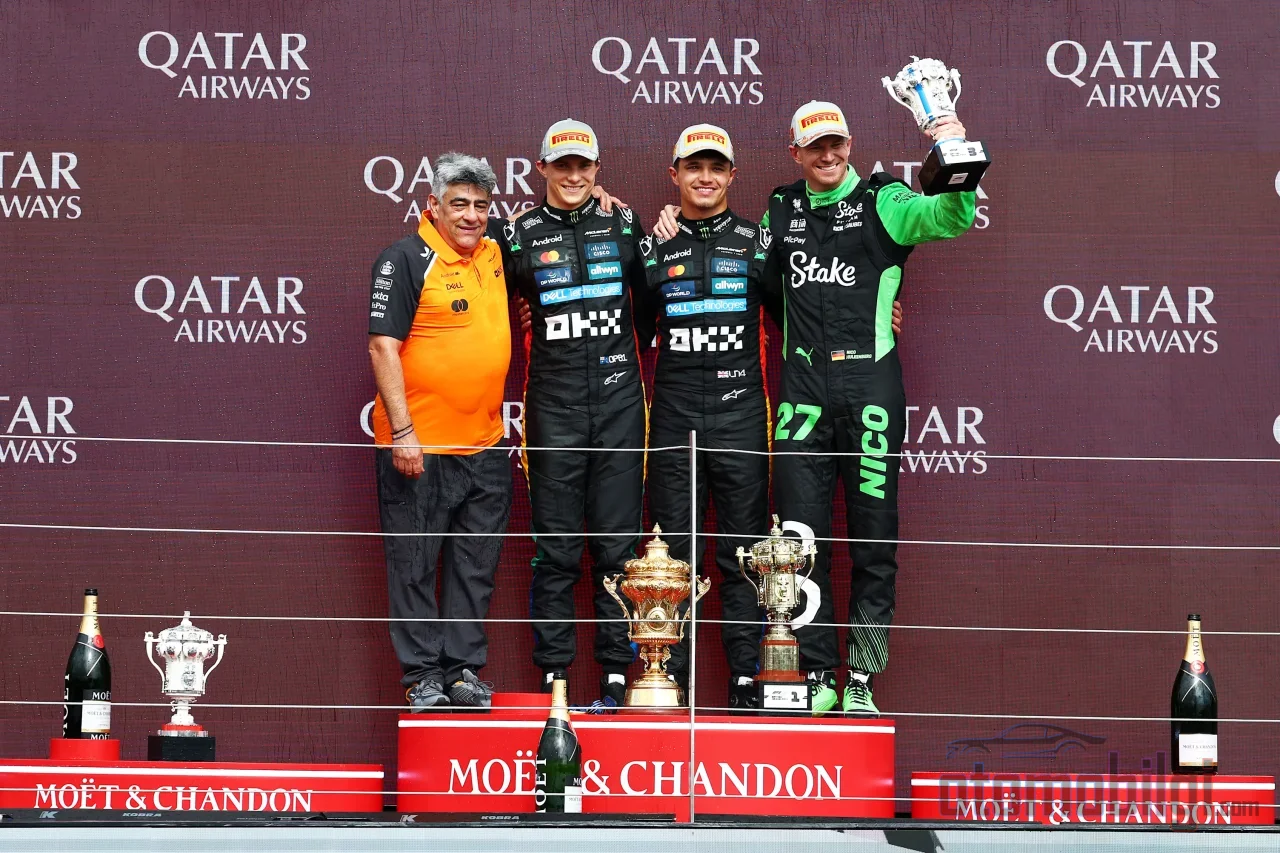
One of the most surprising things when you're new to Formula 1 is this: the two drivers of the same team are not actually equal. One is treated as "number 1" in the garage, while the other often has to give way to them. So who decides this pecking order? Is there a written rule, or are decisions made behind the pit wall? Here's a story whose answer isn't as simple as you might think - one intertwined with contracts, salaries and team politics.
What We Need to Clarify First: Race Number and Status Are Different Things
The number written on a driver's car is not directly related to that driver's position within the team. Since 2014, every driver has chosen a personal number that they use throughout their career; Max Verstappen's number 3 and Lewis Hamilton's number 44 were born that way. If the reigning world champion wishes, they can use this right and switch to the number 1 reserved for the champion. Verstappen did exactly this during his period of four consecutive championships; by 2026, however, the number 1 passed to the 2025 champion Lando Norris's car, and Verstappen returned to 3.
The old system was much clearer: numbers were allocated according to the previous season's standings - the champion raced with number 1 and their teammate with number 2. In other words, on paper everyone could see who was "first." Today, race numbers and intra-team hierarchy are two completely different worlds.
Highlights
- There is no official definition of "number 1 driver" status in F1; contracts, performance and politics determine it together.
- The highest-paid driver of 2026 is Max Verstappen, with 70 million dollars.
- Driver salaries are kept outside the approximately 215-million-dollar cost cap.
- Mercedes' Hamilton–Bottas pairing showed how a harmonious team relationship changes the perception of internal competition.
Contracts: Where the Hierarchy Is Written Down
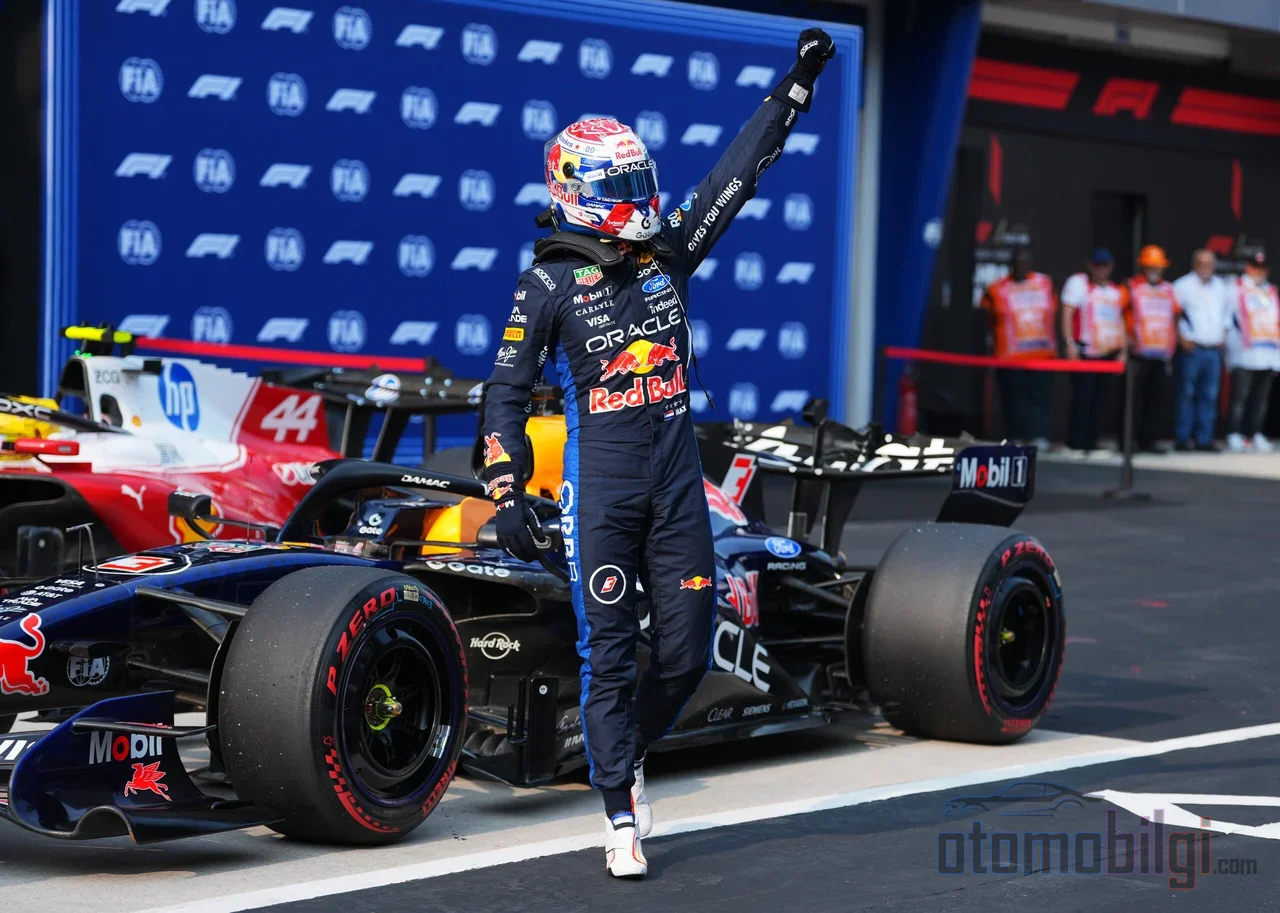
An F1 driver contract contains many clauses, from image rights to "1+1" type arrangements. Some drivers can get clauses passed through that give them priority over their teammate at the negotiating table; others can get an equal treatment clause written into their contract. In other words, hierarchy is sometimes established on paper, at the moment of signing.
Performance-based clauses have also become standard in contracts. It is known that performance-related exit clauses were confirmed as standard practice by Red Bull's decision-makers. George Russell, for his part, explained that his contract is multi-year but that what really matters is mutual satisfaction: even if the metrics don't hold up, things can continue as long as both parties are happy. In short, the paper matters, but the relationship of trust matters just as much.
Who Signed for How Long on the 2026 Grid?
The current contract table clearly shows which team has committed long-term to which driver. McLaren has tied Norris down until 2030; Oscar Piastri is also with the team until at least the end of 2027. Red Bull has kept Verstappen with a new deal through the end of 2030 - his previous contract was set to expire in 2028, and rumors that Verstappen had been talking to McLaren never quite went away. At Ferrari, Charles Leclerc's contract extends beyond 2028, while it is claimed that Hamilton's deal runs through 2027.
A long contract often means the team is telling that driver "you are our plan." But it is just as important to remember that long deals can contain early exit clauses - Williams's agreement with Carlos Sainz is believed to include such clauses. The paper is only the starting point of the hierarchy.
Salaries and Resources: Does Money Buy Priority?
The base salaries reported for the 2026 season seem to mirror the hierarchy exactly: Verstappen sits at the top with 70 million dollars, Hamilton is at Ferrari with 60 million, Leclerc and Russell earn 34 million each, Norris 30 million, and Alonso around 20 million dollars. What's more, the base salary is just the beginning: when performance bonuses and personal sponsorships are added, it is said that Hamilton's total annual earnings are around 100 million dollars. Kimi Räikkonen's 2012 Lotus deal included a bonus of 50,000 euros per point, and he earned roughly 19.5 million euros from bonuses alone over two seasons. Norris's 2025 championship, meanwhile, triggered bonuses worth tens of millions of dollars.
An interesting detail: driver salaries are outside the cost cap. While team spending falls under the cap of roughly 215 million dollars in 2026, Ferrari's Hamilton-Leclerc payroll of around 94 million dollars sits on top of that budget. Star drivers are like the one weapon the regulations cannot shut down. And the highest salaries correlate directly with performance: Verstappen's price tag is a direct reflection of four consecutive world championships between 2021 and 2024.
Who Gets the Updates First?
One of the places where the hierarchy is most visible is the car development process. Updates require both money and manpower; teams have to allocate these resources efficiently. The general rule is that both drivers receive the same parts - but if the team is experiencing internal indecision, there can be situations where the decision changes. Top teams agree that the 2026 championship fight will largely be decided by a battle of updates. If a new part is fitted to only one car, or if a car is designed to better suit one driver, a choice has clearly been made. These choices are sometimes made completely openly, and sometimes hidden under the guise of a "development program."
Team Orders: Is the Number 1 Always Permanent?
A team order means an instruction that places the team's overall interests ahead of an individual driver's interests: saving fuel, reducing the risk of mechanical failure, avoiding a collision, or swapping positions. But the subtlety here is this: issuing a team order does not mean there is a permanent 1-2 hierarchy within that team. Some teams clearly designate a leader from the very first day of the season; while some only look at the result, and the balance of power can change over time.
So there is no single answer to the question "does every team clearly have a number 1?" Decisions from the pit wall are usually shaped by that weekend, by that championship math. Team orders become an instrument of hierarchy when systematic investment is made in one driver, and merely a pragmatic solution of the moment when both drivers are given a chance.
The Mercedes Example: The Hamilton–Bottas Balance
One of the best examples showing how a harmonious number 1–number 2 relationship can also work is Mercedes' Hamilton–Bottas pairing. Hamilton described the relationship between himself and Bottas as the best F1 pairing of all time in terms of respect between drivers, and believed the tension of the 2016 Rosberg era would not be repeated. Mercedes management openly admitted that their view of internal rivalry had changed with Bottas' arrival: they saw that two pilots who trust each other are more productive than two stars trying to destroy each other.
That said, respect does not mean softness within a race: at the 2019 British Grand Prix at Silverstone, the battle between the two Mercedes took spectators' breath away. Hamilton said in his own words that battling other teams is more enjoyable than fighting with a teammate. Bottas' return in 2026 with a multi-year deal at a new team adds a new chapter to the story of that harmonious duo.
The Ferrari Example: The Void After Schumacher
Historical proof of how decisive a hierarchy can be lies at Ferrari. When Jean Todt took office as general manager in the 1990s, the team was going through its darkest days; Todt was a former rally co-pilot who came from the directorship of Peugeot Talbot Sport. The era that Todt and Michael Schumacher built together was so successful that it was called the "dream team"; during this period Ferrari was politically more influential than other teams and earned more money.
There was a clear hierarchy in this structure: Schumacher was indisputably the center of the team from 1996–2006, while Rubens Barrichello (2000–2005) and Felipe Massa (2006–2013) played supporting roles. In the period after Todt, a revolving door effectively took place among team principals, and Ferrari could never rebuild that championship formula. The lesson is clear: number 1 status alone is not enough; a stable management to protect it and an organization that believes in it are essential.
So How Is a Number 1 Driver Determined? The Short Answer
Let's put all the pieces together. There is no single mechanism that determines number 1 driver status in F1: it takes shape naturally during the season through the combination of hierarchy, contract clauses, salary and bonus structure, preferences in update distribution, whose favor team orders are used in, and most importantly, results achieved on track. Some teams establish this ranking on paper from the start; in others, the points table takes care of everything by itself. And the balances - from Ferrari to Mercedes, as history has shown - can change from top to bottom with a single transfer or a single bad season.
The next time you see a driver yielding to his teammate, you will know that behind it there is not one person's split-second decision; there is a contract signed months in advance, a salary account worth millions of dollars, and a cold piece of mathematics on the pit wall. Nothing in F1, not even the hierarchy, is a coincidence.
Sources
- F1 Driver Contracts: how long do the drivers' current deals last?
- How Much Do F1 Drivers Get Paid? 2026 Salaries Ranked
- Team orders - Wikipedia
- F1's balance of power: Does each team have a clear-cut No. 1?
- Lewis Hamilton on Valtteri Bottas rivalry and why it won't be like 2016
- Valtteri Bottas changed Mercedes F1 team's view on driver line-ups
- How Schumacher and Todt transformed Ferrari
- The $215million war that will decide F1 2026
- All F1 driver numbers 2026
- Insider's guide: Who does what in an F1 team?