Alain Prost: The Four-Time Champion Nicknamed "The Professor"
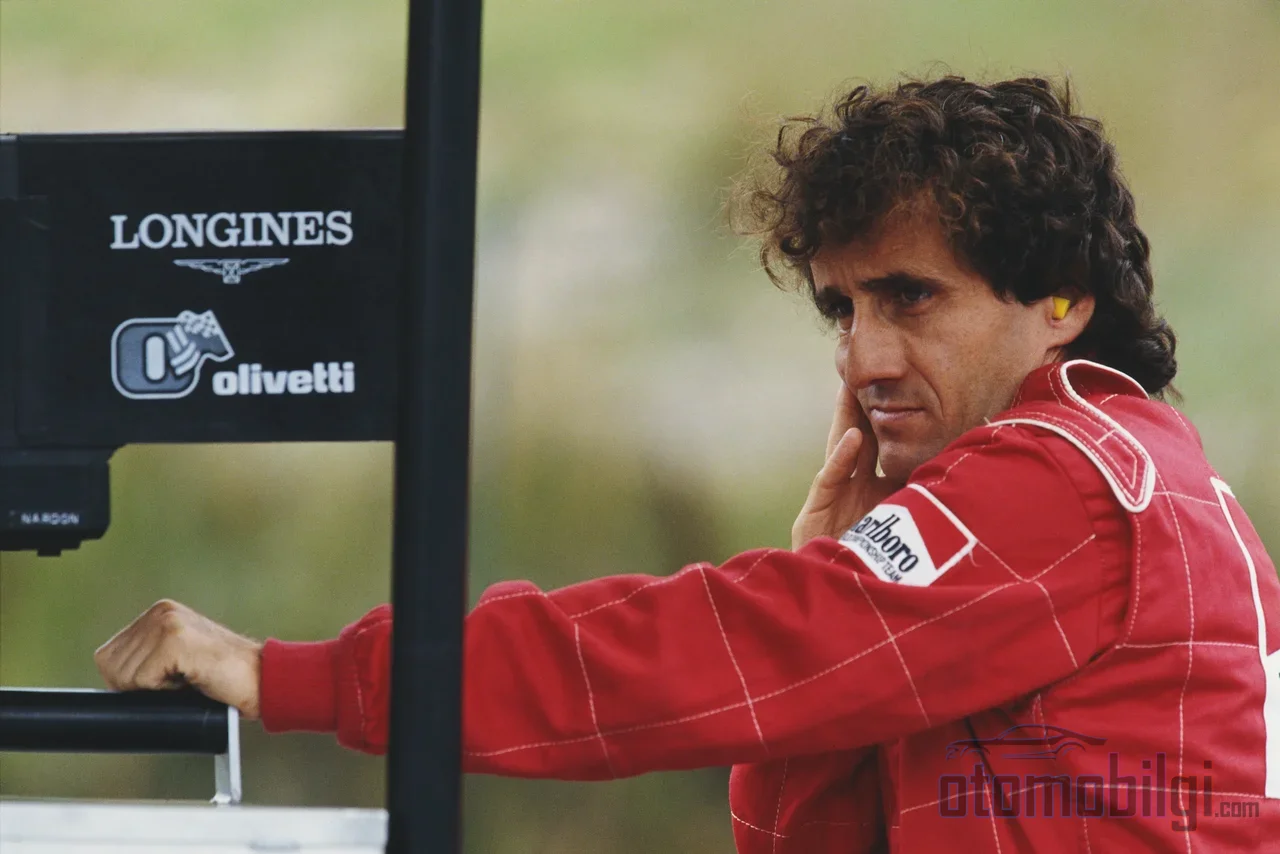
51 wins, four world championships, and a debate that never ends: Alain Prost is the clearest example of a driver who played chess rather than war in Formula 1. So how can one man be both the least loved and the most respected driver at the same time? Come on, let's take a look together at this story that stretches from karting to Suzuka.
From Karting to F1: The Climb of a French Kid
Alain Marie Pascal Prost was born on February 24, 1955, in Lorette, in the Loire region of France. His father ran a furniture store, and there was little racing tradition in the family. It all began when Prost discovered karting during a family vacation when he was 14. While most of us at that age would have been dashing into the sea on vacation, Prost was already signaling that within a few years he would be the fastest on the track.
Here's the detail that really strikes me: Prost bought his first kart with money he earned working at his father's shop. In other words, he climbed up without sitting in the golden seat. He started karting at 16, won the junior World Cup four years later, and became the French senior karting champion in 1975. In 1974 he decided to become a full-time racer, and the rest turned into a rapid rise: the French Formula Renault championship in 1976 (he won every race but one!), the Formula Renault European championship in 1977, and the European Formula 3 championship with Oreca in 1979.
The F1 door knocked a little early in 1979: Marlboro offered him an early F1 debut with a third McLaren ahead of the US GP. Prost declined the offer, thinking that showing up unprepared would be wrong. Imagine it: a 24-year-old driver turning down an F1 offer! That decision carried him to F1 with McLaren in 1980, more prepared, and in his very first race, in Buenos Aires, he finished 6th and immediately scored points. Unfortunately, the rest of the season did not go so smoothly: the car broke down frequently, and Prost was blamed for the crashes. Moving to Renault at the end of the season was a smart move.
The Renault Years and Monaco's Half Point
The Renault era was where Prost's first victory came: the 1981 French GP at Dijon. That same year he also won in the Netherlands and Italy, finishing the championship 5th. In 1982 he burst into the season with wins in South Africa and Brazil and finished 4th. The real spark appeared in 1983: he finished the season second, just 2 points behind Piquet. But he retired from the final race with a turbo failure, and two days later... he was fired. Yes, you finish runner-up in the championship, and two days later you're shown the door. F1's brutality sometimes comes as a surprise like that.
Returning to McLaren in 1984, Prost worked with a teammate who was no small name: Niki Lauda. Prost took 7 wins that season, matching Jim Clark's 1963 record. Yet he still lost the championship. How, you ask? Half points had been awarded at the rain-soaked Monaco GP, and because of exactly that half point, the championship went to Lauda - by a margin of just 0.5 points. To this day, this result is remembered as the closest championship battle in F1 history. Doesn't seem believable, does it?
Highlights
- 4 world championships: 1985, 1986, 1989 (McLaren) and 1993 (Williams)
- 51 wins, 33 poles, 106 podiums, 41 fastest laps and 199 race starts
- France's first F1 world champion (1985)
- At his retirement, he held the records for most wins, fastest laps, and podiums; the win record passed to Michael Schumacher in 2002
- In 1984, he missed the championship by just 0.5 points
The Story of Four Championships
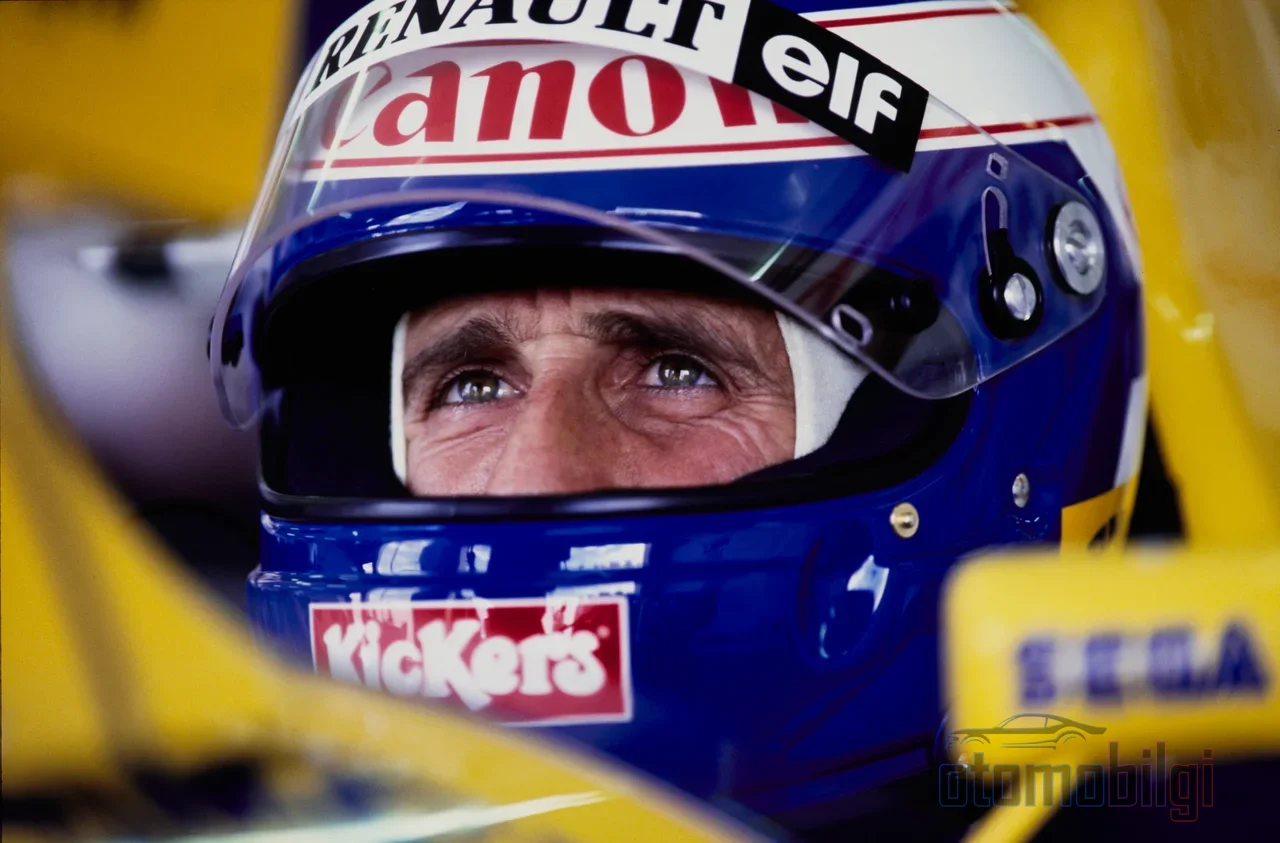
1985 was the turning point of his career: Prost won his first world championship and became France's first F1 world champion. All sorts of events also unfolded during the season: At San Marino, his car was disqualified for being 2 kg underweight. In return for his performance, he was awarded the Légion d'honneur. Lauda retired at the end of the season and attributed this to Prost's presence. In 1986, he managed to defend his championship; he became the first to do so since 1960. The finale of that season in Adelaide was dramatic: After Mansell's tire blew at around 180 mph, the championship went to Prost. At San Marino, too, he had saved the win while running out of fuel, swinging the car left and right. In other words, his intelligence was at work just as much as his speed.
In 1987, he took 3 wins, and with his 28th victory at the Portuguese GP, he broke Jackie Stewart's win record. It is also known that Stewart regarded him as the best racing driver of his generation. In Prost's eyes, however, his own peak was a different race: Brazil 1987. He had made setup changes to reduce tire wear, and while his rivals pitted three or more times, he won with just a two-stop strategy. In my opinion, one of the finest examples of how strategy can turn a race into a win.
When Honda engines arrived at McLaren in 1988, the rivalry was taken to a whole new dimension. It is known that when Honda asked about an engine, Prost recommended Senna, and later regretted this decision. That season, McLaren's MP4/4 set a record by winning 15 of 16 races; this record could only be surpassed by Red Bull in 2023. Only, of those 15 wins, 8 belonged to Senna and 7 to Prost, and Senna took the championship by just 3 points. And it was precisely here that real tension began within the team: Prost suspected that Honda was trying to make Senna number one, and at the end of the season, Honda's specially labeled engine crate for Senna only deepened these suspicions.
Prost's four championships break down as follows:
| Year | Team | Note |
|---|---|---|
| 1985 | McLaren | France's first F1 champion |
| 1986 | McLaren | Mansell's tire blowout in the Adelaide finale |
| 1989 | McLaren | After the collision with Senna at Suzuka |
| 1993 | Williams | Retirement at the end of the season |
The Prost vs. Senna Rivalry: The Two Faces of Suzuka
The most famous rivalry in F1 history is undoubtedly the one between Prost and Ayrton Senna. In 1988 and 1989, they played for the top under the same roof, at McLaren. In 1988, they mostly raced cleanly on track; the exception was the moment Senna squeezed Prost toward the pit wall at Estoril. But after Imola in 1989, the two stopped speaking to each other entirely. The real explosion happened at Suzuka, which decided the fate of the season: there was a collision that directly affected the championship, and Prost won the 1989 title.
The rivalry did not end there. Even though Prost moved to Ferrari in 1990, his battle with Senna continued, and at Suzuka another collision decided the championship once again; this time it was Senna who took the title. Just imagine: two years in a row, at the same track, the same two drivers, with the championship decided directly in their hands. The races between these two were like living lessons showing F1 that staying at the top requires more than just speed.
1991 was a winless year for Ferrari, and Prost was fired from the team because of the things he said about the car coded 643. After a year away, he returned to Williams in 1993. He showed that the break had not slowed him down: he won his fourth championship and retired at the end of the season. His last victory was the 1993 German GP, and his last race was the 1993 Australian GP. Prost later revealed that the 1993 European GP was the race that triggered his retirement decision. That same season, retiring from the Italian GP despite starting from pole position was also one of the surprising moments of the year.
So Where Does the "Professor" Nickname Come From?
Let me explain Prost's driving philosophy with an analogy: while you are busy running 100 meters fast, Prost was like a marathon runner. He thought throughout the race; he did not wear out his tires early, managed fuel with extraordinary precision, and preserved the car's performance until the end of the race. Even on Honda's own website, this management ability is especially emphasized. Avoiding unnecessary tire wear and planning fuel correctly sometimes directly determined victory in those years. This mindset played a big part in the origin of the excitement we feel today when choosing tires in pit strategy.
The "Professor" nickname suits this approach: with his intellectual outlook on racing, his awareness of preserving equipment, and his ability to plan long-term, he drew a unique style for himself. He had a smooth, relaxed driving style, and the names he took as examples were no coincidence: Jackie Stewart and Jim Clark. His skill in braking and race setup was also a strength his teammates benefited from. Prost's own view aligns with this long-term perspective: in this sport, the only thing you can judge is the long term; you can judge a career or a season, not a single race. In my opinion, it is precisely because of this that his four championships do not seem contradictory; each one was part of that long-term plan.
After Retirement: From the Track to the Management Seat
Prost's connection with F1 did not end when his driving career came to a close. Between 1997 and 2001, he bought Ligier and returned to F1 as the owner of Prost Grand Prix. He then worked as a consultant at Renault, and later Alpine, between 2017 and 2021. He never fully cut ties with the track; between 2003 and 2012 he became a three-time champion in the Andros Trophy, won a race in the 2005 FFSA GT, and served as co-owner of Renault e.dams, which won three consecutive Formula E Teams' Championships from 2014-15 to 2016-17. He was inducted into the International Motorsports Hall of Fame in 1999 and is also featured in Formula 1's official Hall of Fame.
What Legacy Did He Leave to Modern F1?
When Prost retired, he held the records for the most wins (51), the most fastest laps (41), and the most podiums (106). The win record was broken by Michael Schumacher in 2002, and F1's numbers table changed rapidly afterwards. But Prost's true legacy goes beyond the numbers: managing a race as a calculated game, planning tires and fuel as resources, and signaling that strategy comes before speed on the way to the top. Today, in everything we call race strategy, we are essentially seeing a modernized version of Prost's mindset. Don't you think so too? I would love to hear your opinion in the comments.
Frequently Asked Questions
Why is Alain Prost nicknamed "The Professor"? Because of his ability to plan races in advance and his intelligence in strategy and resource management (tires, fuel). He analyzed and managed a race just like a scientist.
With which teams did he win his four championships? With McLaren in 1985 and 1986, with McLaren again in 1989, and with Williams in 1993.
Who was France's first F1 world champion? Alain Prost; in 1985, a French driver won this title for the first time.
Which was the closest title race in F1 history? 1984: Prost lost to Lauda by only 0.5 points, and the decisive half point came from the Monaco GP.
Who broke the records? His record of 51 wins, which he held at his retirement, was surpassed by Michael Schumacher in 2002.
Speed is not everything; sometimes patience and planning are the greatest assets. Prost was one of the drivers who taught us this best.
Sources
- Alain Prost - Wikipedia
- Alain Prost | Formula 1®
- Alain Prost|F1|Honda Global Corporate Website
- On This Day in 1993: Alain Prost clinches his fourth title - Williams F1
- Prost–Senna rivalry - Wikipedia
- Alain Prost: 4× F1 World Champion – Career Stats
- Alain Prost – a strategy professor
- F1: Alain Prost Pinpoints the Race Which Triggered His Retirement
- Alain Prost races, wins and teams | Motorsport Magazine Database
- F1 Driver Records | Championships, Poles, Points & Starts