Fernando Alonso's Championships and Long F1 Career
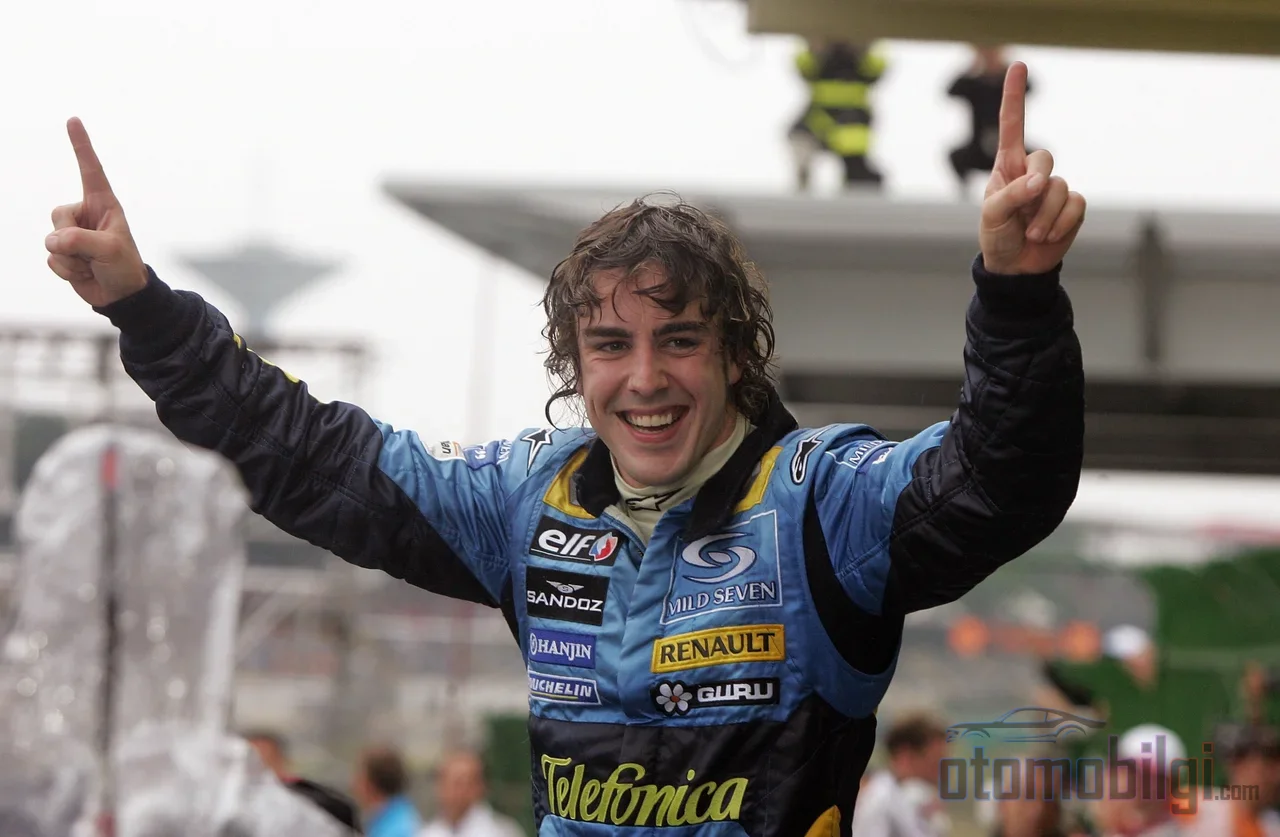
Imagine it's October 2006. At the Suzuka circuit, Michael Schumacher is leading the race when his engine suddenly gives up. The name that passes him is a 25-year-old Spaniard: Fernando Alonso. A year earlier he had already won the championship, ending Schumacher's run of five consecutive titles. So today, in the 2026 season, how many people know the full story of this man who is still on the grid? Hamilton, Schumacher, Senna and Prost have each been covered on our pages one by one; now it's the turn of that famous number 14 - two-time world champion, whose career has stretched uninterrupted since 2001 and who is still racing with Aston Martin.
On this page, we will go through, one by one, Alonso's championships, his rivalry with Schumacher, his Ferrari and McLaren years, his Indy 500 attempts, and how he has stayed on the grid into his 40s. If you're ready, let's begin.
From the Karting Track to Minardi: The Beginning of the Career
Fernando Alonso Díaz was born on July 29, 1981, in Oviedo, Asturias. The story begins when he was just 7 years old: He won his first kart race in Pola de Laviana. So yes, he walked away a winner on his very first attempt. After a karting career that extended to the CIK-FIA Five Continents Cup in 1996, he became champion in the Euro Open by Nissan in 1999 with 6 wins and 9 pole positions, and finished fourth in Formula 3000 in 2000.
And the 2001 Australian GP: He stepped into Formula 1 with Minardi. He was only 19 years old. Then he followed a classic but effective path: In 2002 he served as Renault's test driver, and in 2003 he took a race seat with the same team. In his first season, he became the youngest pole position holder in Malaysia, and by breaking Bruce McLaren's record in Hungary, the youngest race winner, finishing the championship sixth with 55 points. Although 2004 passed without a win, a fourth place with 59 points was a perfect rehearsal for 2005.
The 2005 Championship: Renault's Turn, Alonso's Triumph
Highlights
- Back-to-back world championships with Renault in 2005 and 2006
- In 2005, at 24 years old, the youngest champion in history at the time
- 32 wins, 106 podiums and 22 pole positions in his career
- 24 Hours of Le Mans victories in 2018 and 2019, and the 2019 24 Hours of Daytona triumph
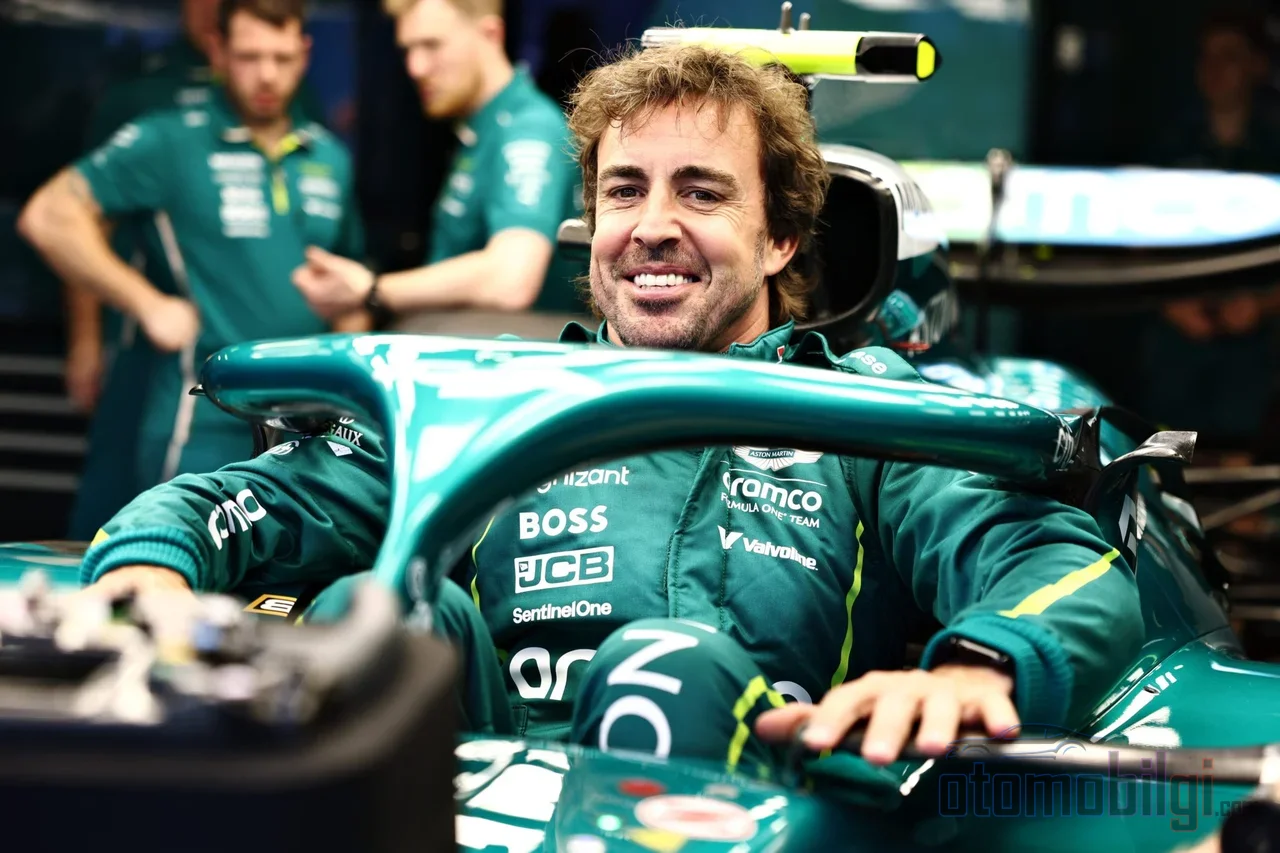
- Still on the grid with Aston Martin in 2026 at 45 years old
The 2005 season was Alonso's breakthrough year. He collected 7 wins and 15 podiums in 19 races, reached 133 points, and secured the championship with a third place at Interlagos. His rival Kimi Räikkonen's McLaren was fast, but Alonso's Renault was reliable; the season's regulations banned tire changes during the race and required the engine to last two races. In other words, speed alone wasn't enough - you had to endure as well. Much like in a school exam, where being smart alone isn't enough - studying regularly the night before also pays off.
The result? Alonso surpassed Emerson Fittipaldi to become the youngest world champion in history at 24 years old, going down in the history books as the first driver to win an F1 championship from Spain. Renault, led by Flavio Briatore, also won the constructors' championship that same year.
2006: The Final Showdown with Schumacher
2006 got tougher because his rival was Michael Schumacher. Alonso once again started like a storm: he won 6 of the first 9 races and collected 84 of the possible 90 points. But two things changed mid-season: the FIA banned Renault's vibration-damping device called the tuned mass damper and Ferrari launched an improvement offensive. Schumacher took back-to-back wins and eroded the points gap, and after Italy the two drivers reached points parity.
The real turning point came at the Japanese GP. At Suzuka, Schumacher's leading Ferrari parked with an engine failure; Alonso won the race. Finishing the season second in Brazil a week later, Alonso claimed his second consecutive championship and became the youngest double champion in F1 history. At the end of the season both drivers had 7 wins each; the difference had been settled on that very day in Japan.
2007: The McLaren Year and Return to Renault
Moving to McLaren as champion, Alonso landed in the same garage as rookie Lewis Hamilton, and the season was marred by internal team tensions: the Hungarian GP qualifying dispute, the espionage scandal, and a garage split in two. Despite this, he took 4 wins in Malaysia, Monaco, Europe and Italy, but lost the championship to Räikkonen by 1 point; while sharing 109 points with Hamilton, he finished third due to the countback rule. In November 2007, he parted ways with McLaren by mutual agreement and returned to Renault.
His 2008 Singapore win was later overshadowed: it emerged that Renault had made his teammate Nelson Piquet Jr. crash deliberately to bring out the safety car. This scandal played a role in Alonso's Ferrari move shifting from 2009 to 2010.
The Ferrari Era: Always Second, Never the Summit
He started 2010 with a real message to Ferrari by winning the Bahrain GP, his first race in the red suit. That season he produced statistics like 5 wins, 2 pole positions, 10 podiums and 252 points, having led 18 of 19 races; he came back from 47 points down mid-season and entered the Abu Dhabi finale 8 points ahead. But finishing seventh there, the championship went to Vettel by a 4-point margin. A painful ending, isn't it?
What followed was like a rerun of the same film: in 2011 he finished fourth with a single win; in 2012 he lost a 40-point lead built on wins in Malaysia, Valencia and Germany to Vettel by 3 points, finishing second again; and in 2013, with 3 wins (the last at the Spanish GP), he once more completed the season behind Vettel. 2014 passed without a win, and after 95 Ferrari races, Alonso left the car that could not promise a championship and returned to McLaren.
The McLaren-Honda Years, First Retirement, and New Horizons
Seasons Struggling With Engine Failures
The McLaren-Honda partnership between 2015 and 2018 was a period remembered for limited success. Ending 2018 11th with 50 points, Alonso left F1 for the first time at the end of the season due to the shortcomings in the car's performance. But he did not stay idle: He won the 2018-19 FIA World Endurance Championship with Toyota, took the 24 Hours of Le Mans twice in a row in 2018 and 2019, and won the 24 Hours of Daytona once in 2019. He still holds the title of being the only person to have won both the F1 and endurance world championships.
The Three Attempts at the Indy 500
The Triple Crown dream (Monaco GP + Indy 500 + Le Mans) took him to Indianapolis. In 2017, on his first attempt, he started made a routine start, led for 27 laps, but on 179. 179 his Honda engine failed; although he was classified in 24th place, he received a standing ovation from the grandstands. In 2019 he failed to qualify. In 2020 he started in 26th place and finished 21st due to a clutch problem. was achieved. He did not win, but these years painted the portrait of a driver who reached for the top in three different disciplines.
The return: Alpine, Aston Martin, and the Grid in Their 40s
Alonso, driving for Alpine in 2021, claimed his first podium in 7 years at the Qatar GP; In 2022 he broke the record for the most race starts. He moved to Aston Martin in 2023: 100 at the Saudi Arabian GP. Grand Prix starts. 400 in 2024. over his career he holds a 292-107 advantage in qualifying and a 262-117 advantage in races, along with 20 shared podiums. So where does the story stand today? over his career a 292-107 advantage in qualifying and a 262-117 advantage in races, plus 20 shared podiums.
But the car is in a difficult situation: In the 2026 season he will be 45 years old, the oldest driver on the grid, and with over 437 starts he holds the all-time record. His contract situation is not clear; on one hand it is said to have been extended until the end of the 2027 season, on the other it is being discussed that 2026 could be his farewell season. The contract situation is not yet clear; while it has been extended through the end of the 2027 season, it is also being said that 2026 could be his farewell season. The future of the car designed under Adrian Newey's leadership seems to be the key to this decision.
Fernando Alonso Career File
| First race | Value |
|---|---|
| World championships | 2001 Australian GP (Minardi) |
| Wins | 2 (2005, 2006, Renault) |
| Podiums | 106 |
| Pole positions | 106 |
| Fastest laps | 26 |
| Total points | 2400 |
| 24 Hours of Le Mans | 2400 |
| Current team | 2 wins (2018, 2019) |
| Current team | Here is the summary of the summary: |
What Do We Learn from Alonso's Career?
The summary of the summary is this: Fernando Alonso won back-to-back world championships with Renault in 2005 and 2006; He has not won an F1 race for 235 Grand Prix since the 2013 Spanish GP; At Ferrari he finished second to Vettel three times, drifted away from the top during the McLaren-Honda years, but proved he could win anywhere with two Le Mans and one Daytona victory in endurance racing. There has been no F1 win in 235 Grands Prix since the 2013 Spanish GP; yet in 2026, at 45 years old, he is still on the grid.
anyone can be fast for a day, but staying for twenty-five years requires a separate mastery. Alonso's career of more than 25 years tells exactly this story: anyone can be fast one day, but staying at it for twenty-five years requires a mastery of its own. Which Alonso do you remember: The young champion of 2005, or the resilient competitor of 2026?