How Are Team Orders Given in F1 and Why Are They Controversial?
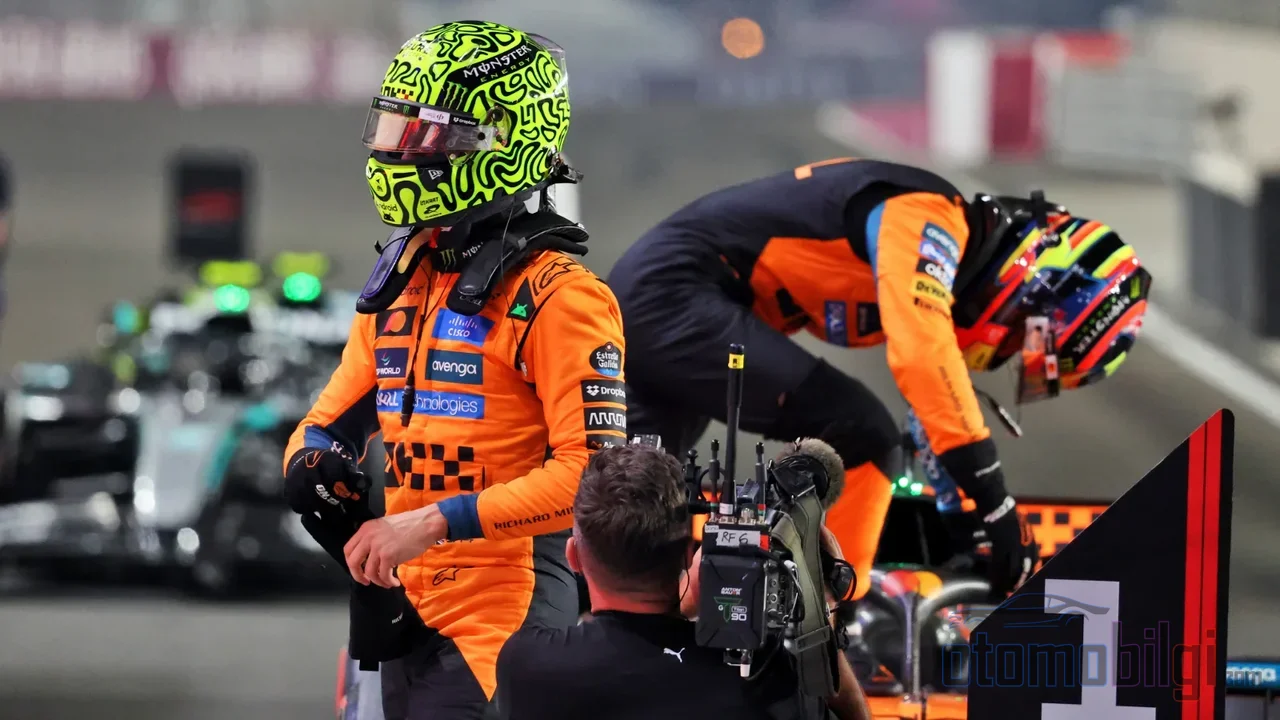
The final laps of the 2010 German Grand Prix. Felipe Massa is leading, with Fernando Alonso waiting behind. Then a message comes through Massa's earpiece: It is confirmed that Alonso is faster than you - do you understand? A few laps later, the Brazilian driver lifts off and his Spanish teammate moves ahead. As the grandstands boo, millions of viewers on their screens ask the same question: Where did that instruction come from - is it a rule, or a breach of the rules?
On this page, I am going to tell you the whole story of what is called team orders in F1: how they are given, what is legitimate and what is controversial under the rules, what those cryptic radio messages mean, and why they were once banned and then allowed again. If you're ready, put on your earpiece and let's begin!
What Are Team Orders and Why Do Teams Use Them?
Team orders is the general name for a team's instructions asking its own drivers to deviate from racing each other normally. Its most well-known form is the driver ahead giving his teammate behind permission to pass. But that is not its only form: establishing a pre-determined internal hierarchy, telling a driver to protect his position without putting it at risk, asking him to save fuel or drive gently when mechanical failure is suspected - all of these fall within the scope of team orders.
So why would a team want to stop its own drivers from racing? The answer is actually very pragmatic: In F1, the championship is decided by the points of both the drivers and the teams. Carrying more points to the driver ahead in the championship, eliminating the risk of the two cars colliding, calculating fuel and mechanical reliability... All of these serve the team's overall interest. A driver does not race alone; he is part of a two-car organization.
In fact, this is nothing new to F1 at all. In the early years of motorsport, it was even within the rules for a driver whose car failed to hand it over to his team leader. So team orders are not a "new-generation cheat" - they are a reality that has existed in the fabric of this sport for nearly a hundred years.
Highlights
- Team orders have existed since F1's early years; they were banned between 2003-2010 and allowed again from 2011.
- The event that triggered the lifting of the ban: Ferrari giving Massa permission to let Alonso pass at the 2010 German GP.
- Ferrari paid a 100,000 dollar fine over this incident but lost no points.
- The crash-order scandal at the 2008 Singapore GP was the darkest side of the ban.
- Indirect language is used on the radio; messages containing the phrase "team orders" are a tiny minority among thousands of radio records.
How Was the Path to the Ban's Removal Opened? 2002 Austria and Beyond
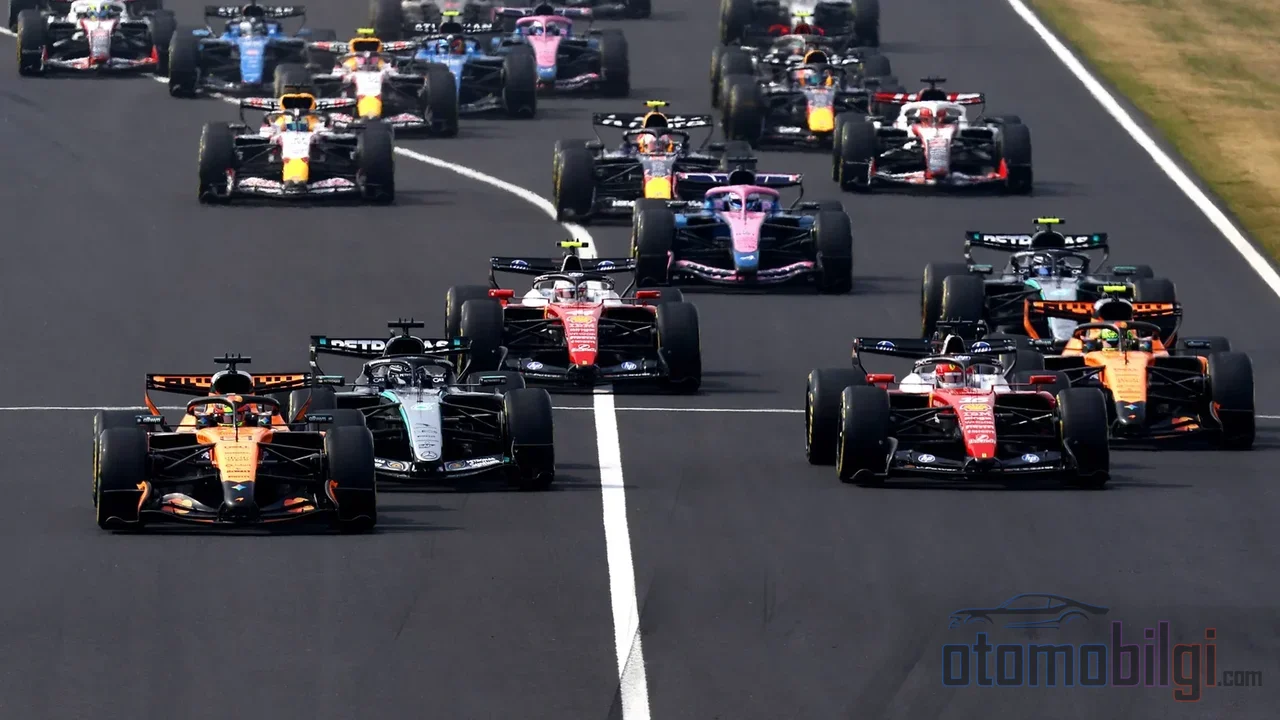
Turning back to history, the journey of team orders through the rulebook was shaped by a few unforgettable examples. At the 1955 British GP, Mercedes asked Juan Manuel Fangio to allow his teammate Stirling Moss to win his home race; Fangio complied and finished second. At the 1964 Mexican GP, Lorenzo Bandini yielding to John Surtees decided the outcome of the championship. Similar situations also occurred in the 1990s: In 1998 Australia, David Coulthard letting Mika Häkkinen past drew a huge backlash, while in 1999 Germany, Mika Salo yielded to Eddie Irvine, handing over what was perhaps the only F1 win of his career with his own hands. Can you imagine - you win once, but that victory belongs to your teammate!
The real flashpoint was the 2002 Austrian GP. Rubens Barrichello let Michael Schumacher through at the very last meter, and the racing world erupted. Schumacher pushing his teammate onto the top step on the podium was also counted as a violation of podium procedure; the team received a penalty. In that same season's US GP, however, Schumacher tried to reverse the situation by handing the position back to Barrichello with a record margin of 0.011 seconds. It sounds like a joke, but it is entirely true.
The backlash was so great that the FIA banned team orders that could affect race results after the 2002 season. From 2003 onward, this ban came into force as Article 39.1 of the Sporting Regulations. It was written in black and white in the rulebook: no team orders. But here is where the really interesting part begins, because nothing changed on the track.
2010 Hockenheim: The Race That Broke the Rule
The most dramatic and most lasting incident of the ban era happened at Hockenheim on July 25, 2010. Ferrari, via Massa's race engineer, sent him a message informing him that Alonso was faster and confirming this. Shortly afterwards, Massa slowed down, Alonso passed him, and won the race.
Ferrari was fined $100,000; but no points were deducted. Officials of the time openly stated that the rule was very clear and that team orders were not allowed, but the outcome on the track did not change. The real significance of Hockenheim is this: After this incident, the FIA admitted that the rule was not working in practice and that its enforcement could not be monitored. In December 2010, the team orders ban was removed from the rulebook and no longer appeared in the rules list from 2011 onward. The eight-year ban faded into history in the shadow of a single race.
The Darkest Face of the Ban: 2008 Singapore
The ban era was not only about examples of position swaps; the 2008 Singapore GP was the biggest scandal of that period. Renault told Nelson Piquet Jr. to crash deliberately; the safety car curtain allowed Fernando Alonso to win. The punishment was severe: Renault received a two-year suspended disqualification, and team principal Flavio Briatore and engineer Pat Symonds were banned from sport (later changed by a settlement). This incident is the most striking proof of how dangerous an area team orders can drift into: asking a driver to crash is no longer strategy, it is a betrayal of the sport.
Coded Language on the Radio: How Are Messages Like "Multi 21" Read?
So how exactly do teams give the instruction? Both during the ban era and today, not everything is said directly on the radio. Since rivals can listen to the same frequencies, strategy details need to be kept hidden; which is why a coded language evolved. "Mode" calls referring to engine modes, short technical expressions referencing car settings, jargon words like pit stop or DAS... All of these are parts of short and precise radio messages.
An interesting piece of data: In extensive analyses of F1 radio messages, messages pointing to team order language make up a very small minority; the expression itself almost never appears. So there is no "move over now" call every lap like in the movies. Teams construct the message as indirectly as possible: by mentioning tire temperature, engine mode, or the rival's strategy, they point to what the driver should do. And the driver, thanks to this shared language built with their race engineer, usually understands it from a single sentence.
During the ban, this indirect language was also a problem: teams were informed that coded messages aimed at circumventing the ban would not be permitted either. But how do you prove a coded sentence? It was precisely this enforcement dilemma that was the fundamental rationale for lifting the ban in 2011.
After the Ban Was Lifted: Big Debates from 2011 to Today
From 2011 onward, team orders became fully legal again. So what happened on the track? The debates never ended, only the ground shifted: now the question being debated is not "is it legal" but "is it fair."
| Race | Team | Incident |
|---|---|---|
| 2012 US GP | Ferrari | Massa was given a 5-place grid penalty by breaking his gearbox seals, Alonso started on the clean side |
| 2013 Malaysian GP | Red Bull | Vettel passed Webber despite the hold position order |
| 2017 Hungarian GP | Mercedes | Bottas gave up 3rd place to Hamilton and gave it back at the final corner |
| 2018 Russian GP | Mercedes | Pole sitter Bottas handed the lead over to Hamilton |
| 2022 Spanish GP | Red Bull | The lead was handed over from Pérez to Verstappen |
| 2024 Hungarian GP | McLaren | The lead was requested back from Norris, Piastri took his first win |
| 2025 Italian GP | McLaren | Norris was ordered to return the position to Piastri |
Two of these examples are particularly striking. In Malaysia 2013, Sebastian Vettel, despite receiving a hold position instruction ahead of Mark Webber, went on the attack and won the race; he drew heavy criticism, but the pit wall also showed everyone why the instruction had been given. In São Paulo 2022, the picture was exactly the opposite: Max Verstappen refused the order to let Sergio Pérez by, and this refusal was long discussed in terms of the internal team balance. So the rulebook gives teams the authority to issue orders, but whether the sentence from the pit wall is carried out in the car is a different story.
The McLaren Example: Team Fairness and Championship Points
Recently, McLaren is at the center of the issue. At the 2024 Hungarian GP, Lando Norris undercut his teammate Oscar Piastri; the team asked him to return the lead, and Piastri took the first win of his career. Some argued Norris deserved the position, while others claimed Piastri should have pitted first. At the 2025 Italian GP (Monza), the situation was reversed: After Norris's slow pit stop, this time he was told to hand the position back to Piastri; Piastri hesitated but complied.
The weight of these decisions became clear at the end of the season: Thanks to these team orders, Norris gained a total of 3 points... sorry, and with the points he gained, he won the championship against Verstappen by just 2 points. Team principal Andrea Stella explained that the decision was consistent with the Hungary 2024 approach, meaning the rule came from logic, not from the driver. We are living in an era where a single radio sentence determines a world championship; team orders are now part of the math, not the show.
Engine Modes and Car Differences: An Invisible Team Order?
When we think of team orders, position swaps always come to mind, but there is also an invisible side: two teammates' cars are not always exactly identical. Setup differences, part selection, testing programs, production order, and the constraints imposed by the cost cap can create real differences between the cars of two pilots in the same garage. So in a sense, decisions made in the technical workshop can also produce an internal hierarchy on the track.
On the engine side, the FIA took a step: Starting from the Belgian GP, changes to the engine performance level were banned throughout the race weekend. Thus, the short-term high-power settings used in qualifying, colloquially known as party mode, became history. The power unit consists of six main elements: the internal combustion engine (ICE), turbocharger, MGU-K, MGU-H, control electronics, and energy store. With the switch to this single-mode operation, the big question was whether Mercedes, which was ahead of its rivals on the engine side, would see its position change; Andrea Seidl from Mercedes management... sorry, that assessment had come from the McLaren camp: Mercedes was still expected to be the reference.
So, What's the Result: Are Team Orders Bad, or Necessary?
The short answer is this: Team orders are entirely legal in F1 today; they were banned in 2003 with Article 39.1, allowed again from 2011 onwards, and this has never been reversed. The ban came after the huge backlash at the 2002 Austrian GP; it was lifted because of the impossibility of enforcement shown at the 2010 Hockenheim race. So there have always been two driving forces behind rule changes: fan reaction and unenforceability.
Both sides of the debate have strong arguments. Critics say team orders make the winning pilot an unfair target and damage the spectacle of racing; therefore, some define team orders as a kind of necessary evil for F1. According to supporters, team orders are a natural part of strategy, and F1 is already a series that encourages strategy; moreover, it is believed that pilots are team employees and that a two-car organization cannot be run without a single goal. Lewis Hamilton also has an interesting observation on the subject: He says that while Mercedes has certain rules for intra-team competition, he saw no such rule framework at Ferrari, adding a different dimension to the debate.
My clear view: a team order is neither a hate letter nor a sacred strategic tool; it is a gray area in between, where team interest and the joy of watching... sorry, the joy of watching racing is constantly weighed. What we have seen from Hockenheim to Monza is this: the rulebook cannot solve the problem, because the real issue is not legal, it is about fairness. And since you know I love asking you questions: if it were you, would you have lifted off like Massa on the last lap, or driven for your own victory like Vettel? Whichever your answer is, you have also understood why this debate has not ended for 70 years.
Sources
- Team orders
- FIA removes ban on team orders - The Guardian
- Ferrari fined as Alonso denies Massa in Hockenheim - CNN
- F1 teams told coded instructions will not be allowed either - Autosport
- F1 Team Orders Explained: What the Radio Actually Shows
- F1 teams banned from changing engine modes over a Grand Prix - BBC
- What we've learned about McLaren's controversial driver swap - The Race
- Hamilton angry: Mercedes-Ferrari rules debate