Max Verstappen Wins Chaotic Las Vegas GP
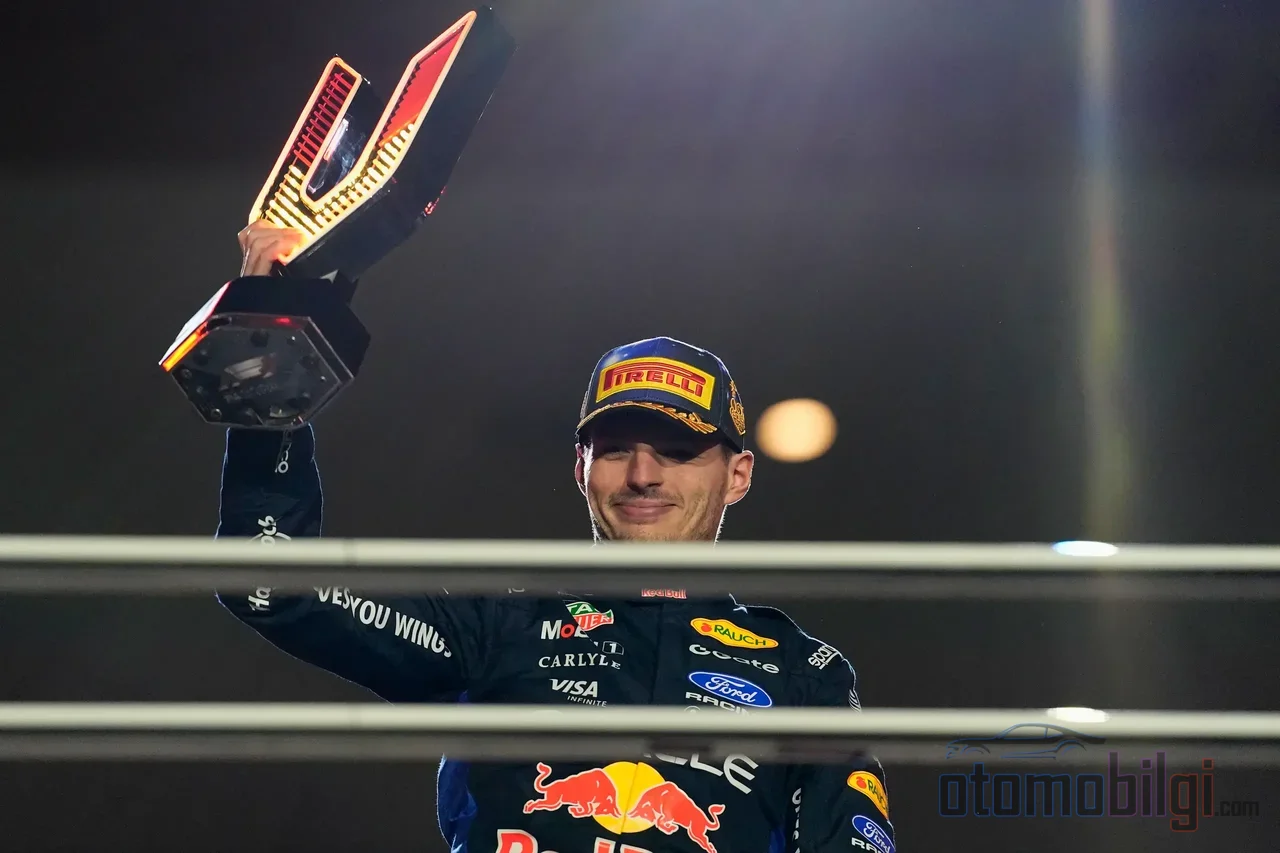
Max Verstappen won the Las Vegas Grand Prix, run on the night of Saturday, November 22, starting from pole position; but this victory came only after 34 lead changes - 35 by some counts - repeated over the 50-lap race, and by a margin of just six to ten seconds. Formula 1's night race in the desert became truly unpredictable for the first time in many years. So how did this chaos come about, and who won at what cost?
Result: Verstappen's Third Las Vegas Victory
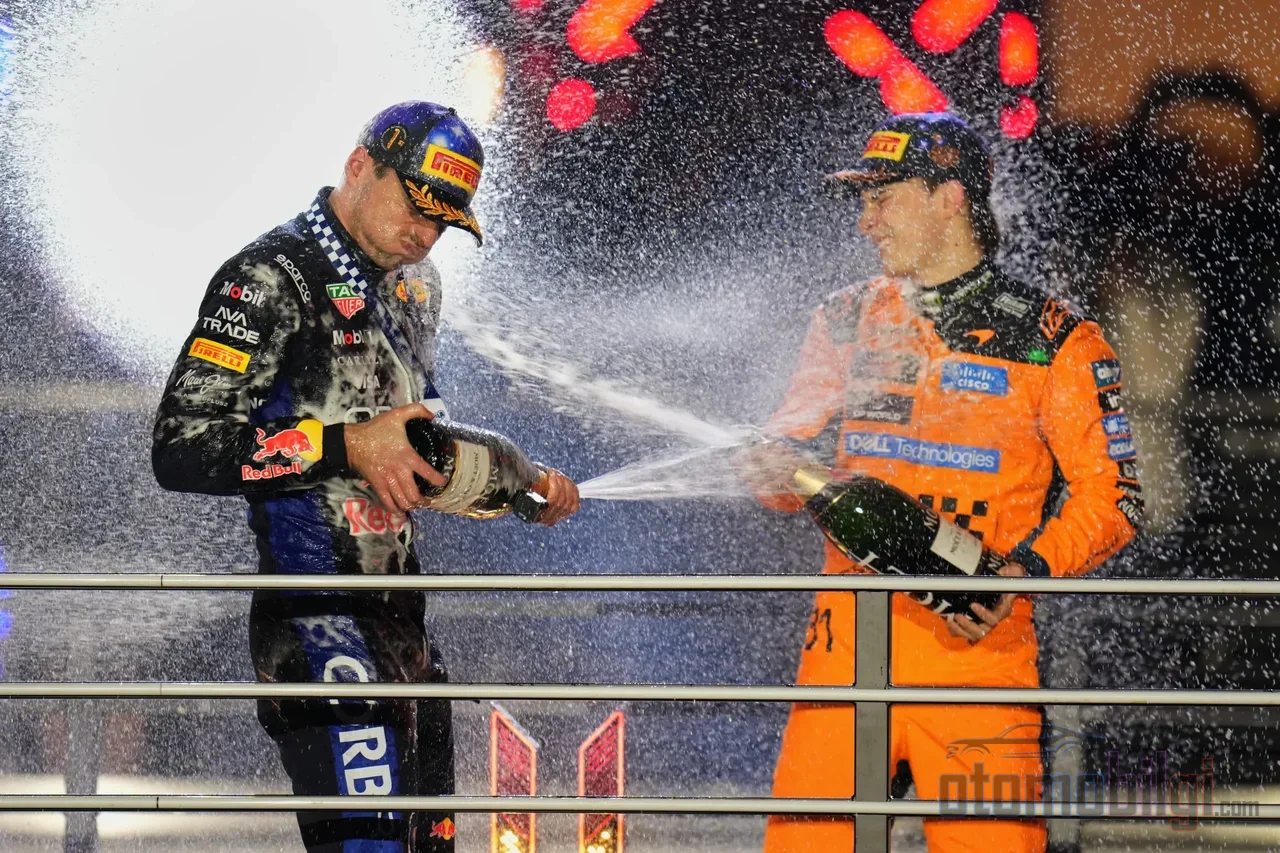
Red Bull-Ford driver Max Verstappen took the checkered flag first with a race time of 1:27:39.624. Lando Norris from McLaren-Mercedes finished 0.639 seconds behind, and his teammate Oscar Piastri finished 1.529 seconds back, completing the podium. Kimi Antonelli was fourth with 2.574 seconds, and Pierre Gasly fifth with 2.927 seconds.
For Verstappen, this was his fourth of the season and 75th career victory, and his third win in Las Vegas. Norris took his seventh of the season, and 51st overall podium, while Piastri, starting from 17th place and finishing third, reached the 29th podium of his career. Among the point scorers, Carlos Sainz's eighth place in his 250th Grand Prix and George Russell's ninth were also notable; the latter's story is perhaps the most striking part of this race.
Highlights
- Verstappen, starting from pole position, reached his 75th Grand Prix victory
- The race saw 34 lead changes according to FIA data, 35 in some counts
- Piastri, starting from 17th place, made it to the podium
- Russell crashed into the wall on lap 48 and lost his chance at a podium finish
How the Grid Ended Up Like This: Penalties and Withdrawals
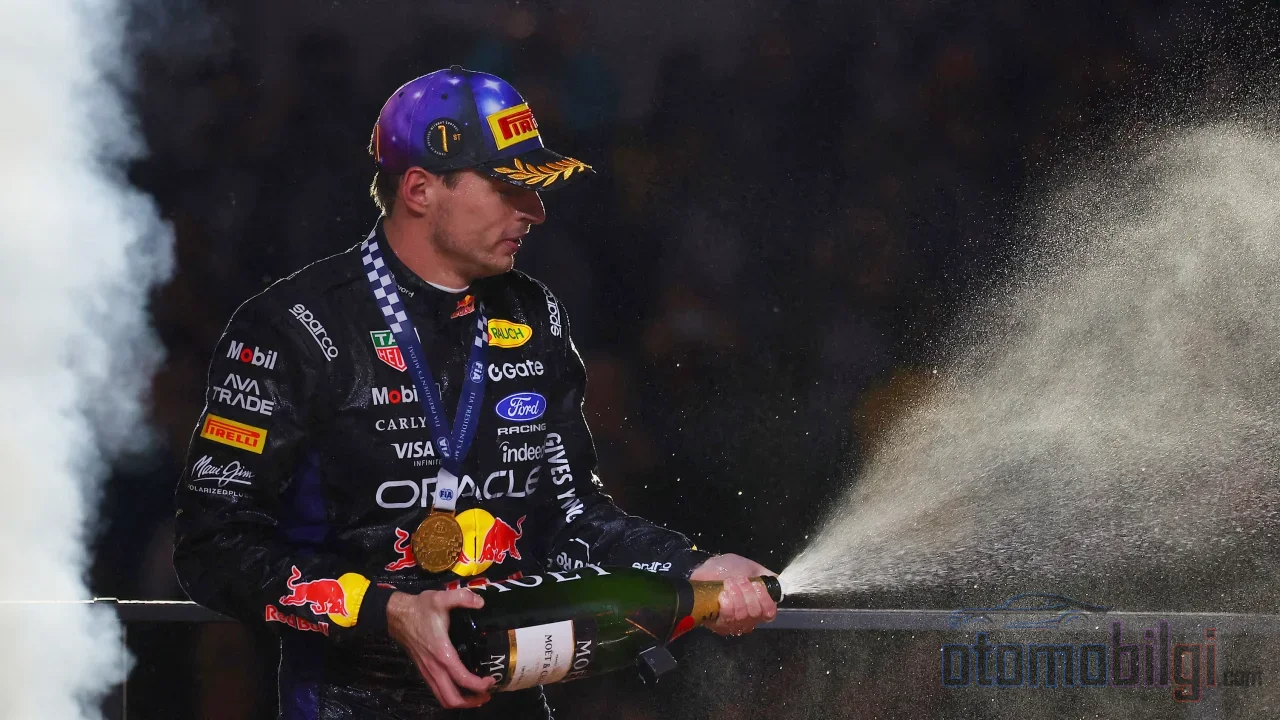
Before the race, the grid presented a picture quite different from the qualifying result. Kimi Antonelli was the fastest in the third practice session and had passed Russell to hold theoretical pole position; but the five-place penalty he received for an engine change dropped him to sixth. Thus the front row consisted of Red Bull's Verstappen and Mercedes' Russell.
It wasn't limited to penalties. Piastri fell from seventh to 17th with a power unit penalty, and Sainz, for a similar reason, dropped from 14th to 20th. Oliver Bearman took up position at the very back with a total of 35 places in penalties. Liam Lawson started from the pit lane due to a fuel leak, while Alexander Albon's Williams withdrew from the grid due to brake overheating. Albon wasn't the only one to miss the start; Sergio Perez, racing in the Chevrolet-powered Cadillac, also dropped out of the race.
34 Lead Changes: A Night Where the Slipstream Ruled
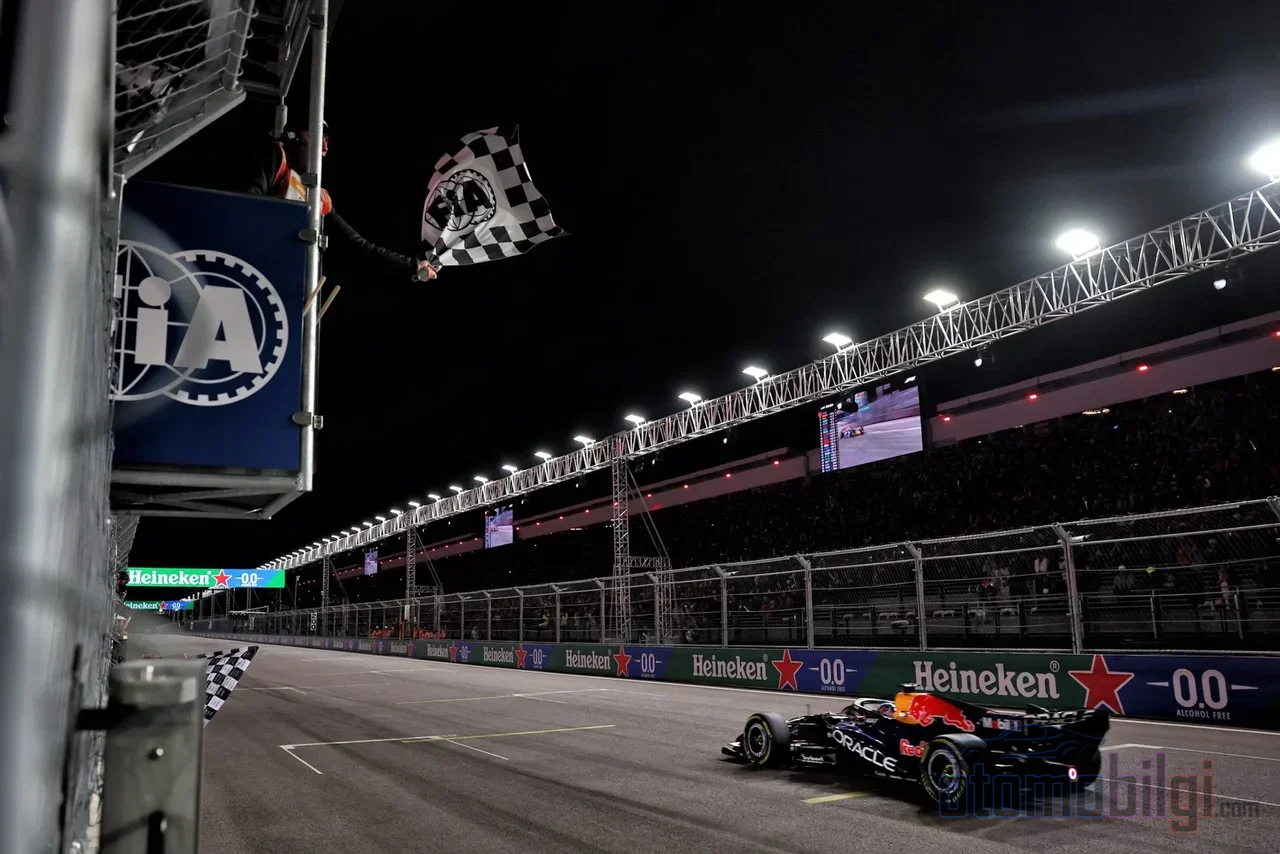
On the long straights of the Las Vegas Strip, the massive slipstream effect made it virtually impossible to break away from the car ahead. The first ten cars stayed connected to each other for most of the race, and at the finish the first five cars were within three seconds. According to the official FIA count there were 34 lead changes, 35 in different counts; both figures mean more than most of the other races of this season combined.
Verstappen said after the race that it was a race he had never seen before in Formula 1, and that the slipstream effect made escaping up front impossible. Red Bull even sent a question to race management about energy deployment; the team reported that there was no better strategy option. For those who have been watching this sport for 30 years, the picture was familiar: in the past the leader would break away, but now when DRS and the slipstream combine, the leader cannot escape. The result is a balance that is perfect for spectacle but grueling for the drivers.
The Turning Points of the Race, Lap by Lap
The opening laps delivered the message right from the start: Russell took the lead on lap 2, and Verstappen answered around the outside at the final corner of the same lap. Isack Hadjar passed Russell on lap 3 to move up into second. On lap 19, there was contact between Perez and Haas's Clement Novalak; Perez hit the wall and retired, and the Safety Car was deployed. The incident was referred to the stewards after the race.
Lewis Hamilton received a 10-second time penalty when he exceeded track limits in his battle with Norris; Ferrari delayed serving this penalty to avoid a double pit stop, and Hamilton reacted strongly to the decision over the radio. On lap 38, Scuderia's nightmare was complete: Charles Leclerc and Hamilton made contact at Turn 7, Hamilton spun and dropped to 10th, and Leclerc, deemed responsible for the collision, took a 10-second penalty and finished in 10th place.
The Psychological Battle Between Antonelli and Verstappen
In the closing stages, the race came down to the duel between Antonelli, who switched to soft tires, and Verstappen. The young Italian driver took the lead from the Dutchman repeatedly between laps 39 and he repeatedly took the lead from the Dutchman between laps; and Verstappen responded every time. Antonelli's troubles in the final laps dropped him behind the McLarens, and he had to settle for fourth. A young driver remaining this aggressive and consistent at the top once again showed that his championship season was no coincidence.
Russell's Crash on Lap 48: The Price of Risk
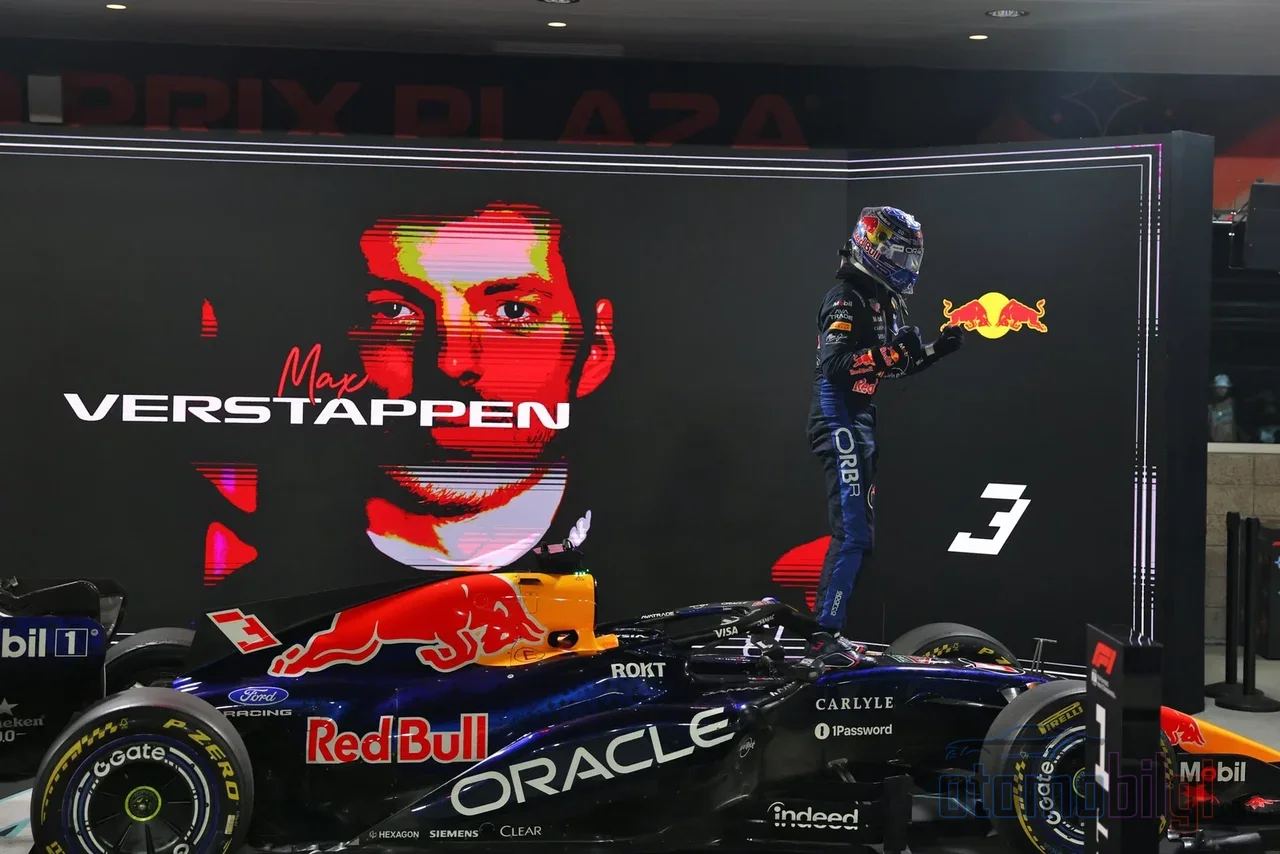
The most talked-about moment of the race came on lap 48. George Russell locked his brakes attempting to pass teammate Antonelli at Turn 5 and hit the wall. The British driver, who dropped down the order due to the damage, finished the race in ninth place.
In his assessment after the race, Russell admitted that the risk was high and that he had paid the price; but he also added that he had no regrets. According to him, the real determining factor was not engine energy deployment but the massive slipstream effect. Verstappen was reported to have given a mocking reaction to Russell's moment of error. From a sporting standpoint, Russell's choice was a defensible gamble; choosing not to pass while in the fight for the podium is rarely rewarded in this sport.
Where Has the Championship Race Ended Up?
In the drivers' standings, Antonelli has already secured the championship with 402 points. The remaining battle is over second place: Verstappen is on 304 points, Hamilton moved up to third with 267, Russell is fourth with 264, and Norris sits fifth, also on 264 points; the tie between the two is settled in the Brit's favor thanks to Russell's greater number of second-place finishes. Leclerc has 250 points, Piastri 167.
On the constructors' side, Mercedes extended its gap to Ferrari from 142 to 149 with 666 points; Ferrari is on 517, Red Bull on 440 points. McLaren's 431 points cut its gap to Red Bull for third place from 17 to 9 - this battle will carry over to the season finale. Racing Bulls-Ford trails with 114 points, Alpine-Mercedes with 87.
Las Vegas GP 2026 Result: Why Was the Chaos So Big?
In short: Max Verstappen won the 50-lap 2026 Las Vegas Grand Prix from pole position, taking the 75th victory of his career; Norris finished 0.639 seconds behind, Piastri 1.529 seconds behind. The race's near-record pace, with 34-35 lead changes, stemmed from the massive slipstream on the long straights making it impossible for the leader to defend; Russell's crash into the wall on lap 48 was the final act of the podium battle. The weather was dry and cool, while Thursday's heavy rain had passed without leaving a trace. Among those who failed to finish were Albon (did not start), Perez, Lindblad (spun under the Safety Car), and Alonso, who retired with one lap remaining. The fastest lap belonged to Liam Lawson on the final lap: 1:35.591.
Next Stop: Qatar
The season's penalty round continues with the Qatar Grand Prix, to be run at Lusail International Circuit on November 27-29. The championship is decided, but side battles such as second and third place among the constructors, as well as the Russell-Norris tie, have carried over to the final races. Before the Abu Dhabi finale, Qatar will be the stage where these battles are largely settled.