From Senna to Today: The Revolutions That Made F1 Safer
Share This Page
The death of Ayrton Senna at Imola in 1994 was the turning point that ended the era in which safety went unquestioned in Formula 1 history; since that day, the HANS device, carbon fiber monocoque, halo, and redesigned circuits have built an engineering revolution that has brought fatal accidents in the series close to zero. This article explains step by step which tragedy gave birth to which technology.
Highlights
- Senna on May 1, 1994 hit the wall at the Tamburello corner during the San Marino GP at a speed of 211 km/h .
- That same weekend, Roland Ratzenberger also lost his life in a crash at 314 km/h .
- The HANS device has been mandatory in F1 since 2003, while the halo has been mandatory since 2018.
- Jules Bianchi's 2014 Japanese GP crash is considered the main catalyst for the halo.
- The McLaren MP4/1 was the first F1 car to use a full carbon fiber monocoque in 1981.
Imola 1994: The Weekend That Changed Everything
Let me ask you a question: in a sport where the fastest machines on earth race, why was safety pushed aside for years? The answer is brutal: because everyone thinks "nothing will happen" until something bad does. The 1994 San Marino Grand Prix weekend became the place where that mindset in F1 was buried forever.
On Friday, Rubens Barrichello crashed at Variante Bassa at 225 km/h ; he broke his nose and arm but survived. In Saturday qualifying, Roland Ratzenberger hit the wall at the Villeneuve corner at 314 km/h and lost his life. On Sunday, while leading the race, Ayrton Senna crashed into the concrete barrier at the Tamburello corner. The telemetry data tells it all: he entered the corner at 309 km/h , downshifted twice, and hit the wall at 211 km/h . About 4.5 hours after the crash, he bid farewell to life at the hospital in Bologna.
Ratzenberger and Senna were the first fatal accidents in F1 since Riccardo Paletti, who died at the 1982 Canadian GP. And Senna's death became one of the most examined events in motorsport history. Italy's Court of Cassation explained the cause of the crash as a failure of the steering column; among the alternative theories is the drop in tire temperature and pressure due to the safety car being driven too slowly. Even today there is no complete consensus, but one thing is certain: after that weekend, F1 would never be the same again.
One more interesting detail: the safety car in that race was an Opel Vectra, and it was going very slowly because its brakes overheated. Think about how primitive that seems compared to today's sophisticated safety car protocols, and the picture completes itself in your mind.
The FIA's Response: A Safety Program Spread Across Years
Senna's death was not just a moment of mourning, but a moment for action. The FIA immediately launched a safety program, and that program worked step by step over the years. Here is a brief summary of those milestones:
| Year | Change |
|---|---|
| 1994 | Circuit and barrier changes |
| 1996 | Increased protection, safer circuits |
| 1997 | Medical improvements |
| 1998 | Roll hoop and driver extraction regulations |
| 1999+ | Ongoing continuous safety steps |
Beyond the list, tangible changes also came: improved crash barriers, redesigned circuits, tire barriers, higher cockpit rims and far stricter crash safety standards. Additionally, the GPDA, the Grand Prix Drivers' Association - the organization that serves as the drivers' own voice on safety - was re-established right after this trauma. In other words, the drivers would no longer remain silent.
Carbon Fiber Monocoque: The Driver's Survival Cell
Now let's turn to the car side. The carbon fiber monocoque is the silent hero of F1 safety. Let me make a simple analogy: in a normal car, the driver sits in a "room"; in F1, the driver lives inside a nearly indestructible shell that is one with the car. This shell, the "survival cell," is the last line of defense for driver safety.
McLaren took the first step: MP4/1 raced in 1981 as the first Formula 1 monocoque chassis built entirely from carbon fiber. Compared to aluminum, it offered roughly twice the torsional rigidity and a significant weight saving. So lighter, faster and stronger - three gains at once. In the years after Imola, this survival cell continued to evolve to withstand the most dramatic crashes. Think of those horrific accidents where drivers could walk away from the wreckage of their cars; that is the difference.
HANS Device: Keep Your Head with Your Body
HANS, the Head and Neck Support, is, as the name suggests, a head and neck protection device. It is worn over the shoulders, under the helmet straps, and works in connection with the helmet. By keeping the head aligned with the body in a crash, it largely eliminates the risk of fatal head injury. How? The weight of the helmet plus the sudden acceleration of the head puts an enormous load on the neck vessels and spine; HANS distributes this load through straps connecting the helmet to the shoulders. You can think of it as the head version of a seatbelt.
Now the part that may seem strange to you: the device was invented in the 1980s, but it took until 2003 for it to become mandatory in F1. Why did it take so long? Both the drivers' resistance and the fact that a design suitable for the series could only be developed by 1999 played a role. The sad irony is this: the basilar skull fracture that led to Ratzenberger's death was exactly the type of injury that HANS prevents. Sometimes the hardest part of a technology is not inventing it, but convincing everyone.
Circuits and Barriers: From Hay Bales to TecPro
The circuits are the most visual part of the story. Think of early F1 circuits: minimal run-off areas, unprotected edges, and on top of that, hay bales. Hay bales! You laugh reading this today, but back then they were placed to "cushion" impacts - until they were banned after a death.
After Senna's era, additional safety measures were implemented at the most dangerous corners and larger asphalt run-off areas were built. Monza is a fine example of this transformation: TecPro barriers were added to high-risk zones like Parabolica, gravel traps were updated, and the track was redesigned in 2010. Asphalt run-off areas largely replaced gravel traps; the logic is that a car that goes off track should decelerate gradually rather than maintaining its speed until the wall.
The safety car side also evolved. The safety car was first used at the 1973 Canadian GP but the real systematization came in the following years. According to today's rule, the safety car leaves the pit lane one minute before the first F1 car follows it - a direct answer to the slow Vectra problem of 1994.
Jules Bianchi and the Halo: The Birth of Cockpit Protection
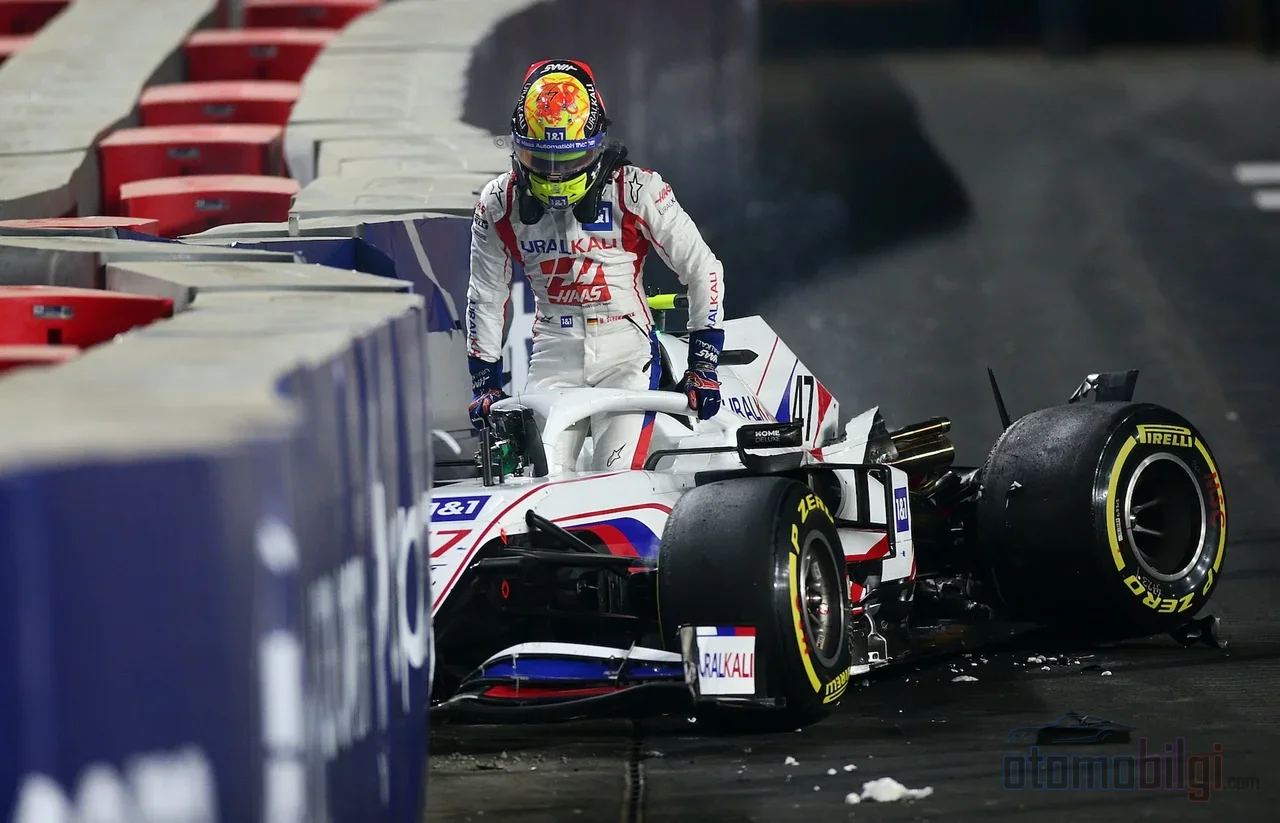
After Senna, F1 went 20 years without a fatal accident. Then came the 2014 Japanese GP. Jules Bianchi's crash made cockpit protection an F1 agenda item overnight; Bianchi lost his life in July 2015. Measures such as the Halo and Virtual Safety Car are associated with this crash.
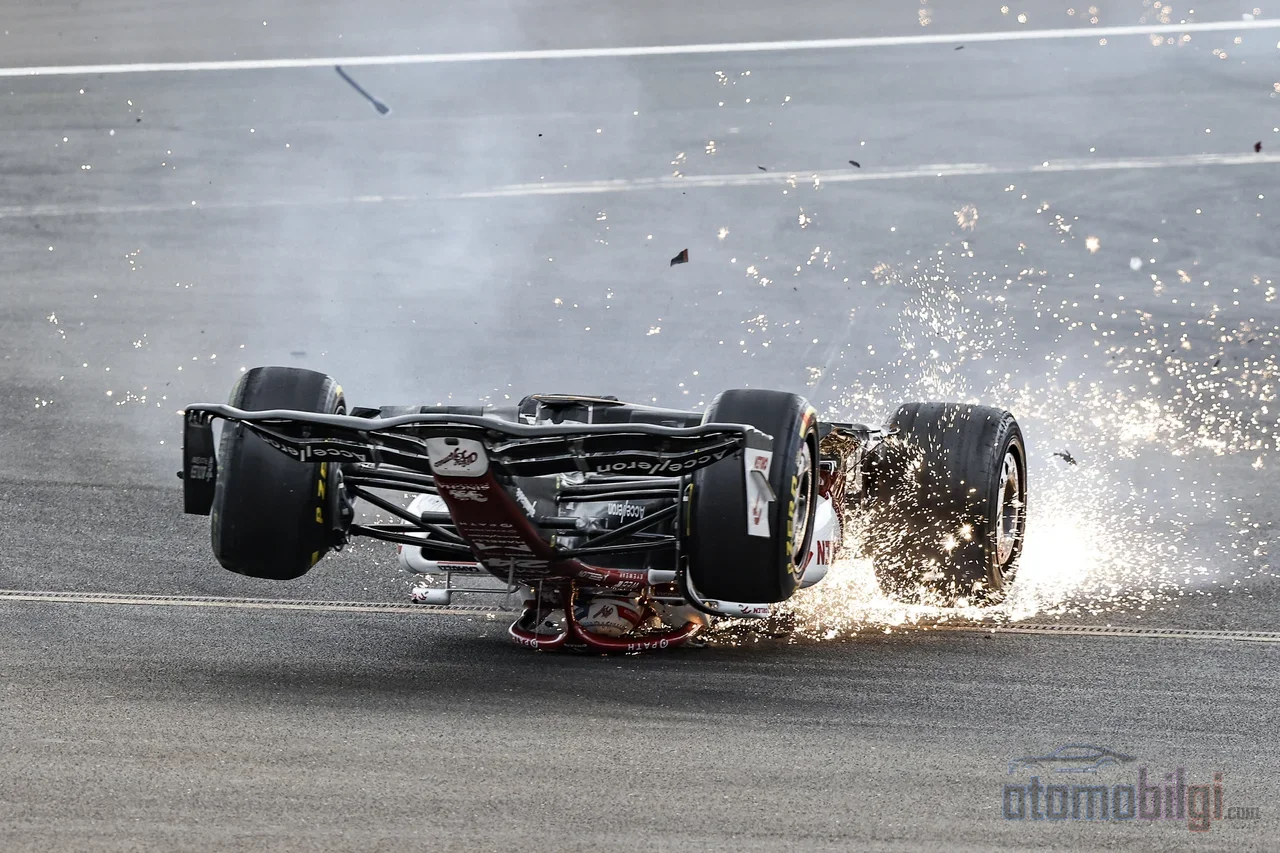
The Halo is a head protection device made of titanium - it stands over the cockpit like an angelic ring. Its purpose is to block flying debris heading toward the driver's head; it aims to prevent the kind of incident that claimed the life of Henry Surtees in a similar accident in 2009. Initial tests were conducted in 2016 and July 2017, and from the 2018 season onward it became mandatory in F1, as well as in F2 and F3. It sounds simple, doesn't it? Yet when it was introduced, it created serious aesthetic criticism among drivers and fans; it was said to change the appearance of the open-wheel tradition. It would not be wrong to say that in eight years, it has become an indispensable element of safety, enough to erase the aesthetic debates.
Safety improvement is an ongoing process.
There is also an emotional dimension. FIA President Jean Todt explicitly stated that the Bianchi crash inspired the creation of the halo. However, Bianchi's father expressed that he was not convinced, saying the halo did not go far enough. This reminds me of a truth: safety measures are not always perceived as "timely" and "sufficient"; the fact that the halo was not implemented immediately after Bianchi's death is still being debated.
Anthoine Hubert: How the Lessons of a Tragedy Were Used?
Unfortunately, the story did not end with Bianchi. Anthoine Hubert on 31 August 2019 lost his life in an F2 race at Spa-Francorchamps and the FIA immediately launched an investigation. The report's findings were striking: Hubert was traveling at 262 km/h and, missing his front wing, lost control and headed toward the barrier.
But it is precisely at this point that we see the system maturing. The FIA announced that the report's findings would be used to improve safety across all championships. Formula 1 also directly incorporated the lessons learned from the Hubert accident into 2020 Formula 1 car safety. In other words, an accident now happens, is investigated, and every lesson learned is written into the next season's regulations. This cycle itself is the greatest proof of the institutional will built after Senna.
From Senna to Today: Where Are We, Where Are We Going?
In 2024, on the 30th anniversary of Imola 1994, the FIA published an official "Legacy of Safety" retrospective; in 2025, Formula 1's official channels shared content describing the halo as "one of the greatest F1 safety innovations." So this story is no longer just a memorial, but a continuously updated safety philosophy.
What impresses me most is this: no safety innovation was sufficient on its own. The carbon fiber monocoque absorbed the impact, the HANS protected the head, the halo built a wall against debris, tracks reduced the likelihood of a crash, and medical protocols increased the chances of survival. Each was added on top of the others to create a layered defense system. Senna's tragedy was the most painful link in this chain, but his legacy is that enormous accumulation of engineering and institutional perseverance that makes it possible for every driver racing on the grid today to survive. The next time you see a driver walk away from an F1 crash, remember that it is no coincidence: that moment is the product of thirty years of lessons.
Sources
- Death of Ayrton Senna
- Legacy of Safety – How the FIA responded to the tragedy of Imola 1994
- HANS device
- 5 crucial milestone moments in F1 safety technology
- History of safety devices in Formula 1: The halo, barriers & more
- Halo (safety device)
- Jules Bianchi's father left unconvinced by Halo safety device
- Discover the vital role carbon fibre plays in F1 car construction
- FIA concludes investigation into fatal Formula 2 accident in Belgium
- Ayrton Senna: 30 years of F1 safety improvements
- All about the F1 safety car
- Evolution of circuit safety – Monza Net
- The Halo System at the Center of Controversy in F1