McLaren 750S's Farewell: Moving from V8 to the Hybrid Era
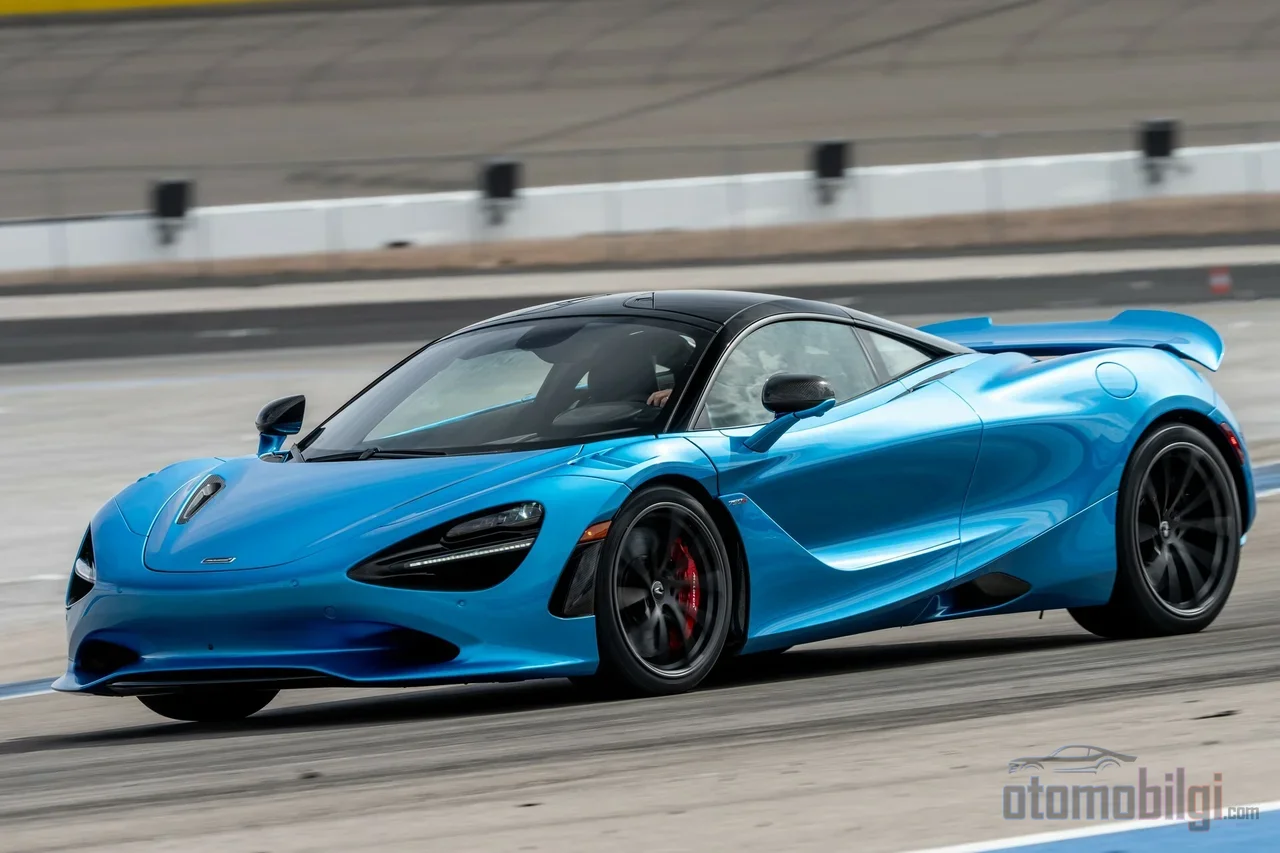
McLaren officially announced on October 7, 2026 750S that final orders are being taken and production will end within 2027. This marks the farewell of the brand's last pure V8 supercar: a 4.0-liter twin-turbo V8 with a 1,277 kg dry weight, closing the chapter on a model that has redefined the balance of lightness and power for a decade. It will be succeeded by an era carried by a hybrid V8 derived from the McLaren W1 hypercar and, according to reports, a new mid-range model with a hybrid V6.
Highlights
- 750S production will end within 2027; final orders are currently open. will end within 2027; final orders are currently open.
- 4.0-liter twin-turbo V8: 740 hp, 800 Nm, dry weight 1,277 kg.
- Final limited version 788HS: only 200 units, 777 hp.
- The successor, coded P34, is reported to arrive with a hybrid V6; no official confirmation yet.
- The W1's MHP-8 hybrid V8 produces 1,275 PS and will live on in future models.
When Will the 750S Go Out of Production?
The question can be answered briefly: production ends within 2027. McLaren has confirmed that final orders are now being taken and the order books are still open. However, the Woking-based company did not disclose the exact end date of production or the number of final units to be built. In other words, a buyer who wants a 750S can still join the queue; but only the factory walls will know where that queue closes.
The company's chief commercial officer Henrik Wilhelmsmeyer stamped the announcement with these words: "The 750S represents everything that defines a McLaren supercar... It will leave an extraordinary legacy." A measured farewell sentence, but behind it stands a performance record that needs no exaggeration.
The Technical Identity of the 750S: Why Is It Such a Special Farewell?
What makes the 750S valuable is not just the magnitude of the numbers, but the ratio of the numbers to each other. The 4.0-liter twin-turbo V8 produces 740 hp (750 PS) of power and 800 Nm of torque; the power goes directly to the rear wheels through a seven-speed dual-clutch transmission. Dry weight: 1,277 kg. The number of contemporary supercars that can bring these three values together in a single sentence is quite small, and it is precisely for this reason that the model was considered the purest expression of McLaren's formula for a decade.
Introduced for the 2024 model year, the car contained about 30% new parts compared to its predecessor, the 720S; it was 30 kg lighter and 30 hp more powerful. Its lineage extends back to the 720S, introduced at the 2017 Geneva Motor Show, and through it to the 650S; the 720S also formed the basis of the 765LT. This line closes roughly a decade-long era of McLaren V8 supercars.
On the performance side, too, the truth rests on measurement, not showmanship: in an independent test, the 750S completed its 0-60 mph acceleration in 2.3 seconds , making it the fastest rear-wheel-drive car that agency had ever measured - the Corvette ZR1 later took the record, but that detail does not diminish the 750S's value; it simply shows the era is accelerating. The starting price was 365,100 USD .
| Feature | 750S | 788HS |
|---|---|---|
| Engine | 4.0 L twin-turbo V8 | 4.0 L twin-turbo V8 |
| Power | 740 hp (750 PS) | 777 hp |
| Torque | 800 Nm | 800 Nm |
| Production run | Not limited (ending in 2027) | 200 units |
| Debut | 2024 model year | July 2026 |
The crowning point of the farewell program is the 788HS: a final version unveiled in July 2026 with F1-inspired aerodynamic solutions and lightweight components, limited to just 200 units . I have been watching these kinds of farewell models for years; I know they appeal less to performance differences and more to collectors who want to take home the last example of a formula.
Who Will Be the Successor: The Hybrid V6 P34 or a W1-Derived V8?
Things here are a bit murkier than the industry is used to. Two scenarios are on the table, and McLaren has not yet officially announced a preference between the two.
The P34 scenario
With the 750S and the Artura, which will be phased out in 2028, being replaced by a single model known internally by the code P34 . This car is reported to draw power from the newly developed twin-turbo hybrid V6 , offering more power and torque than the 750S but inevitably being heavier. In addition, reports are circulating that the mid-engined coupe expected to be unveiled next year will have a ~810 hp hybrid V6 and will be priced at around ~USD 315,000 - none of this is officially confirmed, it all stands in the "according to reports" column.
The W1-derived hybrid V8 scenario
The other possibility is carrying over the engine that debuted in the W1 hypercar into the future. The all-new 4.0-liter twin-turbo V8 and hybrid system in the W1, called MHP-8 , produce a total of 1,275 PS (1,258 hp) and 1,340 Nm of torque; the V8 alone develops 916 hp and revs up to 9,200 rpm. McLaren has confirmed that the W1's V8 will live on in future supercars; while no specific model has been given, the most natural candidate is the 750S's successor. So the scenario of a turbocharged V8 meeting electricity is not a fantasy - it is a direction indicated by the brand itself; which model and in which configuration it will arrive has not yet been announced.
The successor question used to be simple: same engine, a bit more power, a bit less weight. Now every line from the engine's cylinder count to the amount of electric assistance is discussed on a plane of speculation. This uncertainty is the nature of today's industry.
The End of the Pure V8? The Industry's Electrification Wave
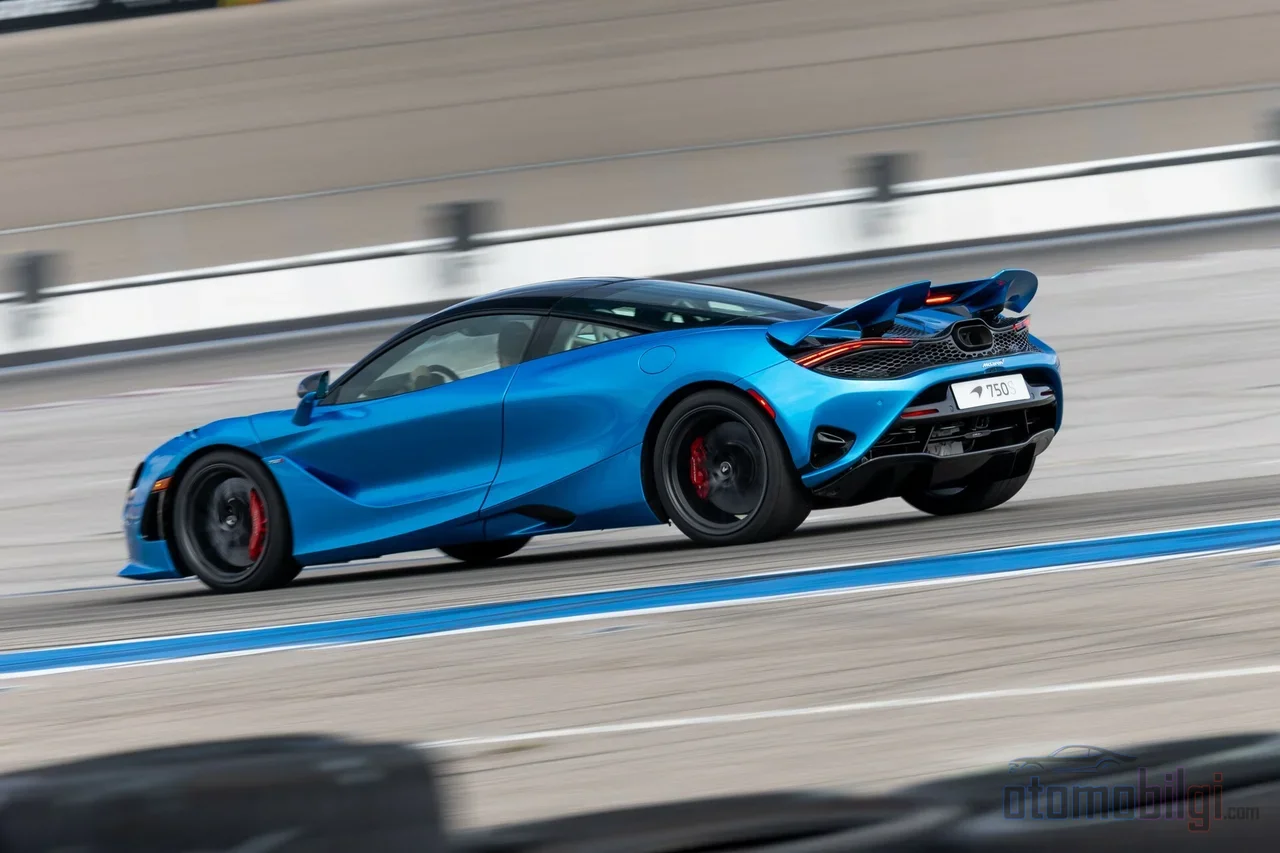
The 750S's farewell is less a decision belonging to McLaren alone and more a cross-section of the transformation the industry is going through. The Maranello and Sant'Agata rivals are already walking the same path: while the Ferrari 296 GTB has moved to a hybrid V6, the Lamborghini Temerario 920 hp became the Huracán's successor with a hybrid V8 producing power; the Italians are also keeping their V12s alive with the help of hybridization - the Revuelto's 6.5-liter plug-in hybrid V12 is a good example of this. So McLaren's transition is not an exceptional deviation from where the electrification wave is heading - it is the wave itself.
This context also clarifies the value of the 750S: while its rivals went hybrid and gained weight, it managed to remain an exception for several years as the last pure V8 supercar left standing. On the other hand, the same car's foundations date back almost a decade; rivals have moved on to solutions that are both more powerful and more environmentally rational. This tension between nostalgia and progress is the real story beneath the farewell news.
Is the 750S Still Available to Buy? The Current Situation for Buyers
Yes - the order books are open right now. However, two pragmatic facts are worth noting: since the number of final units to be produced has not been announced, no one can say for certain how much time remains, and limited versions like the 788HS close quickly during such wind-down periods. According to experience with such events, anyone wanting to get in line as the 2027 end of production approaches should not wait for an official cut-off date.
From a collector's perspective, the "last pure V8" attribute has not been manufactured as a long-term value element; but historical precedents show that models which close out a brand's engine philosophy create their own story over time. There is no guarantee of that - no value is guaranteed - but the floor is holding firm.
The Bigger Picture: McLaren's Product Plan Extending to 2028
The 750S's farewell is not meaningful on its own, but within a broader product strategy. McLaren is reported to launch a new model every year until 2028, with its first four-door hybrid V8 SUV arriving on the roads before 2028. The Artura's withdrawal from production in 2028 also appears to be part of this schedule. The supercar maker's expansion of its lineup toward SUVs and hybrid architectures speaks well to the scale of the change when compared with the clear and narrowly focused nature of the era that a car like the 750S is completing.
This entire plan does not yet rest on detailed official confirmation; however, its general outlines form a coherent whole consistent with the technology infrastructure demonstrated in the W1 and the two scenarios regarding its successor. The first statement clarifying which engine McLaren assigns to which model in the coming period will define both the identity of the successor and the brand's decade-long future at the same time.
Conclusion: The Closing of an Era and the Next Page
The 750S, in bidding farewell, does exactly what is expected of it: with its dry weight, its pure V8, and its test-verified acceleration record, it leaves a reference for how a supercar looked at the threshold of the hybrid era. Its successor, the P34, will be more powerful but heavier; the W1's MHP-8 hybrid V8 will most likely define McLaren's engine identity for the coming decade. In the past, such transitions were summarized by a difference in cylinder count; today, the definition itself is changing. We will continue to follow it closely.
Sources
- McLaren W1 - McLaren.com
- Thanks for the Memories! The McLaren 750S Is Heading to the Supercar Graveyard in 2027 - Car and Driver
- McLaren Confirms It'll Kill Off The Fabulous 750S In 2027 - Carscoops
- McLaren, UK, to end production of 750S in 2027 - MarkLines
- The McLaren W1's New V-8 Will Live on in Future Supercars - Road and Track
- The 750S Is McLaren's Last Pure V8 Supercar - RoadEthos
- Ferrari, Lamborghini keep V-12s alive with hybridization help - Automotive News