What Is Wheel Offset (ET) and What Happens If It's Chosen Incorrectly?
Share This Page
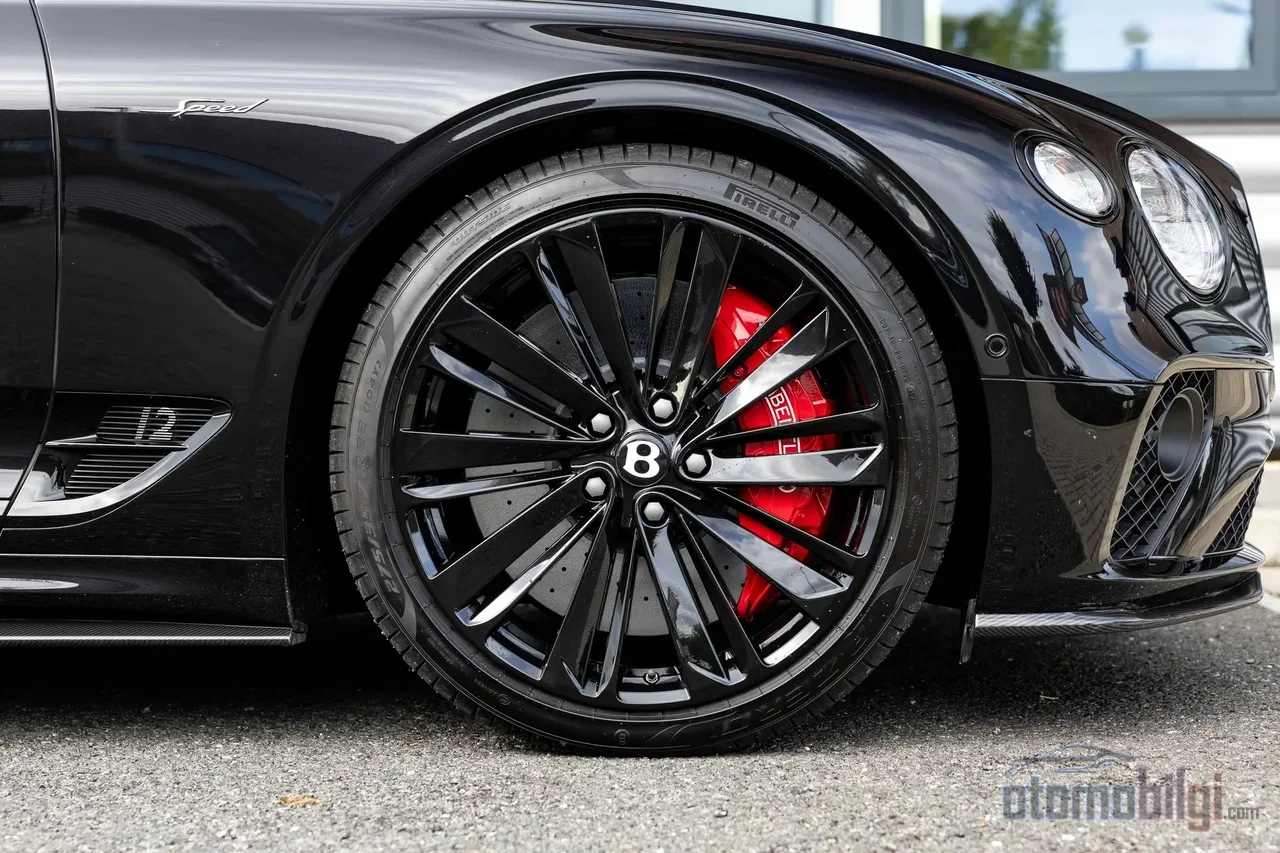
Wheel offset, or the ET value, is the distance in millimeters between the wheel's hub mounting surface and the wheel's geometric centerline, and it determines whether the wheel will sit inward or outward relative to the body. A deviation from the factory value can cause a range of problems, from premature wear in suspension components to fender contact and bearing damage. Knowing the correct offset is the most critical step when buying aftermarket wheels.
Highlights
- The abbreviation ET comes from the German term Einpresstiefe, meaning insertion depth.
- Manufacturers generally allow variation of up to 2% in track width.
- A wheel marked ET35 has its mounting surface 35 mm outward from the centerline.
- At the same ET, if width increases by 1 inch, the wheel extends by approximately 12.7 mm in both directions.
- On lowered vehicles, even an offset error of 5-10 mm can cause rubbing.
What Exactly Does the ET Value Measure?
When wheels are mentioned, most people think of diameter and width; yet the number that truly determines the wheel's relationship with the body is the ET. In short, it expresses in millimeters the distance between the mounting surface that sits on the hub and the centerline passing through the exact middle of the wheel barrel. If this surface is on the outer side of the centerline, the offset is positive; if exactly on it, zero; if behind it, negative.
The abbreviation itself also has a technical history: ET comes from the German term Einpresstiefe, meaning insertion depth, and it has been used as the standard measurement unit in the industry for many years. This value, once rarely explained even in catalogs, is today the first check item in every serious wheel purchase.
Finding the value is not difficult either. The ET is stamped or etched on the inner part of the wheel, on the inner face of the barrel; it is written together with the width and diameter. For example, the marking 8Jx18 ET35 means a wheel that is 8 inches wide, 18 inches in diameter, with an offset of 35 millimeters. If the stamp cannot be read, you should consult the vehicle manual or wheel fitment databases.
What Do Positive, Negative and Zero Offset Mean?
Positive offset
If the mounting surface is close to the outer face of the wheel, the offset is positive and the wheel sits tucked into the fender. In most modern vehicles, especially front-wheel-drive ones, values typically in the ET35 to ET55 range are used. This is the quiet and predictable side of factory production.
Negative offset
When the mounting surface falls behind the centerline, the wheel is pushed outward. The wide stance and deep dish look arise exactly from this. It is common in off-road vehicles, wide-body applications and preferences for deep-lipped wheels; many love the look, but the price is the mechanical effects I will describe below.
Zero offset
The mounting surface is exactly on the centerline. It is rarely seen in modern passenger cars; it appears more in older and special applications. The table below summarizes the three types side by side.
| Offset type | Location of the mounting surface | Position of the wheel | Typical use |
|---|---|---|---|
| Positive | Outside the centerline | Tucked into the body | Modern vehicles, most front-wheel drive models (ET35-ET55) |
| Zero | Exactly on the centerline | Neutral | Older and special applications |
| Negative | Behind the centerline | Protruding outward, deep dish | Off-road, wide body, deep-lip wheels |
How Does the Wheel's Position Shift When ET Changes?
The relationship is simple: As ET decreases, the wheel protrudes outward from the body; as ET increases, it sits deeper inside the body. The mounting surface of a wheel marked ET35 sits 35 mm outward from the centerline; the ET40 version of the same wheel sits 5 mm further in. Five millimeters seems insignificant on paper, but on a vehicle with low-profile tires or a lowered suspension, the clearances are already tight, and those five millimeters can be enough for the tire to rub against the fender at full steering lock. In this sense, ET40 is the more cautious choice.
The role of width should not be overlooked either. At the same ET, when you increase the width by 1 inch, the wheel extends about 12.7 mm both inward and outward. So a 9-inch wheel labeled ET30 protrudes noticeably more than a 6-inch wheel labeled ET30; 18x8.5 ET35 and 18x10 ET35 do not sit the same way. A wider wheel grows in both directions at once: inner clearance decreases while outer protrusion increases. Going from ET45 to ET30, on the other hand, shifts the mounting relationship 15 mm outward without any change in width.
The Price of Deviating from the Factory Value: What Does the Wrong Offset Do?
Load on the suspension and bearings
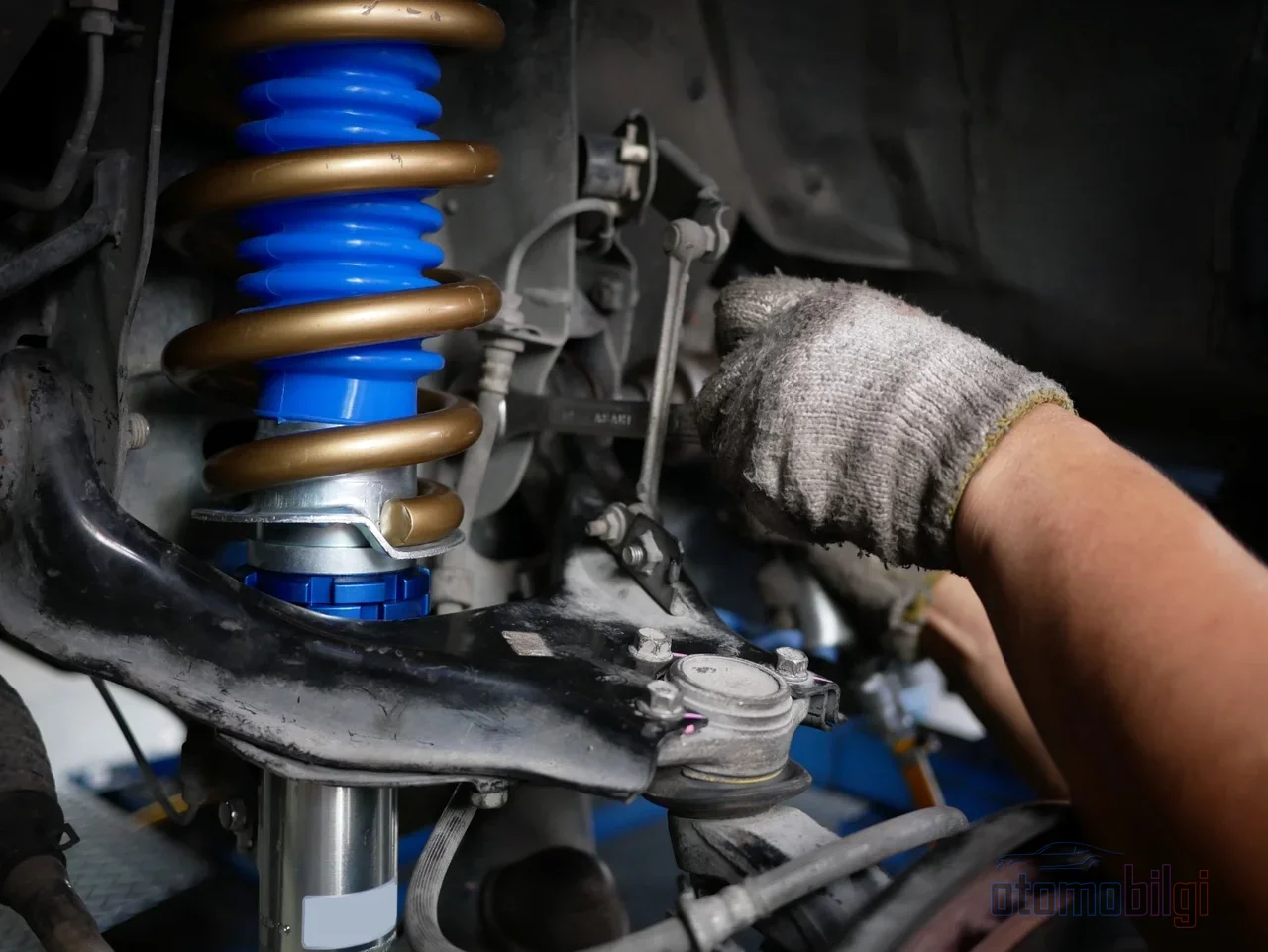
The factory offset is engineered to determine how the load will be distributed on the wheel bearing. When the offset decreases, the load shifts to the outer side of the bearing; when it increases, to the inner side. This shift causes early wear in ball joints and hub bearings; suspension components and other connecting parts also have to carry more load than normal. Additionally, when the wheel moves outward, the track width grows, which creates more leverage on the steering and accelerates the wear of semi-floating type bearings. It is difficult to give a definitive, universally applicable number about the magnitude of this effect; but it is mechanically clear that the load distribution changes and that this shortens part life in the long run.
Tire, body and brake contact
When the offset is very low, meaning close to negative, the tires can rub against the fenders; moments where full steering lock coincides with full suspension compression are the situations where this rubbing is most likely to occur. At the other extreme, when the positive offset increases too much, a risk of contact arises between the brake caliper and the inner face of the wheel.
Driving behavior and safety
Wrong offset is not merely an aesthetic matter. Steering kickback, degraded road holding and stability, premature tire wear, and loss of braking effectiveness are among its known consequences. A changed scrub radius, meaning the shift of the point where the wheel's rotation axis intersects the road, disrupts steering feel and front-end geometry. Excessively positive or negative offset can damage the vehicle at high speeds and, in the worst case, result in a tire blowout. An impact on fuel consumption can also be added to this; it is accepted to affect consumption indirectly through changes in track width and rolling resistance, although solid and direct measurement data on this is limited.
How Much Deviation Is Acceptable?
Manufacturers generally allow up to a 2% change in track width. To illustrate, on a vehicle with a 160 cm axle distance the acceptable change amounts to 3.2 cm; as long as the wheel width and tire size remain the same, this means a maximum offset change of 16 mm per axle. On a vehicle with a 180 cm axle distance, the limit rises to 3.6 cm, or 18 mm per side.
Let's give a practical example: if we include a 16-inch / 7.5J ET35 alternative for a vehicle with a factory size of 15-inch diameter, 6-inch width, and ET45, the width increases by approximately 28.75 mm. Since the acceptable front track increase on that axle is 14.8 mm, these wheels are not recommended. There is also a concrete conversion formula: when switching from a steel wheel to an alloy wheel, the new ET is found by subtracting the steel wheel width from the new width, multiplying by 25, dividing by two, and adding the steel wheel's ET. One final note: the material, whether steel or alloy, has no effect on the ET; the position must remain the same. Only steel wheels are generally narrower and require calculation when switching.
How Do You Find the Correct Offset When Buying Aftermarket Wheels?
Over the years, the aftermarket wheel market has grown enormously; users who once had to settle for factory options now choose from among hundreds of designs. This abundance is nice, but it has also left offset checking to the user's responsibility. The basic points to check before purchase are as follows:
- Read the ET, width, and diameter stamp on the inside of the wheel.
- Find out the factory offset from the vehicle's manual.
- Use fitment databases and offset calculators.
- Verify the bolt pattern (PCD) and center bore.
- Check that the load rating is suitable for your vehicle.
- Before installation, check for clearances by hand at full steering lock and full suspension travel.
If you need to measure the bolt pattern, the formula is ready: on four-bolt wheels, the distance between two bolt centers is divided by 0.7071, on five-bolt wheels by 0.5878, and on six-bolt wheels by 0.5 to find the PCD.
Are backspacing and offset the same thing?
No, and this distinction is often confused. Backspacing measures the same concept from the wheel's rear lip; two wheels with the same backspacing can have different offsets, and vice versa. As backspacing decreases, outward protrusion increases. You can convert between the two with the following formula: the offset is found by subtracting half the total width from the backspacing.
Can an offset error be corrected?
Partially, yes. To correct a very positive ET outward, a hubcentric spacer plate of the correct thickness can be used; in this case, an extended bolt is also required. For example, a 5 mm spacer positions an ET35 wheel exactly as if it were ET40. But a spacer is a solution tool, not a casual gap-filling method; it must always be installed together with a clearance check.
Is Offset Alone Enough?
No. ET alone does not indicate compatibility; width, tire shoulder structure, brake package, hub bore, and load rating must all be checked together. Also, two tires with the same printed size can have different shoulder heights; meaning the tire's measurement on paper may not exactly match the actual area it occupies in the wheel arch. It should also be added that a small offset deviation is normal in the aftermarket; the real limit is where the wheel arch-suspension-brake trio makes contact. The generalization that a change of around +/− 15 mm can easily be made is also incorrect; every vehicle and wheel combination is calculated separately with its own values.
The Bottom Line
Offset is the least glamorous but most consequential parameter of wheel selection. A wheel that sticks outward for looks affects everything from your bearings to steering feel; while a wheel that sits too deep into the body fights with the brake caliper. Learn the factory ET, compare the new wheel's dimensions with a scrub radius calculation, and personally check the clearances before installation. These three steps are the cheapest way to prevent expensive mechanical surprises.
Sources
- Wheel Width and Offset (ET) Explained
- Wheel ET Explained: Ultimate Guide to Perfect Fitment
- Wheel Offset Explained | ET, Width, Poke & Fitment Guide
- What is wheel offset, ET and PCD?
- Understanding Wheel Offset and Backspacing
- Aftermarket Wheel Fitment: 7 Specs You Can't Get Wrong
- What are the Potential Problems with Incorrect Wheel Offset?
- Understanding Wheel Offset
- Understanding Wheel Offset: A Guide to Fitment, Performance