Can You Use Different Tires on One Axle?

Share This Page
Short answer: Using different tires on the same axle is a safety risk, and nearly all manufacturers do not allow it. The two tires on the same axle must be exactly the same size; ideally they should be the same brand, the same tread pattern, the same load index and speed rating. In some cases - especially when replacement is unavoidable due to a spare or budget constraint - tires of different brands may be acceptable, but still only on the condition that they are fitted in identical pairs on the same axle.
Highlights
- On the same axle using different sized tires disrupts vehicle balance, steering response and braking.
- Even in an unavoidable brand mix, the tires must be fitted in pairs on the same axle.
- In all-wheel drive vehicles, matching of all four tires is essential; the front-to-rear circumference difference should be at most 1% .
- Winter tires with summer/all-season tires, and run-flat with regular tires must never be mixed.
- The legal tread depth limit is 2/32 inch (1.6 mm); experts recommend replacing at the 4/32 inch (3.2 mm)
level.
Can Different Tires Be Used on the Same Axle? The Manufacturers' Basic Rule| Here is what someone who has been following this business for over thirty years can say clearly: tire manufacturers do not like tire mixing at all. The industry's general attitude is that all four wheel positions should have tires of the same brand, same size, same tread pattern, same load index and same speed rating. This is not a technical subtlety but a simple matter of physics: tires of different construction exhibit different grip and behavior, and if the vehicle has to operate with two different characters on a single axle, it gives unpredictable responses in corners, under braking, or on wet surfaces.
The legal dimension is also part of it. In many countries, it is mandatory that tires at least comply with the size, load index and speed rating recommendations specified by the vehicle manufacturer. Setting off with a tire below or outside these thresholds puts not only the driver but everyone on the road at risk. In the old days, the tire fitter would choose the tire by eye; now no one should put a tire on the rack without reading the size, load and speed codes.
The safest and simplest rule comes from this simplicity itself: do not mix sizes. Matching of all four positions gives consistent grip, braking and vehicle character.
Can Tires of Different Brands Be Used on the Same Vehicle?
The pragmatic side is not entirely absent. Due to a spare or budget constraint, replacing all four tires at once may not always be possible; anyone who has been through the grind of this business has experienced this situation at least once in their life. In such cases, a mix of brands and patterns is considered acceptable - but with one strict condition: two identical tires must be fitted on the same axle. In other words, if the two rear tires are to be replaced, both must be of the same brand and pattern; the front ones must also remain the same among themselves.
On front-wheel drive or rear-wheel drive vehicles, the axle-matching method is widely accepted on this axis; however, it is still not recommended for optimum performance. There is also the matter of load index and speed rating: tire manufacturers state that tires of different classes can be used together, provided that these values are above the minimum threshold recommended by the vehicle manufacturer. In this case, tires of the higher class should be fitted to the rear axle .
Tread Depth Difference: Can a New Tire Be Used Together with a Worn Tire?
Mixing different tread depths is a more tolerated situation compared to mixing brands. The industry's general recommendation is that if only two tires are being replaced, the new tires should be fitted to the rear axle. The rationale is concrete: giving the rear axle more grip reduces the risk of oversteer, meaning excessive rotation on slippery surfaces, and loss of stability. Since front tires usually wear out faster, this recommendation also goes against the intuition of drivers who want to fit the new tires here - but putting them on the rear preserves the vehicle's balance.
Still, there is an exception: some vehicle manufacturers, especially for front-wheel drive models, may recommend fitting the new tires to the front axle. There is no alternative but to learn the vehicle-specific recommendation from the owner's manual. It is also necessary to be cautious about replacing a single tire; fitting a completely different model alongside the three matching tires can damage the drivetrain and may cause the vehicle to behave differently on different sides. Therefore, tires should be replaced in pairs on the same axle.
When does tread depth reach the replacement limit?
There are clear figures regarding the replacement threshold. In the USA, the legal safety standard requires a tread depth of at least 2/32 inch ; this equals approximately 1.6 mm and is exactly the depth of the wear indicator bars. For measurement, the indicator bars or a simple depth gauge are sufficient; if the gauge reads 2/32 inch or below, the tire must be replaced without delay. If the wear bar at even a single point on a tire has reached tread level, the tire should be replaced even if there is more depth elsewhere.
So when should replacement be considered? Guides recommend considering replacement when the tires reach 4/32 inch (3.2 mm) ; braking distance on wet surfaces increases noticeably in this range. A practical measurement method is the quarter coin: if a distinct detail of the coin is aligned with the tread, approximately 4/32 inch of tread remains.
Why Is Tire Matching Mandatory in All-Wheel Drive Vehicles?
All-wheel drive vehicles are the ones bound by the strictest rule in this regard: all four tires must be matched. The reason lies in the architecture of the drivetrain. AWD systems continuously monitor the rotational speed between the front and rear axles, and if there is a difference between the tire diameters, the system constantly detects a mismatch. The widely accepted threshold is that the difference between front and rear tire diameters should not exceed 1% . A difference exceeding this threshold can damage the drivetrain over time.
The picture is similar for commercial vehicles: a tire mismatch can cause the vehicle to behave differently on different sides, loss of control, and ultimately accidents. If you drive an all-wheel-drive vehicle, plan your budget for four tires; a rescue strategy with two tires does not work on these vehicles.
Which Combinations Are Absolutely Risky?
Some mismatches are not even up for debate; they are strictly forbidden. At the top of the list is using winter tires together with summer or all-season tires. A vehicle with winter tires on one axle and summer tires on the other carries two different characters when braking and cornering; this can disrupt the consistent operation of the braking systems and lead to a loss of braking power. Mixing winter tires with summer or all-season tires also impairs the vehicle's traction and performance.
The second absolute prohibition is mixing run-flat tires with non-run-flat ones. The sidewalls and behavior of the two tire types are so different that even working together on the same axle creates an unpredictable response. The third issue follows similar logic: driving with tires that are good at the front and worn at the rear - or vice versa - carries a risk of unpredictable behavior, especially in wet or emergency situations. A small difference in wear is acceptable; if the difference is large, you must not set off without matching the tires.
Different Sizes Front and Rear: When Is a Staggered Setup Not a Problem?
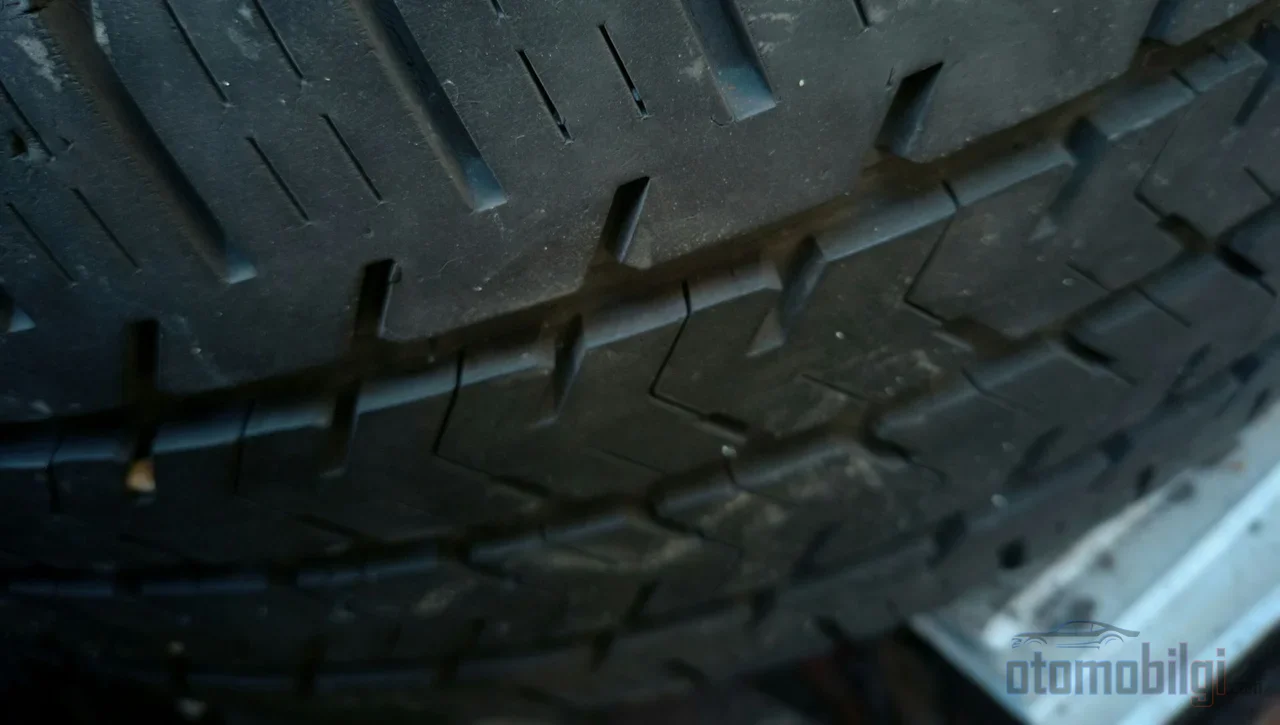
Using different tire sizes on the front and rear axles is not wrong in every case; if the vehicle was designed for such a setup, there is no problem. This arrangement staggered fitment is called, and it typically means wider tires at the rear; for example, 245 mm width at the front and 275 mm at the rear. Sports cars prefer this structure to provide better traction; an example setup could consist of 275/35/R19 at the front and 285/30/R20 at the rear. Different wheel diameters are not a requirement either; a front-to-rear width difference on the same wheel diameter also counts as staggered.
The distinction here is important: some vehicles come from the factory with different front-rear tire sizes, and this is a manufacturer-approved, vehicle-specific setup. When replacement time comes, the manufacturer's recommendations must always be followed. However, fitting different sizes at will on a vehicle whose factory setup is not staggered is not recommended; the vehicle's balance, brake distribution, and safety systems are built on those assumptions.
A Practical Decision Guide When Buying Tires
One of the questions I hear most often over the years is this: I have a tire replacement need, I cannot replace all four, what should I do? Summarizing the answer as a table is useful:
| Situation | What should be done |
|---|---|
| One tire worn | Ideally replace in pairs on the same axle; with a single replacement, match the new tire to the existing ones in size, speed rating, and a similar wear level |
| Two tires to be replaced | New tires go on the rear axle; if there is a vehicle-specific recommendation, consult the manual |
| Different brand unavoidable | The same brand/pattern must be paired on the same axle; tires with higher ratings go on the rear |
| All-wheel-drive vehicle | All four tires must match; the front-to-rear diameter difference should not exceed 1% |
| Winter + summer/all-season | Absolutely must not be mixed |
| Run-flat + normal tires | Absolutely must not be mixed |
There is also a frequently asked question: can you drive a short distance with three winter tires and one summer tire? The short answer is no. Even a single tire of a different type is enough to make one corner of the vehicle behave differently, especially on wet or snowy surfaces; braking and steering balance are disrupted by this single difference.
As a final word, let me say this: the dashboard for tire selection is simple. First, look at the size, load index, and speed class recommended by the vehicle manufacturer; then check the brand, pattern, and tread depth of your current tires. If mixing is unavoidable, pair them on the same axle, consider replacing all four on all-wheel-drive vehicles, and plan to replace tires with tread depth approaching 4/32 inch without delay. These few measurements are what make a difference in road grip.
Sources
- Mixing tires - Continental Tires
- Mixing Tires: Safety, Winter Tires & AWD - Michelin USA
- Mixing Car Tire Sizes - BF Goodrich
- Is It Ok To Mix Tires? - General Tire
- Tire Replacement Guide - Bridgestone Americas
- How to Know When to Replace Your Tires - Consumer Reports
- Tire Mixing Basics - Discount Tire
- Staggered Fitment Pros and Cons - Discount Tire
- Should You be Mixing Tire (Brands) on the Same Vehicle? - Priority Tire
- Is It OK to Mismatch Tires? - TireAgent
- Staggered Wheels Setup - Forgeline Wheels
- Different tire sizes on front and rear? - CarTalk Community