Are Wider Tires Really Better? The Pros and Cons of Width
Share This Page
A wider tire is not better in every condition; it improves grip, braking, and stability on dry ground and at high speed, but raises fuel consumption and noise, can reduce comfort, and performs worse than a narrow tire especially on loose and slushy snow. The right width is found where the vehicle's manufacturer-approved sizes meet your driving conditions. So the question is not width itself, but what you want width for.
Highlights
- A wide tire provides more grip on dry and wet ground with a larger contact patch.
- On loose and slushy snow, the narrow tire beats the wide one thanks to its higher surface pressure.
- A difference of about 40% in rolling resistance can translate into a difference of around 6% in fuel consumption.
- The 3% rule for upsizing: the total diameter must not exceed three percent of the original size.
- Vehicles usually come with 2–4 manufacturer-approved sizes; the safe range starts from there.
What Does Width Actually Do? What Physics Says
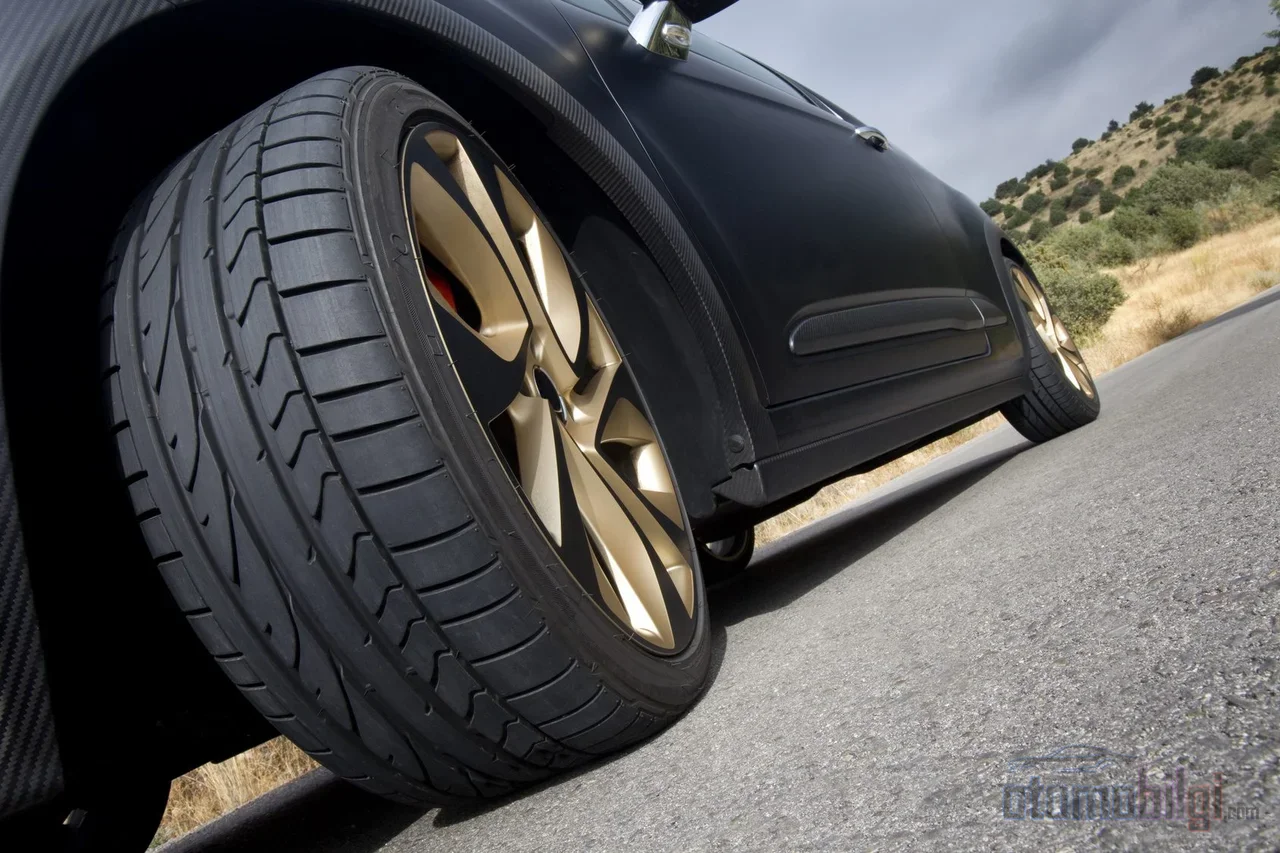
A tire's job is to transfer the vehicle's weight to the road surface; it does this through what we call the contact patch, that small trapezoid-shaped rectangle where the tire touches the asphalt. As width increases, this contact area grows and the tire load is distributed over a wider surface. The result is noticeably more traction on dry asphalt, better steering response in corners, and a more planted feel at high speed.
Braking follows the same logic: as the contact area grows, stopping distance can shorten, and this also shows itself on the acceleration side through power transfer. This is the logic behind performance vehicles being equipped with ultra-high-performance, i.e. UHP tires; for vehicles under heavy load, width is preferred for the same reason.
But there is a nuance here. According to classical friction theory, the friction force does not depend on the size of the contact surface; why a wide tire still grips more has been debated for years. Rough summary: tire rubber is not an ordinary friction material; mechanisms such as adhesion and deformation are at play, and when composition and temperature are kept constant, a larger contact area really does mean more grip. But there is also a practical condition: the vehicle's suspension must be capable of using this extra grip. A tired or economically designed suspension can render part of the wide tire's advantage useless.
The Costs That Upset the Calculation: Fuel, Noise, and Comfort
The price of width shows up noticeably in your pocket. A wider contact patch means higher rolling resistance; the engine burns more fuel to overcome this resistance. To give a rough comparison, a difference of around 40% in rolling resistance can turn into a deviation of about 6% in consumption. Even at the same size, switching to a different model can cause a loss of 1–2 MPG in some user experiences; as the tire gets heavier, this weight effect becomes even more pronounced. In city driving, the consumption difference is a noticeable item for someone who drives long distances.
The second cost is noise. A large contact area and tread pattern transfer more vibration into the cabin; a wide tire operates measurably louder than a narrow one. Third is comfort, and here the picture gets interesting: with the right wheel match, a wide tire can offer extra comfort on bumpy roads, but if the width comes with a larger overall size, the sidewall gets thinner, impacts reach the cabin more noticeably, and the ride becomes harsher. Many years ago wheels were small and sidewalls were thick; now 19-20 inch wheels are finding their way onto family cars. Aesthetics wins, perhaps at the expense of the spine.
Narrow or Wide on Snow? Myth and Reality

The snow tire topic is where the misconception at the heart of this article shows itself most clearly. A common mistake is carrying the assumption that wide tires are better everywhere into winter as well. In reality, narrow tires have the advantage on loose and slushy snow: because they concentrate the weight on a small area, surface pressure is higher, the tire cuts through the snow down to the ground, and it does not carry the risk of aquaplaning by pushing accumulated snow material in front of it. A wide tire acts like a shovel on snow, drags the material in front of it, and invites hydroplaning.
Still, the picture is not entirely one-sided. On hard, compacted snow surfaces, a wide tire can offer more grip; for off-road use where you want to avoid sinking into deep, wet snow, wide tires with flotation capability are also defended. On ice, what matters is contact pressure, so here the narrow tire is ahead again. Findings from independent tire tests also confirm this dual picture: width makes little or no difference on snow and ice; the real difference emerges on dry and wet asphalt. In winter tire selection, compound and tread design are decisive rather than width, and when daily temperatures drop below 7°C during the seasonal transition, switching to winter tires within 7 days is still a working rule of thumb.
How Do You Find the Correct Size? Approved Sizes and +Sizing
Let's clarify one thing from the start: the concepts of wide and narrow are relative. A size considered wide for a compact vehicle may be normal for a heavy SUV. The safe zone for your own vehicle is the list of approved sizes defined by the manufacturer during its homologation process; in Europe and most of the world, vehicles are usually limited to 2-4 manufacturer-approved sizes. You can find this list on the tire label on the driver's side door pillar, in the owner's manual, and in some vehicles on a second label inside the glove box or on the fuel filler flap. The load index, speed rating, and recommended pressure are also written in the same place. The first number in the size code is the tire width in millimeters; for example, the 225 in the P225/70R16 91S code is the width of the tire.
When Does +Sizing Make Sense?
Plus-sizing, that is, fitting a wider and lower-profile tire while keeping the same overall diameter, is the practice of plus-sizing. The widely accepted criterion is the 3% rule: the overall diameter of the new combination must not exceed the original size by more than three percent. If the rule is followed, ride height, odometer and speedometer remain largely unchanged; plus-one and plus-two steps can genuinely improve cornering performance and steering feel. There are also views that consider any widening of more than 20 mm over the factory tire unsafe. But when changing sizes, the checklist is long:
- Load index and speed rating must not fall below the original values.
- The overall diameter must be preserved; otherwise the speedometer and odometer drift.
- The gap between the caliper and the wheel arch must be sufficient, and the risk of suspension contact must be eliminated.
- The wheel-tire match must be correct; an incorrect width match produces uneven wear.
- Significant size deviations can corrupt the wheel speed data of systems such as ABS and ESC; lane-keeping and collision-avoidance systems may require recalibration.
One more thing should be added: the safety equipment of modern vehicles is calibrated for the factory size. Playing with the size shifts the basis on which the systems make their calculations; for this reason, sizes on the approved list always take priority over tempting options outside the list.
Wide or Narrow? Comparison Table
| Criterion | Wide Tire | Narrow Tire |
|---|---|---|
| Dry grip | Better with a larger contact area | Less traction |
| Wet surfaces | Grip increases, but the risk of aquaplaning can rise with width | Cuts through water better with higher surface pressure |
| Loose snow and slush | Pushes the snow ahead of it, plow effect | Digs down to the surface, gains the advantage |
| Fuel consumption | Higher rolling resistance, consumption increases | More efficient |
| Noise | Noisier | Quieter |
| High-speed stability | More planted | Less stable |
| Weight | Heavier | Lighter |
The Decision Is Yours: Choosing the Right Width for Your Own Vehicle
I have spent more than thirty years in this profession; I lived through the first wave of the wide-tire fashion, and I am watching today's wheel inflation as well. The only thing that has not changed is that the answer to the question lies not in the catalog but in the use case. For a driver who wants an economical and quiet ride weighted toward city driving, an approved narrow size is usually the more correct choice; it is also proven by experience that a narrow size feels more balanced in many vehicles. For someone who wants dry-road performance, short braking distances and a planted steering feel, the wide end of the approved list or a rule-compliant plus-sizing step makes sense.
If you live in a snowy region, choose your winter set as conservative as possible in terms of width; the real issue with a winter tire is the compound, not the width. And whichever size you choose, stay faithful to the load index, speed rating and pressure recommendations on the tire label; every advantage gained by width evaporates once these basic parameters are compromised. Is a wider tire better? On dry asphalt yes, on snow like sand no, and probably no on the bill either. The answer is given together by the label on your vehicle's door pillar, your climate, and your right foot.
Sources
- Wide tires vs. narrow tires: A comparison guide
- Wide or narrow tires? Here's how your choice will affect driving
- Skinny vs Wide Tires! Versus!
- Do wider tyres give you more grip? Different tyre widths tested
- The Ultimate Wheel and Tire Plus Sizing Guide
- What is the 3% Rule for Tires?
- Can You Put Bigger Tires on Your Vehicle?
- How to Read Tire Size for Your Vehicle
- Does Tire Size Affect Fuel Economy
- Do Wider Tires Improve Grip? The Real-World Tradeoffs