How Do the A, B, C Ratings on the Tire Label Affect Your Vehicle?
Share This Page
The A, B, C ratings on the tire label measure three things: fuel efficiency, wet braking, and exterior noise. Class A represents the best performance in every parameter, while Class E shows the weakest. A single class difference between these letters means 3 to 6 meters of extra braking distance on wet roads, or an average of 80 liters of fuel difference over the tire's lifetime; in other words, the label is a document with tangible consequences too significant to ignore when choosing tires.
Highlights
- Since 2021 the new EU tire label in effect rates with 5 classes from A to E.
- Each class difference in wet braking 3-6 meters means extra stopping distance.
- In fuel efficiency, one class creates an average of 80 liters fuel difference over the tire's lifetime.
- The noise value measures exterior noise; it does not indicate cabin quietness.
- Dry grip, handling, and wear life are not on the label; for these, you need to look at independent tests.
What Is the Tire Label and What Values Does It Provide?
That colorful letter chart you see next to the tire or on the sales page is a requirement of EU legislation. Its first version was implemented in 2012; since May 2021, a renewed version has been in effect. The 2021 label is more readable than the old one: fuel efficiency and wet braking are now rated with five classes (A to E) instead of seven. In addition, a QR code has been added to the label; when you scan it, you access the tire's record in the official product database.
Alongside the three main parameters, the new label can also carry two icons. The "Alpine" symbol, known as the 3PMSF, which draws a snowflake inside a mountain, indicates that the tire has been tested in heavy snow conditions. The ice icon, on the other hand, is found only on passenger tires that pass the braking test on pure ice. Our readers have often asked what these icons mean; let me go through it briefly because the critical distinction in winter tire selection lies here, and I will cover them one by one below.
In the past, this label was no different from the small table on the back of the packaging in the supermarket aisle; most buyers would pass by without even looking at it. Now the classes are stricter, and the worst-performing classes are being gradually phased out of the market with type approval restrictions. So it would not be surprising to one day see an aisle with only Class A and B tires in front of you.
Does the Fuel Efficiency Class Really Save Gasoline?
The rating in the top left corner of the label measures the tire's rolling resistance. As the tire rotates on the road, it constantly deforms; this deformation consumes energy, and that energy turns into fuel. The materials used in the compound, the tire structure, and the pressure determine this resistance. A hard, less-deforming tire burns less fuel but may compromise grip; a soft compound grips well but heats up more. The label describes this balance, in short.
The language of the numbers is as follows: the difference between classes corresponds to roughly 0.1 liters consumption difference per 100 kilometers in an internal combustion vehicle. It may seem small on its own, but when accumulated over the tire's lifetime, it averages 80 liters fuel. If you drive an electric vehicle, the difference appears not in liters but in range; with every charge you can lose or gain tens of kilometers.
Let's also add this: tires are responsible for a significant portion of a vehicle's total fuel consumption, with a contribution in the 15-20% range for passenger cars. In other words, tire choice is a far more effective item than fuel-saving filters in the exhaust. And there is the control side of things: correct inflation pressure alone can provide energy savings of up to 10%. No matter how good a tire you buy, if you keep the pressure low you will not get the full benefit of the A rating; the value on the label is a commitment valid only when the tire is used at the correct pressure.
Wet Braking Class: How Many Meters Does It Make?
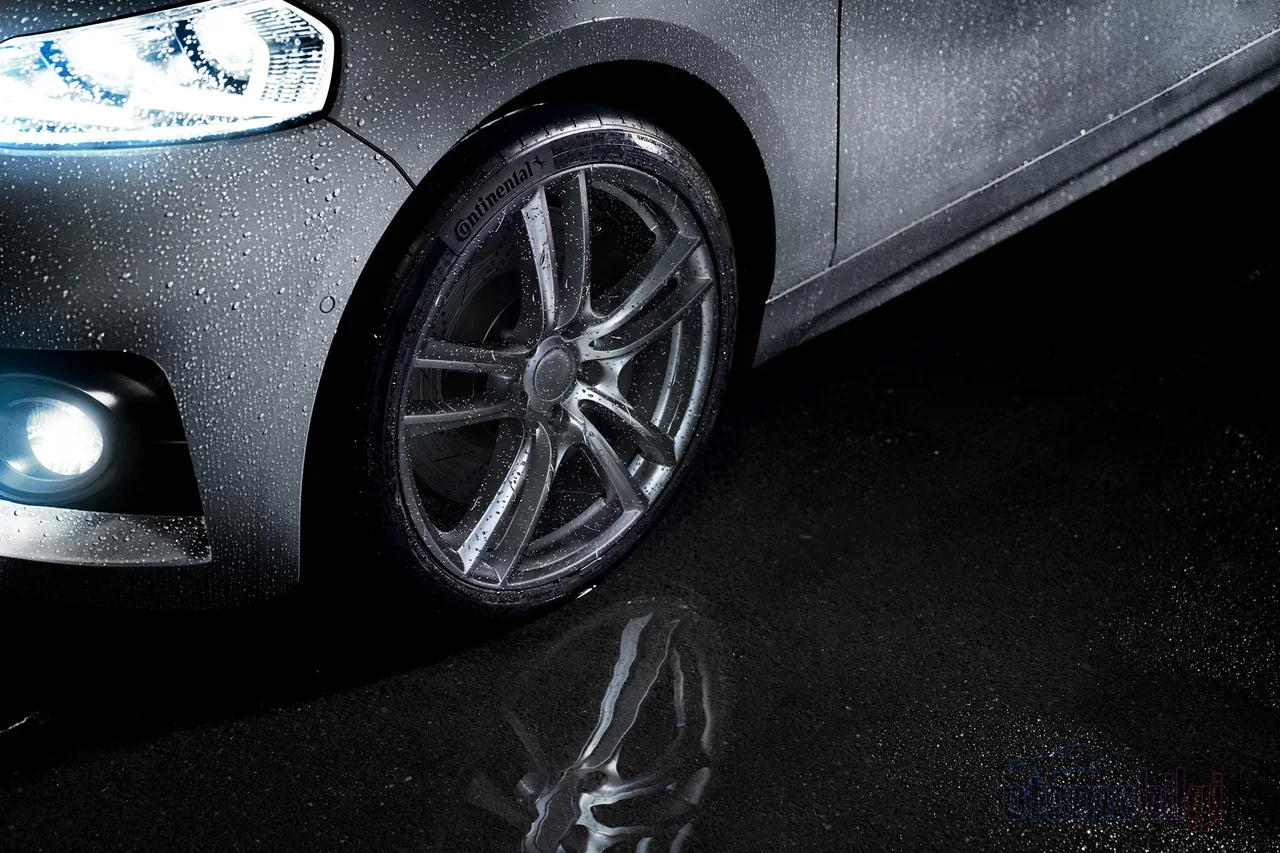
In my view this is the most important line on the label. The wet grip rating is the official indicator of how short a distance the tire stops you in when you brake fully on wet asphalt. A represents the shortest distance, E the longest. According to the official calculation, a difference of a single class means 3 to 6 meters of extra braking distance on wet surfaces. Some manufacturers say the difference between the two extreme classes can open up to 5-10 meters; it is natural for this number to vary depending on the measurement method, speed, and tire size. Still, the picture is clear: 6 meters at an intersection or pedestrian crossing is often more than a car length, and this difference can determine whether it turns into an accident.
There is also a side that degrades over time. As tread depth decreases, wet grip drops, the ability to channel water away weakens, and the risk of aquaplaning increases. The letter A on the label only states the upper limit of performance when the tire is new; over the years, what that letter stands for wears away on your tire. That is why a driver who cares about wet braking has two tasks: check the class when buying, and monitor tread depth when using.
Is the Noise Value a Measure of Cabin Quietness?
The wave symbol and dB(A) value at the bottom of the label indicate the tire's external rolling noise. Pay attention: external. That is, it measures how much noise the tire makes not to your ears, but to someone standing by the roadside. The sound you perceive inside the cabin is an entirely different phenomenon; that hum transmitted from the tire cavity to the body is called cabin noise, and there is no rating for it on the label.
You need to know how to read the value. The classes are A, B, and C; low-noise tires fall in the 67-71 dB band, the noisiest ones in the 72-77 dB band. The decibel scale works logarithmically: a 3 dB difference perceptibly doubles the noise. So the difference between a 67 dB tire and a 71 dB tire is far beyond the four points on paper.
The practical conclusion is this: for someone who drives long distances outside the city and seeks cabin quietness, this line is at least as important as the braking class, but it must be read correctly. You cannot read cabin comfort from the label alone; it is necessary to evaluate tires marketed especially as touring class with comfort in the foreground together with independent test results.
What the Label Doesn't Tell You: How to Fill in the Gaps When Buying?
The label focuses on three parameters and stays silent about the rest. Yet there are other headings that determine a tire's character: dry grip, cornering and handling behavior, cabin noise, tread life, and comfort. The label provides no information on these four. In other words, an A-class fuel efficiency rating doesn't sell you an A-class driving experience; a tire that scores well on those three boxes may not deliver the result you want in dry conditions or in longevity.
What Do the Snow and Ice Symbols Tell You?
The snow icon (3PMSF, the mountain and snowflake symbol) certifies that the tire has passed a standard braking test on packed snow. A tire marked only M+S carries no official winter certification; not every tire bearing this marking is a true winter tire. The ice icon is an even more special case: it is found only on passenger tires that have passed a braking test on pure ice, and it is usually seen on Nordic-type tires with soft compounds. These ice tires are superior on ice but have weak wet performance in mild climates; using them in a region with a soft climate would be the wrong choice. It is also worth noting: the wet braking and rolling resistance values of winter tires on the label do not reflect the tire's real performance in winter conditions. The label measures the tire under standard test conditions; its behavior on snow is another story.
How to Fill in the Gaps
- Define your needs first: is quietness, wet safety, or long life the priority?
- If cabin comfort is the priority, go for comfort-focused touring tires; the label's exterior noise value eliminates quiet models, but independent tests reveal interior noise.
- Read independent tire tests (annual tests by consumer organizations and tire experts); dry grip, handling, and tread life come to light there.
- Scan the QR code on the label; you can access all the values in the tire's official record.
- Ask the sales point these questions; a good dealer also explains the qualities not featured on the label.
Summary: The Letters on the Label and Their Practical Meaning
For those who have been in this business for years, the label is like the tire's identity card at first glance; for beginners, knowing what the letters mean is more than enough. The table below shows side by side what the class differences of the three parameters mean in practice.
| Parameter | What does it measure? | What the class difference means |
|---|---|---|
| Fuel efficiency | Rolling resistance | About 0.1 L/100 km per class; about 80 liters over the tire's life |
| Wet braking | Stopping distance on wet asphalt | 3-6 meters of extra braking distance per class |
| Exterior noise | The sound heard by a passing vehicle | A 3 dB difference perceptually doubles the noise |
| Snow symbol (3PMSF) | Test in heavy snow conditions | Official winter tire indicator; M+S alone is not sufficient |
| Ice symbol | Braking test on pure ice | Only on Nordic-type passenger tires; not suitable for mild climates |
One final note: the labelling rules are being reviewed for simplification; on the EU side, work has begun on simplifying the energy and tyre label rules, and a public consultation process is underway. So the appearance of this label may change in the coming years, but the three fundamental things it measures - rolling resistance, wet grip, and noise - are here to stay. The next time you buy tyres, look at those three letters first, then go to the test results. As long as you do not break that order, the label will serve you well.
Sources
- Tyres - European Commission - Energy Efficient Products
- Understanding the EU Tyre Label Grading | Goodyear Tyres
- European tyre label: what does it mean? - Michelin
- Tire Noise | Continental Tires
- Two types of tire noise | Nokian Tyres
- Commission simplifies energy and tyre labelling rules - EC presscorner
- Choose the Right Tires | Consumer Reports