Why Should Tire Pressure Be Checked Every Month?
Share This Page
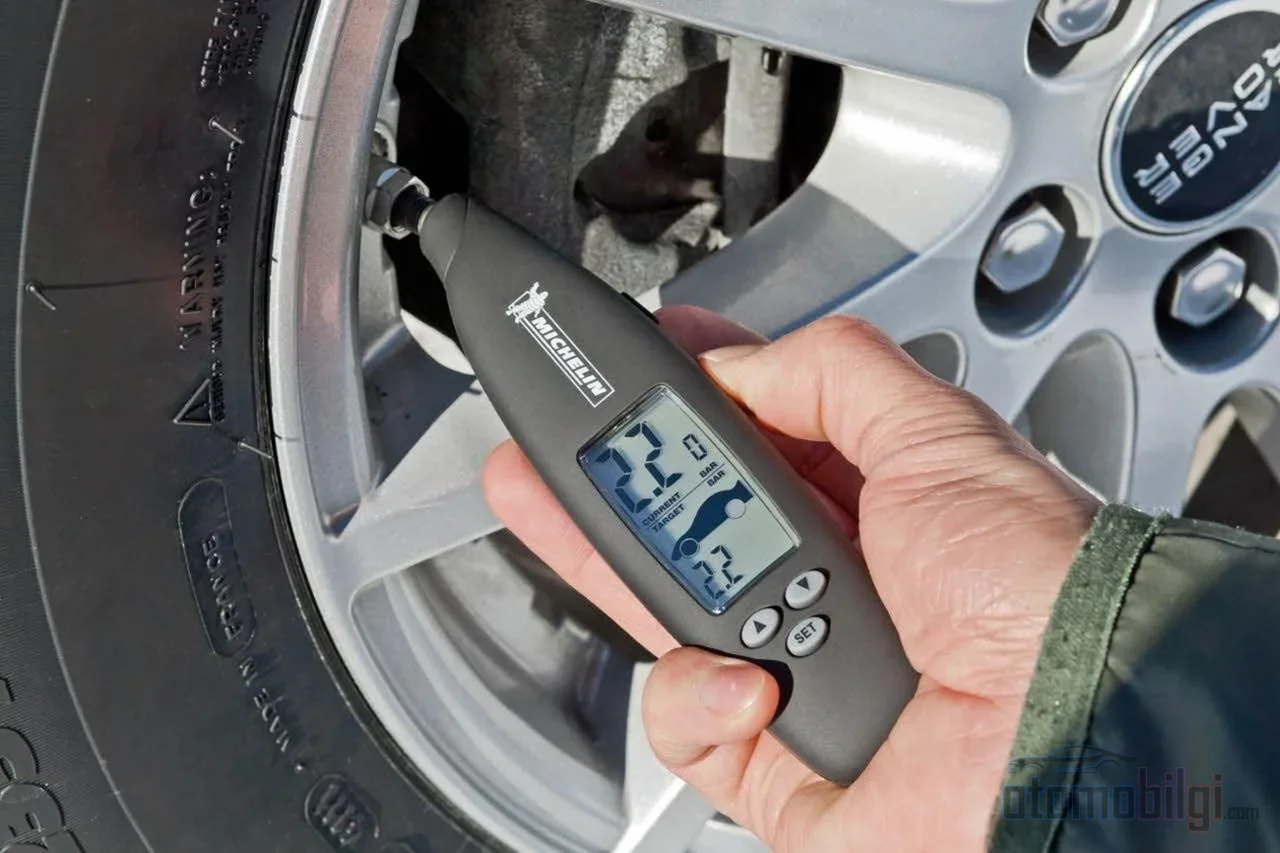
Tire pressure should be checked every month, because your tire loses about 1–2 PSI of air per month; this silent loss increases fuel consumption, lengthens braking distance, and shortens the tire's life. As pressure drops, the tire does not make proper contact with the road, overheats, and carries a risk of blowout. Fortunately, checking is a simple job that takes less than two minutes: read the correct value from the door placard and measure with a gauge on a cold tire.
Highlights
- The correct pressure for most vehicles is in the 30–35 PSI range; the real reference is the door placard.
- A monthly loss of 1–2 PSI is normal; a loss of 5 PSI or more per week is a sign of a leak.
- Every 1 PSI of deficiency reduces fuel efficiency by 0.2% .
- Every 10°F change in air temperature moves the pressure by about 2% .
- The value on the sidewall is the tire's maximum pressure, not the recommended value for the vehicle.
Why Monthly Checks Are a Must: Pressure Decreases on Its Own
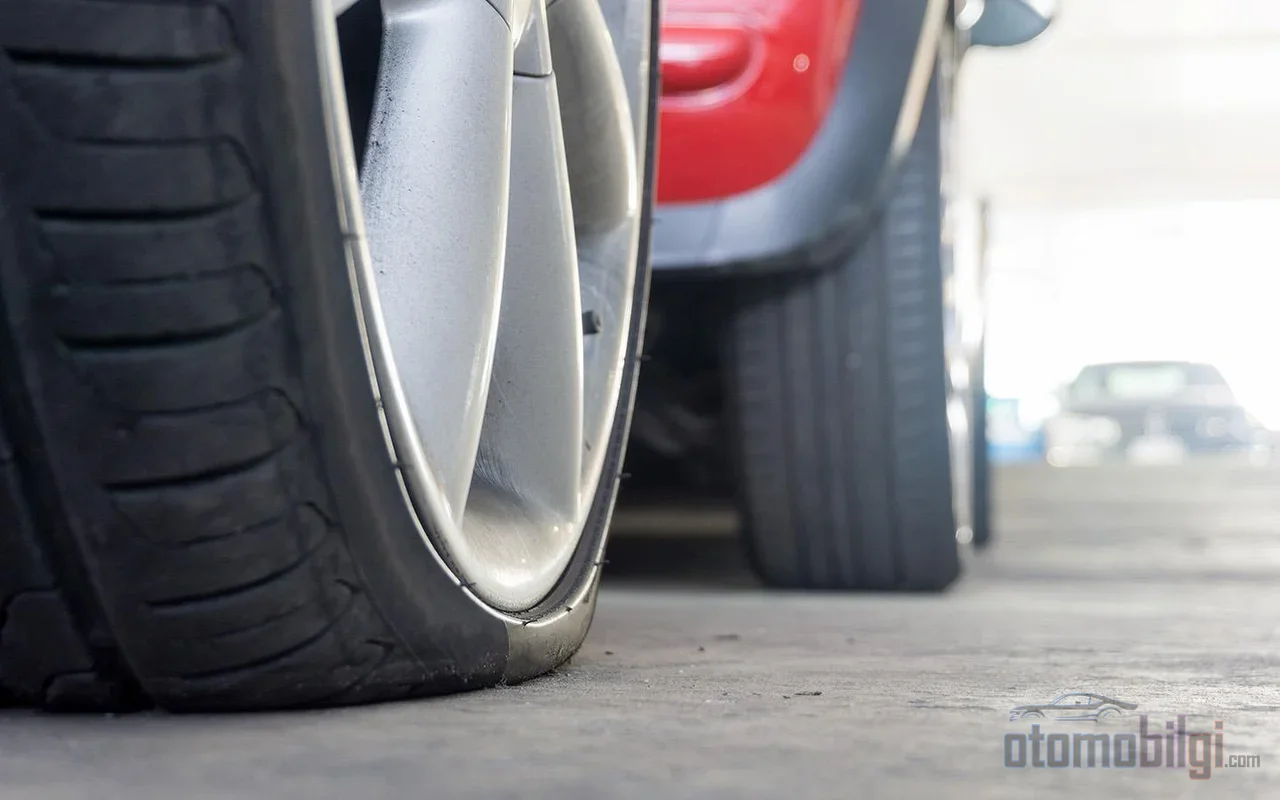
I have been in this business for more than thirty years; the most common objection I still hear is this: "My tire isn't leaking air, so why should I check it every month?" The answer is simple: even if it isn't leaking, it is decreasing. A tire loses about 1 PSI of air per month, even one that looks flawless; some manufacturers state the normal range as 1–2 PSI, or even 1–3 PSI . This is the natural result of moisture and air molecules seeping through the rubber; it does not indicate a fault.
The problem is that this loss is invisible to the eye. A modern tire stands upright enough; a deficiency of two–three PSI says nothing when viewed from outside. In the old days we would stop at gas stations and eyeball it from the side; now an inexpensive digital gauge sits in everyone's pocket. But no tool is of any use unless you measure.
Then there is the role of temperature, which escapes most drivers' attention: Every 10°F (about 5.5°C) change in air temperature moves tire pressure by about 2% . When the weather suddenly turns cold in autumn, the pressure in your tire can drop by 1–2 PSI in a single night. So with no leak at all, even just the change of season can put you into the underinflated zone within a few weeks. That is why a monthly check is not a luxury but a maintenance step, like a basic cleanup.
What Missing Air Costs Your Wallet and Your Safety
Fuel consumption quietly increases
An underinflated tire deforms more on the road, and this deformation costs energy. According to data relayed by the U.S. Department of Energy, every 1 PSI drop across the four tires reduces fuel efficiency by 0.2% ; 10 PSI of deficiency means up to 2% loss and about 6 cents of extra cost per gallon. These figures look small on their own, but when spread across years on a vehicle with high annual mileage, the arithmetic becomes sobering.
On the laboratory side, the picture points the same way. Oak Ridge National Laboratory, in a 2009 Toyota Corolla tested at different speeds: When tires dropped to 75% of the recommended pressure, fuel economy fell by ~2–3%; at 50%, results were ~10% worse at 40 mph and ~5% worse at 80 mph. As pressure drops, the penalty at low speeds grows; because in city driving, as you constantly accelerate and brake, you re-roll that squished tire every time.
Braking distance and grip deteriorate
Don't think low pressure is only a wallet problem. The tire's contact patch is compromised, braking distance lengthens on wet or icy roads, steering feel and stability fade. Suspension, braking, and steering components also work harder than they should. The most dangerous point is heat: an underinflated tire overheats from road friction more than it should, and especially at high speed the blowout risk increases seriously. This is one of the scenarios I fear most on the highway; a sudden blowout is an event several levels beyond the braking distance issue.
Wear pattern is disrupted, the tire retires early
Reading pressure's effect on wear is easy; just look at the tread pattern. At low pressure, the tire's edges wear early, while at high pressure the center wears early. In an overinflated tire, the center of the tread takes on most of the load and the edges don't join the team. Both extremes lead to the same place: uneven wear, weak grip, and early tire replacement. Moreover, this unevenness doesn't end at the tire; it can also negatively affect suspension and axle alignment. Correct pressure rewards the tire not with savings, but with touching the ground as it was designed to.
Door Label or Tire Sidewall Value: Which Should Be Followed?
This question has circulated in forums and gas station yards for years. Let's clarify the answer: The value printed on the tire's sidewall is the maximum pressure that tire can safely carry; it is not the recommended driving pressure for your vehicle. The recommended value is set by the vehicle manufacturer and is written on the label in the driver's side front door jamb; you'll find the same number in the owner's manual.
Let's go through an example: the door label of a 2018 Honda Civic says 32 PSI, while the tire's sidewall says 44 PSI maximum . Trying to find the midpoint of the two here is the wrong approach; the logic is understanding the difference between the 'ceiling' and the 'correct value'. In summary: The PSI on the sidewall determines the tire's ceiling, while the door label determines your actual driving pressure.
It's useful to know one exception: In the caravan (RV) world, debate continues over load-based pressure instead of the door label; some owners argue that the sidewall shows the value corresponding to the maximum load, and pressure should be adjusted according to the actual load. However, for car users the rule is simple: the door label is the reference.
Correct Checking Method: Step-by-Step Cold Tire Measurement
The method isn't complicated, but the order matters. The most accurate reading is on a cold tire measure them; let's not say "the car has been sitting for hours" - a tire that has not been driven a few kilometers or has been parked for at least three hours is ideal. Driving warms up the tire, the air inside expands and the value rises artificially; measuring in the morning, before setting off, is the most practical approach.
- Find the correct value: Check the label in the driver's side door jamb or the owner's manual.
- Get a pressure gauge: Digital or dial doesn't matter; a reliable pressure gauge is the only tool this job requires.
- Open the valve: Remove the valve cap from each tire and put it in your pocket so you don't lose it.
- Measure: Press the tip of the gauge briefly onto the center of the valve stem; you'll hear a hiss of escaping air, then the value settles. Note each tire one by one.
- Add air if needed: Top up the underinflated tires with a station air pump.
- Check again: After adding air, read the value again; make sure you've reached the target.
The answer to the frequency question is also clear: At least once a month and before long trips. It's wise to measure a bit more often during seasonal transitions, especially after the first cold snap.
How is pressure adjusted when loaded and full?
When you load up the family and fill the trunk, applying the same value to the tires may not always be correct. Door labels usually have two lines: recommended values for normal use and full load. A typical example cited by Continental is a full-load line of 240 kPa / 2.4 Bar / 35 PSI or similar. In other words, for long trips, a full trunk and a car full of passengers, switching to the label's full-load line is what the manufacturer itself wants. Let me add as a note: for P-metric standard load tires, the maximum pressure limit is 35 PSI (TRA standard), and in ETRTO and JATMA equivalents it is 36 PSI; the label's recommendation stays within these limits.
How Much Monthly Pressure Loss Is Normal?
This is probably the most practical question on this page. The normal range can be summarized as follows:
| Pressure loss | Assessment | Action to take |
|---|---|---|
| 1-2 PSI per month | Natural loss, normal | Monitor with monthly measurement |
| Up to 3 PSI per month | Borderline, needs monitoring | Measure more frequently |
| 5 PSI or more per month | Abnormal, sign of a leak | Inspect the valve, bead area and tire |
| Constant drop in a single tire | High likelihood of a localized problem | Tire shop check, search for a nail or valve issue |
| 5+ PSI loss per week | Clearly problematic | Repair before moving on |
A loss of 5 PSI or more per week on the same tire, or one tire dropping noticeably faster than the others, is considered the threshold of abnormality everywhere. The valve core, the rim's seal, or a small nail embedded in the tread are the most common causes; these can be fixed with a repair, but if ignored, the tire wears down for kilometers at low pressure and that damage is irreversible.
Let me also correct a misconception: "I measured on a hot tire, the value came out high, let me let some air out" is a wrong approach. A hot measurement is naturally higher than a cold one; in bicycle examples, the difference between cold and hot measurement is 6 PSI reaches, and that is a deviation significant enough to change handling. If you measure when hot, you don't deflate it if it's over; you target the cold value. Manufacturers already give the recommended value for a cold tire.
Is Overinflating a Solution: The Rim Protection Excuse
Some drivers slightly overinflate the tire to protect the rim edge against potholes. I understand the reflex of someone who has experienced pothole trouble in big cities; but this solution has a price. In an overinflated tire, the middle of the tread carries the load alone, grip weakens, tread wear becomes uneven, the suspension meets impacts more harshly, and vehicle control decreases. Experts also note that the risk of a blowout increases. Sacrificing the rim in the short term, and the tread and comfort in the long term, doesn't seem like a good deal to me. The manufacturer's recommended value is the point where both the rim and the tire work most in balance; it's the pothole, not the value, that should be blamed.
Conclusion: A Two-Minute Habit, A Long-Term Gain
A monthly tire pressure check is perhaps the lowest-cost and highest-return item in car maintenance. The correct value is written on the door label, the measurement is done on a cold tire, a loss of 1-2 PSI per month is normal, and a loss exceeding 5 PSI is a sign of a leak. After thirty years, my summary is this: We ask a lot from the tire but give it very little. Correct pressure is the cheapest and most necessary thing you can give.
Sources
- Understanding the Impact of Tire Pressure on Your Vehicle's ...
- How Much Does Tire Air Pressure Change Over Time?
- How Does Temperature Change Affect Tire Air Pressure?
- How to Check Tire Pressure with a Tire Pressure Gauge
- How to check tire pressure
- Tire pressure
- Determining the Right PSI
- Sidewall Max PSI vs Placard: Portable Tire Inflator
- 5 Signs of Overinflated Tires
- Wear Problems: Symptom Wear in Center
- Tire Pressure Keeps Dropping? Common Causes
- Safe Driving with Low Tire Pressure: Risks & Emergency Tips
- How Tire Pressure Impacts Fuel Efficiency & Driving Safety