Can a Tire Puncture Be Repaired, or Does It Need to Be Replaced?
Share This Page
A puncture in the tire can be repaired if it is in the tread area and does not exceed 6 mm (for passenger and light commercial vehicles); damage to the sidewall area, bulges, or large cuts cannot be repaired and the tire must be replaced. The decision comes down to three questions: where is the puncture, how big is it, and what is the overall condition of the tire. The answers to these three questions sometimes save a nail puncture, and sometimes condemn the tire to the scrap heap for good.
Key Takeaways
- The repairable puncture limit for passenger and light commercial tires is a diameter of 6 mm.
- Repairs are only performed in the tread area; sidewall damage is never repaired.
- A permanent repair is a combination in which a plug and patch are applied together.
- String plugs and spray repair kits applied at the wheel are temporary solutions.
- If the tread depth has fallen below 2/32 inch, the tire cannot be repaired and must be replaced.
Repair or replace: the three criteria that decide
I have been in this business for over thirty years; the rules of tire repair are not that complicated, but experience shows that most disputes arise precisely from overlooking these three criteria. There are three fundamental criteria on which the industry-accepted approach is based: puncture location, puncture size, and the overall condition of the tire.
Location: the tread area is everything
Repairs can only be made on the tread, that is, the upper surface of the tire that contacts the road. The tread area is a zone that narrows inward from where the steel belt begins; for a safe repair, the puncture is expected to be at least half an inch (approximately 1.3 cm) away from the edge of this belt line. Damage approaching or entering the shoulder area cannot be repaired by rule. This is the area where the tire experiences the greatest flexing while rolling; a patch placed here becomes unreliable under high thermal and mechanical loads during operation.
Size: why the millimeter limit is 6 mm
For passenger and light commercial tires, the upper limit for a repairable puncture diameter is 1/4 inch, that is, 6 mm. For steel-belted light commercial, medium, and heavy vehicle tires, this limit rises to 3/8 inch, or 10 mm. This is not an arbitrary choice: the load that the repair material filling the puncture can carry decreases rapidly with size. The small hole caused by a nail is usually within this limit; however, continuing to drive with the nail pulled out and low tire pressure can destroy the internal structure of the tread, turning a repairable situation into an unrepairable one.
Overall condition: in these cases there is no argument at all
Even if the puncture is in the tread and within the size limit, no repair is performed if the tire is in any of the following conditions:
- The tire has been driven on flat, that is, with no air; even if the internal structure looks perfect from the outside, it may be damaged.
- Damage has been detected during internal inspection after a run-flat tire has been used.
- The tread depth has reached the wear indicators or has fallen below 2/32 inch in any area.
- There is internal structural separation, exposed cords, or impact damage.
- Existing repairs are close enough to overlap with the new puncture or directly opposite it.
I would especially like to touch on the last item in this list. In the past, some mechanics would hammer plug after plug into the same tire and send it back on the road; today the standards are much clearer, and if repairs overlap, the tire is scrapped. There is no notable difference in between: the cost of living has risen, but the cost of tire safety has not.
Why sidewall damage is never repaired

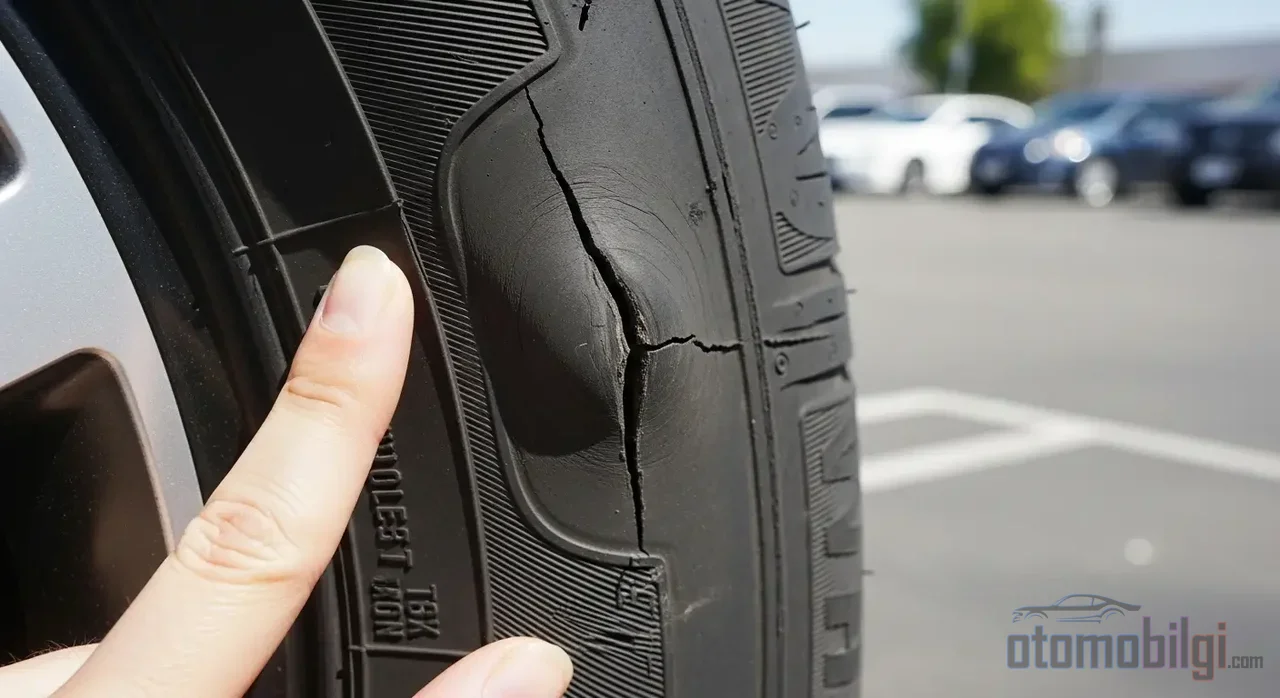
The sidewall is the region that carries the tire's structural integrity; it is not protected by a fixed steel belt like the tread. Any damage to the sidewall renders the tire immediately unusable. A hole, cut, or crack here disrupts the integrity of the internal reinforcement cords, and a patch does not restore this missing structure.
The most dangerous aspect of sidewall damage is the bulge, that is, outward ballooning. Slight inward depressions are normal in some tire profiles; in contrast, an outward bulge indicates cord damage, and the tire's structural soundness should not be assumed even if it is holding air. If you notice a bulge on the sidewall, vibration, or steering pull after hitting a pothole or curb stone, stop in a safe place and have the tire inspected. Driving on a bulging sidewall, one with exposed cords, or one leaking air means knowingly accepting the risk of a blowout.
Confusing sidewall damage with a tread puncture is the most common mistake, which is also the subject of this article. A nail in the tread is saved with a routine repair under the right conditions; a hole of the same size in the sidewall means the mechanic should call for a replacement. There is not a matter of opinion between the two, but a technical boundary.
How a permanent repair is done: plug and patch together
According to industry standards, a permanent repair is performed on a tire that has been removed from the rim. The steps are as follows:
- The tire is removed from the rim and thoroughly inspected from the inside.
- The damage channel is cleaned with a special cutting tool.
- The inner air-holding layer is prepared by sanding (buffing).
- The slit is filled with vulcanizing rubber stem (plug).
- Reinforcement and air-tightness are provided from the inside with a repair patch.
The essence of this sequence is this: the plug fills the channel left by the puncture, while the patch provides sealing from the inside. A plug alone or a patch alone is not considered a permanent solution. A plug alone does not permanently seal the inner layer; since a patch alone does not fill the channel, water seeps in and causes the steel belts to corrode. The combination of applying both together is what is accepted as a permanent repair.
There is also the matter of angle: if the puncture has cut the tread at a slant and the angle of the slit exceeds 25 degrees - in some repair products this limit has been tested up to 35 degrees - a two-piece repair is required. If the tire continues to lose air after the repair, it should be removed and re-examined; hitting the road assuming the repair has done its job is wrong.
Why sealant sprays and repair kits are a temporary solution
They are useful at the roadside, let's admit that. However, sealant sprays and emergency inflation kits are not recommended as long-term solutions, for the same reasons that a plug alone is insufficient: they do not permanently seal the inner liner, and they do not fill the hole. Additionally, large holes, multiple punctures, and sidewall tears are completely outside the scope of these products. It should also be known that the sealing substance can damage the pressure sensors inside the wheel; in modern vehicles, this is not a matter to be dismissed as a minor expense.
As for rope plug repairs applied to the wheel: tires repaired with them can hold air for months, even years. This does not mean the method is safe. A rope plug applied without an internal inspection conceals structural damage inside the tire. I consider such repairs temporary; without hesitation, I expect the vehicle to be taken to a service center, the tire to be removed and inspected from the inside, and, if necessary, a permanent combination repair to be performed.
The repair debate for run-flat tires
Run-flat tires have reinforced sidewalls that allow driving a certain distance at zero pressure, and they constitute the most debated area in the industry regarding repair. It is clear: there is no institutional common position on the repairability of these tires; manufacturers generally refer to the vehicle's original equipment recommendations.
The known general approach is as follows: if the tire has been deflated, most manufacturers object to repair; even if the tire looks flawless from the outside, its internal structure may be damaged. If there is a puncture, with a run-flat tire you should reach a service center as quickly as possible, below 50 mph, or about 80 km/h, and over the shortest possible distance. Repairability depends on the manufacturer's policy, the condition of the tire, and how the tire was used after the leak. My concrete advice to run-flat vehicle owners is to base their decision on the manufacturer's instructions in the vehicle's owner's manual.
What to do after repair: balance and pressure
The completion of the repair process does not mean the job is done. In a comprehensive repair service, the valve and seating area (bead) are checked, and the wheel is rebalanced; if necessary, the pressure sensor is reported to the service. Do not underestimate the balance issue: operations performed during repair can change the wheel's weight distribution, and a wheel with impaired balance reveals itself with vibration at high speeds.
On the pressure side, the golden rule is simple: base it on the vehicle manufacturer's cold tire pressure values and develop a habit of regular checks. A properly repaired tire, when kept at the correct pressure, serves for years; it is even said that the lifespan of an expertly applied patch is compatible with the remaining life of the tire. If you need to replace more than one tire, be sure to consult the manufacturer's instructions regarding matching with the remaining set and special requirements for all-wheel-drive vehicles.
Decision table: which damage requires what
| Type of damage | Repairable | What should be done |
|---|---|---|
| Puncture up to 6 mm in the tread area (nail, etc.) | Yes | Mushroom patch combination, with internal inspection |
| Puncture near the shoulder or sidewall edge | No | Replace |
| Sidewall puncture or cut | No | Replace |
| Outward bulge on the sidewall | No | Replace immediately, stop driving |
| Tire driven while flat | Usually no | Internal inspection; generally replacement |
| Tread depth below 2/32 inch | No | Replace |
| New puncture overlapping existing repairs | No | Replace |
The one sentence to keep in mind when reading this table is this: the repair decision is made based on the tire as a whole, not just the hole. A small, clean puncture in the tread can be safely rescued with the right technique; everything else, including the sidewall, is the territory of replacement. When in doubt, leave the job to someone who removes the wheel and performs an internal inspection; damage invisible from the outside lies inside the tire.
Sources
- Tire Repair - Tire Industry Association
- Tire Repair Basics - USTMA
- Can a Tire Be Repaired? - TECH Tire Repair Solutions
- Can My Car Tire Be Repaired? - Michelin
- Tire Repairable Area - Discount Tire
- Product Service Bulletin PSB 2022-11 - Goodyear
- Tire Sidewall Damage: How to Assess It - FixGo
- Tire Sealant Review - Consumer Reports
- Can Run-Flat Tires Be Repaired? - Tire Rack
- Deciding to Repair or Replace Run-Flat Tires - Automotive Fleet
- Tire Plug vs Patch - Firestone Complete Auto Care