Can You Put Regular Tires on Electric Vehicles?

Share This Page
Yes, you can fit normal tires on an electric vehicle; the car will run and take you where you need to go. But the price of this choice is paid in range, tire life, comfort and, to some extent, safety. Tires developed for electric vehicles are reinforced to withstand higher loads, preserve range with lower rolling resistance, and are designed to dampen road noise that can be heard in the silence of the electric motor. You can fit any tire that matches your size and hit the road; but let me tell you as someone who has been through the mill in this business: the difference is more tangible than you might expect.
Key Takeaways
- Electric vehicles can be up to 20% heavier than gasoline cars of similar size.
- According to manufacturers, tires on electric vehicles can wear out 20-30% faster.
- High Load (HL) rated tires were developed for heavy electric models.
- As rolling resistance improves, wet braking distance can lengthen; a balance between efficiency and safety is essential.
- An EV tire in the right size can be fitted to a gasoline car, but it is usually an unnecessary expense.
Can You Fit Normal Tires on an Electric Vehicle, and What Happens If You Do?
The short answer is above. The long answer is this: there is no technical obstacle, but the tire and the car's character do not match. In the past, tire selection was simple; any tire in the right size and speed rating for a gasoline car would do the job. Now, when an electric vehicle enters the picture, four separate variables come into play: weight, instant torque, silence and range. With a normal tire, you will end up worse off in at least three of these four.
When a normal tire is used on an electric vehicle, the typical outcomes are:
- Range decreases; the tire's rolling resistance directly increases the energy drawn from the battery.
- Tire life shortens; while the car already wears out tires faster than a gasoline car, a non-reinforced structure struggles to carry this load.
- The cabin becomes noisier; since engine noise is gone, the sound generated by the tire's contact with the road becomes far more noticeable.
- On the safety side, a serious risk arises if a tire with a load index lower than the vehicle's weight calls for has been chosen.
A normal tire will get the electric car moving, but a tire not adapted to its intended purpose leads to losses in all four areas: range, wear, comfort and safety. That is why manufacturers and after-sales service organizations recommend that EV-specific products be given serious consideration when buying tires for an electric vehicle.
Four Differences That Set an EV Tire Apart from a Normal Tire
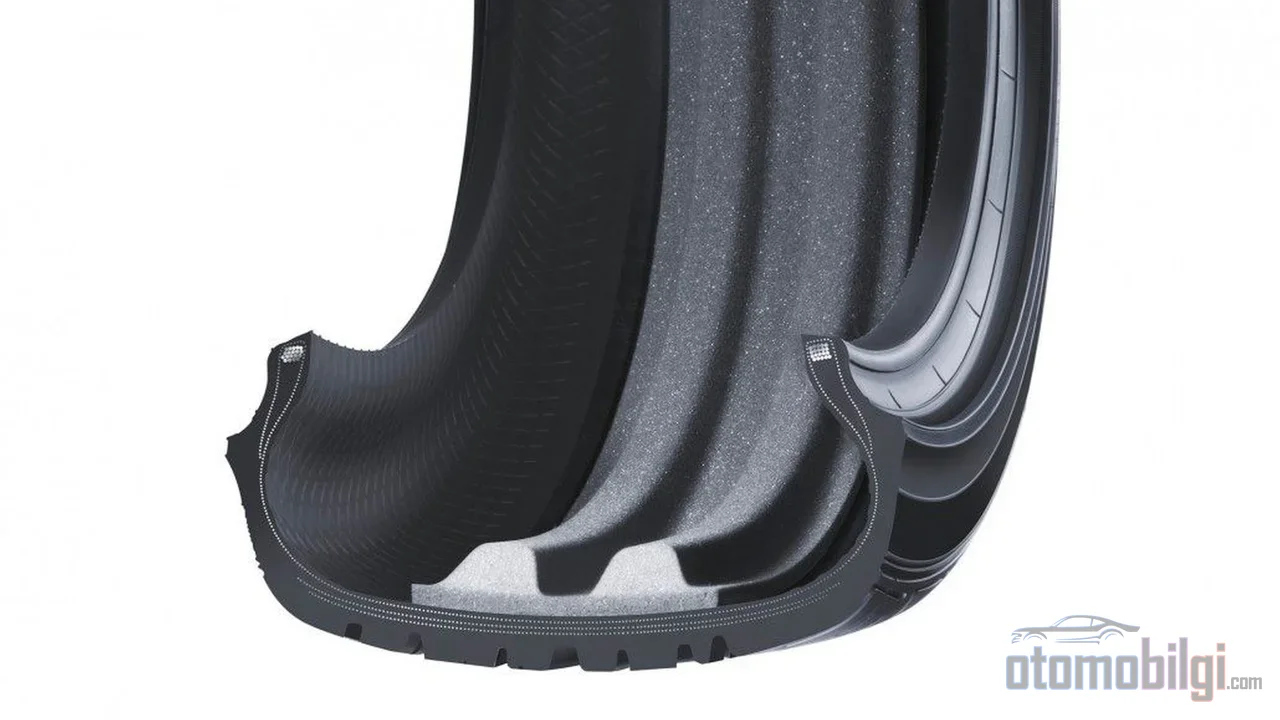
What we call an EV tire is not an empty label invented by marketing; each one carries documented structural differences. We can sum them up under four headings.
Weight: The Price of the Battery Pack
Large battery packs make electric vehicles significantly heavier. A Tesla Model 3 in the same class weighs over four thousand pounds (approximately 1,800 kg); a similarly sized gasoline Toyota Corolla weighs roughly around 3,000 pounds (about 1,360 kg). This difference increases the pressure placed on the tires. That is why EV tires are produced with stronger sidewalls and more durable compounds. Many EV tires carry an XL or HL (High Load) rating; with heavy vehicles becoming widespread, the tire industry added this new load rating to standards in recent years.
Instant Torque: Clutch Load and Wear
An electric motor delivers torque instantly, without a clutch; the moment you press the accelerator, all that force travels from the tire's contact patch to the road. In a gasoline vehicle, this is a load softened by gear and rev transitions. The material blend and tread design of EV tires are chosen to carry this traction load. In addition, regenerative braking reduces pedal use, but distributes the deceleration force differently; the brake pads benefit, while on some models the rear tires may wear faster.
Noise: Every Sound Is Heard Next to a Silent Motor
In a gasoline engine, exhaust and engine noise mask tire noise. In an electric vehicle, there is no such mask. For this reason, major tire manufacturers apply an open-cell polyurethane foam layer to the tire's inner surface after curing; the foam absorbs the vibration noise generated by the tire's contact with the road, suppressing resonance and reducing cabin noise. This acoustic technology has been present in premium vehicles for many years; in electric vehicles, it has come close to becoming standard equipment.
Rolling Resistance: The Invisible Partner of Range
Low rolling resistance reduces the energy the tire expends while turning, allowing you to travel farther on each charge from the battery. Manufacturers achieve this with special rubber compounds. However, there is a trade-off: efficiency sometimes means sacrificing grip and can lengthen braking distance on wet surfaces. In fact, it has been measured that while a certain improvement in rolling resistance contributes relatively little to range, it can impair wet braking distance by several meters. A good EV tire is one that can strike this balance between efficiency, traction and safety.
How Many Kilometers of Range Does a Normal Tire Cost?
Giving an exact figure would not be accurate; the loss varies according to the tire's rolling resistance properties, the vehicle type and driving style. Still, let me give an approximate figure: a normal tire lacking any low rolling resistance features measurably reduces range. Manufacturers emphasize that a low-rolling-resistance tire delivers meaningful extra kilometers per charge, and can even change how a long-distance trip is planned. In practice, this is hardly noticeable in urban use where charging stations are widely available; whereas on a route where charging infrastructure is sparse, the same loss may mean whether you reach your destination or not.
In addition, range loss is not a one-time harm; it repeats with every charging cycle. For anyone calculating vehicle maintenance costs, this is a difference not to be underestimated in total.
Tire Wear: Do Electric Vehicles Really Wear Tires Faster?
The short answer: yes, and this shows up consistently across multiple measurements. Studies by tire manufacturers show that tires on electric vehicles can wear out faster than those on gasoline vehicles. Although the figures vary depending on recognition and measurement methods, 20% to 30% faster wear is reported. One manufacturer puts this rate at up to 20%, while another points to the 30% figure as the justification for developing its own spare tire specifically for its first EV. The reasons are known: higher total weight, instant torque, and regenerative braking distributing the deceleration force differently. An ordinary tire whose size and capacity do not match wears out even faster under these conditions; so while an electric vehicle's tire already has a shorter lifespan, using the wrong tire shortens that life even further.
This picture makes periodic rotation and correct pressure more critical than ever. Regenerative braking can keep the brake pads alive for years; but tire life rests on the four wheels that must carry the vehicle's weight on every kilometer.
What Should You Pay Attention to When Choosing an Electric Vehicle Tire?
Over the years, I have developed a ranking that has come to my rescue when choosing tires; for electric vehicles, the top of this ranking changes. Step by step:
- Verify the load index. The tire's load index indicates the maximum weight it can carry when properly inflated. For example, a tire with an index of 92 carries approximately 630 kg at maximum pressure; heavy electric SUV models may require high indexes such as 116, or even HL (High Load) rated products. The value written on the manufacturer's label inside the door is what matters.
- Match the size and performance requirements with the manufacturer's specification. A tire with a mismatched size code disrupts everything from safety systems to the gauges.
- Look at rolling resistance. Low rolling resistance preserves the range; but evaluate it together with wet grip and braking performance information. Do not go hunting for efficiency on its own.
- Consider the noise level. If the vehicle's tires have acoustic foam in them, choosing a similar noise class when buying replacements preserves cabin comfort.
- Check the speed class. The speed rating indicates the maximum speed the tire can safely carry under load; this value becomes important in high-torque vehicles.
Keep the following in your arsenal as a service-oriented, card-like checklist:
- Load index: the same as or above the manufacturer's value
- Size code: an exact match with the specification on the door label
- Speed class: do not go below the rating the vehicle requires
- Rolling resistance label: prefer a low class
- Wet grip and exterior noise labels: evaluate in a balanced way along with efficiency
Which Brands Manufacture Tires for Electric Vehicles?
There are products developed specifically for electric vehicles and now widely available on the market. Michelin e-Primacy, Bridgestone Turanza EV, the Goodyear ElectricDrive series, Continental EcoContact 6, the Hankook iON series and Pirelli P Zero AS Plus Elect are among the well-known examples in this class. Prices vary by segment; an EV tire in popular sizes can start from around 259 dollars per tire. Yes, it is more expensive than a regular tire; but keep in mind that with regular rotation and correct pressure it can last longer.
Is It Sensible to Use Regular Tires on Electric Vehicles? My Assessment
In my thirty-year career, I have never seen a period in which tire technology specialized so rapidly; the one-size-fits-all rule that applies to gasoline vehicles is losing its validity for electric ones. Still, to be honest, there is no single unquestionable chain of truths. When safety factors are given priority, some independent tests have shown that a tire not designed specifically for electric vehicles can deliver better results; while tires tuned for EVs are optimized for efficiency and noise, they can make compromises in other areas. Moreover, in some technical discussions, there are voices arguing that the EV tire concept carries too much marketing element.
On the other hand, differences such as load capacity, low rolling resistance and acoustic foam are documented facts in the technical documentation of major manufacturers. My judgment is along these lines: if you can turn a blind eye to range loss and faster wear, you can get by for a while with a quality regular tire of the correct size and load index. But ignoring the reinforced structure suited to the vehicle's weight increases the risk of sidewall bulging. In urban, low-speed use, the difference is small; in long-distance and high-performance use, the EV tire pays for itself effortlessly.
One final note: the table works both ways. An EV tire that fits in size can also be fitted to a gasoline vehicle; technically there is no problem. Only its high price and range-oriented optimization usually mean an unnecessary expense on a gasoline vehicle.
Sources
- EV Tires vs Traditional Tires - GreenCars
- Electric vehicle tires - Everything you need to know - Continental
- Understanding EV Tires - Michelin
- An overview about how to reduce tire wear on EVs - Michelin
- What Is the Difference Between EV Tires and Regular Tires? - Hankook
- Do Electric Vehicles Need Special Tires? - Consumer Reports
- Do EVs Wear Through Tires More Quickly Than Gasoline Cars? - Cars.com
- EV Tires: Everything You Need to Know - KBB
- Do You Need EV Tires, or Tires for an EV? - Edmunds
- What Does EV Compatible Tires Mean - Discount Tire
- A New Load Rating is Showing Up on Tires - Tire Review
- What Is Noise Reducing Tire Technology? - Tire Rack
- Understanding EV Tire Wear - Mountain Pass Performance
- Best Tires for 2025 - Recurrent