What Should You Pay Attention to When Buying a Second-Hand Graphics Card?
Share This Page
When buying a used kart, the main things to check are the engine's compression value, cracks and repair marks on the chassis, and the rotation and seating position of the bearings. Ask the seller for the invoice and maintenance history, and if possible do a track test; prices vary over a wide range depending on the engine and class.
Highlights
- A working used kart generally falls in the €500–7,500 range; a Rotax or X30 in good condition can be found for around €1,500–2,500.
- In a compression test, deviation between cylinders matters more than the absolute value.
- The source of a small chassis crack costs $50–100; but recurring weld failures are a red flag.
- Turning the axle by hand reveals most bearing problems within seconds.
- If the seller won't allow a track test, close your wallet and walk away.
Why should the transition from rental track to your own kart start with a used one?
Imagine stepping out of a rental kart in first place and parking your own car in the pit: at that moment, you feel the difference between rental machines and a racing kart in a single lap. Rental karts are built for durability; they are stiff, heavy, and slow. Ownership karts, on the other hand, are faster, more precise, and - most importantly - yours. The grip, braking, and racing-line discipline you learned at the rental track are worth gold at this point, but the performance ceiling is a whole different league.
So why start with a used kart rather than a brand-new one? Because for most first-time buyers, second-hand is the most sensible entry point: the initial cost is significantly lower, the kart's reliability is already proven, cosmetic scratches won't upset you, and it's easy to sell when you upgrade one day. While a new top-tier kart costs over €10,000, the math is clear for someone who wants to start racing on a reasonable budget. Let me even say it as a 15-year-old: in your first kart you look for a properly running engine, not shiny plastic - just as what you need in your first car is reliability, not style.
Which class and engine are right for you?
Kart classes are determined by age, experience, and engine type. Younger kids start in the Cadet, Micro, and Mini classes, while Junior covers roughly the 12–15 age range; 15 and over is Senior. On the engine side there are two families: four-stroke engines like the LO206 are economical and reliable; two-strokes like the KA100, X30, Rotax, ROK, or OK are more performant but require more maintenance. The real trick is this: a properly prepared engine matters more than chasing peak horsepower. For junior pilots in their growing years, seat size, pedal reach, and steering position are critical - a kart bought to fit this month's height may become too small six months later. Beyond that, budget from the start for a Snell or FIA approved helmet, a karting suit, rib protector, gloves and shoes, and neck protection, which is especially mandatory for juniors.
Engine health: how do you check hour readings and run a compression test?
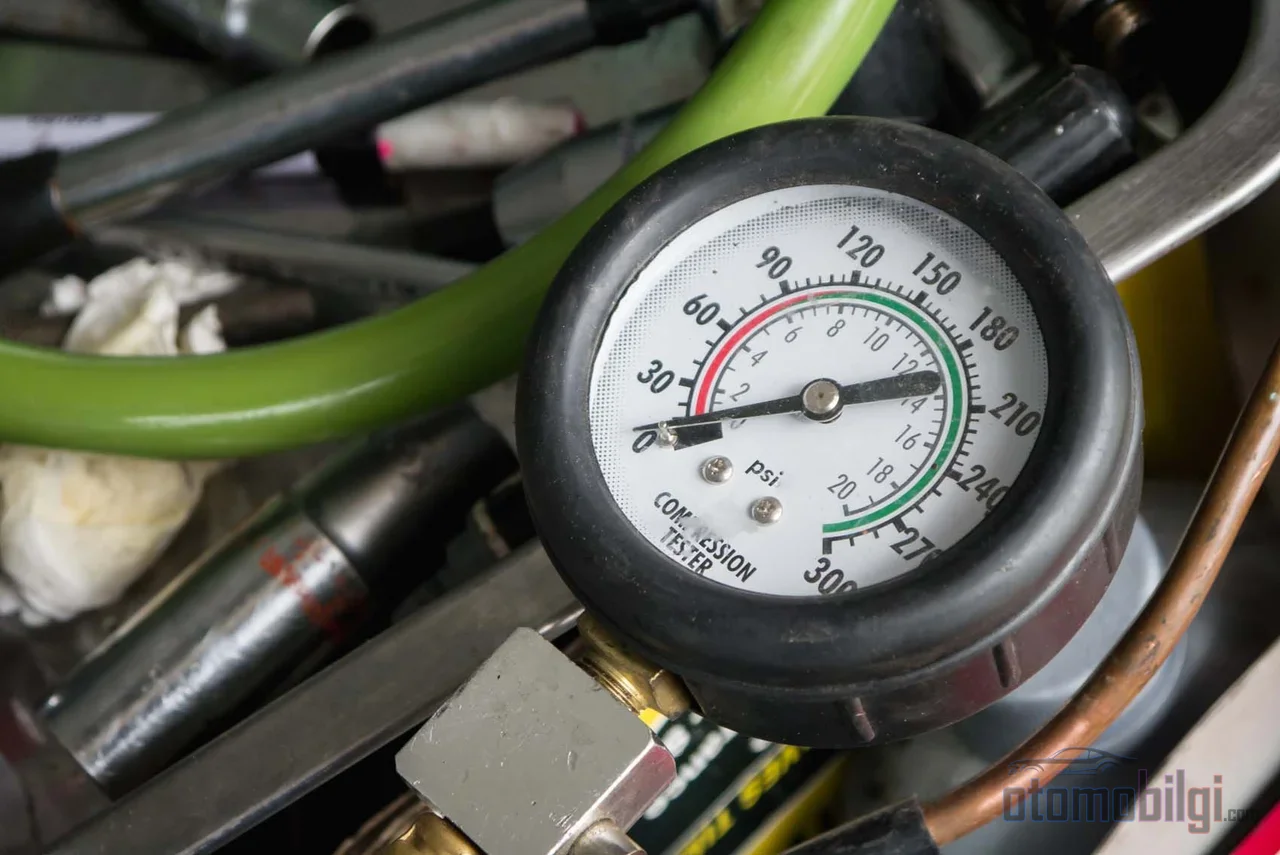
The engine is the heart of the kart; paying money without listening to that heart is the most classic rookie mistake. The first question should always be the same: how many hours does the engine have and what is its overhaul history? If the answer isn't documented, you need to test it yourself. Let's get into the technical side, but I'll keep it simple: think of a compression test as giving the engine's arm a check-up - you're measuring the strength of its heartbeat.
Here's how the test works: an adapter is fitted into the spark plug hole on the cylinder head, the throttle is fully opened and the engine is cranked a few turns; the gauge reads the pressure in PSI. A healthy engine gives readings around 125–160 PSI and the deviation between cylinders stays below 10%. Under heavy use, 110–125 PSI is acceptable. If any cylinder is below 100 PSI or the deviation exceeds 15%, that's a serious red flag; below 90 PSI means major internal damage - walk away. There's also depth to this: deviation matters more than the absolute value. A flat engine reading 115 PSI on all cylinders is better than one reading 148/150/88/145.
There's also the wet compression test: you add a bit of oil through the spark plug hole and measure again. If the reading improves noticeably, the culprit is probably worn piston rings; if it stays low, the valve side comes into question. But the other side of the coin matters too: a compression test is a diagnostic tool, not a fortune teller. It doesn't predict the engine's remaining life; if the engine runs smoothly at idle, during gear changes and at full throttle, the compression is most likely fine anyway. You can't put any test in place of a real track session.
Chassis inspection: how do you catch cracks and straightening marks?
The chassis is the kart's skeleton, and racing with a twisted skeleton is like riding a bike with a bent frame - it doesn't go straight and it doesn't hold a line either. The inspection starts on a flat surface: put the kart on a level stand and check for alignment deviations with a ruler and calipers. You're looking for cracks in the tube welds; mark any obvious bends. The points where the seat mounts attach to the chassis are among the spots that shouldn't be neglected, and if possible, ask for the kart to be placed on a jig to confirm it isn't twisted - if the seller refuses, the answer itself says something.
Weld points and body parts
The favorite addresses of cracks are well known: Tee joints, the weld area where the engine rail meets the crossmember, under the engine mount, and the seat strut welds. Recurring strut weld failures are a sign that the chassis is tired - if the same spot keeps opening up despite a small weld, it's normal to worry. On the body side, scan for traces after contact: cracks in the sidepods, screws, supports and side bars; the mounts and supports of the rear bumper. The good news is: a small crack weld falls in the $50–100 range and is much cheaper than a full chassis replacement. Professional chassis straightening services charge an inspection fee of around $200 that covers most repairs; with severe damage, the time and cost can change. A crack caught early is economical; caught late, it's a problem that isn't even negotiable.
Bearings, seat and wear points
It would be a mistake if bearing inspection were this simple: axle: hold it and rotate it. If the rotation is notched, gritty or stiff, inner bearing wear is likely - this thirty-second test gives away most bearing problems. A bearing that is noisy or does not spin smoothly is due for replacement; play (free movement), heating up and misalignment are also classic symptoms of rear axle bearing and hub failures. In a visual inspection, look at the bearing's appearance and the condition of the remaining lubricant.
Do not stop at the bearing. Before buying, go over the annual maintenance list in your head: all bearings, both joints, throttle cable, fuel lines, filter, brakes, seat struts, chain, clutch, and every nut and bolt. The three checks most often skipped are the chassis condition, the engine history, and the brake-bearing-wear points. On the seating side, we return to the situation I mentioned at the start: the seat, pedal and steering position should suit a person more than a card, especially for a pilot who is still growing.
Second-hand kart prices: how much should you pay?
Let's get to the part that touches your wallet. On the international market, a working second-hand kart circulates on average between €500-7,500; these figures include VAT. A kart in good condition with a Rotax or X30 falls in the €1,500-2,500 band, which is enough for hobby and reasonable-budget racing entry. In the €500-1,500 range there are older karts that are hard to maintain and sometimes require a comprehensive overhaul - so cheap is not always cheap.
| Price band | What do you get? |
|---|---|
| €500-1,500 | Older karts, hard to maintain, sometimes requiring a comprehensive overhaul |
| €1,500-2,500 | Rotax or X30 in good condition, ideal for hobby and entry-level racing |
| Over €10,000 | New premium-segment kart |
| $200 | Professional chassis inspection and straightening fee (most repairs included) |
| $50-100 | Small crack weld repair |
There are no solid statistics on the second-hand kart market in Türkiye; karting vehicles circulate on listing platforms and TL-based prices can be seen in individual listings - for example, one listing had a second-hand go-kart listed in the 270,000 TL band. But this should not be read as a market average: the number of listings is low and prices are formed one by one through bargaining. The picture that the general automobile market closed 2026 as a buyer's market cannot be generalized one-to-one to the karting market; at least knowing that there is room for bargaining is enough.
Negotiating with the seller: which questions should you ask, which documents should you request?
You like the kart, now it is time for the right questions. You should request from the seller the invoice, the kart's history, its current condition and, if any, repair-modification information. Ask whether they will provide a set of spare parts such as chain, sprocket, starter, wheels; if a gauge like an Alfano or MyChron, or a transport trolley would be useful to you, these can be bargaining points. The clearest move is the track test: you should ask to try the kart on the track before purchase. If permission is denied, it is hard for a serious seller to refuse - and you can easily give up on this deal too.
When searching for listings, specialist karting sites, karting clubs, consignment karts at tracks, general classified sites and karting Facebook groups are the main places to look. There is also the matter of homologation: if you are going to enter official races, the kart must be homologated; non-homologated models are cheaper but only suitable for club races. Costs don't end after the purchase - tires, fuel and oil, entry fees, maintenance and parts, and practice days are all part of the budget. For transporting the kart, a trailer or a kart trolley is also equipment you should consider; watch out for the hot exhaust while loading, and secure the chassis with a strap.
Frequently asked questions: Is buying a second-hand kart sensible?
For a first kart, second-hand is often the most sensible option: low entry cost, proven reliability and easy resale. A compression test is a strong signal of engine health; but on its own it is not enough - it is considered together with a track test. On the timing of moving from a rental kart, pilots discuss switching to their own kart as they gain experience (around a quarter of a hundred races is often mentioned); rental kart championships such as SWS are also a natural stepping stone for this transition. A workshop you trust throughout the season and a kart with a track record of saying it was checked and fixed will get you very close - still, always keep an eye on the chassis welds and the rotation of the axle.
In short: verified hour reading, clean weld points, quiet and smoothly spinning bearings, a seat that fits you, and a seller who does not refuse a track test. When these five come together, a second-hand kart will serve you for years - and so will your wallet.
Sources
- How to Choose Your First Kart: A Beginner-Friendly Buyer's Checklist
- Buying a used go-kart: prices and advice
- Compression Test Used Car Guide
- The Value of a Compression Test
- Kart Chassis Weld Crack Repair Guide
- Go-Kart Chassis Integrity
- How to Make Your Go-Kart Chassis Last Longer
- Kart bodywork: what to check after contact
- Kart Chassis Repair and Straightening
- Identifying Worn Bearings
- Rental Kart Rear Axle Bearing, Hub and Keyway Faults
- Bearing Inspection
- 5 tips for buying your first kart
- Karting Vehicle / Go Kart Listings
- When should I jump from rental karts and buy my own kart?
- A Beginner's Guide to Start Rental Go Kart Racing