From Chassis to Motorcycle Engine: The Anatomy of a Karting Vehicle
Share This Page
The anatomy of a racing kart bears little resemblance to most vehicles: it has no sprung suspension, no oil pump, no differential. Instead, there is a flexible tubular steel chassis, a directly connected steering system, and a two-stroke engine we know well from motorcycles. On this page, I explain one by one what every part of the kart does, how the hardware changes between classes, and how chassis settings determine your speed on the track.
Highlights
- Racing karts have no sprung suspension; the flexible chrome-molybdenum tubular chassis does this job on its own.
- The engines have no oil pump; the oil is mixed with the fuel using the premix method and burned together.
- Tire pressure is set in the range of 0.8-1.5 bar on most tracks.
- Rotax MicroMax class is designed for ages 8-11; KZ2 is the category with a 6-speed gearbox.
Why Don't Karts Have Suspension? The Chassis as the Suspension
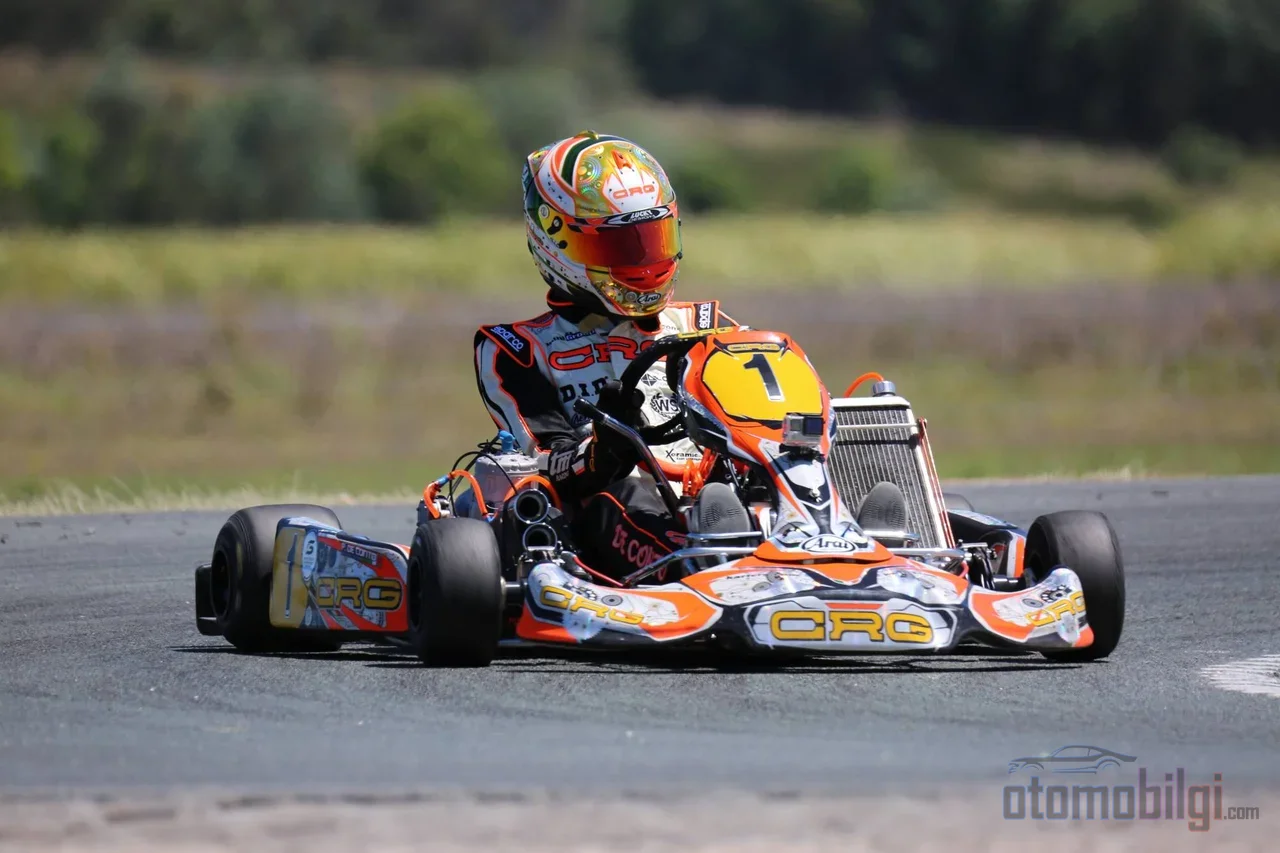
In an ordinary car, each wheel works on springs and dampers. A kart has no such system - and this is not a shortcoming, but a deliberate design. The chassis, made of chrome-molybdenum steel tubes, serves as the suspension thanks to its own flexibility. When you enter a corner, the tubes twist, the kart slightly "flexes," and this twisting shapes the grip. In other words, the kart's suspension is not a separate part; it is the chassis itself.
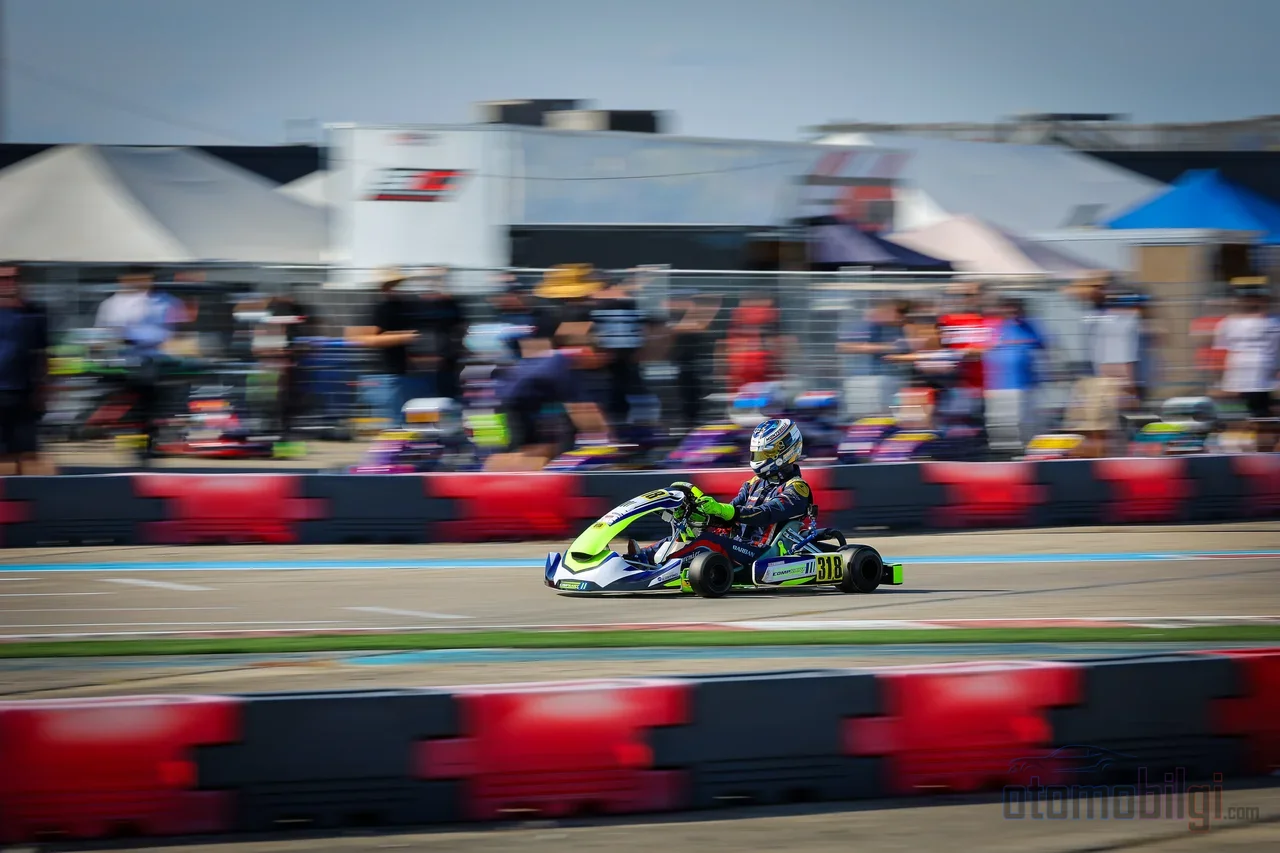
One of the most striking consequences of this is the cornering logic. The kart's rear axle is a one-piece "live axle" without a differential; meaning in a corner, both rear wheels are forced to rotate at the same speed. So how does the kart turn? The answer is a bit crazy: on corner entry, the inner rear wheel lifts off the ground. Without this lift, even if the front wheels turn, the kart keeps going straight - this is exactly the understeer that track drivers call "push."
The seat is also at the center of this experience. Seated in the exact center of the chassis, the driver feels every bump and every cornering force directly in their body. This is why karting is called "naked engineering": between you and the asphalt, there is no suspension, no cabin, no glass. Just tubes and you.
Direct Steering: No Intermediary
The steering side is just as simple. Rotating joints called spindles and tie rod links connect the steering wheel to the front wheels without any intermediary. No hydraulic assistance, no gear system, no delay like in a car. Wherever you turn, that's where you go - which is why karting is considered one of the most honest ways to learn vehicle control.
Torsion Bar, Axle, and Ride Height: The Secrets of Grip Setup
Chassis flexibility is an advantage as long as it is adjustable. This is where torsion bars come into play. There are two types of torsion bars: tubes with different wall thicknesses and tubes flattened in the middle. The flattened one works in an interesting way - when the flat section is horizontal, it is soft, and when rotated 90 degrees to a vertical position, it becomes much stiffer. One single part, two different characters.
The general rule is this: with soft chassis settings, grip decreases; as the chassis stiffens, grip increases. But this doesn't continue forever - at excessive stiffness, chassis flex becomes completely locked, which is called "chassis bind," and performance drops. Removing the rear torsion bar entirely is the "freest" setup. On wet surfaces, it's always recommended to start with the bar installed; too much freedom is not desirable on a slippery track.
The track surface also determines the setup. On low-grip ("green") tracks, the front ride height is raised, the rear ride height is set to maximum, a medium-stiff axle is preferred, and caster is increased. On high-grip, sticky tracks, the picture reverses: the rear ride height drops to minimum, a soft axle is fitted, the seat struts are removed, and the rear torsion bar is taken out.
In Setup, a Rule Is Not Always the Rule
Here is the confusing yet thoroughly enjoyable side of karting: even the "stiffer chassis gives more grip" rule can reverse depending on conditions. On a low-grip surface, a stiff torsion bar may not increase rear grip because it prevents the inside rear wheel from lifting - meaning the theoretically correct setup can backfire on track. The same applies to toe settings, where opposite choices are made depending on the goal: toe-out increases turn-in response but reduces top speed due to friction. Zero toe is recommended for high-speed tracks, and slight toe-out for sprint tracks.
A practical diagnostic tip: if the engine load increases when you turn the steering wheel, the chassis is in a "bound" state and is costing you power.
Two-Stroke or Four-Stroke? A Guide to Kart Engines
Kart engines fall into two main groups, and this distinction determines everything you feel on track. Two-stroke engines are lighter, rev higher, and deliver aggressive acceleration - they are the standard for racing performance. Four-stroke engines, on the other hand, are smoother and more controlled; they are ideal for beginners. This two-stroke character, inherited from motorcycles, is why the kart is thought of as a "motorcycle-engined car that isn't a car."
In classes with a gearbox, the common configuration is: 80cc or 125cc two-stroke engine, six gears, and a hand clutch used only for pulling away from a standstill. Once moving, gears are shifted without the clutch - if you've ridden a motorcycle, this logic will feel familiar.
No Oil Pump: How Does Premix Lubrication Work?
Here is one of the most striking technical details that sets a kart apart from a road car: two-stroke kart engines have no lubrication circuit. No oil pump, no oil reservoir, no filter - none of it. Oil is mixed directly into the gasoline (this mixture is called premix) and burns with the fuel in the combustion chamber. In other words, the engine is lubricated literally by "oily fuel passing through it." That's why keeping the mixture ratio correct is vitally important. There are also premix oils formulated for high-performance two-stroke kart engines, with 100% synthetic approval.
Brakes and Tires: A Kart That Stops Only on the Rear Axle
On most karts the braking system looks at a single axle: there is a hydraulic disc brake acting only on the rear axle. The system works like a straight chain - from the master cylinder to the hoses, and from there to the caliper and rotor. But on the driving side this simplicity has an important consequence: aggressive braking can cause the rear to step out. If the rear slides when you brake, the kart instantly starts to rotate; this is the fundamental characteristic that makes a kart feel completely different from a car. If there is braking distance to make up, smooth, progressive braking is essential.
The tires, on the other hand, are the true source of grip. For dry conditions, treadless "slick" tires are used; the aim is to maximize the tire's contact surface with the asphalt. In the wet, grooved rain tires that evacuate water are switched to. Tire temperature is also critical: an overheated tire loses its grip. The pressure is kept 0.8-1.5 bar in most applications - higher pressure heats the tire faster, but too much of it shrinks the contact surface and shortens its life. There is also a simple diagnostic method: if the middle of the tread is too hot, the pressure is too high; if the middle is cold, the pressure is too low.
Equipment Differences Across Karting Classes
Built on the same tubular chassis idea, these machines change considerably by class. Age and experience tiering is directly related to equipment such as engine power and transmission. The Mini class is the lowest-powered category: around 11 horsepower of power and ~110 kg minimum weight. As you move up the ladder, power and technical complexity increase.
| Class | Age / Level | Equipment |
|---|---|---|
| Rotax MicroMax | Ages 8-11 | Water-cooled FR125 Rotax Max engine |
| Junior TKM Extreme | Ages 11-17 | 115cc, different restrictor in three weight groups, championship class |
| Rotax Max Senior | Adult | 125cc TAG engine, the upper version of Junior Max |
| KZ / KZ2 | Advanced level | Same engine specification; in KZ the chassis and brakes are free, engine homologation is shared |
The difference between KZ and KZ2 is a particularly beautiful engineering detail: in FIA Karting, both shifter categories share the same engine specifications and engine homologation is kept stable. The difference is that in KZ the chassis and brakes are free. In other words, while the engine stays fixed, the team's difference is created by chassis and brake design - you could think of it a bit like the "level playing field" version of the engine.
There are also age-specific rules on the safety side: For drivers under the age of 15, junior helmets with CMR safety certification are mandatory. So it is not only engine power that progresses step by step, but also protective equipment.
Karting in Türkiye 2026: Championship, Talent Programs and Domestic Production
The living example in Türkiye of all this technical world is the MOTUL 2026 Türkiye Karting Championship. The season started in Bursa and is run over a total of 7 rounds. The 2nd round was held on May 16-17 at the TOSFED Körfez Race Track; the 3rd round lasted two days under the hosting of Bursa Metropolitan Municipality. The season calendar also includes the 5th and 6th rounds (05.09 and 03.10.2026) as well as the 2nd round of Rotax Max Challenge Türkiye (20.09.2026). At the women drivers' podium of the Bursa round, Tuğba Yeşiltay finished first, Ela Yeşiltay second, and Fatma Zeynep Çiçek third.
The doors are open for young talents too: the TOSFED Next Talent Project, with FIA support, offers a talent program that young people aged 12-16 can join for free. In TOSFED's youth qualifying system as well, qualifiers were run in 10 separate regions between July 1-27, and the final was held on August 1 at Tuzla Karting Park. To give an example at the club level, in one calendar example Senior X30 was run while KZ2 was not on the program that season - class combinations can vary depending on the organization.
On the technical rules side, TOSFED's 2024 National Karting Technical Rules include chassis-engine regulations in the Micro and Mini categories: no additional materials may be added except for engine repairs, and components must retain their original characteristics. In other words, at the lower levels driver skill takes precedence over an engineering war - which is exactly what it should be for a pilot in the learning age. On the domestic production side, BHK Kart is introduced as Türkiye's only domestic manufacturer, said to have brought its go-karts and spare parts up to international standards; since this was reported through a commercial source, it is worth taking this claim with some caution.
Why Is the Anatomy of a Kart So Educational?
Let me summarize: karting is the purest form of motorsport. If there is no suspension, the chassis flexes; if there is no oil pump, premix burns; if there is no differential, the inner wheel lifts. Every engineering compromise is balanced with a solution, and the driver is physically part of that balance at every moment. Thanks to direct steering, rear-axle braking, and a bare seat, both mistakes and successes reflect back on you instantly. It is no coincidence that almost all F1 drivers come through this school - you would hardly find another discipline that teaches vehicle control, setup logic, and braking discipline this quickly.
If this anatomy excited you, the next step is clear: drop by a school or a talent program, examine the class system according to your own age group, and discover the lift of that inner wheel on the track with your own feeling. The chassis setup you read in a book only gains meaning when you feel the tire's temperature with your hand.
Sources
- Go Kart Parts Explained: Engine, Chassis, Brakes & Tyres
- Go Karting Explained: Beginner Guide to Karts
- Kart Setup | Optimize Your Kart
- Arrow Karts Setup Guide
- FIA Karting Categories
- Kart Classes Archive
- Kart Classes Explained | Rookie Racing
- Kart Classes Explained
- Best Beginner Kart Classes Explained
- Karting Terms Explained
- Best Karting Engine Oil
- Motul Kart Grand Prix 2T
- TOSFED 2024 National Karting Technical Regulations
- TOSFED Next Talent Project Is Starting
- 2026 Türkiye Karting Championship Calendar
- TOSFED Karting Race Results
- 2026 Türkiye Karting Championship Bursa
- Kart racing classes and equipment explained
- Go Kart Spare Parts - BHK Kart