What Does a Karting Season Cost?
Share This Page
Short answer: a hobby-level karting season with rental karts runs into just a few thousand TL, while a competitive regional season starts from at least $8,000, and at the elite international level it starts from $30,000-100,000 per year. So karting is a sport where, between the cheap fun at the track and the Formula 1 dream, budgets can differ by a factor of 100. Now let's examine the rungs of this ladder one by one, item by item.
Highlights
- A new racing kart in Europe: 4,500-8,000 Euro
- Lower limit of a regional racing season in the USA: ~8,000 USD
- FIA Karting Arrive and Drive European entry fee: 4,950 Euro
- TOSFED license fee: 3,600 TL
- Annual cost of an 8-year-old elite karting driver: ~130,000 £
Where to Start? Your First Laps with Rental Karting
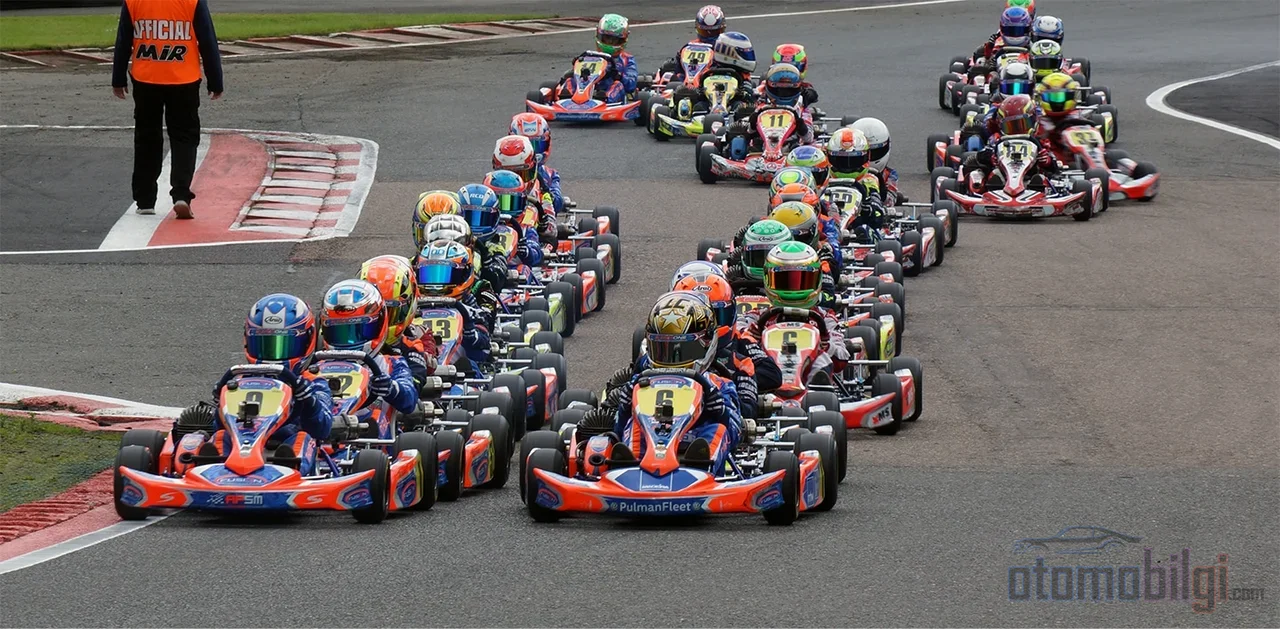
When planning a karting budget, the first rule is this: for a driver who has never even left the pit, buying a kart is the fastest way to burn money. That's why everyone's path goes through rental karting. In Türkiye, a 10-minute session costs on average 300-600 TL ; the price depends on the track's location, the type of kart you use, and the time slot you visit. So doing a few laps once a week is still at a manageable level between coffee and streaming expenses.
Tuzla Karting Park in Istanbul has been serving for many years as the only karting track with a professional license, and it is one of Türkiye's most comprehensive outdoor tracks. In tourism regions like Antalya, tracks also operate at prices close to this tariff. The beauty of rental karting is this: helmet, gloves, fuel, and maintenance are not your problem. You only pay for the time you drive. As for training, some clubs allow participation from age 6 with no upper age limit, and they use karts with power appropriate to the age and level.
On the federation side, there is also a nice door open: TOSFED, with the Next Talent project it launched with FIA support, allows free participation for young people aged 12-16. For a young person with a limited budget but high ambition, this is exactly the first rung of the ladder. Before searching for sponsors, following such free talent projects is, in my opinion, the first item on the list.
The First Big Investment: Kart, Equipment, and Tool Kit
If your lap times at the rental track have started to improve, the question "should I buy my own kart?" comes to mind. This is where your budget makes its first jump. In Europe, a new racing kart, depending on category and brand, is 4,500-8,000 Euro . Choosing between classes like Rotax, X30, or KZ directly changes this price tag. Considering a more modest start: the hobby karts called "fun karts" are new in the 1,500-3,000 USD range. On top of that, for a helmet and basic equipment 300-600 USD, and then at least another 150 USD for a simple tool set. Add it all up, and the difference between dreams without equipment and a start with equipment while carrying $2,000 in your pocket is exactly these figures.
The situation in the Turkish market is a bit different. In second-hand listings, go kart prices start from 25,000 TL; serious race karts, meanwhile, can climb to the 250,000 TL and 350,000 TL level. A firm that stands as Türkiye's own domestic go-kart manufacturer produces karts and spare parts, which somewhat eases the find-the-part problem here. But let's be realistic: if you're buying a second-hand kart, questions like the engine's history, the chassis' fatigue, and tire age can cost far more than pocket change.
The Itemized Cost of a Race Weekend
You've bought the kart, put on your helmet, and now the real question: how much does a race weekend come to? Let's break it down concretely. The entry fee for a race is 70-120 USD or so. For fuel, set aside about 20 USD per race. Maintenance is an everyday item but real enough not to neglect: about ~20 USD per race. The item that truly stings is tires: a new set averages 270 USD. If you change tires every two race weekends, you can cut this item in half; but if you're chasing tenths on track, slick tires will dry you out as much as they dry out your wallet. This picture is enough for a regional-level driver: the floor for a season of regional kart racing in the USA is talked about as roughly 8,000 USD with equipment wear added on top of a ~100 USD per day race entry fee.
Engine Maintenance: Rotax or X30?
The three engine names you'll hear most in European paddocks are Rotax, IAME X30 and ROK. Their impact on your budget depends on the hours you put on the engine. The X30 has a short cycle for major maintenance, i.e. rebuild, of 15-20 hours; meaning you need to tear down and refresh your engine more often. Rotax wants maintenance at longer intervals and stands out with its claim of low operating cost, durability, and ease of use. Both are similar-power engines delivering around 28 horsepower; the difference is the money and time spent in your garage.
That's why for someone buying a second-hand kart, the engine brand isn't just the question "which one is faster?" but "which maintenance schedule fits my wallet?" Your class choice directly shapes the engine line of your season budget. For those wanting to organize championships, Rotax MAX Challenge offers national and international racing opportunities across all age categories; so when choosing your engine, you also need to factor in which series gives you team support and a regular calendar.
Season Budget in Türkiye: Doing the Math in TL
In Türkiye, it's hard to find the total figure of a full race season in a single line; because the items are priced at different exchange rates. But let's lay out the concrete pieces we have. TOSFED's athlete license fee across all disciplines is 3,600 TL - the friendliest item in the budget. Let's look at spare part prices in the domestic market: a Duro brand rear tire including VAT is 2,035 TL; a patterned go-kart tire set is around 9,092 TL . Tubeless slick tires brought in through import can be found in the ~554-594 TL band; as dimensions and brands change, the price moves considerably. Racing slick tires from brands like Anlas and BKT are also sold in the domestic market.
So in Türkiye, a first-season budget for a driver racing with their own kart is structured, at the cheap end, as a 25,000 TL kart + 3,600 TL license + tires and entries; with serious racing karts, this base easily exceeds 250,000 TL. Once championship registration fees and logistics between tracks are added, the answer to the question "is karting expensive?" changes depending on which category you race in. The Federation's MOTUL Türkiye Karting Championship in 2026 hosts a round at Tuzla Karting Park in early October; Borusan Otomotiv Motorsport's BOM Karting team, meanwhile, opens its season at İzmit Körfez Circuit and continues in mid-May at the karting track in Bursa. These teams, competing in categories such as Mini and Formula Senior, are also an example of sharing the cost with a team for families.
The Budget Ladder in Europe and on the Road to F1
As the class rises, money doesn't just increase; it multiplies. Every rung of the karting career ladder demands roughly a multiple of the previous one. Let's see the ladder in a single table:
| Level | Estimated Annual / Seasonal Cost |
|---|---|
| Regional karting (USA) | Starts from around 8,000 USD |
| Karting (national-international) | 30,000-100,000 USD per year |
| FIA Karting Arrive and Drive Europe | 4,950 Euro entry + 2,500 Euro deposit |
| F4 | 200,000-400,000 USD |
| F3 | 500,000-1,500,000 USD |
| F2 | Over 2 million USD per year |
If you've noticed, there's a new format on the list: FIA Karting's Arrive and Drive championship, running in Europe and Asia-Pacific in 2026 as the official umbrella for the model of racing with a team without buying a chassis-engine. The entry fee of around 5,000 Euro is still serious money, but instead of buying and maintaining your own kart, you leave all the logistics to the team. For a family planning a budget, this is a smart waystation that could be summarized as "tasting racing before buying a kart."
So how much is the top rung? An elite karting season for an 8-year-old child can cost around 130,000 £ When it comes to the door of F1, estimates don't settle on a single figure: for the total investment of a young driver's path to an F1 seat, figures circulating range from 5-6 million Euro to 10-15 million dollars The work isn't done with the Super License either: you must accumulate 40 points over three years by finishing high in lower series such as F2. Most professional racers also begin this journey with karting at age 6-7. So karting's budget can be considered the first payment on the F1 dream.
The Right Order to Follow When Planning the Family Budget
The biggest mistake in budget planning is starting with the kart. In my view, the right order is:
- Start with rental karting: Test the preference with 10-minute sessions and see whether the child (or you) is truly persistent.
- Follow free talent programs and schools: Programs like TOSFED's Next Talent are an entry gate that brings the budget down to zero.
- Learn the license and registration system: The 3,600 TL license fee is a small but mandatory step; map out the championship calendar and categories in advance.
- Choose the engine class according to your budget: Does the X30's 15-20 hour rebuild interval fit your wallet, or is Rotax's longer maintenance interval a better fit?
- Set your tire strategy: Getting two weekends out of a 270 USD set is one of the biggest saving levers in your season budget.
- Sort out your entry and logistics line from the start: 70-120 USD entry per race, 20 USD fuel, 20 USD maintenance - multiply these by the number of races in your season.
A family that follows this order moves forward without falling into the "we poured money into the kart, then forgot the equipment" trap. This is actually where the debate over whether karting is an accessible sport gets resolved: on the hobby side, rental tracks make it truly accessible; on the elite racing side, it is an expense line too costly to compare with football or basketball.
The Bottom Line: How Much Is a Karting Budget?
There is no single answer to the question, there is a chart. For a hobby, 10-minute sessions at a rental track are enough; for a serious start, a few thousand dollars with equipment; for regional competition, 8,000 USD as a floor; for national-international karting, 30,000-100,000 USD per year; and for the climb up the F1 ladder, millions of dollars/euros are discussed. The logic is the same in Türkiye too, only the figures are in TL, starting with a 25,000 TL kart, a 3,600 TL license, and 2,000 TL tires. The smartest move? Climbing the ladder from the very bottom, with small and planned steps.
Sources
- How Much Does it Cost to Race Karts
- Competitive karting: How much does it cost?
- How to Become a Racing Driver (When You're Not Rich)
- The Racing Driver Career Path
- 2026 FIA Karting Arrive and Drive Championships
- What it's really like to try to make it to F1
- The difference between IAME and Rotax
- Rotax MAX Combustion Engines
- License Fees - TOSFED
- TOSFED Next Talent Project Is Starting
- 2026 MOTUL Türkiye Karting Championship
- BOM Karting Opened the 2026 Season at Izmit Bay Circuit
- Karting Guide in Antalya 2026
- Tuzla Karting Park
- Kart Vehicle / Go Kart Models & Prices
- BHK Kart
- Karting Spare Parts
- Training - TMK
- What does it cost to race for a year - r/Karting
- How much does it cost to be a F1 driver - r/formula1
- Hobbyist to Competitive Karting